Angela’s Ashes — And Why Your Story Is Not Over
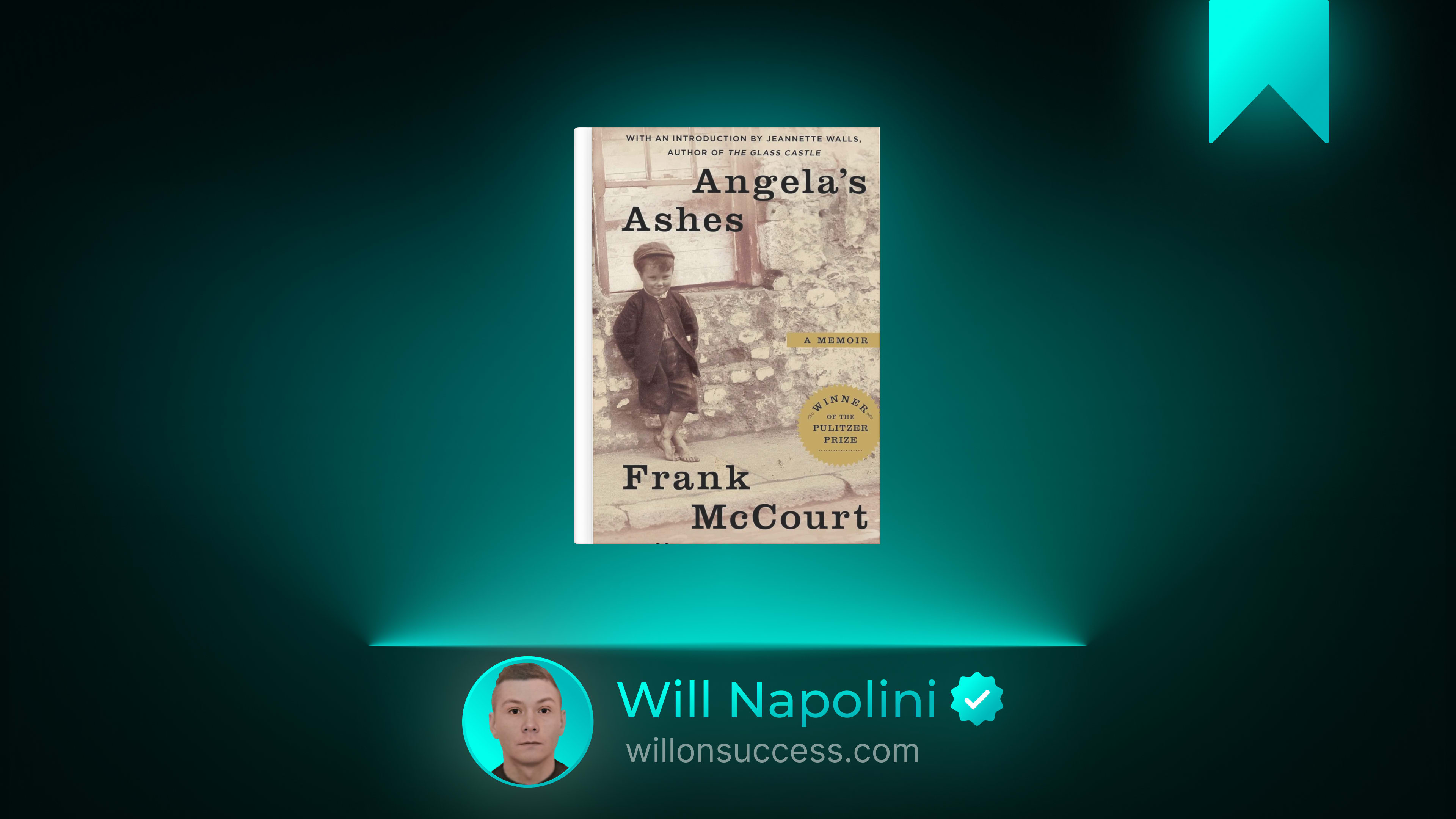
Angela’s Ashes — And Why Your Story Is Not Over
What if the very thing you are most ashamed of is actually the foundation of your greatest strength? I know how heavy shame can feel. I have carried secrets and stories that felt like stones in my chest, convinced that if anyone truly knew where I came from or what I had survived, they would turn away. But here is the truth that set me free, and it is the truth Frank McCourt proves on every page of his masterpiece Angela’s Ashes: your painful past is not a life sentence; it is the raw material for your ultimate triumph. You were not broken by your history; you were being prepared by it.
Let me walk you through this beautiful, heartbreaking book, and then let me show you why your own story is far more powerful than you realize.
The Rain, The Shame, and The Survival
Frank McCourt opens his memoir not with triumph, but with devastation. He takes us to the rain-soaked, coal-dust-covered streets of 1930s Limerick, Ireland. His family is drowning in poverty. His father drinks away their meager wages. Siblings die. Hunger is a constant companion. The shame of wearing patched shoes, of begging for charity, of watching his mother’s spirit slowly erode under the weight of impossible circumstances—it is all laid bare with unflinching honesty.
Your darkest chapter does not define your final destination; it refines your capacity for light. Frank does not write about this suffering to make you pity him. He writes about it to show you that a child can endure the unendurable and still retain a spark of humanity. Even in the filth and the grief, young Frank finds moments of transcendent beauty: the rhythm of words, the warmth of a stolen apple, the fierce, quiet dignity of his mother, Angela. He survives not because his circumstances change, but because he refuses to let those circumstances extinguish his inner fire. The environment may shape your beginning, but only your spirit gets to author your ending.
The Alchemy of Storytelling
For decades, Frank believed his poverty made him worthless. He carried the belief that his accent, his clothes, and his history marked him as lesser. It wasn’t until he began to tell his story—not to hide it, not to sanitize it, but to claim it—that everything changed. Writing Angela’s Ashes at the age of sixty-six was an act of profound alchemy. He took the leaden weight of trauma and transmuted it into literary gold.
You cannot heal what you refuse to acknowledge, but you can transform what you bravely articulate. When Frank finally gave voice to his pain, he didn’t just recount facts; he reclaimed his identity. He stopped being a victim of Limerick’s rain and became the master of his own narrative. This is the architecture of healing. It is not about erasing the past; it is about integrating it. Your scars are not evidence of defeat; they are proof of your survival and the blueprint for your wisdom. When you stop hiding your story, you stop giving it power over you. Instead, it becomes the very thing that connects you to others and gives your life profound meaning.
Breaking the Cycle of Silence
One of the most devastating aspects of Frank’s childhood was the silence. In his community, suffering was endured, not discussed. Pain was swallowed. Shame was inherited like a family heirloom. But Frank broke that cycle. By speaking the unspeakable—with humor, with tenderness, with unvarnished truth—he liberated not only himself but millions of readers who saw their own hidden struggles reflected in his words.
Silence keeps the wound infected; truth is the medicine that allows it to heal. I have mentored so many people who believe their struggles are too messy, too shameful, or too ordinary to matter. They are wrong. Your willingness to be honest about your journey is a gift to everyone around you. When you speak your truth, you give others permission to do the same. You break generational chains of silence simply by refusing to carry them any longer. Courage is contagious, and your vulnerability is the spark that ignites it in others.
The Dignity of the Ordinary
Amidst the crushing poverty, Angela’s Ashes is filled with moments of extraordinary grace. A teacher who sees potential in a ragged boy. A neighbor who shares a crust of bread. A mother who sings lullabies despite her exhaustion. These small acts of kindness are not footnotes; they are the bedrock of Frank’s resilience. They prove that even in the bleakest soil, flowers of human connection can bloom.
Never underestimate the sacred power of a single moment of kindness or a single decision to keep going. You may be in a season where the big victories feel impossibly distant. That is okay. Celebrate the small mercies. Honor the tiny steps forward. The person who encouraged you today. The lesson you learned from a mistake. The quiet strength you found just to get out of bed. These are not insignificant. They are the seeds of your future harvest. Greatness is not built in grand gestures; it is forged in the faithful accumulation of ordinary moments of courage.
Why This Book Matters for You Right Now
Angela’s Ashes won the Pulitzer Prize, but its true reward is the way it reaches into the reader’s chest and whispers, You are not alone. Frank McCourt did not write this book until he was in his sixties. For most of his life, he believed his story was a burden. He was wrong. It was his gift. And I need you to hear this: it is never too late to reclaim your narrative.
You are not behind schedule. You are not disqualified by your past. The very things you think make you unworthy are the exact experiences that have equipped you with empathy, depth, and resilience that no privileged upbringing could ever provide. Your setback is not your identity; it is the setup for your most meaningful contribution.
Your One Brave Step
So here is what I want you to do today. Not tomorrow. Today.
Take out a piece of paper. Write down one part of your story that you have been carrying in silence. Just one. Do not edit it. Do not judge it. Do not try to make it sound inspiring. Just let it exist on the page.
Then, ask yourself this question: “If I were to offer compassion to the younger version of myself who lived this, what would I say?”
Write down the answer. Read it aloud. Let those words begin the work of reclamation. You do not need to publish a memoir. You do not need an audience. You need to bear witness to your own life. Because the moment you stop hiding your story is the moment your true life begins. Pick up the pen. Your voice matters.