A Manual for Living — And the Quiet Power of Letting Go
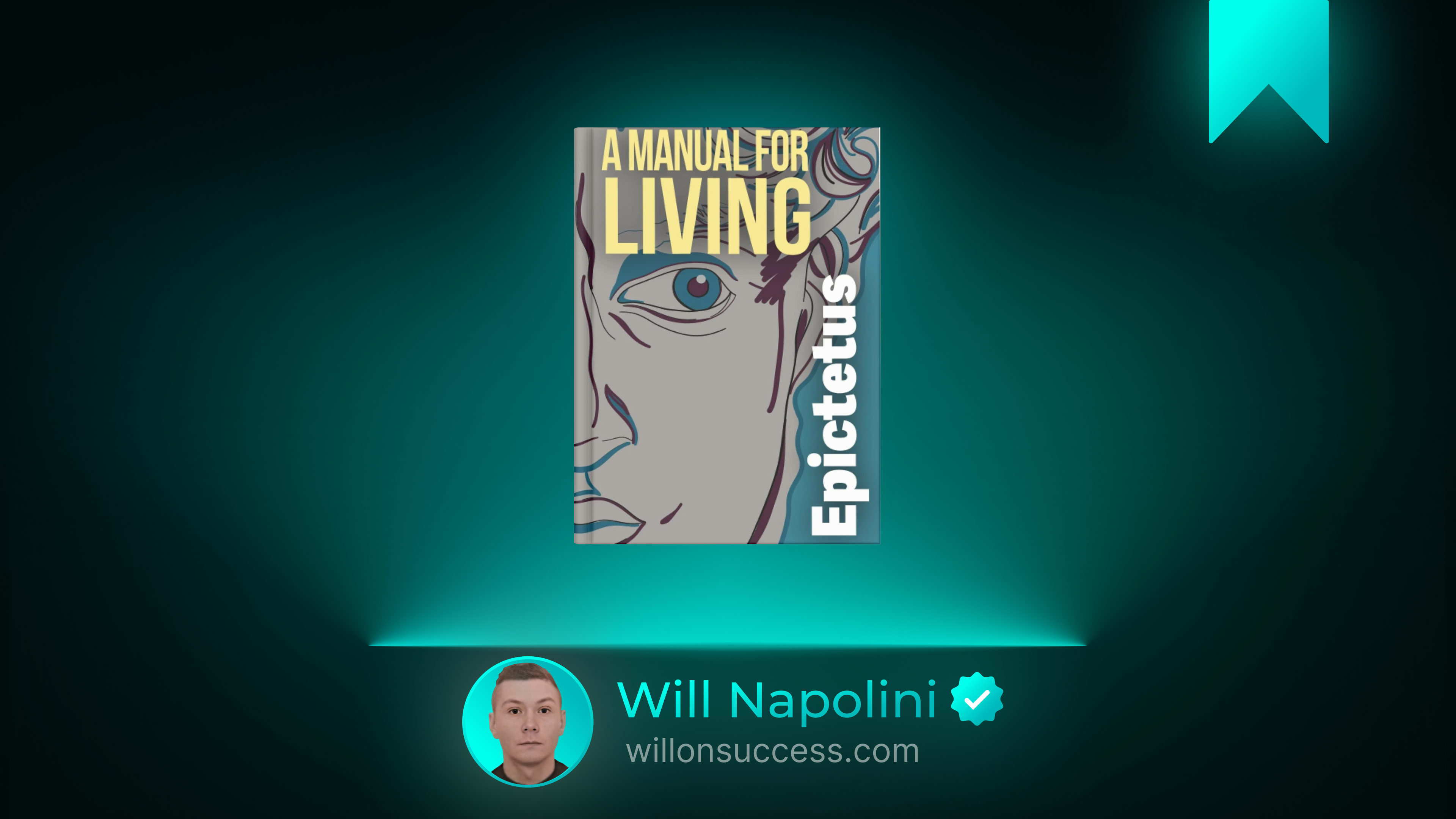
A Manual for Living — And the Quiet Power of Letting Go
I used to think that being a good leader, a good partner, and a good builder meant keeping every single plate spinning. I thought if I just worked harder, worried louder, and pushed longer, I could control the outcome of every conversation, every project, every season of my life. I was exhausted, anxious, and watching my best efforts turn to ash because I was trying to manage the wind instead of adjusting my sails. Then a mentor handed me a tiny, weathered book written by a man who had been born a slave, crippled by a cruel master, and exiled from his home. His name was Epictetus, and his Manual for Living did not give me a strategy to spin the plates faster. It gave me the courage to let the ones that were not mine crash to the floor. You cannot build a masterpiece of a life if you are busy trying to control the weather.
Let me walk you through the architecture of this extraordinary little book, and let me show you how a two-thousand-year-old philosophy can completely transform the way you handle your Tuesday morning.
The Great Divide
Epictetus opens his manual with the most important sentence you will ever read: Some things are up to us, and some things are not. It sounds simple. It sounds almost too simple. But I promise you, every ounce of frustration you are feeling right now comes from blurring that line. You are losing sleep over the economy, your boss’s mood, your neighbor’s opinion, or a mistake you made five years ago. Peace is not the absence of chaos; it is the profound relief of finally staying in your own lane. What is up to you? Your opinions, your pursuits, your desires, your boundaries, and your choices. In short, your own mind. That is your kingdom. Everything else is just the scenery passing by your window.
The Banquet of Life
Epictetus asks you to treat life like a banquet. When a dish is passed to you, take a modest portion. When it moves on, let it go. Do not reach down the table to grab it, and do not stare at it with longing when it is not in front of you. I once watched a brilliant woman sabotage her own joy because she was so obsessed with a promotion that had been handed to someone else. She spent eighteen months staring down the table, bitter and distracted, instead of eating the meal right in front of her. Your joy is never found in reaching for what has already moved on; it is found in fully tasting what has been placed on your plate today. The opportunity you missed, the client who said no, the relationship that ended—let it pass. The host is bringing something else, and you need your hands free to receive it.
The Play You Were Cast In
Here is where the philosophy gets beautifully, relentlessly practical. Epictetus tells you to remember that life is a play, and the Director has assigned you a role. If the Director wants you to play a beggar, play the beggar well. If you are to play a king, play the king well. The Director chooses the part; your only job is to act it with absolute excellence. I know you might be in a season where the role feels too small. You feel overqualified for your current job, underappreciated in your current home, or stuck in a waiting room that smells like stagnation. But I have learned that the soil does not care about the seed’s resume; it only cares about how deeply the seed is willing to push its roots. You do not need a bigger stage to prove your greatness; you just need to play your current scene with absolute, undeniable excellence. When you master the small room, the Director always writes you into a larger one.
The Story You Tell Yourself
Epictetus wrote a sentence that rewired my entire nervous system: Men are disturbed not by things, but by the views which they take of them. The traffic jam does not make you angry; your belief that you should not be delayed makes you angry. The rejection email does not break your heart; the story you tell yourself that it means you are unworthy breaks your heart. You are never a victim of your circumstances; you are only ever a victim of the story you tell yourself about your circumstances. You have the power, right now, to rewrite the narrative. When the obstacle appears, you do not have to call it a disaster. You can call it a classroom. You can call it resistance training for your character. The moment you change your view, the heavy chains of frustration dissolve into the quiet power of focus.
The Muscle of Equanimity
This is not a philosophy you read once and master. It is a muscle you build one rep at a time. Epictetus tells you that if you want to be a runner, you run. If you want to be a carpenter, you work with wood. If you want to be unshakeable, you practice being unshakeable in the tiny, mundane moments. When you spill your coffee, do not curse the universe; practice equanimity. When someone cuts you off in traffic, practice grace. Transformation is not a lightning bolt that strikes you on a mountaintop; it is a quiet compounding of small, daily choices to govern your own mind. Celebrate the tiny victories. The moment you feel the anger rising and choose to take a breath instead of snapping—that is a victory. That is you taking back your throne. That is the seed breaking through the soil.
Your One Small Step
So here is what I want you to do today. Not tomorrow when things are calmer. Today, when the noise is loud. Take out a piece of paper and draw a line down the middle. On the left side, write down everything that is currently stressing you out that is not up to you. The past. The market. Other people’s choices. Look at that list, take a deep breath, and mentally let it go. It is not your department anymore. On the right side, write down what is up to you. Your effort. Your attitude. Your next phone call. Your response to the person who frustrated you. Pick just one item from that right column. Just one. And execute on it with excellence.
Your peace is not something you find at the end of the journey; it is something you practice on the very first step. Step into your power. The Director has given you a magnificent role to play today, and the audience of your future is watching. Go play it well.