Anne of Green Gables — And the Radical Power of Imagining Your Best Life
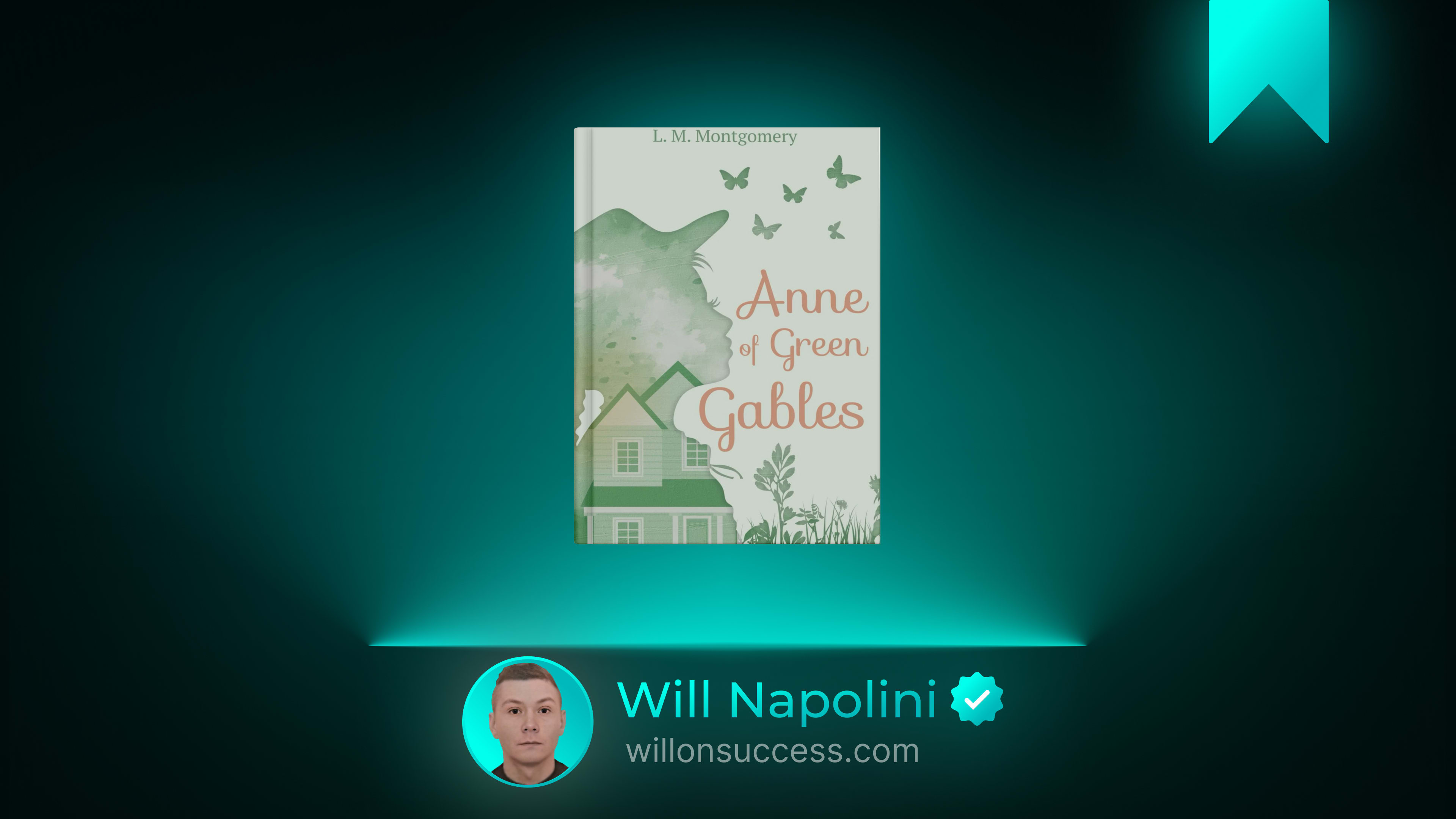
Anne of Green Gables — And the Radical Power of Imagining Your Best Life
I want to tell you a secret that took me half a lifetime to learn: the things that make you feel like a mistake are often the exact tools you need to build your masterpiece. I remember sitting in a sterile boardroom years ago, surrounded by people with the “right” degrees and the “right” pedigrees, feeling entirely out of place. I thought my unconventional background was a liability, a gap in my resume that I needed to hide. But I have since learned that the world doesn’t need another copy; it needs your specific, unrepeatable light. And no one in the history of literature understands this better than a fiery, red-haired, fiercely imaginative orphan named Anne Shirley. The things that make you feel like a mistake are often the exact tools you need to build your masterpiece.
Let me walk you through the soil of this story, because underneath the charm of Prince Edward Island lies a profound blueprint for how to design a life of meaning, impact, and unshakeable joy.
The Ultimate “Wrong Fit”
The premise of L.M. Montgomery’s classic is built on a misunderstanding. Matthew and Marilla Cuthbert, aging siblings running the Green Gables farm, send for an orphan boy to help with the manual labor. Instead, because of a mix-up at the asylum, they get Anne. She is a girl. She is talkative. She is dramatic. She is entirely unsuited for the heavy lifting they required.
On paper, Anne was a disaster. She was the ultimate “wrong fit.” But here is what I have learned from watching thousands of people try to force themselves into molds that were never meant for them: You do not have to shrink yourself to fit a room that was built for someone else; you can simply expand the room to fit your vision. Anne didn’t try to become the silent, laboring boy the Cuthberts thought they wanted. She brought her own magic, her own intellect, and her own heart to the farm. She didn’t just earn her keep; she transformed the very atmosphere of the house. She proved that your greatest value is never found in conforming to someone else’s expectations, but in fully unleashing the unique design you were born with.
The Architecture of Imagination
One of Anne’s most famous philosophies is her demand for “scope for the imagination.” When she encounters a plain, ordinary stretch of woods, she doesn’t just see trees; she names it the “White Way of Delight.” When she sees a simple pond, she calls it the “Lake of Shining Waters.”
Most people think imagination is just for children or artists. The truth is, imagination is the foundational architecture of all personal development. Your life will never rise higher than the names you give to your daily experiences. When you look at a difficult project at work and call it a “burden,” you drain your energy. When you look at that same project and call it a “training ground for my future leadership,” you ignite your spirit. Anne understood that we do not just live in the physical world; we live in the world we describe. By renaming her surroundings, she took ownership of her environment. You have the exact same power today. You can look at the messy, difficult, or mundane parts of your life and speak a better, brighter reality over them.
The Compound Effect of Humility
Anne is brilliant, but she is not perfect. She is deeply flawed. She smashes a slate over Gilbert Blythe’s head because he teased her about her red hair. She accidentally dyes her hair green in a vanity experiment. She gets drunk on currant wine because she mistook it for raspberry cordial.
But what makes Anne extraordinary is not her perfection; it is her profound capacity for course correction. When she makes a mistake, she feels the sting of it, she owns it, and she apologizes. Perfection is a myth, but progress is a promise you make to yourself every single morning. A prideful heart builds walls to protect its ego, but a humble heart builds bridges that lead straight to your destiny. Anne’s willingness to say “I was wrong” is what eventually turns her bitter rival, Gilbert, into her most steadfast ally. Your mistakes are not the end of your story; they are simply the friction required to polish your character. Forgive yourself quickly, learn the lesson, and keep walking.
The Courage to Bloom Where You Are Planted
The climax of the novel presents Anne with a choice that tests everything she has built. She wins the prestigious Avery Scholarship, which would pay for her to attend Redmond College and chase a grand, distant career. It is the ultimate “out.” But tragedy strikes. Matthew passes away, and Marilla’s eyesight is failing. Green Gables is in jeopardy of being sold.
The world would tell Anne to take the money and run. The world tells you to always chase the bigger city, the higher title, the flashier opportunity. But Anne makes a decision that takes my breath away every time I read it. She gives up the scholarship. She chooses to teach at the local Avonlea school so she can stay close to Marilla and keep Green Gables. True success is not about how far away you can run from where you started, but how deeply you can bloom where you are planted.
The world calls this “settling.” I call it the ultimate act of strategic alignment. Anne realized that her roots had grown too deep to be transplanted without losing her soul. She didn’t abandon her dreams; she relocated them to the soil where they would bear the most fruit. Sometimes, the most ambitious thing you can do is stay, serve, and build up the community that shaped you.
Your Scope for Imagination
I am sharing this with you because I know what it feels like to look at your current life and feel like you are waiting for the “real” story to begin. You might feel like an orphan in your own industry, misunderstood by your family, or misplaced in your current city. But I want you to look at your life through Anne’s eyes.
You are not a mistake. You are a masterpiece in the making, and the very things that make you feel different are the exact things the world is starving for. The world does not need you to be someone else; it needs you to be fully, unapologetically, radiantly yourself. Your past does not dictate your future, and your current circumstances do not define your potential. You have the power to rename your struggles, to learn from your stumbles, and to find the diamonds right where you are standing.
Your One Small Step
So here is what I want you to do today. Not tomorrow. Today.
I want you to find one thing in your life that you have been complaining about, dreading, or calling “ordinary.” It might be your morning commute, a difficult client, or a tedious household chore.
I want you to rename it. Give it a new name that reflects its hidden value or its potential for growth. Write that new name on a sticky note and put it where you will see it. Treat that space with a little more grace, a little more curiosity, and a little more imagination.
You do not need to wait for a grand scholarship or a massive windfall to change your life. You just need to change your perspective. Because a step taken today in the direction of your own joy is worth more than a thousand intentions you will never act on.
The soil is ready. The season is here. Start planting.