An Astronaut's Guide to Life on Earth — And Why Your Greatest Breakthrough Requires You to Be a Zero
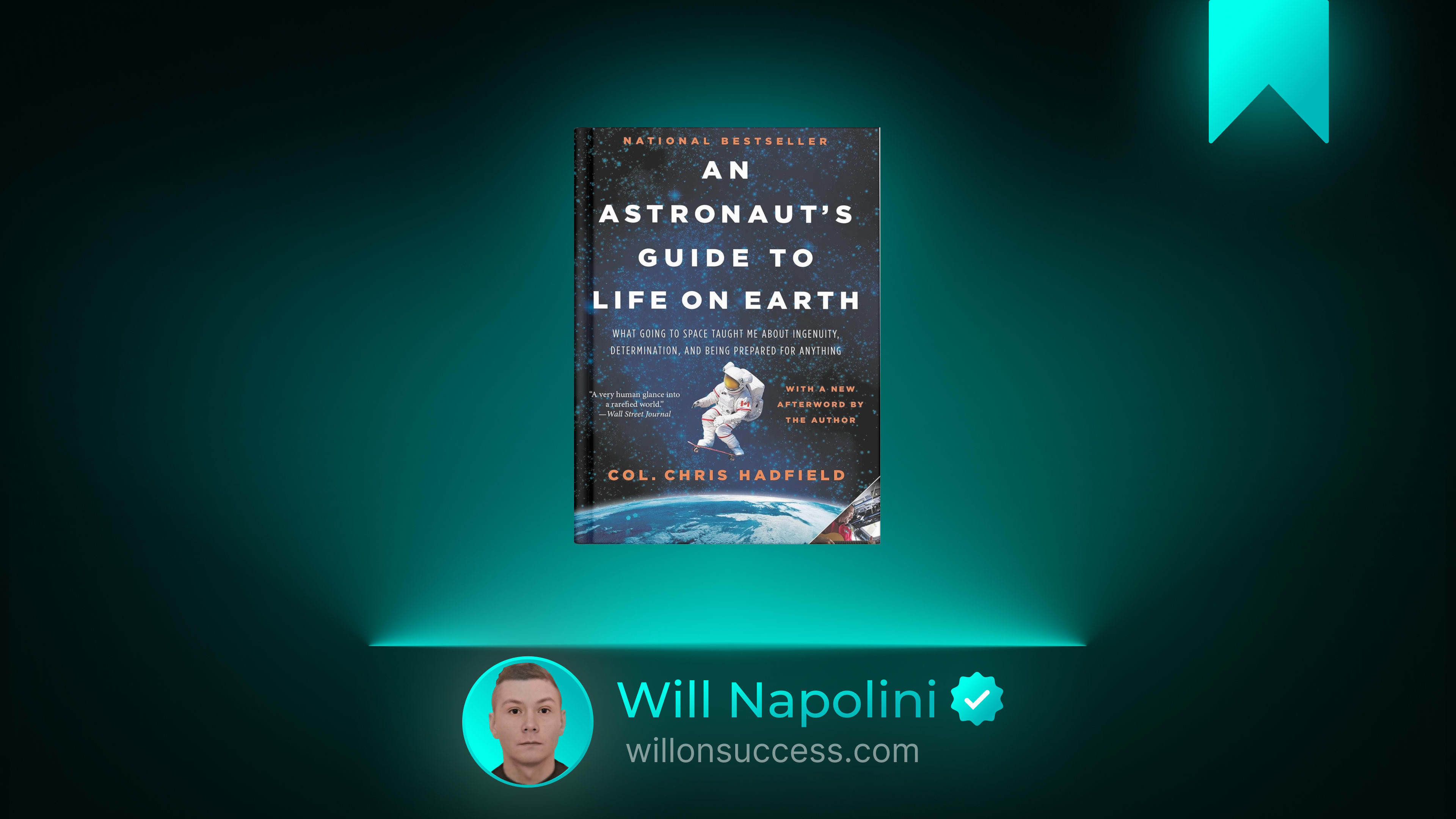
What if the secret to reaching the absolute pinnacle of your life is not trying to be a superstar, but actively choosing to be a “zero”? I know how that sounds. I know you have been told your whole life that you need to stand out, shine brighter, and demand attention to get ahead. But I have learned a profound truth from the people who have literally left this planet and looked back at the Earth: The higher you want to go, the more humble your foundation must be.
Chris Hadfield, one of the most beloved and experienced astronauts in history, wrote An Astronaut’s Guide to Life on Earth not just as a memoir of space travel, but as a masterclass in human potential. Space is an incredibly hostile environment. It does not care about your resume, your ego, or your good intentions. It only respects one thing: preparation. And the beautiful, life-changing realization I want to share with you today is that your life on Earth operates by the exact same physics. Gravity is unforgiving, but so is a life lived without a blueprint.
The Radical Power of the “Zero”
When Hadfield first joined the space program, he quickly learned about a concept that completely rewired his brain: the idea of the “+1”, the “-1”, and the “0”. When you enter a new environment—a new job, a new relationship, a new city—you generally have three choices. You can try to be a “+1”, the superstar who swoops in to prove how brilliant they are. You can be a “-1”, the liability who makes mistakes and creates more work for everyone else. Or, you can aim to be a “0”.
Being a zero means you are competent, you are helpful, and you do not break anything. You do not try to reinvent the wheel on your first day. You learn the systems, you support the team, and you sweep the floors. Most ambitious people despise being a zero. They want to be the hero immediately. But Hadfield discovered that the only way to eventually become a “+1” is to spend years mastering the art of being a zero. You cannot build a legacy on a foundation of arrogance; you must build it on a foundation of competence.
Think about the last time you started something new. Did you rush in trying to prove your worth, only to trip over your own shoelaces? True confidence does not announce itself; it quietly goes to work. When you embrace the zero mindset, you remove the exhausting pressure of having to be perfect, and you replace it with the quiet dignity of being useful. True confidence does not announce itself; it quietly goes to work.
Sweating the Small Stuff
We live in a culture that glorifies the “big break.” We love the stories of overnight success, the viral moments, the massive leaps. But Hadfield makes a point that every person who has ever built something lasting knows in their bones: in space, a loose screw does not just delay the mission; it ends it. Therefore, astronauts are trained to sweat the small stuff. They obsess over the details that no one will ever see.
I see so many talented people frustrated because they are waiting for their big break, while simultaneously ignoring the small details of their daily lives. They want the million-dollar business, but they haven’t balanced their checkbook. They want the thriving marriage, but they haven’t learned how to listen to their partner for ten uninterrupted minutes. The universe does not reward the person who dreams the biggest; it rewards the person who prepares the deepest.
When you start treating the small things as sacred, everything changes. Making your bed, answering an email with grace, showing up five minutes early to a meeting—these are not mundane chores. They are the mortar holding the bricks of your future together. When you master the micro, the macro takes care of itself.
Attitude is a Trained Muscle, Not a Personality Trait
One of the most encouraging lessons in this book is how Hadfield talks about fear and panic. When an alarm goes off on the space station, astronauts do not panic. Why? Not because they are superhuman, but because they have simulated that exact failure a thousand times on Earth. They do not rise to the occasion; they sink to the level of their training. Positivity and resilience are not genetic gifts. They are trained responses.
I know you are facing storms right now. I know there are mornings when the weight of your responsibilities feels like it is crushing the breath out of you. But I want you to look at your current struggles through the lens of a simulator. Every problem you solve today is programming your brain to remain calm when the real alarm goes off tomorrow. Your attitude is not a reflection of your circumstances; it is a reflection of your preparation.
You have the power to train your mind for joy, just as an astronaut trains their body for zero gravity. When you wake up and choose gratitude, when you choose to work the problem instead of complaining about the problem, you are running a simulation for your future success. You are building the emotional muscle required to carry the heavy blessings that are coming your way.
The Dignity of the Unseen Work
Here is the most profound truth I want to leave you with today. For every hour an astronaut spends floating in the breathtaking beauty of space, they spend thousands of hours in a concrete building in Houston, sweating in a simulator, studying manuals, and practicing emergency drills. The world only sees the launch. The world only applauds the spacewalk. But the astronaut knows where the real victory was won.
The launch is just the visible harvest of a thousand invisible seasons of sweating in the simulator.
Do not despise your simulator. Do not hate your current mundane tasks. Do not feel like you are wasting your life because you are not yet in the spotlight. The spotlight is harsh, and it will burn you if you have not built the internal architecture to handle its heat. You are not stuck in a dead-end job; you are in a high-altitude training facility. God is preparing you for a weight of glory that requires the quiet, unglamorous discipline you are building right now.
Your One Small Step
So here is what I want you to do today. Not tomorrow. Not next Monday. Today.
I want you to actively choose to be a “zero” in one specific area of your life. Pick a task that you usually rush through or complain about. It might be doing the dishes, organizing your desk, or writing a routine report for your boss. Do it with absolute, meticulous excellence. Do not tell anyone you are doing it. Do not post it on social media. Just do it perfectly, quietly, and with a heart full of gratitude.
The stars are waiting, but they only open their doors to those who have learned how to sweep the floor.
You have greatness inside of you. I see it. Now, it is time for you to build the foundation that will carry you there. Go sweat the small stuff. Move now.