Complex PTSD — Data Sampler Summary
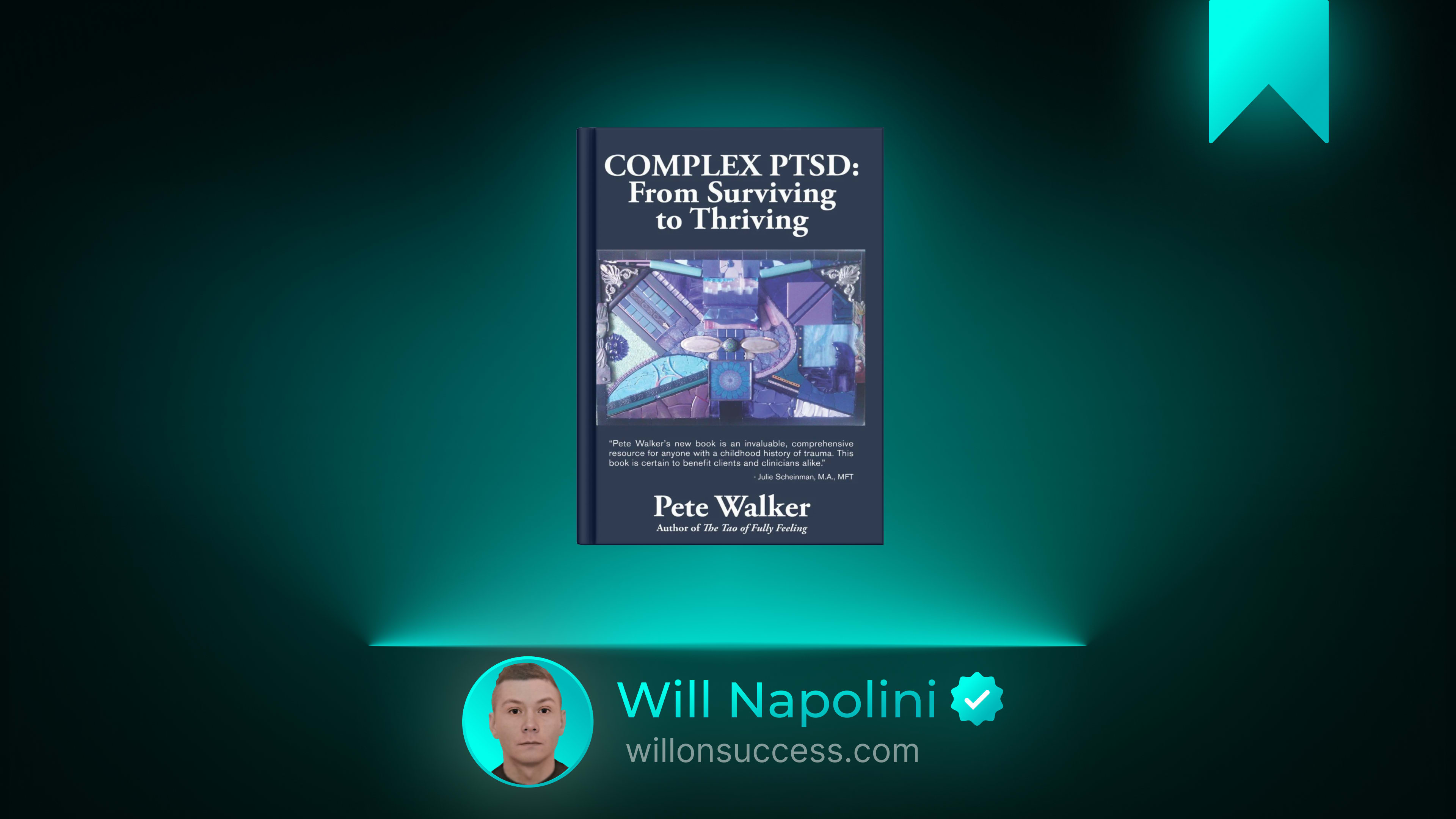
Intro
Core Insight
Healing from childhood trauma isn’t about erasing the past—it’s about reparenting the wounded self, regulating the nervous system, and transforming survival adaptations into authentic living.
Representative Samples: 3
Sample 1: The Emotional Flashback (Perception)
Scenario: A high-performing professional receives mild feedback from a colleague and is instantly flooded with shame, dread, and the visceral sense of being a helpless child—despite no actual threat being present. Pattern: Emotional flashbacks are affective, not visual. They regress you to childhood emotional states without clear memories. Recognizing them as “time-traveling feelings”—not present reality—is the first step toward regulation. This matters because misidentifying flashbacks as current danger perpetuates the trauma cycle.
Sample 2: The 4F Survival Types (Action)
Scenario: Four adults raised in the same neglectful home develop distinct coping styles: one becomes controlling and angry (Fight), one obsessively overworks (Flight), one withdraws into dissociation (Freeze), and one people-pleases to earn safety (Fawn). Pattern: Trauma responses are adaptive, not defective. Each “F” represents a brilliant childhood survival strategy that becomes limiting in adulthood. Recovery involves expanding your repertoire—learning to access all four responses flexibly rather than being trapped in one. This matters because rigidity perpetuates suffering; flexibility enables healing.
Sample 3: Reparenting the Inner Critic (Will)
Scenario: A survivor notices their inner voice saying “You’re worthless” after a minor mistake. Instead of obeying or fighting it, they pause, name the voice as the “toxic inner critic,” and respond with the compassion a loving parent would offer a scared child. Pattern: Healing requires becoming the parent you needed. The inner critic is a trauma artifact, not truth. Shrinking it isn’t about silencing—it’s about replacing its messages with earned self-compassion through consistent, small acts of self-reparenting. This matters because sustainable recovery is built on internal safety, not external achievement.
Key Generalizations
| Concept | Core Truth |
|---|---|
| Flashbacks | Feelings are time-travelers; name them to reclaim the present. |
| Survival Styles | Your coping mechanism was once protection; now it’s a doorway to growth. |
| Self-Reparenting | You cannot think your way out of trauma—you must feel your way through with compassion. |
Application Formula:
Notice → Name → Nurture
When triggered: (1) Pause and notice the bodily/emotional shift, (2) Name it (“This is an emotional flashback” or “My Fawn response is activating”), (3) Nurture the younger self with the words/actions a safe caregiver would provide.
Conclusion
Walker’s framework transforms recovery from a vague hope into a navigable process. Apply it by treating symptoms as messengers, not enemies: each flashback, each compulsive behavior, each wave of shame points to an unmet childhood need waiting to be acknowledged. Progress isn’t linear—it’s measured in shrinking the intensity and duration of suffering, not its total elimination. The goal isn’t a trauma-free life, but a life where trauma no longer drives the bus.