Adult Children of Emotionally Immature Parents — And Why Your Healing Is Your Greatest Power
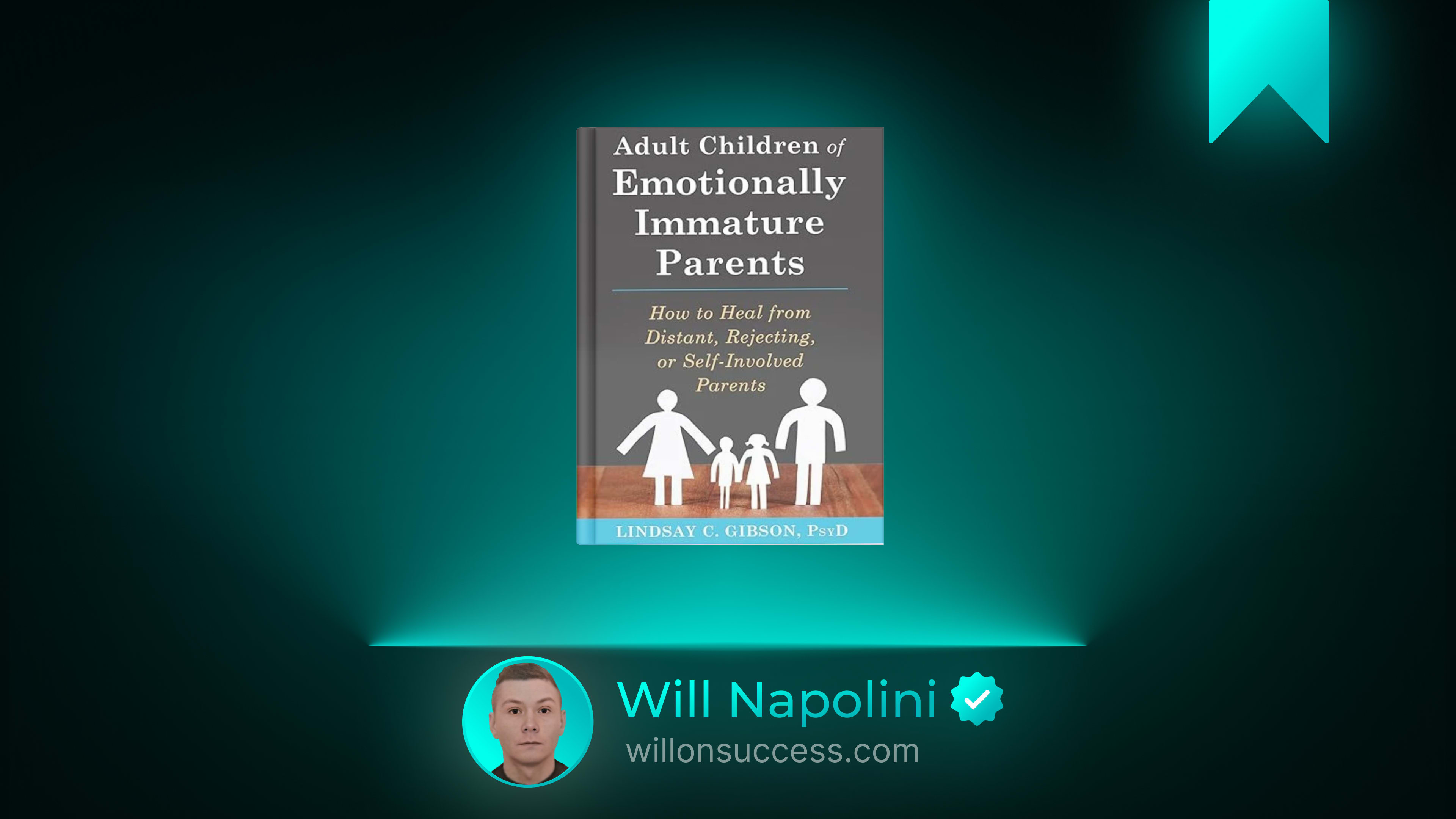
Adult Children of Emotionally Immature Parents — And Why Your Healing Is Your Greatest Power
I want to tell you something that might feel like a weight lifting off your chest: You are not responsible for fixing what was never yours to carry. I know how heavy that responsibility has felt. I have sat across from brilliant, compassionate adults who still whisper, “If only I had been better, they would have loved me differently.” I said it too. For years. But here is the truth Lindsay C. Gibson illuminates with such grace in Adult Children of Emotionally Immature Parents: your pain is not proof of your failure. It is proof of your awareness. And awareness is the first seed of the emotional maturity your parents could not give you—but you can now grow for yourself.
The Invisible Wound No One Named
Gibson begins not with blame, but with clarity. She defines emotionally immature parents not as monsters, but as people who never developed the capacity to hold space for another person’s inner world. They may have provided food, shelter, and even affection—but they could not provide attunement. They could not regulate their own emotions, so they demanded you regulate theirs. They could not tolerate your sadness, anger, or neediness, so you learned to bury those parts of yourself to keep the peace.
You did not lose your childhood because you were unlovable. You lost it because your caregivers were emotionally unavailable. This distinction is everything. It shifts the narrative from “What is wrong with me?” to “What happened to me?” And when you stop asking the first question, you create room to answer the second with honesty—and then move beyond it.
I remember mentoring a woman named Elena. She was forty, successful, kind to everyone except herself. She described her mother as “distant but not abusive.” Yet Elena carried a chronic sense of emptiness she couldn’t name. When she read Gibson’s description of the “internalizer” child—the one who absorbs the parent’s emotional chaos and mistakes it for love—she wept. Not from grief alone, but from recognition. “I thought I was just sensitive,” she told me. “Now I see I was surviving.” Your sensitivity was never weakness. It was your radar for a storm no one else acknowledged.
The Four Roles You Were Forced to Play
Gibson identifies four survival roles children adopt in emotionally immature homes: the Internalizer, the Externalizer, the Caretaker, and the Observer. You likely recognize yourself in one—or several. These were not personality traits. They were adaptations. Brilliant, necessary adaptations that kept you safe when safety was scarce.
But here is where hope enters: Roles are costumes, not identities. You wore them because you had to. Now you get to take them off.
The Internalizer believes their worth depends on being good, quiet, and useful. The Externalizer acts out to force attention. The Caretaker becomes the parent to their parent. The Observer watches everything, feels deeply, but never speaks. All four roles sacrifice authenticity for connection. And all four can be honored for their service—then gently retired.
When you understand your role, you stop judging yourself for it. You start grieving the child who had to wear it. And in that grief, you make space for the adult who gets to choose differently. Healing is not erasing your past. It is reclaiming your present from its grip.
The Gift Hidden in the Gap
Here is what most summaries miss: Gibson does not leave you in the wound. She points to the extraordinary strength forged in its absence. Because your parents could not model emotional maturity, you had to develop it on your own. You learned to read micro-expressions before you could read books. You sensed tension before words were spoken. You became fluent in the language of unmet needs—yours and others’.
Your empathy is not a symptom of trauma. It is a superpower refined in fire. The very attunement you lacked from your parents, you cultivated in secret. Now, as an adult, you can offer it to yourself—and to others—with a depth few possess.
I’ve watched clients transform this insight into careers as therapists, teachers, artists, and leaders. Not despite their upbringing, but because of the unique perception it gifted them. Your pain was not wasted. It was preparation. You were not broken by their limitations. You were built by your response to them.
Boundaries Are Not Betrayal—They Are Belonging
The hardest lesson in this book is also the most liberating: You cannot heal your parents. You can only honor your own growth. Many adult children cling to the fantasy that if they explain themselves clearly enough, love deeply enough, or achieve enough, their parents will finally see them. Gibson gently dismantles this hope—not to crush you, but to free you.
Emotionally immature parents often cannot receive boundaries without feeling attacked. That is not your failure. It is their limitation. Setting a boundary is not about changing them. It is about protecting the part of you that deserves safety.
Start small. Say “I need time to think” instead of instantly agreeing. Decline an invitation without over-explaining. Feel your discomfort without rushing to fix it. Each boundary is a brick in the foundation of your new emotional home. Belonging to yourself is the prerequisite for belonging anywhere else.
Self-Parenting: The Work That Changes Everything
Gibson’s most practical gift is the concept of self-parenting. This is not indulgence. It is reparation. It is the daily practice of giving yourself what you needed but did not receive: validation, consistency, patience, and unconditional regard.
Self-parenting looks like noticing your inner critic and answering it with kindness. It looks like resting when you’re tired, even if productivity screams otherwise. It looks like celebrating small wins as fiercely as big ones. It looks like saying “This hurts” instead of “I should be over this by now.”
You are both the wounded child and the wise adult. And the adult gets to show up now. Every time you choose compassion over criticism, you rewrite your nervous system. Every time you honor a feeling instead of suppressing it, you prove to your younger self that they are safe at last.
Why This Book Matters Right Now
We live in an age of performance, comparison, and external validation. But true stability comes from within. Gibson’s work is the antidote to the belief that your worth must be earned through achievement, compliance, or caretaking. She reminds us that emotional maturity is not a destination—it is a practice. And you are already practicing.
Your healing is not selfish. It is sacred. When you tend to your own wounds, you break cycles that have echoed through generations. You become the ancestor your future lineage needs.
Your One Small Step Today
So here is what I want you to do today. Not tomorrow. Today.
Place a hand over your heart. Close your eyes. Breathe slowly. Then say aloud, softly: “I am here for you now.”
Do not wait for the perfect moment. Do not wait until you feel ready. Say it anyway. Feel the resistance. Feel the tenderness beneath it. That tenderness is your true parent emerging.
Then, write down one way you will honor that voice this week. Will you pause before saying yes? Will you journal without judgment? Will you rest without guilt? Choose one. Do it. Celebrate it.
You were never meant to earn love. You were always worthy of it. Start living from that truth—one gentle step at a time.