The ADHD Toolkit for Women — And Why Your Brain Is Not Broken
The ADHD Toolkit for Women — And Why Your Brain Is Not Broken
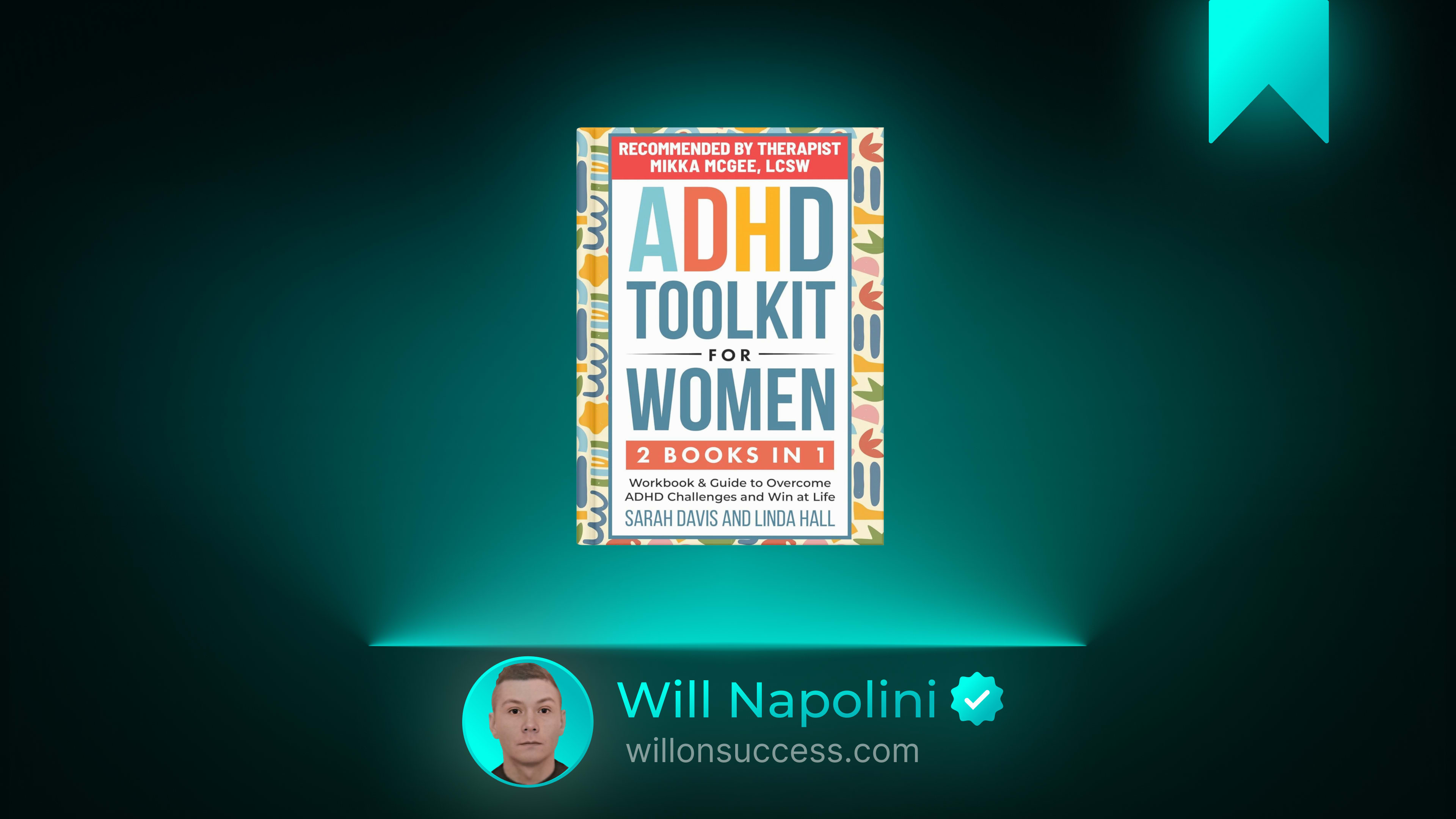
What if the exhaustion you feel every single day is not a sign that you are failing, but a sign that you have been trying to run a Mac operating system on a Windows machine? I know the heavy, quiet shame that comes with an ADHD diagnosis, especially when it arrives late in life. I have sat across from brilliant, capable women who looked at me with tears in their eyes and whispered, “I should have this figured out by now.” I need you to hear me right now, and I need you to let this truth sink deep into your bones: you are not broken, you are not lazy, and you are not behind. You have simply been trying to build a skyscraper using the blueprints for a cottage. Sarah Davis and Linda Hill’s The ADHD Toolkit for Women is not a manual for fixing you, because there is nothing to fix. It is a blueprint for building the scaffolding your brilliant mind actually needs to thrive.
The Architecture of the Unseen Struggle
For decades, the medical world looked at ADHD through the narrow lens of hyperactive little boys, entirely missing the girls who internalized their chaos. They missed the women who smiled through the overwhelm while their internal engines ran at a hundred and twenty miles an hour, masking their struggles to appear effortlessly competent. The heaviest weight you carry is not your executive dysfunction; it is the shame you have attached to it. When you forget an email, lose your keys, or abandon a half-finished project, the world calls it carelessness, and you have been taught to call it a character flaw. But a seed does not apologize for needing different soil, and your brain does not need to apologize for needing a different environment. The struggle you feel is real, but it is not a life sentence; it is simply a signal that your current systems are mismatched with your cognitive reality.
Dismantling the Exhausting Mask
Davis and Hill strike at the very heart of the female ADHD experience by exposing the exhausting art of masking. You have spent years curating a persona of perfection, terrified that if you drop the act, people will see the messy, chaotic truth underneath and judge you for it. Masking is a brilliant survival tactic, but it is a terrible long-term strategy for a meaningful life. Every ounce of energy you spend pretending to be neurotypical is an ounce of energy stolen from your actual genius and your actual joy. The moment you put down the mask is the moment you reclaim your power, shifting your internal dialogue from “What is wrong with me?” to “What does my brain actually need to succeed?” That single pivot in questioning changes the entire architecture of your day and the trajectory of your life.
Building Your Scaffolding
This is where the workbook aspect of the Toolkit shines, moving you from abstract theory into the dirt and sweat of real-world application. Success for an ADHD brain is rarely about brute discipline; it is almost always about intentional environmental design. Discipline is trying to force the river to flow uphill; design is building a waterwheel that uses the current to do the work for you. Let’s talk about the “doom pile”—that stack of mail, laundry, and random objects accumulating on your kitchen counter that fills you with dread. The neurotypical advice is to “just clean it up,” but for you, that pile is a monument to overwhelm; instead, the Toolkit teaches you to put a shredder next to the front door or buy a beautiful, open basket for the mail so it doesn’t look like clutter. You do not need more willpower; you need fewer barriers between you and the life you want to live. When you start implementing these micro-systems—using visual timers to combat time blindness, breaking a massive project into embarrassingly small steps, or body-doubling to get through a task—you are not just cleaning your house, you are compounding self-trust.
The Season of Invisible Growth
I want to talk to you about the days when the systems inevitably fail, because they will, and you need to know how to handle the aftermath. You will have a day where the visual timer is ignored, the doom pile returns, and the old shame creeps back in to whisper that you are back at square one. Listen to me closely: A single bad day does not erase a season of good decisions. Growth is not a straight line shooting upward into the clouds; it is a spiral, meaning you will revisit old struggles, but you will visit them with entirely new tools in your belt. I want you to fiercely celebrate the micro-wins, whether that means drinking a glass of water before looking at your phone or forgiving yourself for missing a deadline instead of spiraling into self-hatred. Progress is sacred, no matter how small the step, because small steps compound into an unshakeable life.
Why This Book Is Your Compass
The ADHD Toolkit for Women is practical, deeply compassionate, and relentlessly actionable, refusing to deal in vague platitudes when you need concrete checklists and cognitive reframes. It teaches you that your ADHD traits—your hyperfocus, your vibrant creativity, your deep empathy, your unique ability to see connections others miss—are not unfortunate side effects of a disorder. Your greatest weaknesses and your greatest strengths are simply the same river flowing at different speeds. Once you stop fighting the current and learn to navigate the rapids, you can harness the hydroelectric power of your own mind to build a career, a home, and a life that feels entirely your own. You were not built to fit into a neurotypical box; you were built to color outside the lines and create something the world has never seen before.
Your One Small Step
So here is what I want you to do today. Not tomorrow. Not when you “feel more organized” or when the stars align. Today. Action cures fear, and a single step taken right now is worth more than a thousand intentions you will harbor tomorrow.
Look around your physical space right now and find one single point of friction. Just one. Is it the drawer where you always lose your keys? Is it the app on your phone that distracts you for an hour every morning? Is it the shoes you always trip over in the hallway? You cannot conquer a mountain until you are willing to move a single stone.
Do not try to fix your whole life. Just fix that one friction point. Put a hook by the door. Delete the app. Move the shoes. A small win today proves to your brain that you are no longer at the mercy of your symptoms—you are the architect of your days.
Make your environment work for you, just once, in one tiny, specific way. You do not need a perfect system to change your life. You just need the courage to pick up the shovel and build the first brick. Move now.