A Wrinkle in Time — And the Secret Weapon You Already Carry
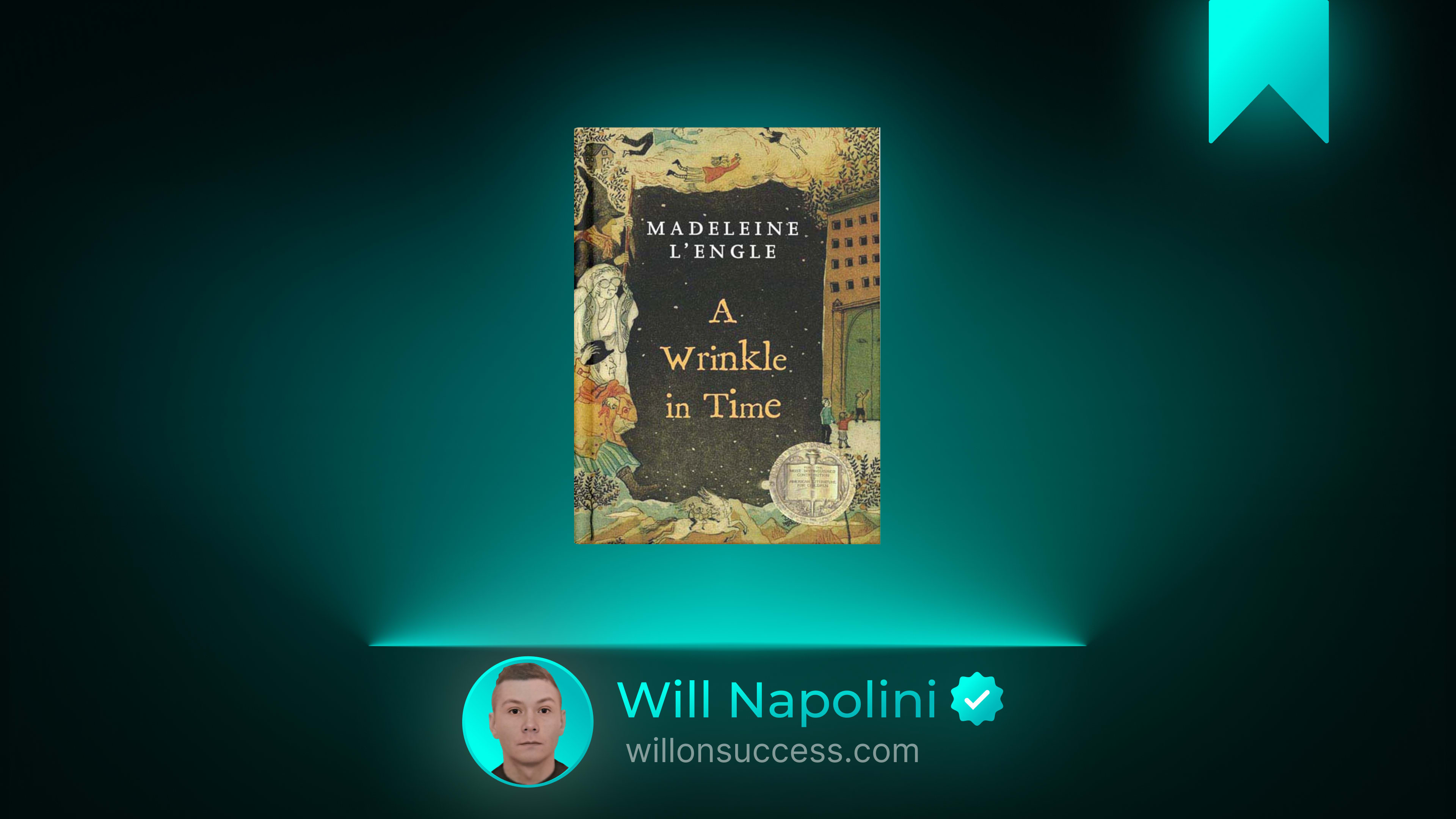
A Wrinkle in Time — And the Secret Weapon You Already Carry
I was eleven years old, standing in my grandmother’s sun-dappled kitchen, when I first opened A Wrinkle in Time. My jeans were too big. My hair was too wild. I felt like a puzzle piece that didn’t fit anywhere. Meg Murry—angry, stubborn, “difficult”—stared back at me from the page, and for the first time, I didn’t feel broken. I felt recognized. You are not too much. You are exactly what the world needs to resist the darkness. That book didn’t just change my childhood—it rewired my understanding of strength. Let me show you why it still matters today.
The Journey That Mirrors Your Own
L’Engle doesn’t write about space travel. She writes about the journey every one of us takes: from confusion to courage, from fear to faith, from isolation to connection. Meg, her brother Charles Wallace, and friend Calvin leave the safety of their Connecticut home to rescue Meg’s missing scientist father. They tesser—folding space and time like a piece of paper—to traverse galaxies, confront a terrifying force called the Black Thing, and battle a mind-controlling entity known as IT. But here’s what L’Engle knew: the real battle isn’t in another dimension. The war for your soul is fought in the quiet moments when you choose to believe you’re enough.
Meg isn’t a hero because she’s perfect. She’s a hero because she’s imperfect. She’s impatient. She’s insecure. She’s fiercely protective of her brother. And it’s because of these so-called flaws that she wins. When IT tries to crush her with its cold, uniform logic, Meg doesn’t fight with brilliance or power—she fights with love. Your weakness is not your enemy. It is the very weapon that can shatter darkness. That’s not metaphor. It’s physics. It’s theology. It’s your lifeline.
The Black Thing—and What It’s Really Teaching You
L’Engle describes the Black Thing as a shadow that smothers worlds, enforcing sameness and silence. It’s not fire or claws—it’s the absence of light. The horror isn’t in its violence, but in its suffocation. It tells you: Be quiet. Be small. Conform. You’re not good enough. Sound familiar? That voice in your head when you hesitate to share your idea? When you shrink your voice to fit in? When you believe you’re “too much” for this world? That’s the Black Thing whispering.
But here’s the truth L’Engle gifts us: The Black Thing has no power where love is present. It can’t comprehend it. It can’t consume it. Meg defeats IT not by becoming “stronger” in the world’s eyes, but by embracing the very thing IT fears: her messy, inconvenient, human love for her brother. Your darkness isn’t your destiny—it’s the backdrop against which your light becomes visible. The moment you choose love over fear, the shadow loses its grip.
Mrs. Whatsit’s Flower—and Why Your Flaws Matter
Remember the scene where Mrs. Whatsit shows Meg a flower? She explains how a single flower can’t exist without the entire universe—the sun, the soil, the rain. But the flower isn’t the same as the sun or the soil. It’s unique. It’s necessary. L’Engle’s message is crystal clear: Your quirks, your struggles, your “flaws”—they aren’t accidents. They’re your signature. Meg’s anger becomes her courage. Charles Wallace’s sensitivity becomes his strength. Your anxiety? It’s your radar. Your stubbornness? It’s your resilience. The world doesn’t need another copy of someone else. It needs you—exactly as you are.
I’ve watched clients spend years trying to “fix” the parts of themselves they think are broken. But here’s what I’ve learned after decades of walking with people through their own darkness: The thing you’ve been apologizing for is the key you’ve been searching for. Your sensitivity isn’t fragility—it’s depth. Your doubt isn’t weakness—it’s wisdom. Your “too much” is your superpower. Stop fighting it. Start wielding it.
The Tesseract—and Your Power to Fold Time
Tessering—the book’s way of traveling instantly across space—teaches us something radical: time and distance are not barriers when you know the right way to move. L’Engle shows us that love is the force that bends reality. When Meg tesser to rescue her father, she doesn’t rely on speed or strength. She relies on connection. She tethers herself to what matters most.
That’s the secret for you today: You don’t need more time. You need more meaning. The “impossible” distance between where you are and where you want to be? It’s not measured in years or miles. It’s measured in intention. One decision to speak up. One act of kindness. One moment of courage. These tiny folds in time—these wrinkles—are how you traverse the impossible. Your next step isn’t “someday.” It’s now. And it’s closer than you think.
Why This Book Still Matters in 2026
We live in a world shouting at us to be perfect, to be loud, to be more. But L’Engle wrote this in 1962—and it’s more urgent now than ever. Because the Black Thing hasn’t disappeared. It’s just changed its voice. It’s the algorithm that tells you you’re not enough. It’s the culture that rewards sameness. It’s the fear that whispers, You’ll never measure up.
But here’s what Meg Murry teaches us: Love is the only force that can’t be tesser’d. It can’t be folded, copied, or controlled. It’s the one thing the darkness can’t replicate. When you choose love—real love, messy and stubborn and inconvenient—you become untouchable. You become a force of nature. L’Engle didn’t just write a children’s book. She wrote a battle plan for the soul.
Your One Small Step Tonight
So here is what I want you to do before you close this screen. Not tomorrow. Not when you “have time.” Tonight. Step into your bathroom, your bedroom, your kitchen. Look in the mirror. Find one thing you’ve called a “flaw” this week—a habit, a feeling, a trait you’ve tried to hide. Now say this out loud: “This is not my weakness. This is my weapon.”
Then do one tiny thing that honors it. If you’re “too emotional,” write one sentence of what you feel. If you’re “too quiet,” send one text to someone who needs to hear from you. If you’re “too stubborn,” take one stand for what matters. Your power isn’t in being perfect. It’s in being you—right now, exactly as you are.
The universe didn’t create you to blend in. It created you to tesser through darkness with love as your compass. Meg Murry didn’t need to become someone else to save her father. She just needed to become herself. And so do you.
Now go love fiercely. The darkness is already losing.
You’re the light it never saw coming.