A Tale of Two Cities — And the Resurrection Waiting Inside You
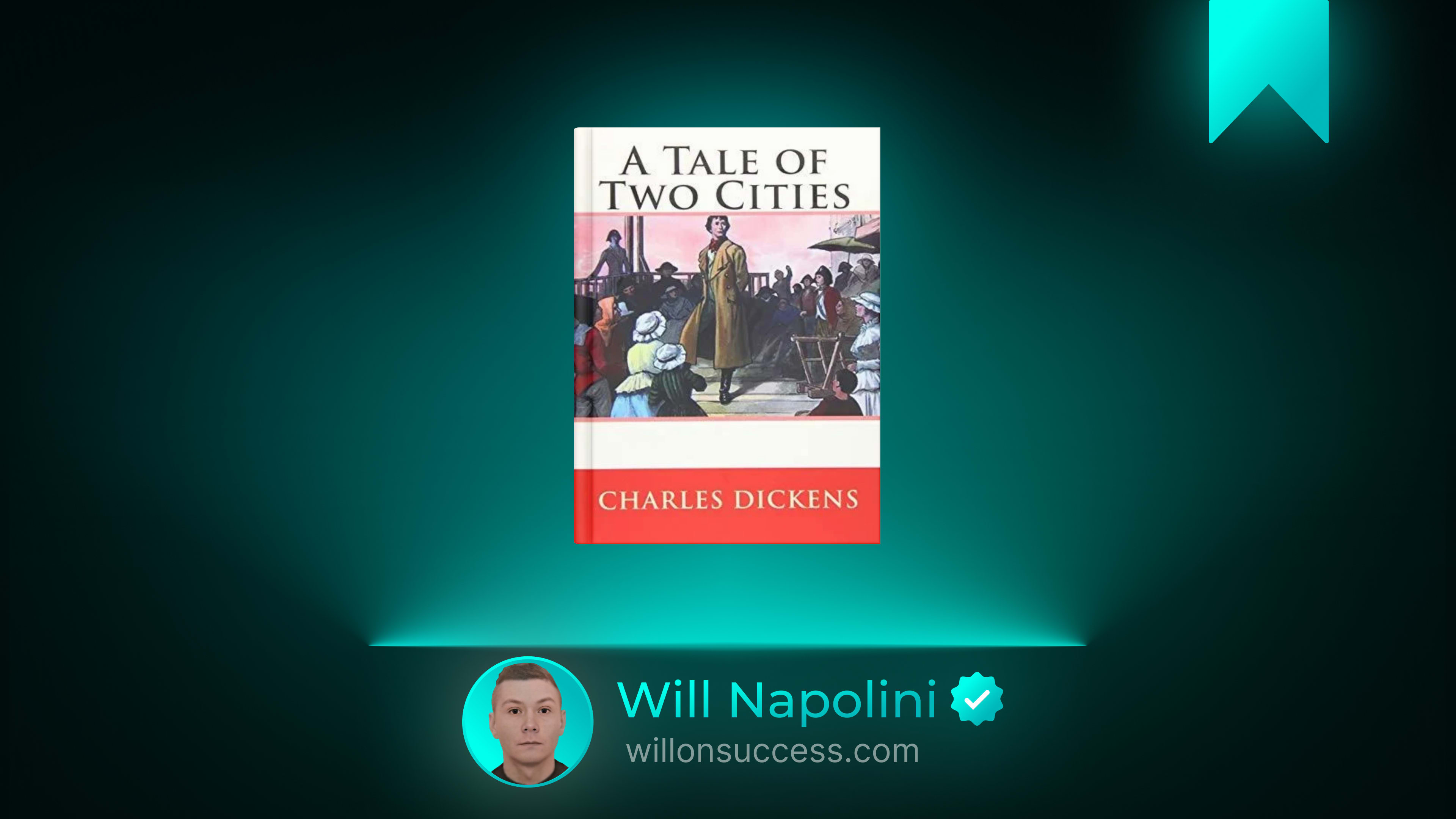
A Tale of Two Cities — And the Resurrection Waiting Inside You
I remember the exact moment I stopped reading A Tale of Two Cities as a story about the French Revolution and started reading it as a story about my own Tuesday mornings. I was thirty-one, sitting in a hospital waiting room at 3 a.m., holding a cup of vending-machine coffee that had gone cold, wondering if the life I had built was about to collapse entirely. I opened the book to distract myself, and the first line hit me like a physical blow: “It was the best of times, it was the worst of times.” I had always thought that was poetic exaggeration. In that fluorescent-lit hallway, I realized it was the most accurate description of human experience ever written. Your life is not one thing or the other. It is both, simultaneously, and that tension is exactly where transformation lives.
Let me walk you through what Dickens actually wrote, and then let me tell you why I believe this 165-year-old novel holds the blueprint for the comeback you have been praying for.
What Dickens Is Really Showing You
On its surface, this is a historical thriller set against the bloody backdrop of 1789. Dickens takes you between two cities: London, which represents order, safety, and quiet endurance; and Paris, which represents chaos, injustice, and violent upheaval. He introduces you to Dr. Manette, a man imprisoned for eighteen years in the Bastille who has been “recalled to life” but still shoemakes in the dark when trauma resurfaces. He shows you Lucie Manette, whose love becomes the golden thread that stitches her father back to himself. He gives you Sydney Carton, a brilliant but dissipated lawyer who believes he is worthless, who drinks too much, who calls himself a jackal, and who ultimately walks to the guillotine in place of another man so that someone else might live.
And threaded through every chapter is one relentless question: Can a person truly be reborn? Not metaphorically. Not as a motivational poster. But actually, painfully, irrevocably reborn?
That is the book. But here is what it did to me in that hospital waiting room, and here is what I pray it does to you right now.
The Principle of Duality: Your Season Is Not Your Sentence
Dickens opens with seven pairs of opposites. Best and worst. Wisdom and foolishness. Belief and incredulity. Light and darkness. Hope and despair. He does not resolve these tensions. He holds them together, because he understands something most modern self-help ignores: you do not have to fix the worst of times to experience the best of times. They coexist.
I have watched so many people wait for their circumstances to become perfect before they allow themselves to feel hope. They say, “When the debt is gone, then I will breathe.” “When the diagnosis clears, then I will trust.” “When the relationship heals, then I will believe in love again.” Dickens would gently take your hand and say, No. The breath comes now. The trust comes now. The belief comes now, inside the very season that is breaking you.
Dr. Manette lived eighteen years in a dungeon. Eighteen years of darkness so complete he forgot his own name. And yet, when he was released, he did not emerge as a victim. He emerged as a physician, a father, a man whose suffering had carved out a capacity for compassion that comfortable people never develop. Your worst season is not erasing your story. It is deepening it. The duality is not a contradiction. It is the architecture of resurrection.
Sydney Carton and the Identity Shift No One Saw Coming
Sydney Carton is the character who changed my life. For three hundred pages, he is the man everyone dismisses. He is talented but lazy. He loves Lucie Manette but believes he is unworthy of her. He tells her, “I am a disappointed drudge, sir. I care for no man on earth, and no man on earth cares for me.” He has internalized his own failure so completely that he cannot imagine a version of himself worth saving.
And then, in the final act, he makes a decision. Not a feeling. Not an epiphany. A decision. He trades places with Charles Darnay, the man Lucie loves, knowing it means death. He walks to the scaffold not as a drunkard, not as a jackal, but as a man who has finally aligned his actions with his deepest truth. His last words are among the most quoted in English literature: “It is a far, far better thing that I do, than I have ever done; it is a far, far better rest that I go to, than I have ever known.”
I need you to hear this clearly: Carton’s redemption did not require him to feel worthy first. It required him to act worthy, and the feeling followed. You do not have to believe in your new identity before you step into it. You step into it, and the belief catches up. The person you are becoming is already inside you, waiting for a single decision to call them forward. That decision does not have to be dramatic. It can be as quiet as showing up sober to a meeting. As simple as forgiving yourself out loud. As small as choosing kindness when bitterness would be easier. The resurrection begins with movement, not certainty.
The Golden Thread: What Anchors You When Everything Else Falls
Lucie Manette is often criticized as too passive, too pure, too Victorian. But I have come to see her as the most practical character in the novel. She is the golden thread. When her father relapses into trauma-induced shoemaking, she does not argue with him. She does not shame him. She sits beside him. She speaks softly. She reminds him, through presence alone, that he is loved even in his brokenness. And slowly, stitch by stitch, he returns.
You cannot think your way out of a wound. You must be held through it. And sometimes, you must be the one doing the holding—for yourself. The golden thread is not grand achievement. It is the daily, unglamorous practice of returning to what is true when everything around you is screaming what is false. It is the morning ritual that grounds you. The friend who answers the phone at midnight. The journal entry that says, I am still here. The prayer whispered in the parking lot. These threads seem fragile. But Dickens shows us that they are stronger than revolutions. They are what recall us to life.
Why You Should Read It (Even If You Think You Know the Story)
I will be honest with you. Dickens’ prose is dense. His sentences coil like vines. There are passages of social commentary that feel dated, and there are moments where the melodrama runs thick. Give yourself permission to read slowly. Give yourself permission to reread paragraphs. This is not a book to consume. It is a book to inhabit.
And the reason I keep pressing it into people’s hands is not the history. It is the honesty. Dickens wrote this while grieving the death of his daughter. He wrote it while his marriage was collapsing. He wrote it while watching a nation tear itself apart over inequality and rage. He did not write from a place of resolved peace. He wrote from inside the storm, and he handed his readers a lantern. Great wisdom is not born in comfort. It is forged in the very fires you are walking through right now. Your current struggle is not disqualifying you from insight. It is qualifying you.
Your One Small Step
So here is what I want you to do today. Not after you finish the book. Today. Right now. Identify one area of your life where you have been waiting for the “best of times” to arrive before you allow yourself to hope. Name it. Write it down. Then, beside it, write one small action that embodies the person you are becoming inside the worst of times. Not the person you will be when the storm passes. The person you are choosing to be within the storm.
Maybe it is making the appointment you have been avoiding. Maybe it is saying “I need help” to someone you trust. Maybe it is putting down the bottle, closing the tab, sending the apology, starting the page. Do not wait for certainty. Do not wait for the duality to resolve. Act from within it.
Sydney Carton did not wait until he felt worthy to make his sacrifice. He made the sacrifice, and worthiness met him on the scaffold. Your resurrection is not waiting at the end of your hardship. It is hidden inside your next faithful step. Take it.
The best of times and the worst of times are both yours. Build in both. Now.