The Big Book: How to Break the Cycle of Self-Sabotage and Rebuild Your Character
I want to show you an idea that changed the way I think about breaking destructive habits.
For years, I believed that if I just wanted change badly enough, I could white-knuckle my way through my worst tendencies. I treated my bad habits like an enemy to be defeated by sheer force of will. I would make a grand declaration, rely on a surge of motivation, and try to muscle my way into a new life.
I was wrong. Willpower is a fragile shield, and eventually, it breaks.
What I discovered was that true change doesn’t begin with a burst of motivation. It begins with a quiet, honest look in the mirror. If you have been working hard to change your life, only to find yourself slipping back into the same old patterns, you are not lacking discipline. You are likely trying to solve a character problem with a willpower solution.
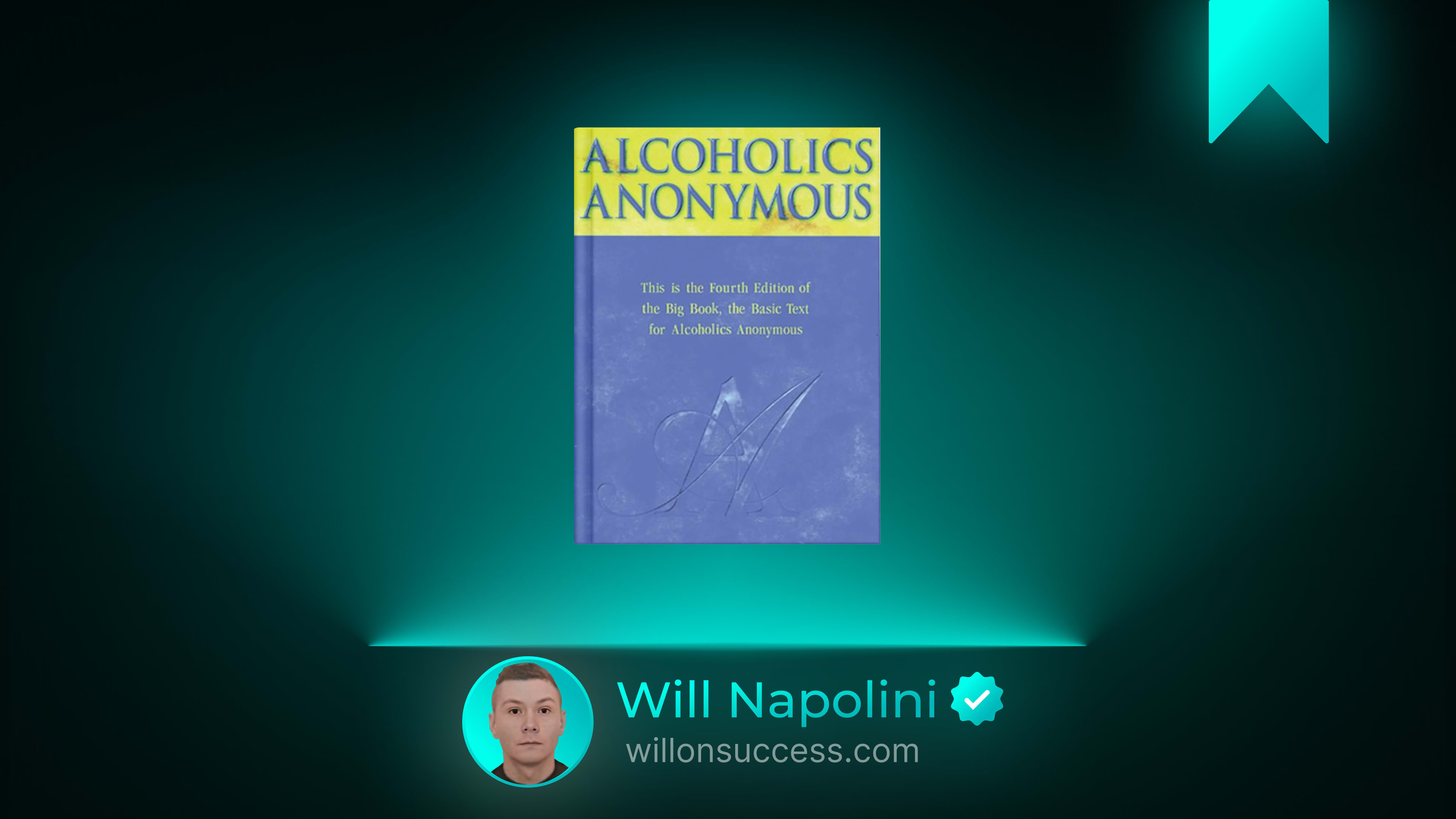
This brings us to a remarkable piece of literature. The Big Book—the foundational text originally written for Alcoholics Anonymous—is often misunderstood as merely a clinical manual for a specific condition. But if you look past the specific context of its origin, it is actually one of the most profound books ever written on universal human change.
Its central thesis is simple but challenging: you cannot think your way out of a problem you behaved your way into. Lasting transformation requires a shift in character, a willingness to take absolute responsibility, and a commitment to living one day at a time. The book argues that our external circumstances are almost always a reflection of our internal state. If the roots are diseased, you can prune the leaves all you want, but the tree will still produce bitter fruit.
The Illusion of Control and the Power of Surrender
To understand the power of this idea, we have to look at how the book came to be. The founders were two men who had tried everything to control their compulsions. They had tried medical treatments, they had tried sheer willpower, they had tried temporary retreats. Nothing worked. Their individual willpower had failed them completely.
The breakthrough didn’t come from trying harder. It came from surrender.
They realized that the self, left to its own devices, will always rationalize its own downfall. The ego is a brilliant defense attorney. It will always find a reason why just one more time is okay, why your anger was justified, or why your procrastination was necessary.
The concept of hitting “rock bottom” in this context isn’t just about physical ruin or losing everything. Psychologically, rock bottom is the moment you stop lying to yourself. It is the moment you admit that your current way of thinking and acting is unmanageable. Once they surrendered the illusion of control, they were able to build a new foundation. They developed a system of deep personal inventory, making amends, and relying on a community and a higher power to sustain them.
They proved that when you change the underlying character, the behavior changes automatically.
Willpower is Fragile; Character is a Foundation
The first major principle of The Big Book is that you must address the root of your behavior, not just the branches. The text identifies what it calls “character defects”—things like fear, dishonesty, selfishness, and false pride.
In a modern personal development context, these aren’t just moral failings; they are the hidden engines of self-sabotage.
When you act out of fear, you build walls instead of bridges. When you act out of false pride, you refuse to ask for help or admit when you are wrong, which destroys your relationships. When you act out of selfishness, you prioritize short-term comfort over long-term integrity.
Most self-help advice tells you to change your actions without examining the fears and pride driving those actions. It tells you to just “stop doing the bad thing.” But if you do not address the underlying fear or pride, the pressure will eventually build, and the behavior will return.
You don’t just stop the behavior; you replace the underlying fear with trust, and the underlying pride with humility. Character before circumstances. When you build a foundation of honesty and humility, the destructive habits lose their fuel. You stop fighting the symptoms and start curing the disease.
The Courage of the Fearless Inventory
The second principle is the practice of taking a “fearless moral inventory.” This is perhaps the most challenging, yet most liberating, concept in the book.
Most of us live in a state of mild self-deception. We blame our boss for our anger, our partner for our resentment, our past for our current failures. We are experts at identifying what everyone else is doing wrong, but we are remarkably blind to our own exact role in our own misery.
The inventory forces you to write it down. It forces you to look at your resentments, your fears, and the harms you have done to others. You have to examine your exact part in every conflict.
This is not about shaming yourself. Beating yourself up is just another form of ego. This is about reclaiming your agency. You cannot change what you do not acknowledge. When you blame others, you give away your power. When you take responsibility for your exact role in a situation, you get your power back.
Guilt paralyzes you; responsibility empowers you. A fearless inventory strips away the comforting illusions you have built around your behavior and leaves you with the raw, actionable truth. It is the mechanism by which you finally see the maze clearly enough to find the exit.
The Power of Day-Tight Compartments
The third principle is the practice of living in “day-tight compartments.” One of the most famous phrases from the book is the commitment to live “one day at a time.”
When you are trying to change your life, the future is terrifying. If you look at the rest of your life and think, “I have to maintain this new behavior forever,” you will collapse under the weight of it. The human mind is not designed to carry the burden of forever.
The book’s solution is to shrink the horizon. Don’t worry about next year. Don’t worry about next month. Just stay solid for the next twenty-four hours.
This is the ultimate expression of consistency before intensity. It takes the massive, overwhelming project of “changing your life” and breaks it down into a single, manageable day. You don’t have to be perfect for the rest of your life; you just have to make the right choice today.
When you shrink the timeline, the anxiety drops. You can handle anything for one day. And when you string enough of those single days together, you wake up years later and realize you have built a completely different life. A small decision becomes a direction, and a direction repeated long enough becomes a life.
Why It Matters on an Ordinary Tuesday
You might not struggle with the specific addiction the book was originally written for. But you might struggle with doomscrolling, procrastination, anger, people-pleasing, or workaholism. The mechanism of self-sabotage is exactly the same. Your ego will always protect your comfort zone.
Why should you care about these principles? Because they act as a circuit breaker.
On an ordinary Tuesday, when the urge to revert to your old ways hits you, when the anger flares up in a meeting, or when the fear of failure makes you want to hide, these principles give you a way to pause. They prevent you from operating on autopilot. The inventory keeps you honest with yourself. The “one day at a time” philosophy keeps you from getting overwhelmed.
They shift your focus from trying to control the uncontrollable external world to mastering the only thing you actually have authority over: your own character, in the present moment.
Practical Application: Turning Insight into Action
Understanding these principles is valuable, but understanding without action changes nothing. Here is how you can translate the wisdom of The Big Book into your daily routine.
1. The Nightly Review Do not just go to sleep replaying your anxieties or planning tomorrow’s tasks. Take five minutes at the end of the day to review your actions. Ask yourself three questions: Where was I resentful today? Where was I selfish or dishonest? Where did I act out of fear rather than trust? Write the answers down. Do not judge yourself; just observe. This daily maintenance prevents the small cracks in your character from turning into structural failures.
2. The 24-Hour Shrink When you feel overwhelmed by a massive goal, or when you are fighting a massive urge to fall back into an old habit, shrink the timeline. Ask yourself, “Can I do the right thing just for today?” If twenty-four hours feels too long, shrink it to one hour. Win the hour. Then win the next one. Let time do its work.
3. The Micro-Amends The book heavily emphasizes the importance of making amends to those you have harmed. You do not have to wait for a grand, dramatic gesture to start repairing your relationships. Identify one small way you hurt someone recently—perhaps you were dismissive, or you broke a small promise. Take action before intention. Apologize sincerely and change the behavior. Action is the only true apology.
Who Should Read This Book
The Big Book is for anyone who feels stuck in a loop. It is for the person who has tried “hacks,” “systems,” and “quick fixes,” but still finds themselves returning to the same destructive behaviors.
It is less useful for someone looking for a superficial productivity hack or a way to optimize their morning routine without doing any deep internal work. It requires spiritual openness—not necessarily adherence to a specific religion, but a willingness to admit you are not the center of the universe and that you need help from a power greater than yourself.
It demands radical honesty. It will ask you to look at parts of yourself you have spent years avoiding. But if you are ready for deep character work, if you are tired of managing your symptoms and want to cure the disease, this book is a masterpiece. It has helped millions of people rebuild their lives from the ground up, and its principles are universally true.
One Small Step
If you want to start applying this today, do not try to overhaul your entire life tonight. Just take one small step.
Tonight, before you go to sleep, take five minutes with a piece of paper. Write down one destructive pattern or habit you have been ignoring. Do not judge it. Just name it clearly. Then, write down one specific way it has harmed you or someone else.
This is the beginning of your fearless inventory. It is the moment you stop lying to yourself.
The Door Opens Forward
I have learned that the hardest part of changing your life is not the work itself; it is the willingness to see yourself clearly. We spend so much energy defending our flaws, rationalizing our failures, and hoping that tomorrow will magically be different without requiring us to be different today.
But you do not need more motivation. You need more honesty. You need a system that forces you to look at your roots, take responsibility for your fruit, and commit to the quiet, unglamorous work of building your character one day at a time.
The life you want is not hidden in a future breakthrough; it is hidden in the honest choices you make in the next twenty-four hours.