The Godfather by Mario Puzo: What a Crime Saga Teaches You About Loyalty, Power, and the Price of Becoming
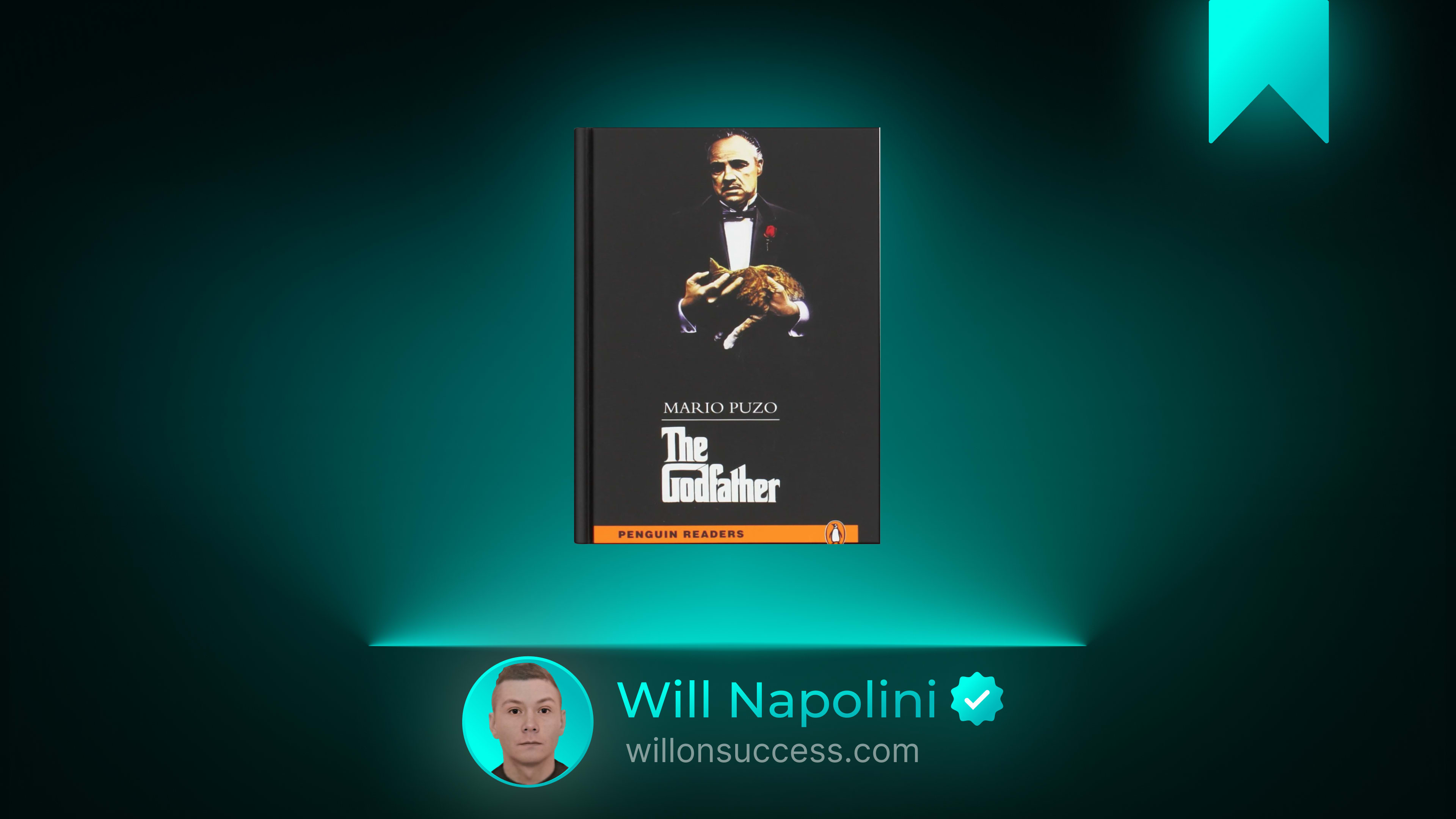
There is a sentence near the heart of Mario Puzo’s The Godfather that most people remember as a threat. But if you sit with it long enough, it reveals something far more unsettling about how human beings actually build their lives:
“A man who doesn’t spend time with his family can never be a real man.”
I first read that line when I was young, and I dismissed it as sentiment wrapped in menace. Years later, after watching people I cared about trade their marriages, their friendships, and their health for careers that would never love them back, I understood. Puzo was not writing a crime novel. He was writing a book about what holds a person together when everything else falls away. And the answer he kept returning to was not money, not power, not reputation.
It was loyalty. Chosen, tested, costly loyalty.
If you have ever wondered why some people seem to build lives that endure while others accumulate achievements that feel hollow by the time they reach them, I think this book has something important to say to you. Not because it endorses violence or crime. It does not. But because it takes seriously a question most of us quietly avoid: What are you willing to protect, and what will that protection cost you?
The Big Idea: Power Is Built on Relationships, Not Resources
On the surface, The Godfather tells the story of the Corleone family, an Italian-American crime dynasty in New York, and the slow, devastating transformation of the youngest son, Michael, from a war hero who wants nothing to do with his father’s world into the most ruthless leader that world has ever seen.
But beneath the plot, Puzo is exploring a single, persistent idea: all real power is relational power. Don Vito Corleone does not rule through fear alone. He rules because he spent decades building a web of obligations, favors, loyalties, and genuine human connections. People come to him not only because they are afraid, but because he listened when no one else would. He helped when the legitimate world turned its back. He remembered names, debts, and promises.
This is not a lesson about organized crime. This is a lesson about how trust compounds. How showing up for people, keeping your word, and treating relationships as sacred rather than transactional builds something no competitor can replicate overnight.
Puzo understood something that our hyper-individual, optimization-obsessed culture keeps forgetting: you cannot shortcut your way into a network of genuine loyalty. You build it slowly, one kept promise at a time.
Michael Corleone: The Transformation You Don’t Notice Until It’s Complete
The most powerful arc in the book belongs to Michael. And it is powerful precisely because it is gradual.
At the beginning, Michael is the son who went to college, who served in the war, who tells his girlfriend Kay, “That’s my family, Kay. It’s not me.” He believes he can stand apart. He believes the world his father built is a world he can observe without entering.
And then circumstances press against him. His father is shot. His older brother is killed. The family is under siege. And Michael steps in—not all at once, but one decision at a time. One compromise. One act justified by necessity. One small surrender of the person he intended to be.
By the end of the novel, Michael has become more cold, more calculating, and more isolated than his father ever was. And the tragedy is not that he was forced into it. The tragedy is that each individual step seemed reasonable. Each choice could be defended. No single moment felt like the moment he lost himself.
I have seen this pattern outside of fiction. I have watched people enter careers, partnerships, or ambitions with clear boundaries, telling themselves, “This is temporary. This is not who I really am.” And then the temporary becomes structural. The exception becomes the habit. And one morning they look in the mirror and recognize someone they did not intend to become.
The lesson is not “never change.” Change is inevitable. The lesson is this: pay attention to the direction of your small decisions, because a direction repeated long enough becomes a destination you cannot easily walk back from.
Loyalty Is Not a Feeling. It Is a Practice.
One of the things Puzo does brilliantly is show loyalty as a verb, not an emotion. The characters who survive and thrive in this story are not the ones who feel the most affection. They are the ones who show up. Who keep their word when keeping it is expensive. Who do not abandon a friend because the friend is no longer useful.
Don Corleone’s empire is not built on contracts. It is built on handshakes remembered. On a favor granted twenty years ago that is honored today. On the quiet understanding that if you helped someone when they were nothing, they owe you not because of law, but because of character.
Now, I want to be careful here. Loyalty without discernment becomes a cage. Puzo shows us that too. Characters who give blind loyalty to the wrong person or the wrong code are destroyed by it. Loyalty to a corrupt system is not virtue. It is captivity dressed as devotion.
But loyalty to the people who matter—your family in whatever form that takes, your closest friends, the community you have chosen and that has chosen you—that loyalty is the bedrock on which a meaningful life is built. Not because it is easy. Because it is hard, and because doing the hard thing when the easy thing would be to walk away is what forges trust into something unbreakable.
You do not need a crime family to practice this. You practice it by not canceling on your friend when you are tired. By finishing what you promised a colleague. By showing up to your child’s event even when work is screaming. By remembering the name of the person who helped you five years ago and asking how they are doing.
Small acts. Repeated. Over years. That is how you build something no one can take from you.
The Immigrant’s Lesson: Build Your Own Table
There is another thread running through Puzo’s novel that I find quietly profound, and it belongs to the immigrant experience that frames the Corleone story.
Vito Corleone arrives in America as a boy, orphaned, speaking no English, with nothing. The legitimate world—the banks, the courts, the employers—does not welcome him. It does not see him. And so he builds his own world. His own economy of favors. His own justice. His own structure of protection and obligation.
I am not romanticizing crime. But I am recognizing a principle that applies far beyond the novel’s world: when the existing system will not make room for you, you do not have to wait for permission. You can build your own.
This shows up everywhere. The entrepreneur who starts a business because no one would hire them. The artist who self-publishes because the gatekeepers said no. The community organizer who creates a support network because the institutions failed. The parent who builds a family culture of reading and curiosity because the schools were indifferent.
You do not need someone else’s approval to begin. You need a clear-eyed assessment of what is in front of you, a willingness to start smaller than you would like, and the patience to let what you build compound over time.
Don Corleone did not build his world in a year. He built it in decades. One relationship. One favor. One kept promise. The scale came later. The foundation came first.
Silence as Strategy: The Power of Listening Before You Act
One of Don Corleone’s most distinctive qualities is not his violence. It is his stillness. In a room full of men shouting, threatening, posturing, he listens. He asks questions. He lets the other person reveal themselves fully before he responds. And when he does respond, it is measured, precise, and final.
Puzo gives us a character who understands that most people talk themselves into weakness. They reveal their hand. They make threats they cannot keep. They react emotionally and lose leverage.
The Don does the opposite. He gathers information. He waits. He chooses his moment.
There is a practical wisdom here that extends well beyond negotiation tables. Think about the last argument you had with someone you love. How much of it was you actually listening, and how much was you waiting for your turn to speak? Think about the last major decision you made. Did you sit with it, or did you rush to resolve the discomfort of uncertainty?
Learning to be still before you act is not passivity. It is the discipline of not letting your anxiety make your decisions for you.
You can practice this tomorrow. In your next conversation, resist the urge to respond immediately. Count to three. Ask one more question. Let the silence do a little work before you fill it. You will be surprised how much changes when you stop performing understanding and start actually practicing it.
The Cost You Cannot Negotiate
I want to be honest with you, because I think Puzo is honest, and a mentor who only shows you the upside is not a mentor. They are a salesperson.
The central tragedy of The Godfather is that Michael gains everything and loses the one thing that made the gaining matter. By the end of the novel, he has secured his family’s power, eliminated his enemies, and consolidated his position. And Kay, the woman he loved, the person who connected him to the life he once wanted, looks at him and sees a stranger.
The book does not say, “Power is bad.” It says something more difficult: every path has a cost, and the most dangerous costs are the ones you do not notice paying until the transaction is complete.
This is true for every ambition. The career that demands eighty-hour weeks costs you evenings with your children. The hustle that builds your business costs you sleep, health, presence. The pursuit of recognition costs you the quiet satisfaction of doing good work for its own sake.
I am not telling you not to pursue ambitious things. I am telling you to name the cost before you pay it. To decide, with open eyes, what you are willing to trade and what is not for sale. Because if you do not draw that line deliberately, circumstances will draw it for you, and you will not like where it falls.
Michael never drew his line. Or rather, he drew it and then kept moving it, one crisis at a time, until there was nothing left on the side he was supposed to protect.
You do not have to repeat that pattern. You can choose, today, what is non-negotiable in your life. And then you can protect it. Not with violence. With boundaries. With the quiet, steady refusal to let urgent things crowd out important ones.
Who Should Read This Book
The Godfather is for you if you are drawn to stories about power, family, loyalty, and moral complexity. If you want a novel that treats its characters as full human beings rather than archetypes. If you are interested in how systems of obligation and trust are built, maintained, and corrupted.
It is especially resonant if you are navigating questions of ambition and identity—figuring out who you want to become and what you are willing to sacrifice to get there.
It may be less suited for readers who want a straightforward moral universe where good and evil are clearly separated. Puzo’s world is gray. The people who do terrible things also love their children. The people who seem righteous make compromises that corrode them. If you need your fiction to reassure you that the world is simple, this book will frustrate you.
But if you can sit with complexity, if you want a story that respects your intelligence and your emotional depth, this is a novel that will stay with you for years.
One Small Step
Here is what I would invite you to do today. Not something dramatic. Something small and honest.
Think about one relationship in your life that you have been treating as lower priority than it deserves. A parent you have been meaning to call. A friend whose last message you have not answered. A partner whose presence you have been taking for granted while you chase something else.
Contact them today. Not with a grand gesture. A phone call. A text that says, “I’ve been thinking about you. How are you, really?” A decision to be fully present at dinner instead of checking your phone.
That is where loyalty begins. Not in dramatic oaths. In small, repeated choices to show up for the people who matter before the world convinces you they can wait.
They cannot wait. And neither can you.
The life you are building is not built in the spectacular moments. It is built in the quiet ones. In the call you make when you are tired. In the promise you keep when breaking it would be easier. In the boundary you hold when everything in you wants to say yes to one more thing at the expense of the thing that actually matters.
Michael Corleone learned this too late. You do not have to.
You start small. You stay faithful to what matters. You let the years reveal what your choices have built.
And the door is still open. Walk through it today.