How to Stop Avoiding Your Life: Lessons from Building a Non-Anxious Life
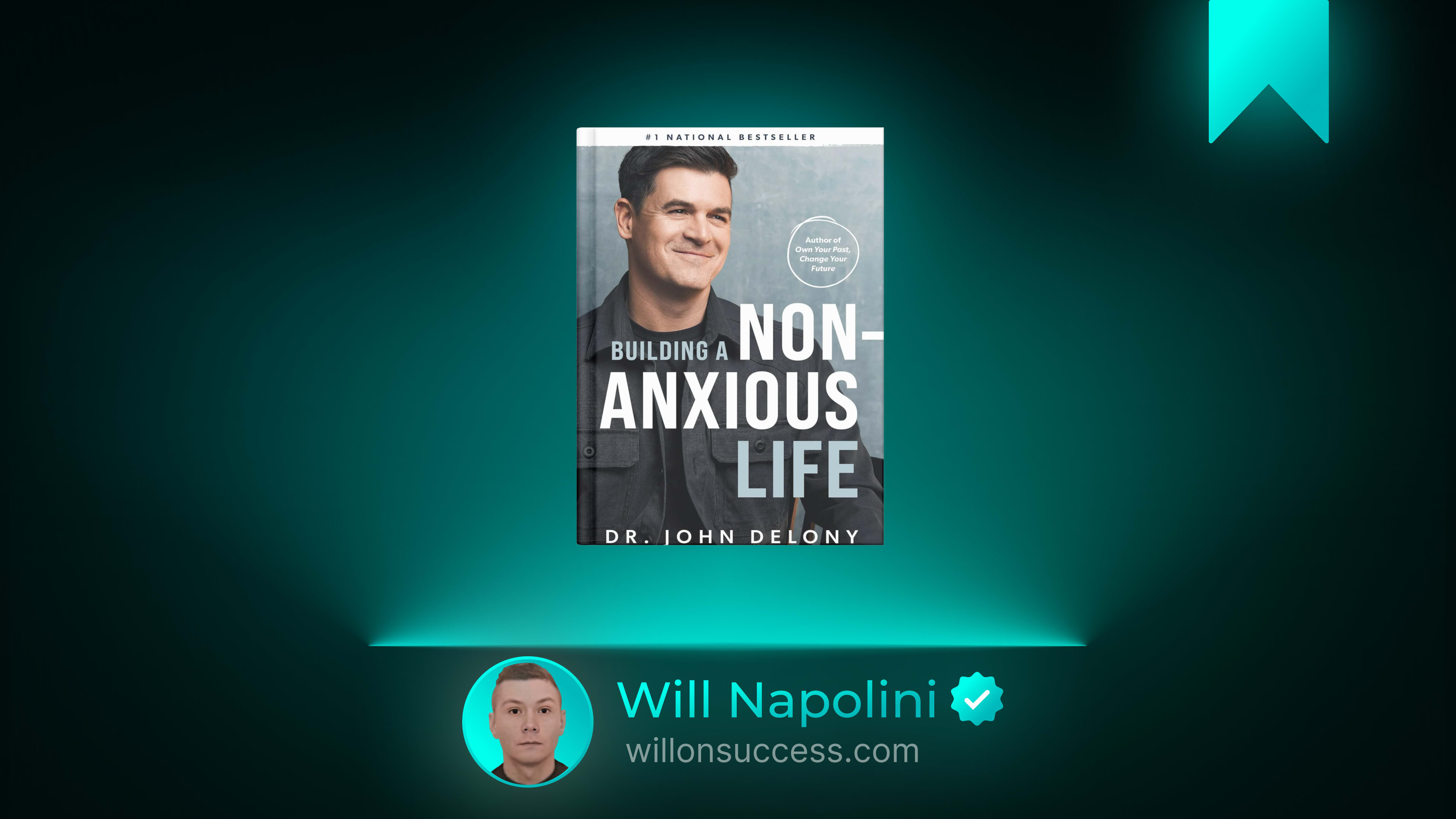
There is a quiet exhaustion that comes from living a life you are constantly trying to escape.
You know the feeling. It is the tightness in your chest when you wake up on a Tuesday morning. It is the endless scrolling through your phone at midnight, desperately trying to numb the noise in your head. It is the realization that you are working incredibly hard, managing a thousand responsibilities, yet you feel entirely unmoored.
If I could sit across the table from you right now, I would not tell you to just “calm down.” I know how insulting that phrase is when your nervous system is on fire. I would not tell you that you just need to think more positively.
What I would tell you is what I have learned from years of studying human behavior, sitting with people in their darkest moments, and wrestling with my own mind: You are not broken. You are not weak. You are simply carrying a load you were never meant to carry alone, and you have been using the wrong tools to try and put it down.
In his deeply grounding book Building a Non-Anxious Life, researcher and counselor John Delony challenges the way we think about our modern epidemic of stress. He suggests that we have fundamentally misunderstood what anxiety is, and because we misunderstand it, we keep treating it in ways that only make it worse.
Here is the truth that can change everything for you: A non-anxious life is not a life without problems. It is a life where you are no longer terrified of your problems.
The Smoke Detector in Your Mind
Most of us treat anxiety like a math problem we cannot solve, or a disease we need to silence. We pop a pill, we pour a drink, we open an app, or we distract ourselves with a screen, hoping the feeling will just go away.
But Delony offers a different perspective. He asks us to view anxiety not as the fire, but as the smoke detector.
When a smoke detector goes off in your kitchen, you do not get a ladder, take the detector off the ceiling, and smash it with a hammer. The detector is doing exactly what it was designed to do. It is alerting you to a problem. If you smash the detector, the alarm stops, but the kitchen still burns down.
For much of your life, you may have been smashing the smoke detector. You have been trying to silence the alarm without looking for the fire.
Anxiety is a biological signal. It is your brain’s way of telling you that something in your environment, your relationships, or your unresolved past requires your attention. When you learn to stop fighting the signal and start listening to it, the entire game changes. You move from being a victim of your nervous system to becoming a student of it.
Avoidance Is a High-Interest Loan
If anxiety is the alarm, what is the fire? More often than not, the fire is the things we are refusing to face.
Human beings are wired to avoid pain. It is a brilliant survival mechanism when you are running from a predator. But in the modern world, we use that same avoidance mechanism to run from hard conversations, financial realities, career pivots, and past wounds.
We think avoidance buys us peace. We tell ourselves, If I just don’t look at my bank account today, I won’t have to worry about it. If I just don’t bring up the issue with my spouse, we won’t have a fight.
But avoidance is a high-interest loan you take out against your future peace.
Imagine trying to hold a beach ball underwater. For the first few minutes, it is easy. But as time goes on, your arms begin to burn. Your shoulders ache. You have to use an immense, constant amount of energy just to keep the ball submerged. And the moment your arms get tired, the ball doesn’t just float to the surface—it explodes out of the water, knocking you backward.
That beach ball is the hard thing you are avoiding. The energy you spend keeping it submerged is the chronic anxiety you feel every single day.
Delony points out a profound reality: The things you avoid are the exact things you must face. You cannot build a non-anxious life while simultaneously hiding from your own reality. The moment you decide to let the beach ball surface—the moment you finally make the phone call, look at the debt, or speak the truth—the immediate aftermath might be uncomfortable. But the chronic, exhausting pressure in your chest will begin to fade.
You Cannot Think Your Way Out of a Feeling
One of the most frustrating traps of anxiety is the belief that if we just analyze it enough, we can outsmart it. We sit in our chairs, staring at the wall, having endless arguments in our heads, trying to logic our way into a state of calm.
But you cannot think your way out of a feeling, because anxiety does not just live in your thoughts. It lives in your body.
When you perceive a threat, your brain floods your system with cortisol and adrenaline. Your heart rate elevates. Your muscles tense. Your body is preparing you to fight or to run. But in our modern lives, we rarely do either. We sit in traffic. We sit at our desks. We sit on our couches. The stress hormones have nowhere to go. They become trapped in your tissues, leaving you feeling wired, jittery, and exhausted all at once.
If you want to calm your mind, you must first move your body.
This is not about becoming a fitness influencer or running a marathon. It is about completing the biological stress cycle. It means going for a brisk twenty-minute walk without your headphones. It means doing push-ups until your arms shake. It means dancing in your kitchen or lifting heavy weights.
When you move your body with intention, you send a primal signal to your brain: We ran. We fought. We survived. The threat is over. Only then does your nervous system get the permission it needs to power down. Action is the bridge between panic and peace.
The Antidote to Isolation Is Vulnerability
We live in the most connected era in human history, yet we are suffering from an epidemic of profound loneliness. You can have five thousand followers on social media, a packed calendar of networking events, and a phone that never stops buzzing, yet still have absolutely no one to call when you are falling apart at 2:00 AM.
Delony emphasizes that a non-anxious life is biologically impossible to build in isolation. We are not meant to regulate our nervous systems alone. We are meant to co-regulate with safe, trusted others.
When you are anxious, your brain tells you a lie. It tells you that you are a burden. It tells you that if people knew how messy you really were, they would leave. So, you put on a mask. You smile at the office. You post the curated photo. You say, “I’m fine,” when you are dying inside.
But superficial connection feeds anxiety; deep connection starves it.
You do not need a massive crowd in your corner. You need two or three people who know the real you. You need people who have earned the right to hear your story, who will not try to “fix” you with a cliché, but who will sit in the dark with you until the light comes back.
Finding these people requires the terrifying act of vulnerability. It requires you to drop the mask and say, “I am struggling right now, and I need a friend.” It feels like a risk. But it is actually the safest thing you can do.
Why This Matters on an Ordinary Tuesday
It is easy to read about these principles and nod along. It is much harder to apply them when the alarm is ringing.
So, what does this look like on an ordinary Tuesday?
It looks like waking up with that familiar dread in your stomach. But instead of immediately reaching for your phone to scroll through the news and numb the feeling, you pause. You recognize the smoke detector.
You ask yourself: What am I avoiding today?
You realize you have been putting off a difficult conversation with your business partner. The anxiety isn’t a random chemical misfire; it is the beach ball you are holding underwater.
Instead of trying to meditate the anxiety away, you get up and put on your shoes. You go for a hard, fast walk around the neighborhood, letting your body burn off the adrenaline. You complete the stress cycle.
When you get back, you do not wait until you feel “ready” or “confident” to make the call. You understand that courage is not the absence of the alarm; it is the decision to walk toward the smoke while the alarm is still ringing. You pick up the phone. You have the hard conversation.
The conversation might be awkward. It might be tense. But when you hang up, you will notice something miraculous. The tightness in your chest is gone. The smoke detector has stopped. You did not eliminate the problem, but you eliminated the anxiety surrounding it because you finally took responsibility for it.
Who Needs to Read This Book
Building a Non-Anxious Life is a vital resource for the high-functioning anxious person. It is for the individual who looks perfectly put-together on the outside but is running on fumes and fear on the inside. It is for anyone who is tired of just talking about their feelings in therapy without ever changing their daily behaviors.
It is also a crucial read for those who feel isolated, reminding them that community is not a luxury; it is a biological necessity.
However, it is important to be clear about what this book is not. Delony is a rigorous researcher and counselor, and he is careful to distinguish between the normal human experience of anxiety and severe clinical disorders. If your anxiety is rooted in deep clinical depression, severe trauma, or a chemical imbalance that prevents you from functioning, this book is a companion to, not a replacement for, professional medical and psychiatric care. You do not have to white-knuckle your way through a clinical condition. Seeking professional help is an act of profound courage and responsibility.
Your One Small Step
You do not heal by hiding from your life. You heal by finally turning around to face it.
The journey to a non-anxious life does not require a massive, dramatic overhaul of your entire existence by tomorrow morning. It requires a shift in direction. It requires you to stop running and start walking toward the things that matter.
If you want to begin today, I want you to do one simple thing.
Take out a piece of paper and write down the answer to this question: What is the one thing I am avoiding right now that is costing me my peace?
It might be a stack of mail on your counter. It might be an apology you owe a friend. It might be a boundary you need to set with a family member.
Identify it. Name it. And then, choose one microscopic action you can take in the next twenty-four hours to face it. Send the text. Open the envelope. Make the outline.
Do not wait for the fear to leave before you act. Take the fear with you.
Because a small decision becomes a direction, and a direction repeated long enough becomes a life. The alarm may still be ringing today, but you finally have the tools to walk through the smoke and find your way home.