Ikigai: The Japanese Secret to Designing a Life You Don't Need to Escape From
Have you ever woken up on a Tuesday morning, stared at the ceiling, and felt a deep, exhausting dread at the thought of the day ahead?
We live in a culture that glorifies the hustle, yet we are collectively burning out. We are told that the goal of life is to work relentlessly, sacrifice our weekends, and optimize every waking second until we can finally afford to stop working. We treat life like a grueling sprint toward a finish line called “retirement.”
But what if the finish line is a lie? What if the secret to a long, vibrant life isn’t found in slowing down to a halt, but in finding a reason to keep moving forward with joy?
If I could sit across the table from you right now, watching you pour your third cup of coffee while anxiously scrolling through your inbox, here is the first thing I would tell you: You do not need a vacation from your life; you need a reason to wake up inside of it.
The Big Idea: The Reason You Get Out of Bed
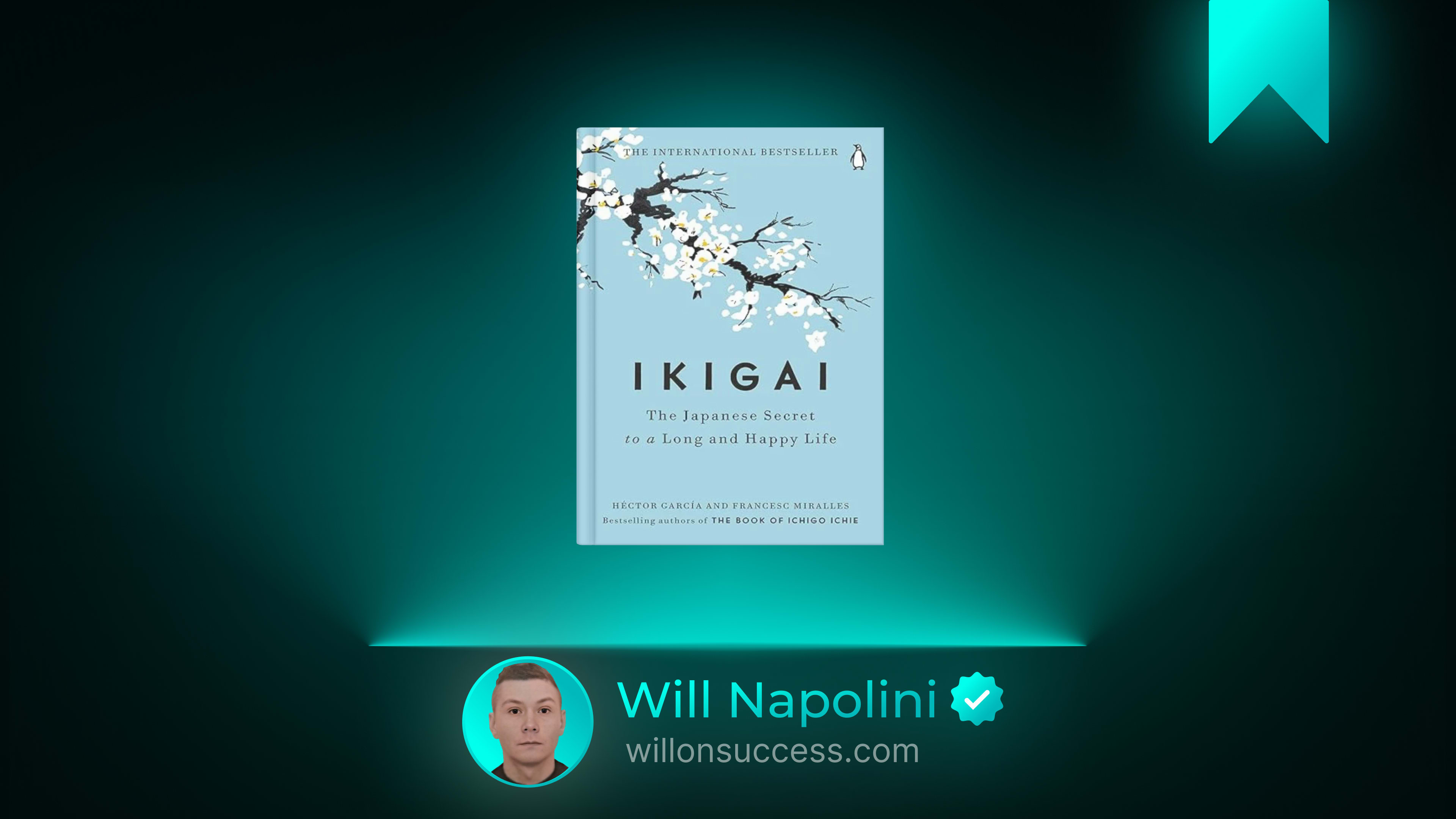
In their beautifully grounded book, Ikigai: The Japanese Secret to a Long and Happy Life, authors Héctor García and Francesc Miralles take us on a journey to Ogimi, a rural village in Okinawa, Japan. This region is known as a “Blue Zone,” home to the highest concentration of centenarians in the world. The authors didn’t just want to know why these people lived to be a hundred; they wanted to know why they lived so happily.
They discovered a central, unifying concept called Ikigai. Roughly translated, it means “the happiness of always being busy” or “the reason you get out of bed in the morning.”
In the West, we have turned Ikigai into a neat, four-circle Venn diagram representing the intersection of what you love, what you are good at, what the world needs, and what you can be paid for. But the authors reveal that for the elders of Okinawa, Ikigai is not just a career strategy. It is a lived, daily philosophy. It is the quiet joy found in tending to a garden, the deep comfort of a lifelong friendship, and the mastery of a simple craft.
The central thesis of this book is that a long, fulfilling life is not the result of a magic diet or good genetics alone. It is the result of staying deeply connected to your purpose, your community, and the present moment.
You cannot buy a meaningful life, but you can build one, brick by small brick, through the habits you choose every single day.
The Tale of Two Gardens: The Architecture of a Long Life
To understand how this works in reality, imagine two gardeners.
The first gardener views his garden as a chore. He rushes out on Saturday morning, aggressively pulls weeds, dumps chemical fertilizer on the soil, and tries to force the tomatoes to grow faster. He is focused entirely on the harvest. When a storm comes and destroys his crop, he is devastated. He gives up, letting the yard grow wild.
The second gardener views her garden as a companion. She walks out every morning with a cup of tea. She prunes a little, waters a little, and simply observes the changes in the soil. She does not rush the seasons. When a storm comes, her deep-rooted plants bend, but they do not break. She finds joy in the act of tending, regardless of the harvest.
García and Miralles would tell you that the first gardener is living the modern, Western life—obsessed with the outcome, rushing toward the finish line, and fragile in the face of adversity. The second gardener embodies Ikigai. She is active, she is patient, and she is deeply connected to the natural rhythm of her days.
The Core Principles of the Okinawan Way
How do we transition from the anxious, rushing gardener to the grounded, joyful one? The authors distill the wisdom of the Okinawan elders into a series of profound, actionable principles.
1. The Myth of the Finish Line
The very first rule of Ikigai is to stay active and never truly retire. In the West, retirement is viewed as the ultimate prize—the day you finally stop working and sit on a beach. But the Okinawans understand that human beings are not designed to idle. When we stop moving, we stop living.
This doesn’t mean you must work a grueling corporate job until you are ninety. It means you must always have a purpose. It means keeping your hands busy, your mind engaged, and your contributions to your community ongoing. The elders of Ogimi continue to tend their gardens, cook for their families, and share their wisdom until their final days. They do not step off the stage; they simply change their role in the play.
2. The Architecture of Flow
We spend much of our lives distracted, our minds wandering to the regrets of the past or the anxieties of the future. The authors emphasize the psychological concept of “flow”—that magical state where you are so completely immersed in a task that time seems to vanish.
You do not need to be a master painter or an elite athlete to experience flow. You can find “micro-flow” in the mundane. It is the feeling of washing the dishes and focusing entirely on the warmth of the water. It is the feeling of writing a single, perfect line of code, or carefully chopping vegetables for a stew. When you live in the moment, you stop rushing through your life to get to the next thing, and you start actually inhabiting the life you have.
3. The Power of Restraint (Hara Hachi Bu)
One of the most famous dietary rules of Okinawa is Hara Hachi Bu, which translates to “fill your stomach to 80 percent.” When you sit down to eat, you stop before you feel completely stuffed.
This is a profound metaphor for life, not just a diet tip. We live in a culture of excess. We consume too much food, too much media, too much information, and too much stuff. We fill ourselves to 110%, leaving no room for energy, clarity, or gratitude. By practicing restraint—by leaving a little space on the plate, and a little space in your schedule—you create a vacuum that draws in vitality. You remain light, agile, and hungry for life.
4. The Fortress of Friends (Moai)
You cannot survive a long life alone. In Okinawa, people form a Moai, which is an informal social support group of people who share common interests and look out for one another. They meet regularly, share resources, and provide a safety net during hard times.
Loneliness is as toxic to the human body as smoking. The Okinawans do not leave their elderly to fade away in isolation; they are woven tightly into the fabric of their community. Building your own Moai requires intentional effort. It means prioritizing deep, face-to-face friendships over shallow digital connections. It means showing up for people when it is inconvenient, knowing they will show up for you.
5. Becoming Antifragile
The authors borrow the concept of “antifragility” from philosopher Nassim Taleb to describe the Okinawan mindset. A fragile thing breaks when it is stressed. A resilient thing withstands stress and stays the same. But an antifragile thing actually gets stronger when exposed to stressors.
The elders of Okinawa have lived through wars, famines, and immense personal tragedies. Yet, they do not become bitter; they become wiser. They develop an antifragile soul by maintaining a sense of humor, practicing gratitude, and accepting the impermanence of life. They do not hide from the storms; they let the storms deepen their roots.
Why This Matters on an Ordinary Tuesday
Why does the wisdom of a remote Japanese island matter to you in the middle of a busy modern city? Because the biology of human happiness does not change based on your zip code.
If you are a leader, you might be driving your team toward burnout by demanding 110% capacity and offering no moments of flow. If you are a parent, you might be overscheduling your children, robbing them of the quiet time they need to discover their own Ikigai.
When you internalize these principles, the heavy burden of “hustle culture” begins to lift. You realize that you do not need to conquer the world to be successful. You just need to tend to your small corner of it with love, focus, and consistency. You stop measuring your worth by your productivity, and start measuring it by your presence.
Practical Application: Building Your Daily Ikigai
Understanding these principles is a beautiful start, but wisdom without action is just philosophy. You must build a daily practice that brings this wisdom into your living room.
- Audit Your 80% Rule: Tomorrow, look at your calendar and your plate. Where are you overcommitting? Where are you overeating? Choose one area of your life where you can deliberately stop at 80%. Leave one hour of your day completely unscheduled. Leave a few bites of food on your plate. Notice how the space creates energy.
- Identify Your Micro-Flow: Pay attention to your week. When do you lose track of time? Is it when you are organizing a spreadsheet, folding laundry, or talking to a specific friend? Identify one activity that naturally induces flow, and deliberately schedule thirty minutes for it this weekend. Protect that time fiercely.
- Nurture Your Moai: Look at your five closest friends. When was the last time you saw them in person, without the distraction of a phone on the table? Reach out to one person today and propose a simple, low-stakes ritual—a weekly walk, a monthly coffee, or a Sunday morning phone call. Build the fortress.
Who Should Read This Book
Ikigai is a vital read for the exhausted overachiever, the mid-life professional questioning their career path, and anyone who feels a vague sense of emptiness despite having “checked all the boxes” of success. It is a masterpiece for those who want to age with grace, vitality, and deep connection.
However, if you are looking for a high-intensity, bio-hacking manual to optimize your sleep down to the minute, or a step-by-step business plan to scale a startup to a billion dollars, this book will frustrate you. García and Miralles are not interested in speed or scale. They are interested in depth, slowness, and the quiet art of living well. They demand that you slow down, look inward, and appreciate the simple miracle of being alive.
One Small Step to Take Today
You do not need to move to Japan or quit your job to begin living with Ikigai. The practice begins the moment you open your eyes.
Here is your one small step for today: Tomorrow morning, before you reach for your phone, before you check the news, and before you look at your email, take exactly two minutes to identify your Ikigai for the day.
Ask yourself: “What is one small, meaningful thing I am looking forward to today?”
It might be the taste of your morning coffee. It might be a five-minute chat with a colleague. It might be the feeling of the sun on your face during your commute. Name it. Claim it.
When you start your day by anchoring yourself to a small joy, you stop being a victim of your schedule and become the architect of your experience.
The longest, happiest lives are not built by running away from the world, but by falling deeply in love with the small, quiet moments that make up the day.