Finding Meaning When the Future Disappears: A Mentor’s Guide to When Breath Becomes Air
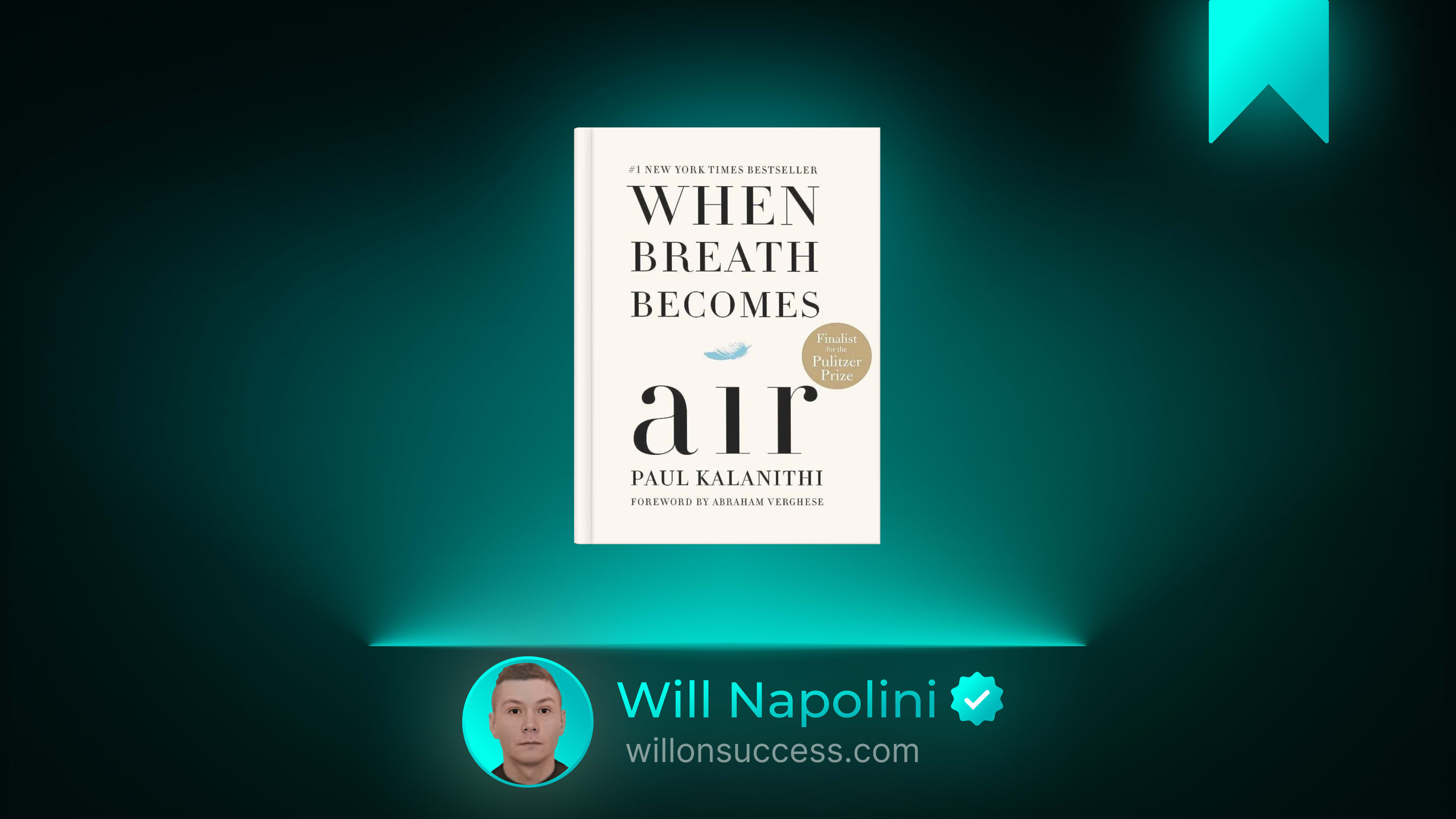
Have you ever stopped to consider what you would do if the future you spent your entire life building suddenly vanished?
We spend our twenties and thirties accumulating credentials, building careers, and saving for a retirement that feels like a distant, guaranteed horizon. We operate under the quiet, unspoken assumption that we have time.
But what happens when that horizon abruptly shrinks?
I have learned through my own seasons of profound loss, and through witnessing the journeys of others, that a crisis does not create your character; it reveals it. When the scaffolding of the future is stripped away, you are left with only the foundation of who you truly are and what you actually value.
If I could sit across the table from you, I would tell you that you do not need a terminal diagnosis to learn this lesson. You can learn it now. And there is no better guide for this essential work than When Breath Becomes Air by Paul Kalanithi.
The Big Idea: Meaning Is Built in the Foreground
The central thesis of Paul Kalanithi’s posthumous memoir is not a treatise on how to die. It is a masterclass in how to live.
Paul’s core insight is this: Meaning is not found in the length of our days, but in the depth of our commitments and the clarity of our values. When the future is no longer a reliable canvas for our ambitions, we are forced to stop deferring our lives and start inhabiting the present.
We often treat the present moment as a mere waiting room for the future. We endure today so we can enjoy tomorrow. But Paul’s journey teaches us that tomorrow is a promise no one is guaranteed. The only place life actually happens is in the foreground, right now. External peace and purpose begin with the internal decision to stop postponing your life.
The Story: From Architect of the Future to Student of the Present
To understand the weight of this book, you must understand the man who wrote it.
Paul Kalanithi was not a man who lacked direction. He was a brilliant neurosurgery resident at Stanford University, on the verge of completing a grueling decade of training. But he was not just a scientist. He held degrees in English literature and human biology. He was a man who straddled two worlds, deeply committed to understanding both the biological mechanics of the brain and the philosophical questions of what makes human life meaningful. He was, by all accounts, building a magnificent future.
Then, at the age of thirty-six, just as he was finishing his residency, Paul was diagnosed with stage IV metastatic lung cancer.
Overnight, the doctor became the patient. The man who spent his days mapping the intricate pathways of the human brain, offering hope and surgical precision to others, was suddenly staring at his own CT scans. The architect of the future was forced to become a student of the present.
He did not pretend this was easy. He wrote honestly about the rage, the grief, and the profound disorientation of watching his carefully constructed identity dissolve. But he also refused to surrender to despair. Instead, he asked a different question. He stopped asking, “Why me?” and started asking, “What now?”
The Major Principles
You Cannot Outrun Your Mortality, But You Can Define It Circumstances matter, but your response to them matters more. When Paul received his diagnosis, he could have retreated into bitterness or passive victimhood. Instead, he took radical responsibility for the only thing he could control: his attitude and his actions. He returned to the operating room for a time, continuing the work he loved, even as his body failed. He chose to define his remaining time not by the disease he had, but by the purpose he maintained.
What I have seen in my own life is that we cannot control the weather, but we can always adjust our sails. You may be facing a setback, a loss, or a sudden change in plans. You cannot change the event, but you have absolute authority over the meaning you assign to it.
The Future Is a Compass, Not a Destination We are taught to optimize our lives for future achievement. We sacrifice our health for a promotion, our relationships for a degree, our peace of mind for a larger bank account. Paul had to undergo a painful but necessary recalibration. He had to shift from building a future to inhabiting the present, without entirely abandoning hope.
This is a delicate balance. It does not mean you stop planning. It means you stop treating the present as a disposable stepping stone. A small decision becomes a direction, and a direction repeated long enough becomes a life. If your daily actions do not align with your deepest values, no future achievement will ever feel like enough.
Meaning Is Forged in Connection, Not Just Achievement Perhaps the most profound and debated decision Paul and his wife, Lucy, made was to bring a child into the world despite his terminal prognosis. To the outside observer, this might seem illogical or even cruel. Why bring a child into a world where the father will not be there?
But Paul and Lucy understood a fundamental truth about the human condition: love is not a calculation of risk and reward. It is an act of defiant hope. Having their daughter, Cady, was not about securing Paul’s legacy; it was about choosing life, joy, and deep connection in the face of inevitable grief. It was a declaration that the pain of eventual loss is worth the beauty of present love.
Growth before achievement. Paul was not trying to achieve a perfect ending. He was growing into a deeper, more expansive version of love, even as his time ran out.
Words Matter When Actions Are Limited As his physical capabilities diminished, Paul turned to the only tool he had left that could outlast him: language. Writing this book was his final act of neurosurgery. He was no longer operating on brains; he was operating on the human condition, dissecting fear, hope, and meaning, and leaving a map for the rest of us.
Understanding is valuable, but understanding without action changes nothing. Paul’s action was to write. He refused to let his voice be silenced by his illness. He left us a testament that our stories, our truths, and our love can survive long after our breath is gone.
Why It Matters on an Ordinary Tuesday
You may be reading this and thinking, This is beautiful, but I am not dying of cancer. I am just trying to manage my career, my family, and my bills.
Here is the gentle, challenging truth: You are not immortal either.
We all have a terminal life; the only variable is the timeline. We act as if we have infinite time, and because of that, we postpone joy. We delay difficult conversations. We stay in roles that drain our souls because we are waiting for the “right time” to make a change. We chase metrics of success that do not feed our spirits.
This book matters because it is a mirror. It forces you to look at your ordinary Tuesday and ask: If my time were suddenly truncated, would I be proud of how I spent today?
It helps you avoid the tragic mistake of reaching the end of your life only to realize you climbed the wrong ladder. It changes how you prioritize your calendar, how you speak to your loved ones, and how you view your work. It reminds you that a meaningful life is not built in grand, dramatic gestures, but in the quiet, consistent choices to show up for what matters.
Practical Application: Your Next Steps
Philosophy without practice is merely entertainment. Here is how you can translate Paul’s profound insights into tangible behavior in your own life.
1. Conduct a “Values Audit” Take thirty minutes this week to write down your top three core values. Not the values you think you should have, but the ones that actually drive you. Now, look at your calendar and your bank statement from the last month. Do your time and money reflect those values? If there is a mismatch, choose one small area to realign. For example, if “family” is a top value, but you work late every night, commit to leaving the office by 6:00 PM twice a week to be fully present at home.
2. Write Your Own Epilogue Paul’s book ends with a breathtakingly beautiful epilogue written by his wife, Lucy, detailing his final days and the birth of their daughter. Imagine someone you love writing an epilogue about your life today. What would it say? Would it say you were always busy, always stressed, always preparing for a future that never arrived? Or would it say you were present, kind, and deeply engaged with the people around you? Write down three sentences you would want to be true. Then, start acting in ways that make those sentences a reality.
3. Practice “Present-Tense Living” Choose one hour each week to be entirely in the present tense. No planning, no worrying about next week, no scrolling through your phone. If you are drinking coffee, just drink coffee. If you are walking with a friend, just listen to them. Train your mind to inhabit the foreground. You start small. You stay consistent. You let the practice of presence rewire your relationship with time.
Who Should Read This Book
This book is a vital, grounding read for anyone feeling adrift, overly focused on future metrics, or facing a major life transition, illness, or loss. It is for the high-achiever who has forgotten why they started running the race. It is for the caregiver who needs to feel understood. It is for anyone who wants to live a life of intention rather than default.
However, I will be honest with you: this book is not for everyone. If you are seeking a purely medical guide, a step-by-step manual for overcoming adversity, or a saccharine, overly optimistic narrative that promises everything will work out fine, this is not the book for you. It is raw, it is deeply philosophical, and it does not offer easy answers. It offers something far more valuable: honest companionship in the face of life’s greatest mystery.
One Small Step
If you take only one thing away from this today, let it be this: You cannot build a meaningful life on a foundation of deferred living.
Right now, do not wait for the perfect moment, the promotion, or the weekend to start living the life you claim to want.
Tonight, put away your phone an hour earlier than usual. Sit with someone you love, or sit quietly with your own thoughts, and ask yourself one question: “If I only had a year left to live, what is one thing I would stop doing today?”
Then, have the courage to stop doing it tomorrow.
Your time is finite, but your impact does not have to be. Build a life that matters, starting with the very next breath you take.