Navigating the Unknown: A Mentor’s Guide to What to Expect When You're Expecting
If you are holding a positive pregnancy test in your hand right now, or if you are simply trying to make sense of the whirlwind of changes in your body, your mind is likely racing with a hundred questions you do not even know how to ask.
I have sat with many people in this exact season of life. I have seen the mix of profound joy and quiet, creeping anxiety that comes with the realization that you are growing a human being. You may be wondering if what you are feeling is normal. You may be overwhelmed by the sheer volume of conflicting advice from well-meaning friends, family members, and the endless scroll of the internet.
Here is what I would tell you if we were sitting across the table: You do not need to have it all figured out today. You just need a reliable map.
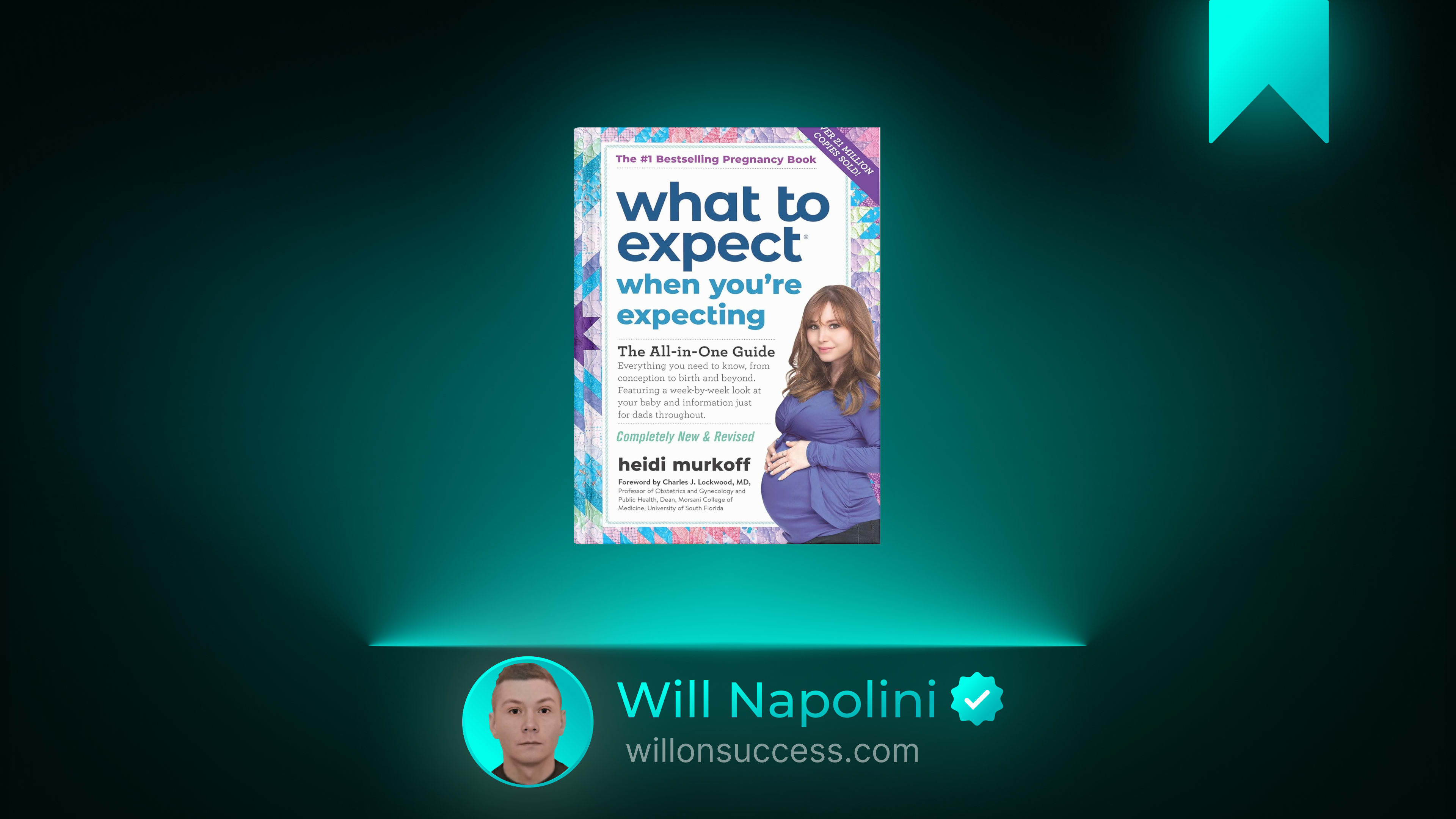
For decades, that map has been What to Expect When You’re Expecting by Heidi Murkoff.
The Big Idea: Knowledge Displaces Fear
The central thesis of this book is deceptively simple, yet it requires a fundamental shift in how you view this season. Pregnancy is not a medical condition to be endured in silence, nor is it a mystical event that defies explanation. It is a profound physical and emotional transition that is best navigated with practical knowledge, self-compassion, and clear communication.
Murkoff’s work exists to demystify the nine months of pregnancy. It replaces the fear of the unknown with the power of prepared, accessible information. It operates on a foundational principle of personal development: external peace often begins with internal clarity. When you understand what is happening inside your body, you stop fighting the process and start partnering with it. You shift from a passive passenger to an active, informed participant in your own care.
The Story Behind the Pages
To understand why this book resonates with tens of millions of readers, you have to understand how it began. During her own first pregnancy, Heidi Murkoff went looking for answers. What she found were dense, intimidating medical textbooks on one end of the spectrum, and overly sentimental, impractical fluff on the other. There was no bridge between clinical facts and the messy, beautiful, confusing reality of daily life.
She realized that expecting parents did not need to be lectured at; they needed to be answered.
This insight birthed the book’s signature architecture: a month-by-month, question-and-answer format. It was designed to meet you exactly where you are, answering the questions you are actually thinking about, often before you even know how to phrase them. It was built on the premise that no question is too small, and no concern is too trivial to be addressed with respect.
The Major Principles
1. A Predictable Rhythm in an Unpredictable Season The book is structured chronologically, walking you through each month of pregnancy. Each chapter is divided into clear, consistent sections: “Your Body This Month,” “Your Baby This Month,” and “What You May Be Concerned About.”
Why this matters: Pregnancy can feel like your body has been hijacked by a foreign process. By giving you a predictable rhythm, the book grounds you. When you experience a new ache, a strange symptom, or a sudden wave of fatigue, you do not have to spiral into panic. You can turn to the corresponding month, read the explanation, and realize, Ah, this is a normal part of the process. It transforms a scary unknown into a manageable, expected milestone. Consistency in your information source creates consistency in your peace of mind.
2. Your Questions Are Valid, No Matter How Small Medical appointments are often rushed. It is easy to leave the doctor’s office remembering only half of what was said, or feeling too embarrassed to ask about that specific, seemingly minor discomfort.
Murkoff’s Q&A format validates your lived experience. The book addresses everything from severe medical concerns to the deeply mundane: Can I eat this? Why am I so tired? Is this craving normal? Why does my partner not understand?
When you read these questions, you realize you are not alone, and you are not crazy. Your body is doing hard, complex work, and it is entirely reasonable to have questions about it. Clarity is a form of care.
3. Pregnancy Is a Partnership, Not a Solo Mission One of the most powerful, yet frequently overlooked, features of the book is the integration of “For Dads” (or partners) boxes throughout the text.
Growth before achievement applies to relationships, too. Building a family requires building a stronger partnership. The book does not treat the pregnant person as an isolated vessel. It actively invites the partner into the process, explaining what the pregnant person is experiencing and offering concrete ways the partner can provide support, from managing household logistics to offering emotional reassurance.
Shared burden creates shared joy. When both people understand the journey, the load becomes infinitely lighter.
4. Consume Information with Discernment I must offer a gentle, honest challenge here. The book has occasionally been criticized for listing every possible complication, which can sometimes induce anxiety in readers who are already prone to worry.
Here is the principle to hold onto: This book is a reference library, not a daily prophecy.
You do not need to read about every rare complication from cover to cover. You use this book the way you use a dictionary. You look up the specific word you need to understand, and you close the book when you have your answer. Do not let the exhaustive nature of the medical information rob you of the joy of your current reality. Focus on what is in front of you, today.
Why It Matters on an Ordinary Tuesday
Why should you care about how you consume this information? Because the way you spend your mental energy during pregnancy shapes your experience of it.
Historically, pregnancy was shrouded in myth and silent suffering. Today, the pendulum has swung to the opposite extreme: information overload. The danger is no longer ignorance; it is paralysis by analysis.
On an ordinary Tuesday, applying these principles looks like this: Instead of spending an hour doom-scrolling through unmoderated internet forums at 2:00 AM, you open your trusted guide. You read the section for your current week. You write down one or two specific questions in a notebook. You take a deep breath, knowing you have a reliable source of truth, and you go back to sleep.
You stop borrowing trouble from a future that has not yet arrived. You anchor yourself in the reality of the present moment, equipped with the knowledge to handle it.
Practical Application: Your Next Steps
Understanding the philosophy is only the first step. Action before intention. Here is how you can put this into practice immediately.
1. Create a “Question Parking Lot” Keep a small notebook or a dedicated note on your phone. Every time a question pops into your head—no matter how trivial it seems—write it down. Do not rely on your memory to bring it up during your fifteen-minute doctor’s appointment. For example, instead of vaguely remembering “I felt weird last week,” you can say, “On Tuesday, I experienced a sharp pain in my lower right side when standing up. Is that normal?” This simple habit ensures your concerns are heard, respected, and addressed.
2. Read One Month at a Time Resist the urge to binge-read the entire book. It will only overwhelm you with information you do not yet need, and much of it will not apply to your specific pregnancy. Commit to reading only the chapter for your current month, and perhaps skimming the very beginning of the next. Stay present in your current season. Let the next season reveal itself in its own time.
3. Assign a Specific Support Task to Your Partner If you have a partner, hand them the book. Ask them to read the “For Dads/Partners” section for your current month. Then, ask them to take ownership of one specific, actionable task. It might be researching pediatricians, taking over the evening dishes so you can rest, or simply being the one to call and schedule your next appointment. Make the support tangible. Vague offers of “Let me know what you need” place the mental load back on you. Specific, volunteered action builds a true partnership.
Who Should Read This Book
This book is an invaluable anchor for first-time parents, anyone who feels overwhelmed by dense medical jargon, and partners who genuinely want to understand and support the pregnancy but do not know where to start. It is for the person who wants to feel prepared, not panicked.
However, I will be honest with you: this book is not for everyone. If you are someone who struggles with severe health anxiety or obsessive worry, the exhaustive lists of potential complications might do more harm than good. In that case, you may be better served by a more streamlined, minimalist guide, coupled with a strict personal rule to limit your pregnancy reading and rely heavily on direct, trusting conversations with your healthcare provider.
There is no shame in curating your information diet to protect your peace. Your mental health is a vital component of a healthy pregnancy.
One Small Step
If you take only one thing away from this today, let it be this: You are not required to know everything. You are only required to take the next right step.
Right now, do not worry about the third trimester, the delivery room, or the sleepless nights of the first year. Those are problems for your future, more experienced self to solve.
Open the book to your current month. Read the section titled “Your Body This Month.” Write down one question you have for your healthcare provider.
You are building a human being. That is monumental, sacred work. Give yourself the grace to learn about it one month, and one question, at a time.
A small decision becomes a direction, and a direction repeated long enough becomes a life. Turn the page, take a deep breath, and trust the process. You have got this.