Stop Waiting, Start Working: The Relentless Wisdom of Kevin Hart’s 'This Is How We Do It'
Are you waiting for the perfect moment to begin?
Maybe you are waiting for the fear to subside, for your bank account to look a little healthier, or for that elusive burst of motivation to finally carry you across the starting line. I have sat across from so many talented, brilliant people who are stuck in this exact waiting room. They have the vision. They have the desire. But they are paralyzed by the belief that conditions must be perfect before they can build something great.
If I could sit across the table from you right now, I would tell you the truth that changed my own life: the perfect moment is a myth. The only moment you actually possess is the one you are standing in right now.
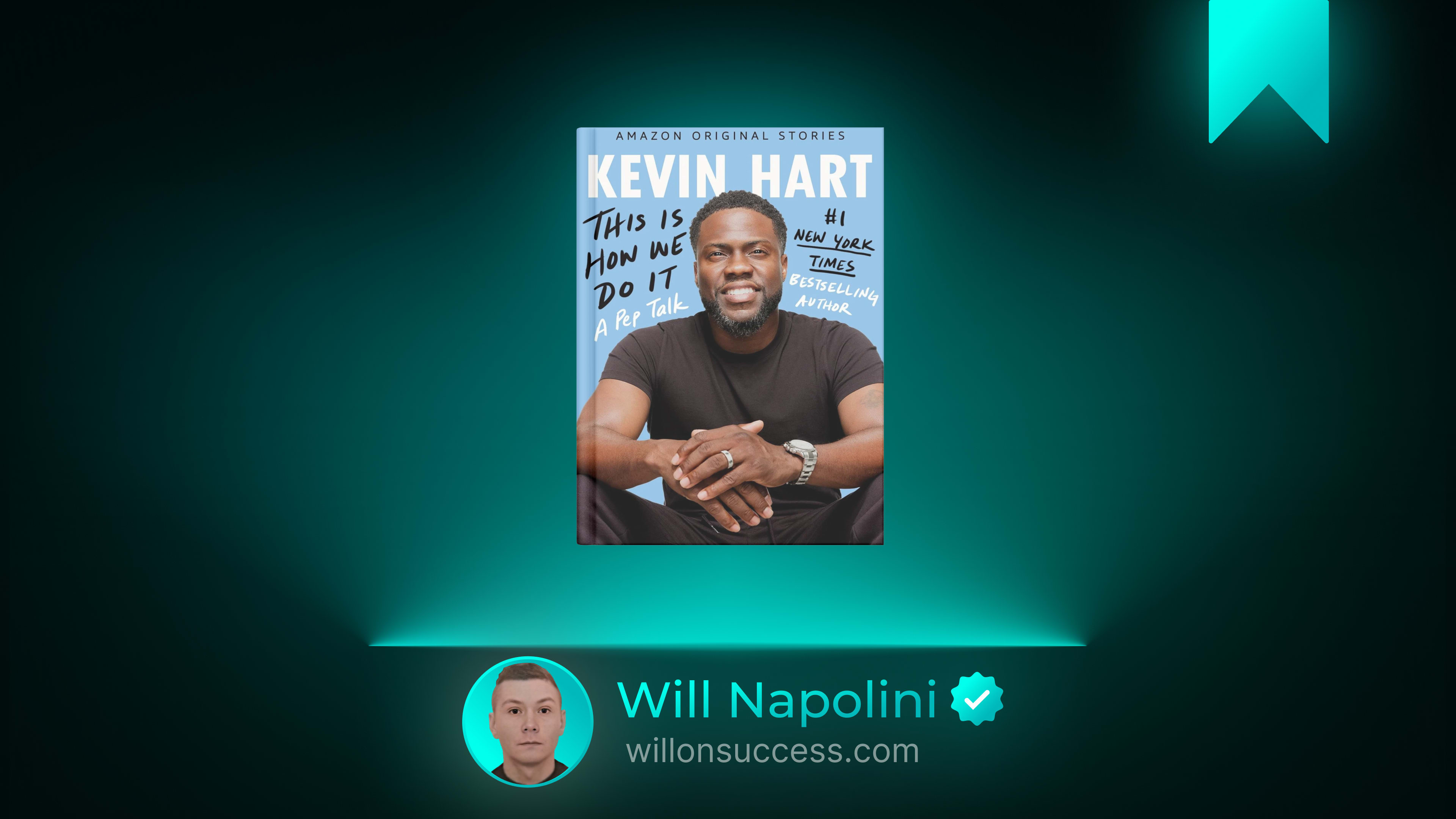
This is the beating heart of Kevin Hart’s short but fiercely potent book, This Is How We Do It: A Pep Talk. Hart is known to the world as a comedic powerhouse and a global entertainer, but beneath the humor lies a relentless, almost staggering work ethic. In this book, he shares fifteen heartfelt lessons about harnessing your potential in the “here and now.”
The central thesis of his message is not a secret hack or a hidden shortcut. It is a profound, unapologetic commitment to personal accountability. Hart argues that your life is entirely your responsibility, and that success is not something that happens to you—it is something you forge through daily, unglamorous, relentless effort. He doesn’t offer gentle, comforting affirmations. He offers a mental bootcamp. And the core curriculum is simple: stop wishing things were different, accept the way they are, and take up the sole responsibility of doing something about it.
The Mental Bootcamp of the “Here and Now”
Imagine a house built on a foundation of wishes. Every time it rains, the walls leak. Every time the wind blows, the windows rattle. You can spend your entire life complaining about the weather, blaming the architect, or wishing you had a different house. But the house will not change until you pick up a trowel and start laying new bricks.
Hart’s concept of the “here and now” is that trowel.
Many of us live our lives time-traveling. We dwell in the past, replaying our mistakes and letting them define our identity. Or we project ourselves into the future, dreaming about the person we will become “someday.” But action cannot exist in the past, and it cannot exist in the future. Action only exists in the present tense.
Hart’s rise from struggling stand-up comedian in small, unglamorous clubs to selling out stadiums worldwide was not an accident of talent. It was a masterclass in presence. He realized early on that while other comedians were complaining about bad crowds, poor lighting, or late-night time slots, he could use those exact moments to refine his craft. He treated every terrible gig as a laboratory. He understood that the “here and now”—no matter how uncomfortable or imperfect—is the only workshop where you can actually build your future.
Accept Reality to Change It
We all have a tendency to negotiate with reality. When we face a setback, our first instinct is often to explain it away. I didn’t get the promotion because my boss doesn’t like me. I couldn’t finish the project because I didn’t have enough time. I can’t start the business because the economy is bad.
Hart cuts through this noise with a piece of advice that is as liberating as it is challenging: “Until you stop wishing things were different, accept the way they are, and take up the sole responsibility of doing something about it, nothing will change.”
This is the bedrock of character before circumstances. Acceptance is not resignation. Acceptance is clarity. When you stop arguing with the facts of your current situation, you free up the massive amounts of mental energy you were wasting on denial and excuses. You cannot navigate a map if you refuse to acknowledge your starting point. Once you accept exactly where you are, the path forward finally becomes visible.
Never Outgrow the Small Work
There is a dangerous illusion in personal development that success means eventually reaching a point where you no longer have to do the “grunt work.” We imagine that once we achieve a certain level of status, the small, tedious tasks will magically vanish.
Hart flips this script. One of his most vital lessons is the importance of never becoming too important for the small tasks. Humility is not just a moral virtue; it is a strategic advantage. When you are willing to do the unglamorous work—the late-night emails, the sweeping of the floors, the meticulous checking of the details—you maintain a connection to the reality of your craft.
Think of a massive oak tree. Its ability to weather violent storms does not come from the height of its branches, but from the depth and grip of its roots. The small, unseen work is your root system. If you abandon it because you feel you have “arrived,” you will topple the moment the weather turns.
Outwork Your Doubt with Consistency
Motivation is a fickle friend. It shows up when the sun is shining and you had a good night’s sleep, but it abandons you when you are tired, stressed, or facing rejection. Hart’s blueprint relies on consistency over intensity.
You do not need to work a hundred hours in a single week and then burn out for a month. You need to show up every single day and do the work, especially on the days you do not feel like it. Doubt is inevitable. Every person who has ever built something meaningful has faced the quiet, nagging voice that says, You aren’t good enough.
You cannot argue with that voice. You cannot debate it into silence. The only way to silence doubt is to outwork it. You drown out the noise of insecurity with the quiet, rhythmic sound of daily progress. You do not build a masterpiece by waiting for inspiration; you build it by laying one heavy brick at a time, day after day, until the wall stands on its own.
Use Humor to Defuse the Ego
When you take your goals incredibly seriously, every setback feels like a mortal wound. Hart blends his comedic style with actionable self-help advice because humor is a profound mechanism for resilience.
When you can laugh at your failures, you strip them of their power to paralyze you. You learn to view a bad day not as a tragedy, but as material. This doesn’t mean you don’t care about your work. It means you refuse to let your ego tie your self-worth to a single outcome. A sense of humor acts as a shock absorber on the rough road of personal growth, keeping you moving forward when the terrain gets bumpy.
Why This Matters in Your Real Life
Why should you care about a comedian’s pep talk? Because we live in an era that is obsessed with optimization, hacks, and shortcuts. We are constantly sold the lie that there is a secret backdoor to success, a hidden algorithm that will bypass the hard work.
This illusion is paralyzing. It makes you feel like you are doing something wrong if you are struggling. It makes you abandon good projects because they didn’t yield instant, viral results.
Hart’s philosophy matters because it returns your power to you. When you realize that there is no secret trick—only the daily, compounding interest of showing up and doing the work—the anxiety of “missing out” fades. You stop looking for shortcuts and start looking for systems.
What changes when you apply this on an ordinary Tuesday?
- At work: You stop waiting for your manager to tell you how to improve. You take the sole responsibility of identifying a bottleneck and fixing it.
- In relationships: You stop wishing your partner would change, accept the dynamics as they are, and take responsibility for how you show up and communicate.
- In your finances: You stop blaming the economy for your spending habits and accept the reality of your budget, taking ownership of every dollar that leaves your account.
You transition from being a passenger in your own life to being the driver.
Practical Application: Building Your Own Bootcamp
Understanding these principles is valuable, but understanding without action changes nothing. If we were working together, I would not let you close this article without giving you a system to implement these ideas. Here is how you translate Hart’s “here and now” philosophy into your daily routine.
1. The Reality Audit (Journaling Practice) Take ten minutes tonight. Draw a line down the middle of a piece of paper. On the left side, write down three things in your life you are currently frustrated by—things you are “wishing were different.” On the right side, write down exactly what you can control about each of those situations. If you are frustrated by your fitness, you cannot control your genetics, but you can control what you eat for breakfast tomorrow and whether you go for a twenty-minute walk. Focus entirely on the right side of the page.
2. The “Small Work” Challenge (Behavior to Build) Identify one task in your life that you feel you are “above” doing. Maybe it is doing the dishes immediately after dinner instead of letting them pile up. Maybe it is personally thanking a junior colleague instead of delegating it. Maybe it is cleaning out your email inbox. Tomorrow, do that task with absolute focus and zero complaint. Remind yourself as you do it: I am building my root system.
3. The 24-Hour Rule for Complaints Give yourself permission to be human. When a major setback hits, give yourself exactly 24 hours to complain. Vent to a friend, be frustrated, wish things were different. But when the timer goes off, you must pivot to “sole responsibility.” The complaining phase is over; the building phase begins.
4. The “Here and Now” Anchor (Daily Decision) Whenever you catch your mind drifting into anxiety about next year, or regret about last year, use a physical anchor to pull yourself back to the present. It could be taking one deep breath, feeling your feet flat on the floor, and asking yourself: “What is the single most useful thing I can do in the next fifteen minutes?” Then, do it.
Who Should Read This Book
This Is How We Do It is a short, sharp shock to the system. It is highly recommended for anyone who feels stuck in a rut, anyone who is prone to overthinking, and anyone who responds well to humor blended with hard, unvarnished truths. If you need a mentor who will put an arm around your shoulder, hand you a shovel, and say, “Let’s get to work,” this book is for you.
However, it may be less useful for you if you are currently navigating deep psychological trauma and need a gentle, clinical approach to healing. It is also not a book filled with academic research, complex business frameworks, or step-by-step financial modeling. It is a pep talk, a mindset shift, and a call to arms. It works best when you are ready to move but just need that final, forceful push out the door.
One Small Step
I want to leave you with a challenge you can execute the moment you finish reading this sentence.
Think of one thing you have been putting off because you are waiting to “feel ready.” It might be making a difficult phone call, signing up for a class, or throwing away the junk food in your pantry.
Do not wait until tomorrow. Do not wait until you feel motivated. Take up the sole responsibility of doing something about it right now, in the here and now. Take the first step, no matter how small.
The life you are wishing for is waiting on the other side of the work you are avoiding.