How to Write Copy That Sells: The Art of Selling Without Selling Your Soul
Have you ever poured your heart into creating something—a course, a product, a service, a book—only to launch it to the sound of crickets? You know it’s good. You know it solves a real problem. But when you try to explain why people should buy it, you freeze. You worry about sounding pushy. You worry about sounding like a late-night infomercial. So, you water down your message, you bury the offer, and the people who desperately need your solution never even know it exists.
If I could sit across the table from you right now, watching you wrestle with the guilt of trying to sell your own work, here is the first thing I would tell you: Your reluctance to sell is not humility. It is a disservice to the people you were created to serve.
The Big Idea: Empathy in Disguise
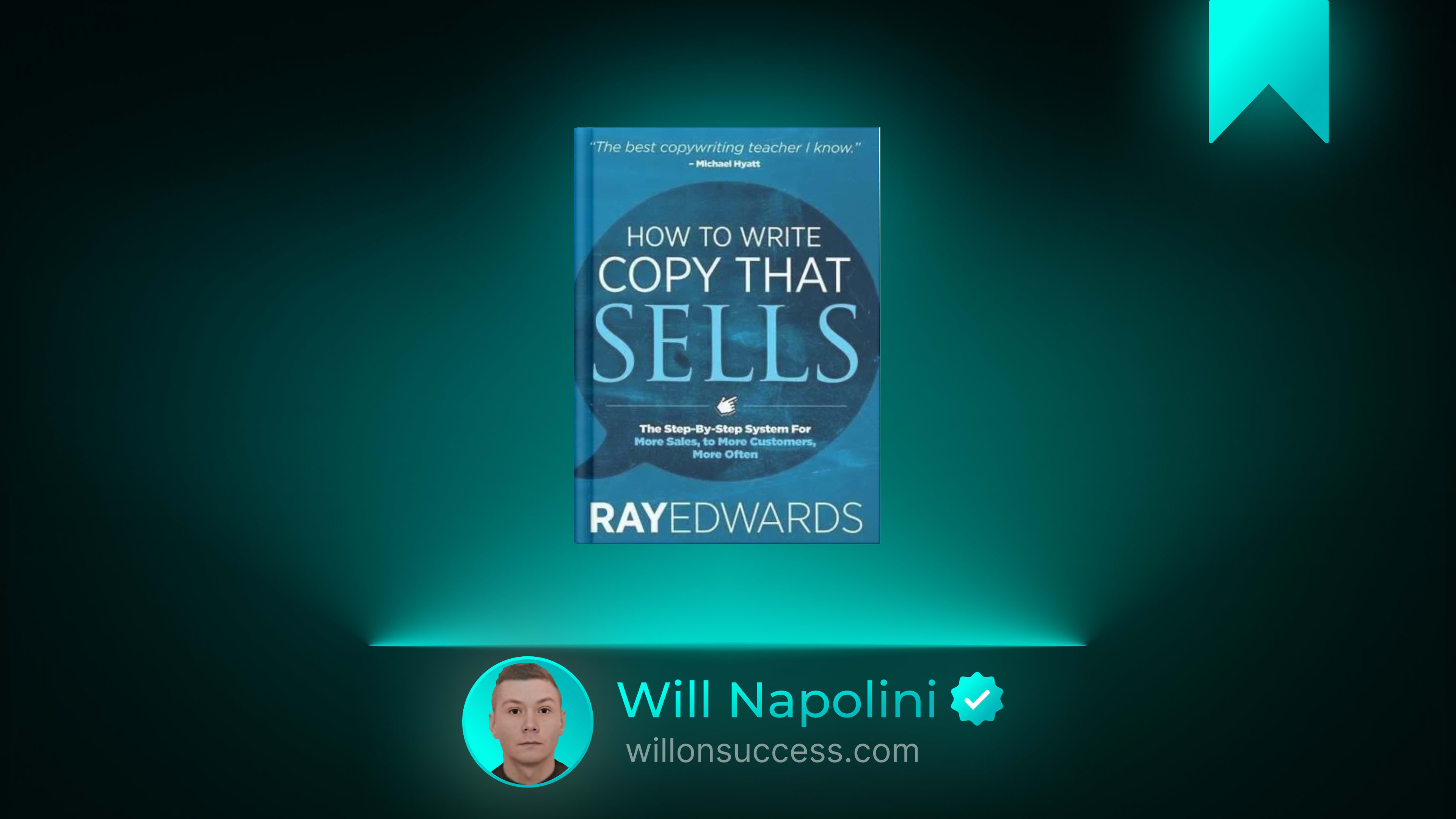
In his profoundly practical and ethically grounded book, How to Write Copy That Sells, veteran copywriter Ray Edwards dismantles the toxic myth that selling is inherently manipulative. He argues that at its core, copywriting is not about tricking people into parting with their money. It is an act of empathy.
Edwards’ central thesis is beautifully simple: Copywriting is the art of translating a product’s features into the reader’s desired transformation.
When you write copy, you are not standing in front of a crowd demanding attention. You are sitting across from a single person who is in pain, frustrated, or stuck, and you are handing them a map out of the wilderness. If your map is genuinely good, refusing to show it to them is not kindness; it is negligence.
Persuasion is not about forcing someone to say yes. It is about removing the obstacles that prevent them from saying yes to their own better future.
The Tale of the Traveler and the Bridge: The Architecture of Persuasion
To understand how to write words that actually move people, we have to look at how human beings make decisions. We like to think we are logical, rational consumers. But Edwards knows that people buy with emotion and justify with logic.
Imagine a traveler standing on one side of a raging river. On their side, there is exhaustion, frustration, and a dead-end. On the other side, there is relief, prosperity, and the life they have always wanted. Your product is not the traveler. Your product is the bridge.
Most entrepreneurs try to sell the bridge. They talk about the materials it’s made of, the engineering, the toll fee. They list the technical specifications. But the traveler doesn’t care about the bridge. They care about the other side of the river.
Edwards provides a brilliant, step-by-step architecture for building that bridge in the reader’s mind. He calls it the PASTOR framework. It is not a script to memorize; it is a psychological journey that mirrors how humans naturally process problems and solutions.
The Core Principles of Ethical Persuasion
How do you transition from a confused creator to a clear, compelling messenger? Here are the core principles Edwards outlines to help you master the craft of connection.
1. The Anatomy of a Magnetic Headline
Long before a reader ever sees your offer, they see your headline. Edwards emphasizes that the only job of a headline is to get the first sentence read. If your headline is vague, your message is dead on arrival.
A great headline must do one of three things: Promise a massive benefit, provoke intense curiosity, or address a burning pain point. But more importantly, it must be crystal clear. Cleverness is the enemy of conversion.
If you write, “Unlock Your Financial Destiny,” the reader scrolls past because it sounds like noise. If you write, “How to Reclaim 10 Hours of Your Work Week Without Hiring an Assistant,” the reader stops. Why? Because you have named their specific pain and offered a tangible, believable outcome.
Your headline is not a decoration. It is a promise. If you break the promise in the first three seconds, you lose the reader forever.
2. The PASTOR Framework: The Engine of Persuasion
This is the beating heart of Edwards’ book. When you sit down to write, you do not need to stare at a blank page hoping for inspiration. You simply need to answer these six questions in order:
- P - Problem: Identify the specific pain or desire. You must show the reader that you understand their struggle better than they understand it themselves.
- A - Amplify: What is the cost of not solving this problem? If they stay stuck, what happens to their health, their marriage, their bank account? You are not fear-mongering; you are waking them up to the reality of their current trajectory.
- S - Story or Solution: Humans are wired for narrative. Share a story of someone who faced this exact problem and found a way out. Then, introduce your solution as the mechanism that made the transformation possible.
- T - Testimony: You cannot just say you are great; you must let others say it for you. Social proof is the currency of trust. Share the transformations your product has already created for real people.
- O - Offer: Lay out exactly what they get. Be specific. Stack the value. Make the offer so clear and so compelling that saying “no” feels like a loss.
- R - Response: Tell them exactly what to do next. Do not be passive. Give them a clear, unambiguous command: “Click here,” “Sign up now,” “Buy today.”
3. Selling the Destination, Not the Plane
One of the most common traps Edwards warns against is selling features instead of benefits. A feature is what your product does or has. A benefit is what your product means for the user’s life.
If you are selling a high-end blender, the feature is a 1500-watt motor. The benefit is making a perfectly smooth, chunk-free green smoothie in under thirty seconds, even when you are running late for work.
People do not buy products. They buy better versions of themselves. They buy the feeling of relief, the surge of confidence, the restoration of their time, or the peace of mind that comes with solving a nagging problem.
Do not sell the drill bit; sell the hole in the wall. Do not sell the hole in the wall; sell the family photos hanging beautifully in the living room.
4. The Ethics of the Ask
Edwards, a man of deep faith and conviction, insists that copywriting must be rooted in integrity. You must believe in what you are selling. If you know your product will genuinely improve someone’s life, then asking them to buy it is an act of service.
However, this also means you must protect your audience. You must over-deliver. You must use guarantees to remove their risk. You must never make a promise your product cannot keep. True persuasion builds long-term trust; manipulation burns the bridge after a single transaction.
Why This Matters on an Ordinary Tuesday
Why does a book about copywriting matter to you if you are not a professional marketer? Because every single day, you are writing copy.
When you ask your boss for a raise, you are writing copy. When you pitch a project to your team, you are writing copy. When you try to convince your skeptical spouse to try a new parenting strategy, you are writing copy.
If you are an entrepreneur, your inability to articulate your value is the single biggest bottleneck to your business. You can have the best coaching program, the most beautiful handmade jewelry, or the most life-changing software in the world. But if your words do not clearly connect the reader’s pain to your solution, your genius remains invisible.
When you master these principles, the anxiety of “selling” evaporates. You stop feeling like a beggar asking for scraps, and you start feeling like a doctor diagnosing a patient and prescribing a cure. You shift your focus away from your own ego and onto the urgent needs of the person reading your words.
Practical Application: Building Your Persuasion Muscle
Understanding the theory is only the beginning. You must turn these concepts into a repeatable system.
- Run a “Pain Audit”: Take your current landing page, email, or pitch. Read it out loud. Count how many times you use the words “I,” “we,” or “our product” versus the words “you” and “your.” If the scale is tipped toward you, rewrite it. Shift the spotlight entirely to the reader’s problem.
- Draft a PASTOR Outline: Before you write a single sentence of your next sales message, open a blank document and create six headings: Problem, Amplify, Story, Testimony, Offer, Response. Write one bullet point under each. Do not try to write the final copy until the skeleton is solid.
- The “So What?” Test: Look at your list of product features. Next to every single one, write the phrase “So what?” Keep answering it until you hit an emotional benefit. Feature: “Includes a 24-hour battery.” -> So what? -> “You don’t have to carry a charger.” -> So what? -> “You can travel light and never panic about your device dying in an emergency.” That is your copy.
Who Should Read This Book
How to Write Copy That Sells is essential reading for the coach who feels guilty charging for their advice, the artist who doesn’t know how to price or describe their work, and the small business owner who is exhausted by marketing tactics that feel slimy. It is a masterpiece for anyone who wants to build a sustainable business without compromising their integrity.
However, if you are looking for a collection of “growth hacks,” manipulative psychological triggers, or a way to trick people into buying things they don’t need, this book will deeply frustrate you. Edwards is not interested in dark patterns or predatory marketing. He demands that you build a foundation of genuine value and then communicate that value with clarity and compassion.
One Small Step to Take Today
You do not need to wait for a major product launch to begin changing the way you communicate. The laws of human connection are available to you right now.
Here is your one small step for today: Take the very next email, message, or proposal you need to write. Before you type a single word, stop and ask yourself: “What is the specific pain this person is feeling right now, and what is the exact relief I am offering them?”
Write those two things on a sticky note and put it on your monitor. Then, write your message. Do not talk about your process. Talk about their relief.
Watch how the dynamic shifts. Watch how people suddenly lean in and say, “Yes, this is exactly what I needed.”
You have the power to stop shouting into the void and start speaking directly to the human heart.
The world does not need more noise. It needs clear, compassionate voices that know exactly how to guide a weary traveler home.