How to Build Emotional Bridges That Actually Move People
Have you ever laid out a perfectly logical argument, only to watch the person across from you cross their arms, nod slowly, and say, “I hear what you’re saying, but I still don’t agree”?
I have sat across the table from people when this happened. I have been the person saying it, and I have been the person hearing it. It is one of the most frustrating experiences in human interaction. You have the facts. You have the data. You have the right answer. Yet, nothing changes.
If you are working hard to persuade your team, your spouse, your children, or even yourself, and you are still wondering why nothing is shifting, you are likely making the most common mistake in human communication. You are trying to build a logical road when you actually need to build an emotional bridge.
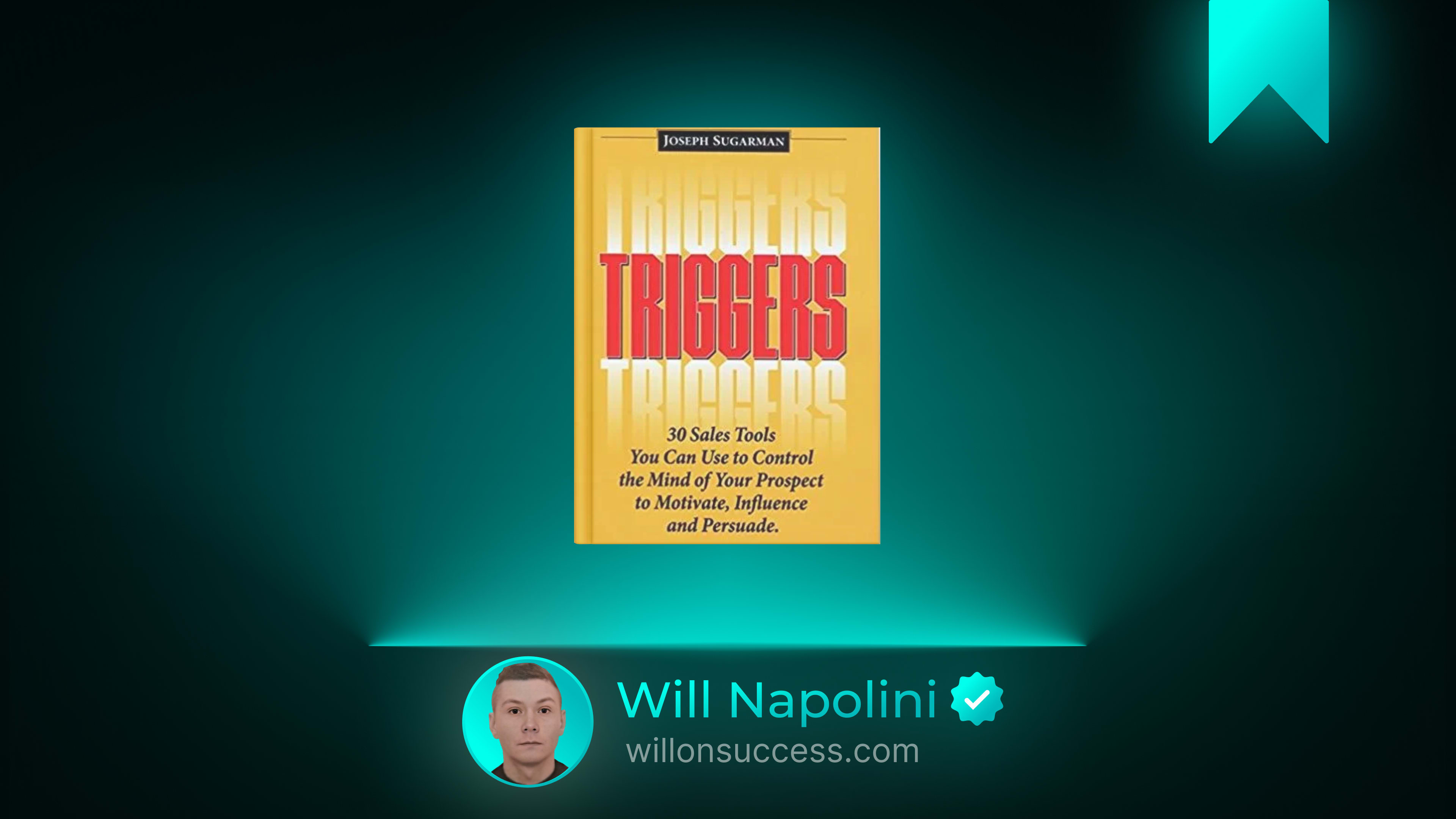
Decades ago, a legendary direct-response copywriter named Joe Sugarman wrote a book called Triggers: Building Emotional Bridges That Influence Behavior. On the surface, it is a book about selling products through the mail. But beneath the sales tactics lies a profound, timeless truth about human nature.
Sugarman understood something that most of us spend our whole lives trying to figure out: human beings do not make decisions based on logic. We make decisions based on emotion, and then we use logic to justify what we have already decided.
If you want to influence behavior, you cannot just present a case. You have to build a bridge to the heart, because that is where the actual decision is made.
The Big Idea: Emotion Drives the Car
The central thesis of Triggers is remarkably simple, yet it contradicts almost everything we are taught in school and in the corporate world. We are taught that if we just give people the right information, they will make the right choice.
Sugarman argues that this is fundamentally backward.
Information does not change behavior. Emotion changes behavior. Sugarman identified specific psychological “triggers”—deeply rooted human desires and fears—that bypass our rational resistance and connect directly to our decision-making center. He called these triggers “emotional bridges.”
When you understand which bridge a person needs to cross, you can guide them to the other side. When you ignore the bridge and just shout facts from the shoreline, you will never get them to move.
This is not about manipulation. Manipulation is tricking someone into crossing a bridge that leads them off a cliff. True influence is understanding what someone truly cares about, and showing them how your idea, your product, or your request aligns with their deepest emotional needs. It is about connection.
The Slippery Slide of Attention
Before we can talk about the specific emotional triggers, we have to talk about how Sugarman believed you capture a person’s attention in the first place. He called this concept “The Slippery Slide.”
In copywriting, Sugarman taught that the sole purpose of the first sentence is to get the reader to read the second sentence. The purpose of the second sentence is to get them to read the third. You are building a slippery slide. Once the reader starts, the momentum carries them down.
I have found that this principle applies to almost every area of life.
When you are trying to change a habit, you do not start by trying to leap to the finish line. You make the first step so small, so easy, and so frictionless that you naturally slide into the second step. When you are trying to lead a team through a difficult transition, you do not start with the massive, terrifying final goal. You start with a single, clear, compelling first step that builds momentum.
Most of us fail because we try to force the destination without earning the attention. We demand the outcome without building the slide. We want people to accept our grand conclusion without guiding them gently down the slope of understanding.
Emotion Drives the Car, Logic Just Steers
Sugarman categorized human psychological triggers into several distinct buckets. While the exact list in his book includes nuances, the core drivers remain the same today. They are the invisible engines of human behavior.
Curiosity is perhaps the most powerful and benign trigger. The human brain hates an open loop. When we sense that there is information we do not know, it creates a mild, almost physical itch. We have to scratch it. Curiosity is the engine of learning, of reading, of exploration. When you lead with curiosity, you do not force people to listen; you invite them to discover.
Greed is the desire to get more, to keep more, to gain an advantage. In business, this is the desire for profit. In personal life, it is the desire to save time, to gain status, or to secure our resources.
Fear is the desire to protect what we already have. It is the fear of loss, the fear of missing out, the fear of looking foolish. Sugarman noted that fear is an incredibly potent trigger, but it is a heavy one. It works, but it leaves a residue.
Romance is not just about romantic love. It is the deep, universal desire to be attractive, to be desired, to feel special, and to connect deeply with others. It is the desire to feel alive and valued.
Anger is the trigger of righteous indignation. It is the desire to see justice, to correct a wrong, to stand up against an unfair system.
When you are trying to persuade someone, your first job is not to figure out what you want to say. Your first job is to figure out which of these emotional engines is currently running in the other person. Are they driven by curiosity today? Are they operating out of fear? Are they looking for romance and connection?
Once you identify the engine, you build the bridge to it. Logic is just the steering wheel you use once the car is already moving.
The Danger of the Heavy Bridges
I want to pause here and offer a word of caution, drawing from my own experience and from the broader wisdom of human relationships.
Sugarman was a salesman. His job was to get a catalog reader to pull out their credit card. In that context, using heavy triggers like Fear or Anger is highly effective. If you make someone afraid of losing their health, they will buy the supplement. If you make them angry at their current physical state, they will buy the gym equipment.
But in your personal life, in your leadership, and in your own personal development, relying on fear and guilt is a dangerous game.
Fear will get compliance, but it will never get commitment. If you lead your team through fear, they will do exactly what you say, right up until the moment they find a job where they are not afraid. If you try to motivate yourself through self-criticism and fear of failure, you will burn out. Fear is a heavy bridge. It can hold weight, but it cracks the foundation over time.
The most sustainable influence comes from the lighter, more enduring bridges: Curiosity, Romance (connection), and the desire for Growth. When you inspire someone because they are curious about the possibility, or because they feel valued and connected to the mission, they do not just comply. They contribute.
Why This Matters on an Ordinary Tuesday
You might be thinking that this sounds like a great framework for selling products or running a marketing campaign, but how does it apply to a regular Tuesday in your life?
It applies because you are constantly trying to influence people.
Think about the last time you tried to get your teenager to clean their room. You probably used logic. “If you don’t clean your room, you won’t be able to find your things. It’s unsanitary. It’s your responsibility.”
You were speaking to their logic. But a teenager’s brain is not primarily running on logic. It is running on Romance (the desire for autonomy and identity) and Anger (the desire to push back against authority). By using pure logic, you built a road that led straight to a brick wall.
What if you had built an emotional bridge? What if you had tapped into their desire for autonomy? “I need you to take ownership of your space today. How do you want to organize it so it works for you?” You have shifted the engine from Anger to Romance and Growth.
Or think about your own habits. How often do you try to logic yourself into going to the gym? “I need to exercise for my long-term cardiovascular health.” That logical argument loses to the emotional desire for comfort on the couch every single time.
You have to build an emotional bridge to your future self. You have to tap into the Romance of how you want to feel in your body, or the Curiosity of what you are capable of achieving. You have to make the first step of putting on your shoes so easy that you slide right into the next step.
External results always begin with internal alignment. You cannot force change through sheer willpower and logic. You have to align your emotional triggers with your logical goals.
Practical Application: Building Your Own Bridges
Understanding the theory is only the beginning. Action before intention. Here is how you can turn Sugarman’s principles into daily behavior.
1. Conduct an “Emotion First” Audit The next time you need to have a difficult conversation or persuade someone, stop drafting your logical points. Instead, ask yourself: What is the underlying emotion driving this person right now? Are they afraid of losing control? Are they curious about a new opportunity? Are they feeling unvalued? Write down the logical points you want to make, and then cross them out. Write down the one emotional truth you need to address first. Start the conversation there.
2. Open Loops in Leadership and Parenting Stop giving all the answers at once. When you are leading a meeting or teaching a child, use the trigger of Curiosity. Instead of saying, “Here is the solution to our problem,” say, “I’ve been looking at our problem, and I found a pattern that completely changes how we should approach it. Let me walk you through what I noticed.” You have opened a loop. Their brain now needs to close it. You have built a slippery slide.
3. The 10-Second Slippery Slide for Habits When you are trying to build a new habit, do not focus on the 45-minute workout. Focus entirely on the 10-second action of tying your shoes. Make the first step so ridiculously small that it requires almost zero emotional effort. You are building a slippery slide for your own brain. Once you are in motion, the emotional friction disappears.
4. Audit Your Triggers Take an honest look at how you motivate yourself and others. Are you relying heavily on Fear and Guilt? If so, you are building heavy bridges that will eventually crack. Consciously shift your language and your focus toward Curiosity, Growth, and Connection. Celebrate progress rather than punishing failure.
Who Should Read This Book
Joe Sugarman’s Triggers is a brilliant, sharp, and highly practical book. It is written by a man who tested every single principle with his own money. If a trigger did not work, he lost his shirt. That kind of skin in the game gives the book a level of practical credibility that academic psychology books often lack.
This book is essential reading if you are in sales, marketing, copywriting, or entrepreneurship. It is also highly valuable for leaders, managers, and parents who want to understand the mechanics of human motivation.
However, I want to be honest with you about what you will encounter. The book is heavily focused on direct-response copywriting. Many of the examples involve selling gadgets, health supplements, or business opportunities through mail-order catalogs. The tone is very much of its era.
You will need to do some translation. You will need to look past the 1990s product pitches and extract the timeless psychological principles underneath. If you can look past the specific sales examples and see the human nature at play, the book is a goldmine. If you are easily distracted by outdated sales tactics, you might find the examples tedious.
One Small Step
I want to leave you with something you can do today, before you close this article and move on with your day.
Think of one area in your life where you are currently stuck because you are trying to logic your way out of it. Maybe it is a conversation with a partner. Maybe it is a pitch to a client. Maybe it is your own resistance to starting a difficult project.
Take out a piece of paper. Write down the logical reasons why this thing needs to happen.
Now, put the pen down. Take a breath. And ask yourself: What is the emotion I am ignoring?
Find the feeling. Find the curiosity, the fear, the desire for connection, or the need for autonomy. Build your bridge to that feeling first. Leave the logic for the crossing.
The Door Opens
We spend so much of our lives trying to convince people. We build elaborate, flawless arguments, stacking facts and figures like bricks, hoping that if we just build the wall high enough, people will finally understand.
But human beings do not live in walls. We live in the spaces between us.
Logic can build a flawless argument, but only emotion will build a bridge. And it is only across that bridge that real change walks.
Look at the people in your life. Look at yourself. Stop shouting facts from the shoreline. Find the bridge. Take the first step. And let the momentum carry you forward.