The Freedom of Letting Go: What Kevin Hart Teaches About Control and Peace
I want to show you an idea that sounds simple but feels terrifying: your need to control isn’t strength. It’s fear wearing a disguise.
You may believe that if you just manage every detail, anticipate every outcome, and hold everything together tightly enough, you’ll finally feel safe. You may think that letting go means giving up, being passive, or inviting chaos. But what if the opposite is true? What if the very grip you use to protect yourself is the thing shrinking your joy, your relationships, and your life?
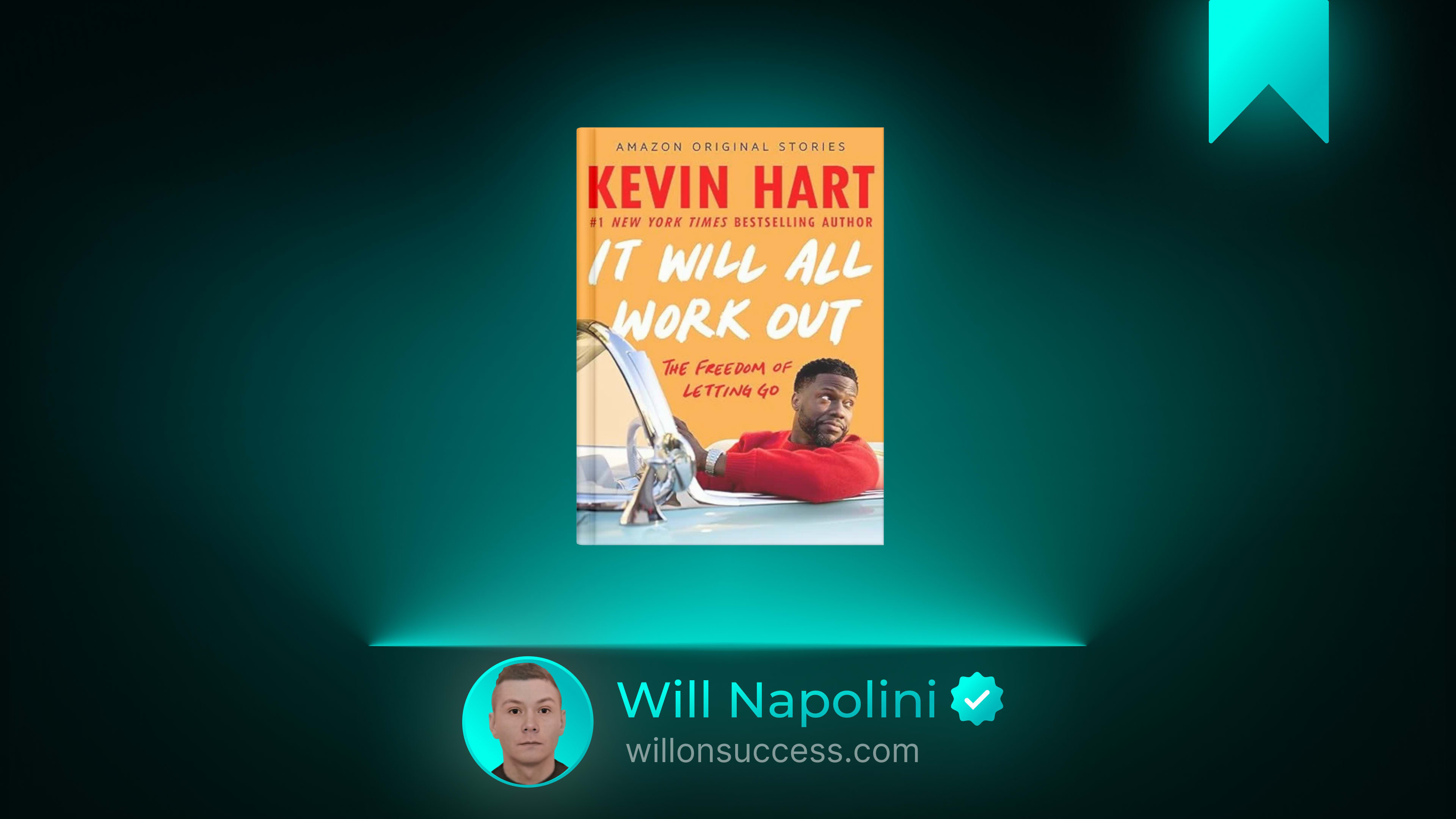
Kevin Hart’s It Will All Work Out: The Freedom of Letting Go is not a book about passive resignation. It is a direct, compassionate confrontation with the “Control Monster” that lives in so many of us—the part that believes safety comes from domination rather than trust. Hart writes from decades of personal experience, showing how his own drive for control was never about success; it was about managing anxiety and avoiding pain.
If you have ever felt exhausted by the weight of holding everything together, or if you sense that your achievements haven’t brought the peace you expected, this book speaks directly to you. It offers not platitudes, but a clear-eyed path toward freedom.
The Big Idea: Control Is Protection, Not Power
The central thesis of It Will All Work Out is that our compulsive need to control is fundamentally a protective mechanism born from distrust—of ourselves, of others, and of life itself. Hart argues that happiness is not found in comfort but in growth, and growth is inherently uncomfortable. When we chase comfort and avoid pain, we inadvertently avoid the very experiences that lead to fulfillment.
This matters because so much of modern self-help confuses productivity with peace, and busyness with purpose. We optimize our schedules, curate our images, and micromanage our relationships, believing that mastery over externals will quiet our inner turmoil. Hart cuts through this illusion. He shows that true security comes not from controlling outcomes but from building self-awareness and self-control—the internal foundation that allows us to navigate uncertainty without collapsing.
You do not need more leverage over your circumstances. You need more trust in your capacity to handle whatever arises.
The Control Monster Is Just Anxiety in Costume
Hart names the pattern clearly: the Control Monster serves one purpose—to manage anxiety and ensure safety. Whether it shows up as perfectionism, overworking, people-pleasing, or micromanaging loved ones, its function is identical. It whispers that if you just try harder, plan better, or worry more, disaster can be avoided.
But here is the truth Hart reveals: control doesn’t make things safer. It makes them smaller. It shrinks your joy because joy requires spontaneity. It shrinks your relationships because love requires space. It shrinks your lifespan because chronic stress wears down the body. The monster promises protection but delivers confinement.
I have seen this in my own life and in those I mentor. We mistake tension for diligence. We confuse vigilance with virtue. But when you examine the root, you find fear—not of failure, but of feeling helpless. The Control Monster is not your enemy. It is a wounded part of you trying to keep you safe using outdated strategies.
Recognizing this changes everything. You stop fighting yourself and start listening.
Self-Awareness Plus Self-Control Equals Freedom
Hart offers a deceptively simple equation: self-awareness plus self-control equals the best possible life you could ever hope for. These are not abstract ideals. They are practical skills.
Self-awareness means noticing when the Control Monster activates. What triggers it? A missed deadline? A child’s misbehavior? A partner’s differing opinion? What physical sensations arise—tight chest, clenched jaw, racing thoughts? Awareness creates a pause between stimulus and reaction.
Self-control is what you do in that pause. It is not suppression. It is choice. Instead of tightening your grip, you breathe. Instead of fixing, you ask. Instead of assuming the worst, you stay present. Self-control is the muscle that lets you respond from wisdom rather than reflex.
This combination transforms your relationship with discomfort. You begin to see that avoiding pain also avoids growth. Happiness is not the absence of struggle; it is the presence of meaningful expansion. And expansion always asks something of you.
Trust Is the Antidote to Control
At the heart of letting go is trust. Hart explains that any form of control is ultimately protection born from distrust—you don’t trust yourself or others to handle difficulty. When you judge others by comparing them to yourself, you deny them the chance to show their capability. Your Control Monster is too busy managing to empower.
Letting go does not mean abandoning responsibility. It means releasing the illusion that you alone must orchestrate outcomes. It means believing that your children can learn from mistakes. That your team can innovate without your constant oversight. That your partner can love you differently than you expect. That life can unfold in ways you cannot predict and still be good.
Trust is not naive optimism. It is earned through small acts of release. Each time you resist the urge to fix, correct, or preempt, you strengthen your faith in resilience—yours and others’.
Why This Matters on an Ordinary Tuesday
You may be wondering how this applies beyond moments of crisis. The Control Monster thrives in the mundane: snapping at your spouse over unwashed dishes, rehearsing conversations before they happen, checking emails at midnight to soothe unease, saying yes when you mean no to avoid conflict.
When you recognize these as expressions of anxiety rather than necessity, you reclaim agency. Instead of asking “How do I prevent this from going wrong?” you ask “What am I afraid of feeling right now?” Instead of tightening your schedule, you create margin. Instead of demanding compliance, you invite collaboration.
This shift aligns with foundational principles of lasting change. Character before circumstances means building inner stability regardless of external chaos. Responsibility before excuses means owning your anxiety without blaming triggers. Consistency before intensity means practicing small releases daily rather than waiting for a dramatic breakthrough.
Your life expands not when you master everything, but when you stop needing to.
Practical Application: Name and Negotiate With Your Control Monster
Understanding is valuable, but understanding without action changes nothing. Here is a concrete practice drawn directly from Hart’s framework:
The Daily Pause-and-Name Ritual
Each evening, reflect on one moment today when you felt compelled to control. Write it down briefly.
Then ask:
- What was I afraid would happen if I let go?
- What emotion was underneath that fear (e.g., shame, abandonment, inadequacy)?
- What did my Control Monster promise me (safety, approval, certainty)?
- What did it actually cost me (connection, rest, authenticity)?
Finally, speak aloud: “I see you, Control Monster. Thank you for trying to protect me. But I choose trust today.”
Do this for seven days. Notice patterns. Notice which fears recur. Notice where trust begins to take root.
This is not about eliminating control overnight. It is about changing your relationship with it. You are not erasing a part of yourself; you are integrating it with compassion.
Who Should Read This Book
It Will All Work Out will resonate deeply if you:
- Feel chronically anxious despite outward success
- Struggle to delegate, relax, or receive help
- Have achieved goals but still feel empty or tense
- Want to break cycles of overfunctioning in relationships
- Are ready to trade exhaustion for embodied peace
It may be less useful if you seek tactical productivity hacks, motivational pep talks, or narratives that glorify relentless hustle. Hart offers neither shortcuts nor spectacle. He offers honest reckoning and gentle redirection.
Read this book if you are tired of holding the world together and ready to discover what happens when you put it down.
One Small Step Toward Release
Before you close this page, identify one area of your life where you are gripping too tightly.
Today, intentionally loosen your hold in one small way. Send the email without triple-checking. Let your child solve their own problem. Say “I don’t know” instead of pretending certainty. Sit with five minutes of unstructured silence.
Do this once.
Because freedom does not arrive when everything is perfect. It arrives when you decide that imperfect is enough.
Letting go is not losing your grip on life; it is finally allowing life to hold you.