The Valley and the Clock: Reclaiming Your Natural Rhythms in an Artificial World
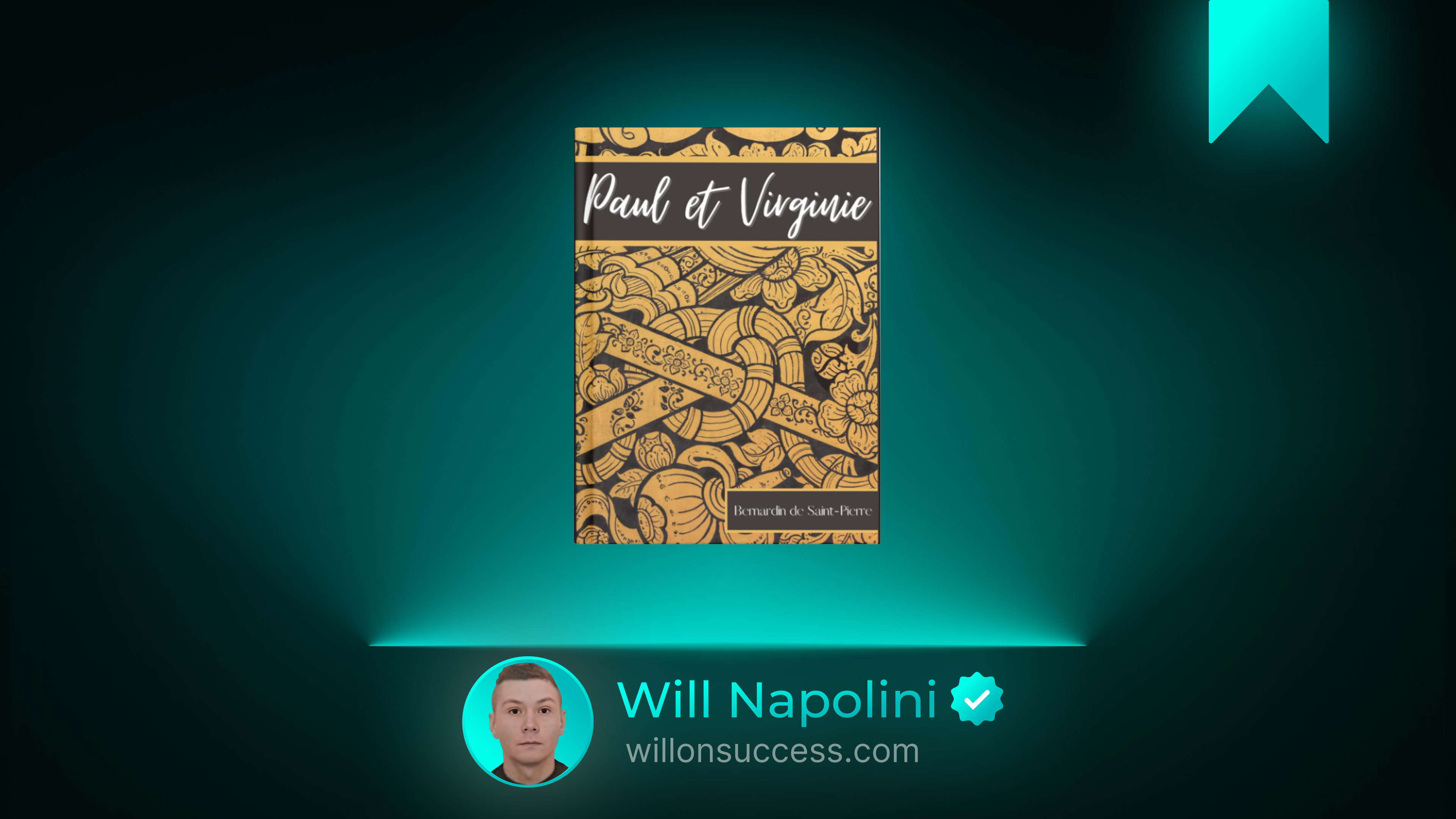
We measure our days in notifications, in calendar blocks, in the relentless, mechanical ticking of a clock that does not care if we are tired, inspired, or grieving. We have built a modern world that demands we optimize every waking hour, turning our lives into a continuous performance of productivity. We are exhausted, yet we are terrified to stop, believing that if we step off the treadmill, we will fall behind and be forgotten.
But what if the very metrics we use to measure a “successful” life are the exact things draining the life out of us?
If I could sit across the table from you right now, away from the glare of screens and the pressure of schedules, I would ask you a quiet but urgent question: When was the last time you allowed your life to be guided by a natural rhythm, rather than an artificial deadline?
In 1788, the French writer Jacques-Henri Bernardin de Saint-Pierre published a novel that captivated Europe and broke the hearts of thousands. Paul and Virginia is often remembered as a tragic romance, a pastoral tale of two children growing up on a remote tropical island. But beneath the surface of the love story lies a profound, almost devastating critique of how we construct our lives. It is a mirror held up to our modern obsession with status, speed, and societal approval.
The central thesis of the book is not merely that nature is beautiful and society is corrupt. It is a deeper, more challenging warning: When we abandon the natural rhythms that sustain the human soul in order to chase the abstract approval of a distant “civilization,” we do not just lose our peace. We risk losing ourselves entirely.
The Architecture of the Valley
To understand the power of this book, you have to understand the world Bernardin de Saint-Pierre built.
The story begins with two women fleeing the shame and betrayal of European society. Marguerite, a fallen noblewoman, and Madame de la Tour, a widow betrayed by her husband, escape to the Isle of France (modern-day Mauritius). They settle in a remote, enclosed valley, completely cut off from the politics, the money, and the clocks of the outside world.
Here, they give birth to Paul and Virginia. The children are raised without formal schooling, without wealth, and without the concept of social hierarchy. They do not know what a clock is. They tell time by the shadows of the trees on the mountainside. They know it is time to eat when the birds begin to sing at noon; they know it is time to rest when the sun dips below the canopy. Their education is not found in books, but in the cultivation of empathy, physical resilience, and a deep, intuitive connection to the land and to each other.
In this valley, there is no anxiety about the future. There is no keeping up with neighbors. There is only the profound, quiet wealth of being entirely present in the current season.
But the tragedy of the book arrives when the outside world intrudes. Virginia’s wealthy aunt in France demands that the teenage Virginia return to Europe to be “properly educated” and to claim her inheritance. Seduced by the promise of securing a better future for her mother, Virginia leaves her paradise. She enters the glittering, hollow world of Parisian high society—a world of endless rules, rigid etiquette, and profound emotional isolation.
When she finally attempts to return home to the valley, her ship is caught in a horrific storm just off the coast of the island. The ship breaks apart. A sailor reaches out to save her, urging her to take off her heavy, waterlogged clothes so he can pull her to safety. But Virginia, deeply conditioned by the rigid modesty and strict social rules of the European society she had just left, refuses to undress in front of a man.
She chooses the rule over her survival. The heavy clothes drag her under, and she drowns within sight of the valley she loved. Paul, unable to survive the loss of his soulmate, dies shortly after of a broken heart.
The Tyranny of the Clock vs. The Rhythm of the Sun
The most striking feature of the children’s early life in the valley is their relationship with time. They lived by the shadows of the trees.
Today, we live by the tyranny of the clock. The clock is an industrial invention, designed to synchronize factory workers and maximize economic output. It does not care about your biological rhythms, your creative peaks, or your emotional capacity. It simply demands that you be “on” at 9:00 AM and “done” at 5:00 PM.
When you force a human soul to operate purely on mechanical time, you create a state of chronic, low-grade trauma. You are constantly fighting your own biology. You drink coffee to force your brain awake when it needs rest; you stare at blue light to force it awake when it needs to sleep.
Bernardin de Saint-Pierre understood that a life lived out of sync with natural rhythms is a life lived in quiet desperation. You cannot optimize a soul. You can only nurture it. When you reconnect with natural time—waking with the light, resting when you are weary, eating when you are hungry, and working in seasons of intensity followed by seasons of rest—you stop fighting the current of your own life.
The Illusion of the “Better” Place
Why did Virginia leave the valley? She left because she was told that her current life was not “enough.” She was told that to be truly valuable, to be truly secure, she needed the validation, the education, and the wealth of the distant, civilized world.
How often do we do this in our own lives? We look at our quiet, ordinary, beautiful moments and we discount them because they do not look like the highlight reels of the culture around us. We tell ourselves, “I will be happy when I get the promotion. I will feel secure when I buy the house in the right neighborhood. I will finally be enough when I reach that distant shore.”
We abandon our own personal valleys—our local communities, our simple joys, our deep, unglamorous relationships—to chase the glittering, hollow approval of a macro-culture that does not know our names. Virginia went to Paris and found that the palaces were cold, the people were cynical, and the wealth could not replace the warmth of the sun in her valley. The lesson is stark: Do not trade the deep, rooted peace you have cultivated for the shallow, abstract approval of a world that will forget you the moment you stop performing.
When Virtue Becomes a Cage
The most haunting and practically applicable moment in the entire book is Virginia’s death. It is easy to view her refusal to shed her heavy clothes as a quaint, tragic relic of 18th-century modesty. But as a mentor looking at your life, I want you to see it as a profound metaphor for psychological rigidity.
Virginia drowned because she could not let go of a rule that no longer applied to her current reality. In the calm, polite drawing rooms of Paris, her strict modesty was a virtue. It made her “good.” But in the violent, chaotic waters of a shipwreck, that exact same virtue became a fatal weight. She was so deeply identified with being the “good, proper girl” that she could not adapt to the brutal demands of survival.
I have watched incredibly talented, deeply good people drown in their own lives because they refuse to shed their heavy clothes.
You might be clinging to a professional identity that no longer serves you, refusing to pivot because you’ve always been “the loyal employee,” even as the company sinks around you. You might be clinging to a rigid standard of perfectionism in your parenting or your art, refusing to ask for help or ship imperfect work, and the heavy weight of that expectation is pulling you into burnout.
Sometimes, the very traits that make us successful in calm waters are the weights that drown us in a storm. True resilience requires the humility to look at the storm and say, “The rules that got me here will not save me now. I must drop the weight.” You must be willing to shed the heavy, waterlogged expectations of others when your survival and sanity are on the line.
Why This Matters on an Ordinary Tuesday
You are not living on an 18th-century tropical island, and you are likely not facing a literal shipwreck. But you are navigating the storms of modern life, and the principles of the valley are more vital than ever.
Think about your current relationship with your work and your loved ones. Are you physically present at the dinner table, but mentally pacing the halls of tomorrow’s anxieties? Are you measuring the success of your weekend by how many tasks you crossed off a list, rather than by the depth of the conversations you had?
When you internalize the wisdom of Paul and Virginia, you begin to fiercely protect your own “valley.” You realize that building a sanctuary of un-optimized, un-monetized time is not a luxury; it is a psychological necessity. You start to view your attention as a sacred resource, refusing to let the distant, noisy demands of the “outside world” dictate the climate of your inner life. You stop trying to impress the aunt in Paris, and you start tending to the garden right in front of you.
How to Reclaim Your Valley Today
Understanding the tension between nature and society is beautiful, but understanding without action changes nothing. If you want to stop drowning in the heavy clothes of modern expectations and reclaim your natural rhythms, you must begin applying these principles immediately.
1. Practice “Shadow Time” Choose one day this weekend to turn off your phone, take off your watch, and cover the clocks in your house. For just four hours, let your body and the environment dictate your actions. Eat when you feel hungry. Walk outside when the sun hits a certain angle. Read until your eyes grow heavy. Notice the initial spike of anxiety your brain feels when it cannot check the time, and then notice the deep, physical exhale that follows when you surrender to the natural rhythm.
2. The “Paris” Audit Take out a journal and ask yourself: Where am I currently sacrificing my peace to chase the approval of a distant, abstract audience? Is it on social media? Is it in a corporate hierarchy that does not value my health? Is it in a social circle that demands I spend money I don’t have? Identify the “Paris” you are trying to reach, and consciously choose to invest that energy back into the “valley” of your immediate, tangible reality.
3. Shed the Heavy Clothes Identify one rigid rule or expectation you are holding onto that is dragging you down. It might be the belief that you must answer work emails after 7:00 PM. It might be the belief that you must host perfect, elaborate holiday gatherings. It might be the refusal to admit you are struggling. Look at the storm you are currently in. Ask yourself: Is this rule keeping me safe, or is it pulling me under? Give yourself permission to drop it. Survival and sanity require adaptability, not rigid perfection.
Who Needs to Read This Book
Paul and Virginia is a vital, healing text for the chronically burnt-out. It is for the high-achiever who has reached the summit only to find the air too thin to breathe. It is for anyone who feels a deep, instinctual pull toward slow living, nature, and simplicity, but feels guilty for wanting it in a world that glorifies the hustle. It will speak directly to the part of your soul that is tired of performing.
However, an honest warning is required. If you are looking for a triumphant, empowering narrative where the heroes conquer their obstacles and build an empire, this book will break your heart. It is a tragedy. It is a pastoral elegy. It does not offer a neat, happy ending. It offers something more valuable: a profound warning about what we lose when we trade our natural humanity for artificial success.
Your First Step Toward Freedom
You do not need to sell your possessions and move to a tropical island to reclaim your soul. You do not need to reject the modern world entirely to find peace within it.
You only need to step outside and remember that you are a biological creature, not a machine.
Here is what I want you to do today. Step outside your front door. Leave your phone inside. Look up at the sky, look at the trees, or look at the clouds. Take ten deep breaths. For just five minutes, do not think about what you need to do next. Do not measure the time. Simply exist in the environment, guided by the light and the air.
You are not a clock. You are a living, breathing part of the earth. The world will always demand more of your time, but your soul only requires your presence. Step out of the mechanical rush, feel the sun on your face, and remember the quiet, enduring power of the valley.