The Mirror of Greatness: What Plutarch's Parallel Lives Teaches Us About Character, Power, and the Human Soul
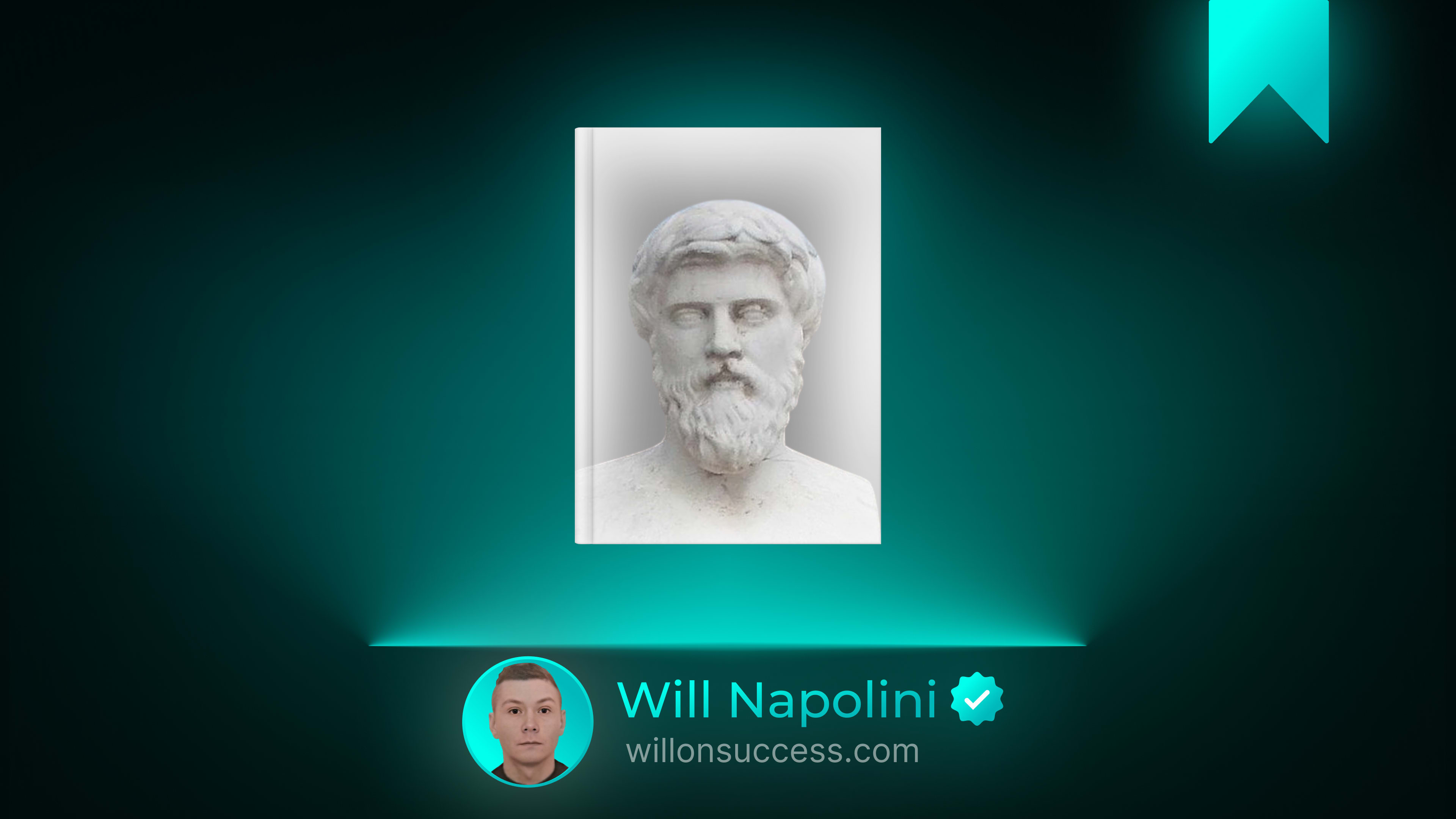
We live in an era that is deeply, almost pathologically, obsessed with the scale of a person’s achievements. We measure a life by its visible metrics: the size of the audience, the digits in the bank account, the title on the door, the square footage of the home. We scroll through the highlight reels of the ultra-successful and quietly conclude that greatness is a matter of accumulation and visibility.
But what if the true metric of a life is entirely invisible to the public eye? What if the moments that actually define who you are happen when no one is watching, when the cameras are off, and when the applause has died down?
If I could sit across the table from you right now, I would ask you to look away from the modern scoreboard. I would tell you that the most profound manual for building a life of substance was not written in a modern boardroom, but nearly two thousand years ago by a Greek philosopher who understood a fundamental truth that we have largely forgotten: Character is destiny.
In his monumental work, Parallel Lives, the ancient biographer Plutarch did something revolutionary. He did not write sweeping, dry histories of wars and empires. In the prologue to his life of Alexander the Great, he famously declared, “I am not writing histories, but lives.” He understood that the soul of a person is rarely revealed in the grand, calculated movements of a battlefield. It is revealed in a casual joke, a fleeting expression of anger, a moment of unobserved mercy, or a quiet act of restraint.
The central thesis of Parallel Lives is that human nature is universal, and that the study of great figures from the past is not meant to be mere entertainment. It is meant to be a mirror. By examining the virtues and the fatal flaws of those who walked before us, we can adorn our own lives, correct our own trajectory, and learn how to navigate the heavy burdens of ambition, power, and adversity.
The Architecture of the Mirror
To understand how Plutarch’s work applies to your life, you first have to understand his unique method. Plutarch paired his biographies. He would take a famous Greek and a famous Roman who shared similar traits, circumstances, or destinies, and he would write their life stories side by side. He paired Alexander the Great with Julius Caesar; the brilliant but volatile Alcibiades with the fierce Roman Coriolanus; the noble statesman Aristides with Cato the Elder.
At the end of each pair, he would write a “Comparison,” acting as a judge weighing their souls on a scale.
Why did he do this? Because Plutarch knew that we cannot understand ourselves in a vacuum. We need contrast. We need to see how the exact same raw materials—intelligence, charisma, ambition, and physical courage—can lead one person to build a republic and another person to burn it to the ground. He used these parallel lives as mirrors. He explicitly stated that he began writing them for the benefit of others, but continued writing them for himself, using the virtues of his subjects as a mirror to examine and correct his own flaws.
When you read Plutarch, you are not just reading about ancient generals and senators. You are looking into a mirror that reflects your own hidden capacities for both nobility and ruin.
The Smallest Actions Reveal the Deepest Truths
We tend to believe that our character is proven in the massive, cinematic moments of our lives. We think we will know who we truly are when we face a terminal diagnosis, when we are offered a million-dollar bribe, or when we must run into a burning building.
But Plutarch knew better. He wrote that “a slight thing like a phrase or a jest often makes a greater revelation of character than battles where thousands fall.”
Think about the sheer psychological truth of this. A person can rehearse a grand speech and fake bravery in a crisis. But it is incredibly difficult to fake how you treat a waiter who gets your order wrong. It is hard to fake your tone of voice when you are speaking to a subordinate who cannot help your career. It is hard to fake your reaction when you are cut off in traffic.
I have watched incredibly talented people destroy their careers and their marriages not because they failed a massive test of integrity, but because of a thousand tiny, unguarded moments of contempt, impatience, and arrogance. They thought the small things didn’t matter. But the small things are the bricks that build the house of your character. If the bricks are made of mud, the mansion will eventually collapse, no matter how beautiful the facade.
Power Does Not Corrupt; It Reveals
One of the most haunting themes running through the Lives is the intoxicating, corrosive nature of power and success. Plutarch watches men like the Roman dictator Sulla, or the brilliant Athenian general Alcibiades, rise to the absolute pinnacle of their societies. And he watches what happens when the constraints of their earlier struggles are removed.
We often say that power corrupts. But a closer reading of Plutarch suggests a more uncomfortable truth: power does not corrupt; power reveals.
When you are struggling, when you are building your career, or when you are trying to win a partner’s affection, you are forced to be disciplined. You are forced to listen, to compromise, and to regulate your impulses because the consequences of failure are immediate. But when you finally “make it”—when you get the promotion, when you secure the funding, when you achieve the status you craved—the external constraints vanish. You no longer have to be polite. You no longer have to listen.
And in that vacuum of constraint, your true character rushes to the surface. If your foundation is built on insecurity and a need for dominance, success will turn you into a tyrant. If your foundation is built on duty and service, success will turn you into a steward. Plutarch forces us to ask: If all the external limits on your behavior were removed tomorrow, who would you become?
Ambition Is a Fire That Needs a Hearth
The figures in Plutarch’s biographies are driven by philotimia—the love of honor, or ambition. It is the engine that drives them to cross the Alps, to reform the laws, to build the Parthenon. Plutarch does not condemn ambition. He recognizes it as a vital, masculine, world-building force.
But he also shows us, with tragic clarity, what happens when ambition is untethered from a moral core.
Consider Coriolanus, a Roman general of unmatched bravery and military genius. He saves Rome from its enemies, but he possesses a towering, unmanageable pride. When the political winds shift and he is unfairly exiled by the very people he bled to protect, his ambition curdles into bitter vengeance. He joins the enemy army and marches on his own homeland, fully willing to burn Rome to the ground just to prove he was right. His brilliance was entirely consumed by his ego.
Contrast him with a figure like Aristides “the Just,” who was also exiled by the fickle public. Instead of seeking vengeance, Aristides prayed that his countrymen would never have cause to remember him with regret, and he quietly went about his life until they needed him again.
Ambition is a fire. Without a hearth to contain it, it will burn down your own house. The hearth is your commitment to something larger than your own ego—your family, your community, your principles.
Fortune Is Fickle, but Character Is an Anchor
If there is one guarantee in life, it is that the wheel of fortune will turn. The market will crash. The diagnosis will come. The relationship will end. The public will turn its fickle gaze away from you and toward someone new.
Plutarch pays meticulous attention to how his subjects handle sudden reversals of fortune. The truly great figures in his pages—men like Cato or the Greek statesman Phocion—do not tie their internal worth to their external circumstances. When they are stripped of their wealth, their titles, and their armies, they do not collapse into despair or bitterness. They remain internally anchored.
They understood a principle that modern life desperately tries to hide from us: You do not own your circumstances. You only own your response to them. If your identity is entirely wrapped up in your job title, the day you lose the job, you lose yourself. But if your identity is wrapped up in your character—your courage, your honesty, your resilience—then no external force can ever truly bankrupt you.
Why This Matters on an Ordinary Tuesday
It is easy to read about the crossing of the Rubicon or the assassination of Caesar and feel a sense of historical detachment. But how do these ancient lessons apply to the messy, frustrating reality of your life right now?
They apply because the battlefield has simply changed its shape.
You may never command a legion, but you do command a team, a household, or a classroom. When a project fails and the blame is being thrown around the conference room, the spirit of Coriolanus will tempt you to lash out, to defend your pride, and to throw a colleague under the bus. The spirit of the noble statesman will allow you to absorb the blow, take responsibility for your part, and focus on the solution.
You may never be offered the dictatorship of a republic, but you do hold power over others. You hold power over your children, over your aging parents, over the junior employees who rely on your mentorship. How you wield that micro-power when you are tired and stressed is the exact same moral test that Plutarch applied to the emperors of Rome.
When you internalize Plutarch’s worldview, you stop viewing your daily frustrations as meaningless annoyances, and you start viewing them as the forge in which your character is being hammered into shape. Every difficult email, every unfair criticism, every moment of uncelebrated hard work is a line being written in the biography of your life.
How to Reclaim Your Character Today
Understanding the philosophy of antiquity is valuable, but understanding without action changes nothing. If you want to use the wisdom of the Parallel Lives to build a more resilient, honorable life, you must begin applying these principles immediately.
1. Conduct a “Micro-Behavior” Audit Stop worrying about your five-year plan for a moment and look at your last twenty-four hours. How did you speak to the person who serves you coffee? What was your tone of voice when your partner asked you a question while you were distracted? How did you react when someone else got the credit for an idea you contributed to? Write down three “micro-behaviors” from your recent past that you would be embarrassed to see recorded in a biography. Choose one of them to consciously change this week. Character is built in the margins.
2. Choose Your Historical Mirrors You cannot become what you do not study. Identify two or three historical figures, or people currently living, who embody the specific virtues you wish to cultivate. Do not just read about their triumphs; study their failures, their exiles, and their moments of doubt. When you face a difficult decision, ask yourself: How would they handle this? Let their lived experience act as a mirror for your own choices.
3. The “Reversal” Rehearsal The Stoics, who deeply influenced Plutarch, practiced premeditatio malorum—the premeditation of evils. Take ten minutes this week to vividly imagine a major reversal in your life. Imagine losing your primary source of income. Imagine a public failure. Ask yourself: If this happened, what core virtues would I rely on to survive it? By mentally rehearsing the loss of your external circumstances, you detach your self-worth from them. You build an internal anchor that the storms of fortune cannot snap.
Who Needs to Read This Book
Parallel Lives is mandatory reading for anyone who holds power over others—leaders, managers, parents, and teachers. It is a profound antidote to the modern obsession with “life hacks” and quick fixes, offering instead a deep, slow immersion into the complexities of human nature. It is for the person who wants to build a life of quiet dignity and unshakeable integrity, rather than a life of loud, fragile success.
However, an honest warning is required. This is not a fast-paced, modern thriller. Plutarch is a moralist, not a modern historian. He frequently includes rumors, myths, and digressions. The translations can be dense, and the sheer volume of names and political factions can be overwhelming. If you are looking for a tightly plotted, purely factual historical account, or a quick weekend read, this book will frustrate you. It requires patience. It requires you to sit quietly with the text and allow the mirror to do its work.
Your First Step Toward Greatness
You do not need to conquer a foreign empire to prove your character. You do not need to wait for a massive crisis to show the world who you are.
You only need to master the next small interaction.
Here is what I want you to do today. Identify one interaction you know you will have later—a meeting with a difficult colleague, a conversation with a frustrated child, or even just a transaction with a cashier. Decide right now what virtue you will bring to that specific moment. Will it be patience? Will it as grace? Will it be unwavering honesty?
When the moment arrives, do not react on autopilot. Consciously deploy the virtue you selected.
The monuments we build will eventually crumble, and the titles we hold will eventually be forgotten. But the character we forge in the quiet, unobserved moments will echo long after we are gone. You are not merely living a life; you are writing a biography. Pick up the pen, look into the mirror, and make it a story worth reading.