The 5 Love Languages Summary: How to Speak the Language Your Relationships Actually Need
You may be pouring your heart into a relationship, working late to provide, or meticulously planning weekend activities, and still wondering why the person closest to you feels unloved.
You look at all the things you are doing right. You feel a quiet, growing resentment. After everything I do, why isn’t it enough?
If I could sit across the table from you, I would tell you that this exhaustion is rarely a sign that you do not care. More often, it is a sign that you are speaking a different emotional language than the person you are trying to reach.
For years, I watched brilliant, well-intentioned people watch their relationships slowly drift apart, not out of malice, but out of a simple, tragic failure of translation. We assume that love is a universal currency. We assume that if we give it, it will be received exactly as we intended.
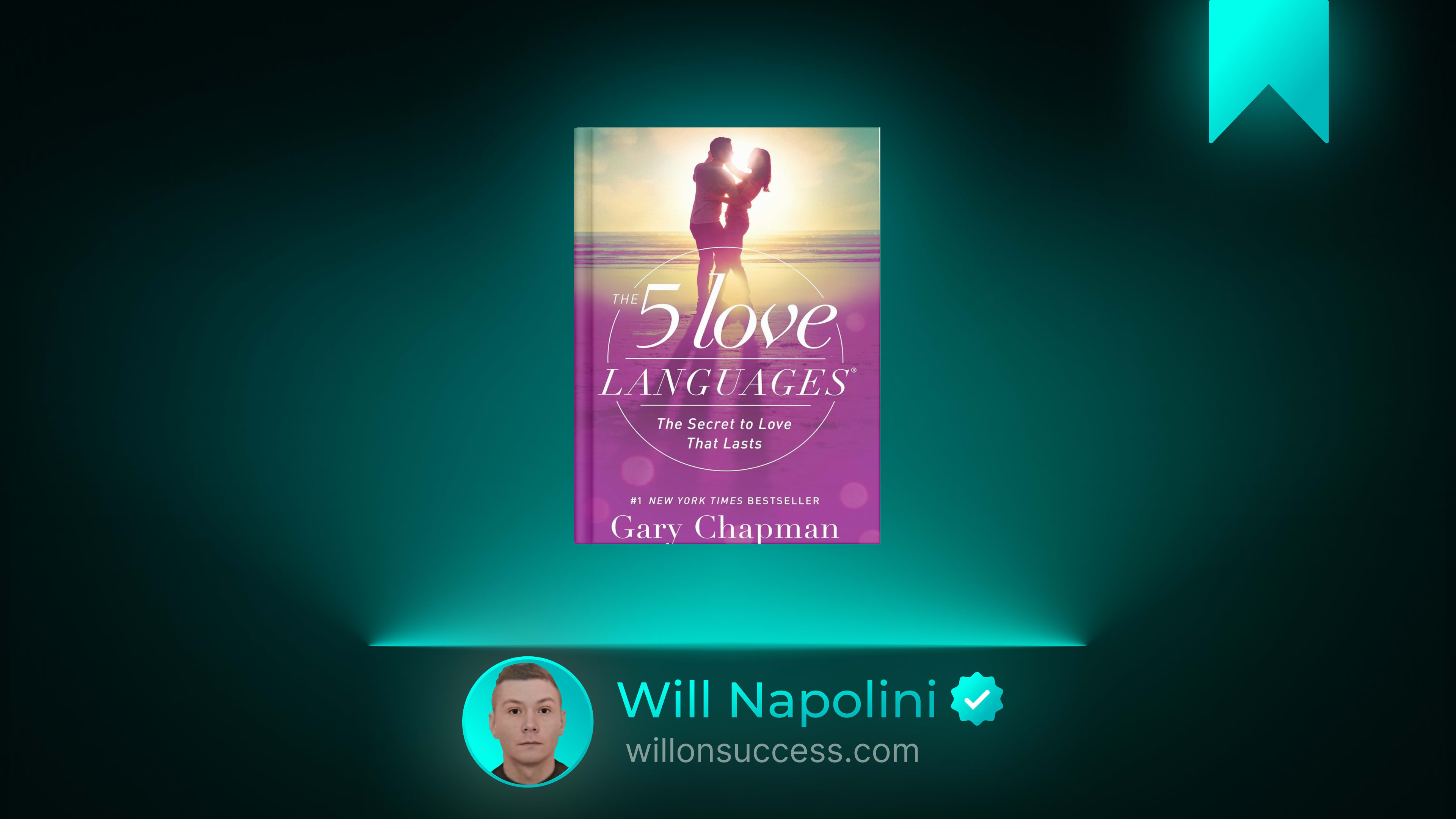
Dr. Gary Chapman’s classic book, The 5 Love Languages, dismantles this assumption with gentle, profound clarity. While it is most famous as a marriage book, its underlying philosophy is a masterclass in human connection, applicable to parenting, friendships, and even professional mentorship.
Here is what I have learned from this framework, and how you can use it to stop guessing and start truly connecting.

The Big Idea: Love Is Not a Single Currency; It Is a Set of Dialects
The central thesis of The 5 Love Languages is deceptively simple: People give and receive love in fundamentally different ways. Chapman identifies five primary “languages” of emotional communication.
The core problem in most strained relationships is not a lack of love. It is a mismatch of languages.
Imagine you are trying to express your affection to someone who only understands French, but you are speaking exclusively in Japanese. You may be speaking the most beautiful, poetic, heartfelt Japanese in the world. You may be exhausting yourself to get the words right. But to the listener, it is just noise. They will walk away feeling empty, and you will walk away feeling unappreciated.
Chapman introduces a brilliant, foundational metaphor to explain this dynamic: the “emotional love tank.”
Just as a car cannot run without gasoline, a human being cannot thrive emotionally when their love tank is empty. When the tank is full, we feel secure, valued, and capable of giving back. When the tank is empty, we become defensive, critical, withdrawn, or anxious.
The goal of any healthy relationship is not to win arguments or to prove your worth. The goal is to keep the other person’s love tank full. And to do that, you must learn to pump the specific type of fuel they require.
The Trap of the Default Dialect
Before we look at the five languages, we must understand the mechanism of why we get this so wrong.
Chapman points out a deeply human tendency: we naturally express love in the way we prefer to receive it.
If your primary love language is Acts of Service, you will show your love by doing chores, fixing things, and running errands for your partner. You will assume that when you do these things for them, they feel loved. But if their primary language is Quality Time, they will not register your hard work as love. They will simply see you as busy, distracted, and absent.
I have seen this happen countless times. A parent works two jobs to provide the best possible life for their child (Acts of Service/Gifts). The child, however, just wants the parent to sit on the floor and play a board game with them for twenty minutes (Quality Time). The parent feels sacrificed; the child feels abandoned. Both are trying. Both are missing the mark.
We default to our own dialect because it is our emotional reflex. It requires zero effort to love someone the way we want to be loved. But real love—the kind that sustains relationships through difficult seasons—requires the discipline to step outside our own preferences and learn the dialect of the person standing in front of us.
The Five Distinct Languages
Chapman categorizes the ways we experience love into five distinct buckets. Understanding them is the first step toward intentional connection.
1. Words of Affirmation
For these individuals, unsolicited compliments, words of appreciation, and verbal encouragement are oxygen. Insults or harsh words are not easily forgotten; they leave deep scars. What it looks like: A handwritten note left on the kitchen counter. A specific, genuine compliment about how they handled a difficult situation. Saying “I am proud of you” without being prompted.
2. Quality Time
This language is about giving someone your undivided attention. It is not about sitting in the same room while scrolling on your phones. It is about active listening, eye contact, and shared experiences. What it looks like: A twenty-minute walk without any devices. Putting your laptop away the moment they walk through the door to ask about their day. Maintaining eye contact when they are speaking.
3. Receiving Gifts
This is often misunderstood as materialism, but it is not. For these individuals, a gift is a visual symbol of love. It shows that you were thinking of them when they were not around. The monetary value is irrelevant; the thought and effort behind the selection are everything. What it looks like: Picking up their favorite snack on your way home from work. Bringing back a small, meaningful souvenir from a trip. Remembering a casual mention of a book they wanted to read and surprising them with it.
4. Acts of Service
For these people, actions speak infinitely louder than words. They feel loved when you ease their burden. Laziness, broken commitments, and making more work for them are interpreted as a lack of care. What it looks like: Doing the dishes without being asked. Filling up their car with gas. Taking care of a tedious administrative task they have been dreading.
5. Physical Touch
This is not solely about sexual intimacy. It is about the reassurance of physical presence. For these individuals, physical distance feels like emotional distance. What it looks like: A hand on the small of the back as you walk through a crowd. Holding hands while driving. A long, deliberate hug at the end of the day. Sitting close together on the couch.
Why This Matters on an Ordinary Tuesday
It is easy to read about love languages and file it away as “nice relationship advice” for special occasions. But the true power of this framework is revealed in the mundane, ordinary moments of a Tuesday evening.
When you know your partner’s or child’s love language, your daily decisions change.
Instead of automatically defaulting to what is easiest for you, you pause and ask: What does this moment require?
If your child’s language is Quality Time, you realize that rushing them through dinner to get to homework is draining their tank. You choose to spend five extra minutes just talking about their day, knowing it will make the homework transition smoother.
If your partner’s language is Acts of Service, you realize that saying “I love you” while leaving your shoes in the middle of the hallway sends a mixed message. You choose to pick up the shoes, knowing that to them, that small act is a profound declaration of care.
This is not about keeping a transactional scorecard. It is about shifting your focus from your own intentions to your actual impact.
Practical Application: Turning Concepts into Behavior
Understanding the five languages is only the beginning. Action before intention. Here is how you can apply this framework to your life starting today.
1. The Dialect Discovery Experiment
Do not just guess what your loved one’s language is; investigate it. Chapman suggests three reliable ways to discover it:
- Observe their complaints. What do they complain about most often? (“You never help me around the house” points to Acts of Service. “We never just talk anymore” points to Quality Time.)
- Observe their requests. What do they ask for most frequently?
- Observe how they express love to others. People often give what they most desire to receive.
Take a quiet moment this week to write down your observations for the most important people in your life.
2. The Complaint Reframe
When you feel frustrated, you likely default to criticism. “You never spend time with me.” Practice reframing your complaints as positive requests in their language, or gently guiding them to yours. Instead of “You never help,” try: “I would feel so loved and supported if you could handle dinner on Tuesdays.” This removes the attack and provides a clear, actionable path to filling your tank.
3. The Seven-Day Micro-Habit
Choose one person in your life whose love language you now understand. For the next seven days, commit to one small, deliberate action that speaks directly to that language.
- Words: Send one specific, unprompted text of appreciation each day.
- Time: Give ten minutes of undivided, device-free attention daily.
- Gifts: Leave one small, thoughtful item (a flower, a favorite candy) in their space.
- Service: Complete one chore they normally handle, without mentioning it.
- Touch: Offer a warm, lingering hug or a reassuring hand on the shoulder daily.
Notice how the atmosphere in the relationship shifts when you consistently speak their dialect.
Who Should Read This Book
The 5 Love Languages is essential reading for married couples, dating partners, and parents who want to build a foundation of secure, lasting connection. It is also highly valuable for anyone who feels chronically unappreciated, as it provides a vocabulary to articulate your needs without sounding demanding.
Who might find it less useful? It is important to be honest about the limits of this framework. This book is a tool for improving communication and connection between generally healthy, well-intentioned people. It is not a cure-all for deep-seated trauma, emotional abuse, or fundamental incompatibility. Furthermore, while one person changing their behavior can positively shift a dynamic, a thriving relationship ultimately requires two willing participants.
One Small Step
You do not need to have a massive, hours-long conversation about relationship dynamics today. You just need to open a door.
Here is your one small step: Tonight, or the next time you speak with the person closest to you, ask them this exact question:
“On a scale of 0 to 10, how full is your love tank right now?”
When they answer, do not get defensive. Do not list all the things you have done for them. Simply ask one follow-up question:
“What is one small, specific thing I could do this week to add one point to that number?”
Then, listen. And do that one thing.
The Courage to Build a Bridge
We often wait for our relationships to magically improve. We wait for the other person to finally notice our efforts. We wait for the perfect moment to feel deeply connected again.
But connection is not a passive event. It is a construction project.
The deepest lesson of The 5 Love Languages is that love is not just a feeling you fall into; it is a choice you make, repeatedly, to learn the dialect of another human being. It requires the humility to admit that your way is not the only way, and the discipline to act on that knowledge.
You have the power to change the climate of your most important relationships. You do not need to be perfect. You just need to be willing to learn their language, one word, one action, one day at a time.
Start building the bridge today.