The Courage to Be Truly Seen: What Interpreter of Maladies Teaches Us About Connection
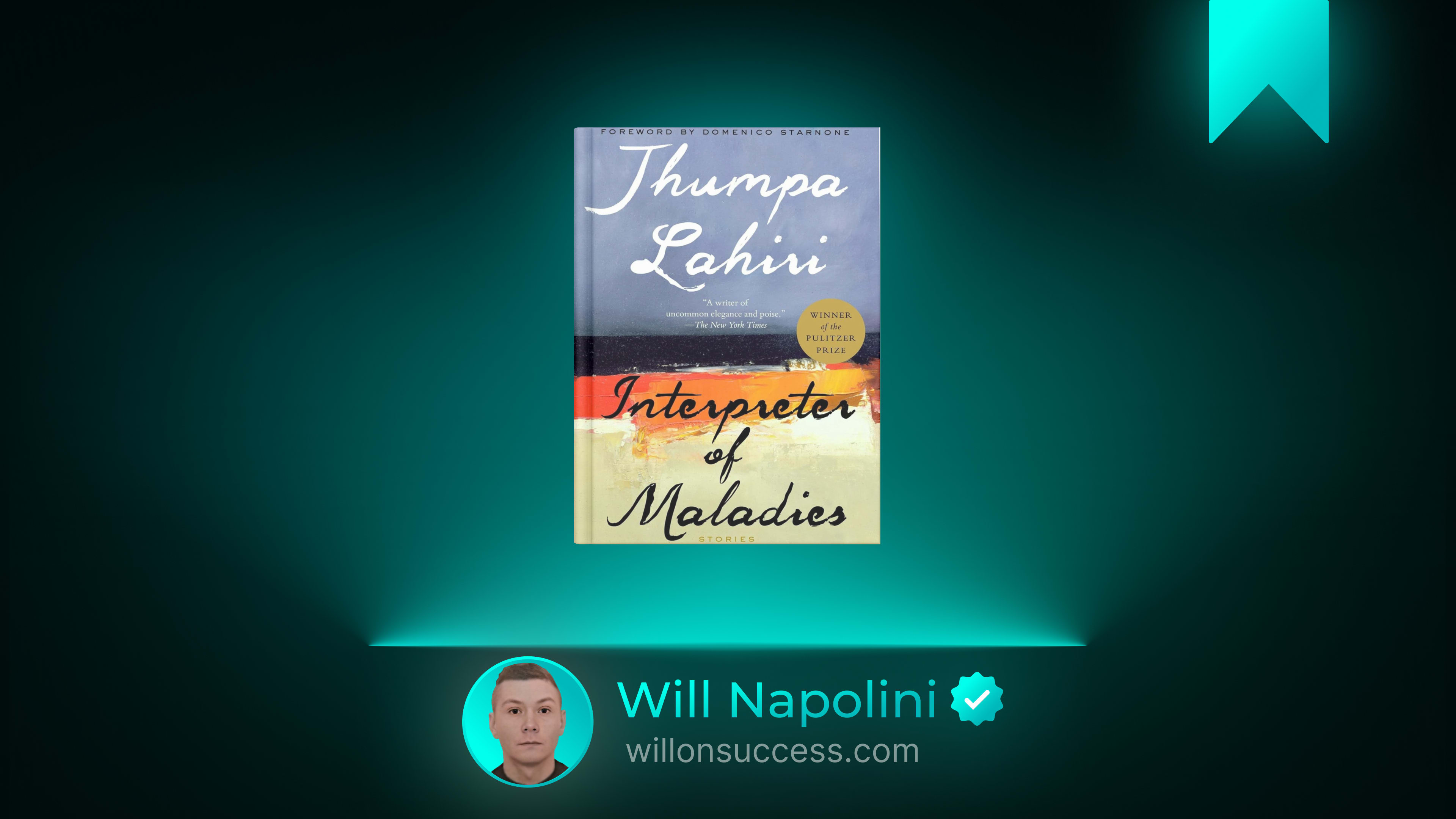
I want to show you an idea that changed the way I think about loneliness.
We often believe that if we just find the right person, the right community, or the right words, our isolation will end. We assume that sharing a background, a language, or even a marriage certificate guarantees understanding. But what if the barrier isn’t distance? What if the barrier is the story we tell ourselves about the person standing right in front of us?
Jhumpa Lahiri’s Interpreter of Maladies is not a self-help book. It is a collection of nine short stories about Indian immigrants and Indian-Americans navigating the space between worlds. Yet, within its pages lies some of the most practical wisdom on human connection I have ever encountered. Lahiri teaches us that true intimacy is not found in fantasy or projection. It is forged in the difficult, unglamorous work of seeing others as they actually are, and allowing ourselves to be seen in return.
If you have ever felt alone in a crowded room, misunderstood by someone who should know you best, or disappointed when a relationship failed to match the picture in your head, this book is speaking directly to you.
The Big Idea: Connection Requires Truth, Not Translation
The central thesis of Interpreter of Maladies is that communication is more than linguistic competence; it is an act of moral and emotional recognition. Characters repeatedly fail to connect not because they lack vocabulary, but because they lack the willingness to confront reality. They substitute fantasy for knowledge, and tourism for engagement.
Lahiri shows us that we can share a culture, a home, or a bed and still remain strangers if we refuse to interpret each other’s true maladies. The “malady” is rarely just a medical condition; it is the universal ache of being unseen. Healing begins only when we stop translating people into what we need them to be and start listening to who they actually are.
This matters because so much of our personal development focuses on external skills—better conversation techniques, active listening scripts, cultural competency training. Lahiri reminds us that these tools are hollow without the internal foundation of honesty. You cannot hack genuine connection. You must earn it through the steady practice of truth.
The Story That Reveals the Trap of Fantasy
Consider the title story, which serves as the collection’s emotional anchor. Mr. Kapasi, a tour guide and part-time interpreter at a doctor’s office, drives the Das family—an Indian-American couple and their three children—through India. On the surface, they share a heritage. Beneath the surface, they inhabit different universes.
Mr. Kapasi, lonely in his own arranged marriage, begins to romanticize Mrs. Das. He sees her American confidence and assumes she might understand his inner life. Mrs. Das, burdened by guilt over an affair, projects onto Mr. Kapasi the role of absolver, hoping his job as an “interpreter of maladies” means he can translate her pain into forgiveness.
Both are wrong.
When Mrs. Das finally confesses her secret, expecting solace, Mr. Kapasi offers only a banal observation. He cannot give her what she wants because he never truly saw her; he saw a mirror for his own longing. And she never saw him; she saw a functionary for her guilt. When the slip of paper with his address flutters out of her bag and blows away in the wind, it is not a tragic accident. It is the inevitable result of a connection built on illusion.
Meanwhile, Mr. Das remains behind his camera and guidebook, treating India and his own family as scenery rather than living reality. The children run wild, unattended. No one is interpreting anyone. Everyone is speaking, yet no one is heard.
This story is devastating because it is recognizable. How often have you mistaken your own needs for someone else’s truth? How often have you expected a partner, friend, or mentor to fix what only you could face?
Your Environment Is Quietly Shaping Your Capacity for Intimacy
Lahiri understands that connection does not happen in a vacuum. Our physical and cultural environments either nurture or starve our ability to see clearly.
In “Mrs. Sen’s,” an Indian woman babysitting an American boy struggles to adapt to life in New England. Her loneliness is not merely emotional; it is spatial. She misses the communal rhythms of Calcutta, where food, conversation, and care were woven together. In America, domestic spaces become sites of isolation rather than belonging. Her inability to drive becomes a metaphor for her broader dislocation; without mobility, she cannot bridge the gap between her inner world and her outer circumstances.
Contrast this with “The Third and Final Continent,” the collection’s closing story. An unnamed narrator moves from Calcutta to London to Boston, carrying the weight of displacement. Yet, in a cramped Boston apartment, he forms a quiet bond with his elderly landlady, Mrs. Croft. Their connection emerges not from grand declarations but from shared routines: tea, respectful silence, and the gradual acknowledgment of each other’s dignity.
What makes this possible? The environment allows for slowness. There is no pressure to perform assimilation or manufacture intimacy. The domestic space becomes a container for genuine recognition. When his arranged wife Mala arrives, their relationship blossoms not despite their cultural differences but because both have learned, through small acts of attention, how to inhabit uncertainty together.
Your surroundings are teaching you how to relate. If your environment rewards speed, performance, and superficiality, do not blame yourself for feeling disconnected. Instead, ask: What small change in my physical or relational space could create room for truth?
Miscommunication Is Often a Refusal to See
Language and communication are dominant themes throughout the collection, but Lahiri reveals that the deepest miscommunications are not linguistic. They are ethical.
In “A Temporary Matter,” Shukumar and Shoba’s marriage has collapsed after the stillbirth of their child. They live in polite silence until a power outage forces them to share secrets in the dark. The darkness removes the visual cues that allow them to maintain their carefully constructed facades. Only when they cannot see each other do they begin to speak honestly.
But here is the crucial lesson: the temporary nature of the blackout mirrors the temporary nature of their reconnection. The secrets they share are real, but they are also safe because they occur outside ordinary time. When the power returns, so does the distance. One final revelation—Shoba’s plan to move out—shatters the fragile closeness.
Why? Because honesty without ongoing commitment is just another form of performance. True communication requires daily courage, not just crisis-induced vulnerability. It demands that we keep showing up in the light, not just in the dark.
I have seen this pattern in my own life and in the lives of those I mentor. We wait for the perfect moment, the safe space, the dramatic confession. But connection is built in the mundane moments: the question asked without agenda, the silence held without discomfort, the refusal to look away when the truth is inconvenient.
Guilt and Responsibility Are the Groundwork of Trust
Guilt and responsibility emerge as quiet undercurrents in nearly every story. Mrs. Das carries the weight of infidelity. Mr. Kapasi carries the weight of wasted potential. Shukumar and Shoba carry the weight of grief they cannot name.
Lahiri does not offer easy absolution. Instead, she shows that responsibility is the prerequisite for trust. You cannot build a relationship on hidden shame or avoided accountability. Mrs. Das seeks relief from Mr. Kapasi precisely because she has not taken full ownership of her choices. She wants interpretation, not transformation.
In contrast, the narrator of “The Third and Final Continent” takes responsibility for his own adaptation. He learns English, respects Mrs. Croft’s boundaries, and patiently builds a life in a foreign land. His eventual connection with Mala is possible because he has already done the inner work of showing up faithfully in unfamiliar territory.
Personal development often emphasizes self-care and boundary-setting, and these are vital. But Lahiri reminds us that responsibility toward others is equally essential. Growth before achievement means becoming someone capable of holding another person’s truth without collapsing under its weight. Character before circumstances means choosing integrity even when no one is watching.
Why This Matters for Your Life Right Now
You may be working hard and still wondering why nothing is changing in your relationships. You may have read every book on communication, attended every workshop, and practiced every technique—and still feel profoundly alone.
Lahiri’s work suggests the problem may not be skill deficiency. It may be vision deficiency.
Are you seeing the person in front of you, or are you seeing the role you need them to play? Are you listening to understand, or are you listening to confirm what you already believe? Are you taking responsibility for your part in the disconnection, or are you waiting for the other person to translate your pain for you?
These questions apply everywhere:
- In marriage: Stop expecting your partner to heal wounds they did not create. Begin by naming your own.
- In parenting: Put down the guidebook (literal or metaphorical) and engage with the child who exists, not the one you imagined.
- In leadership: Recognize that your team members are not functions. Their malaises are real, and your job is not to fix them but to acknowledge them.
- In cross-cultural relationships: Understand that shared heritage does not guarantee shared understanding. Curiosity must replace assumption.
- In friendship: Release the fantasy of perfect alignment. Real friendship survives disagreement because it is rooted in respect, not resonance.
Practical Application: One Practice of Honest Seeing
Understanding is valuable, but understanding without action changes nothing. Here is a concrete practice drawn directly from Lahiri’s wisdom:
The Daily Unfiltered Question
Once a day, ask someone in your life a question that invites truth rather than performance. Then listen without correcting, defending, or advising.
Examples:
- “What is something you’ve been carrying lately that you haven’t said aloud?”
- “When did you last feel truly seen by me? When did you feel missed?”
- “What part of our relationship feels distant to you right now?”
After asking, hold silence for at least ten seconds. Do not fill it. Do not offer solutions. Simply receive.
If the answer hurts, resist the urge to retreat into explanation. Say only: “Thank you for telling me.” Then sit with the discomfort. That discomfort is the birthplace of real connection.
Do this for seven days. Notice what fantasies dissolve. Notice what truths emerge. Notice how your capacity for presence grows.
This is not about fixing anyone. It is about practicing the discipline of seeing.
Who Should Read This Book
Interpreter of Maladies will resonate deeply if you:
- Feel caught between cultures, identities, or expectations
- Have experienced the hollowness of relationships that look good from the outside
- Are grieving a loss that has no socially acceptable language
- Want to understand the immigrant experience beyond stereotypes
- Believe that literature can teach what textbooks cannot
It may be less useful if you seek prescriptive advice, upbeat narratives, or stories with tidy resolutions. Lahiri offers no guarantees. She offers only the clear-eyed compassion of someone who knows that healing is slow, partial, and always earned.
Read this book not to escape your life but to enter it more fully.
One Small Step Today
Before you close this page, choose one person you have been avoiding seeing clearly.
Write down one assumption you hold about them. Then write down one question that could challenge that assumption.
Ask that question today.
Not tomorrow. Not when you feel ready. Today.
Because connection does not begin when conditions are perfect. It begins when you decide that truth matters more than comfort.
Real intimacy is not found in the absence of difference, but in the courageous presence within it.