Taming the Wild Things Within: A Mentor’s Guide to Emotional Mastery and the Journey Home
I want to talk about the moment you lose control.
Not the dramatic, cinematic kind of losing control. I mean the quiet, internal snap. The moment when frustration boils over, when you say the thing you immediately regret, when the heavy wolf suit of your own defensiveness zips up and takes over.
We all know this feeling. You are triggered, you react, and suddenly you are a stranger to yourself. Afterward, when the adrenaline fades, you are left sitting in the wreckage of your own making, wondering why you cannot seem to master your own mind.
If I could sit across the table from you right now, I would tell you that the problem is not that you have wild, chaotic emotions. The problem is that you have been taught to believe those emotions make you a monster.
We spend so much of our personal development journey trying to cage our anger, suppress our fears, or intellectualize our grief. We think that maturity means building a fortress to keep the wild things out.
But after years of studying human behavior and sitting with people who are exhausted by their own reactivity, I have learned a different truth. True emotional mastery is not about building a cage. It is about learning how to sail to the wild things, look them in the eye, and eventually choose to come home.
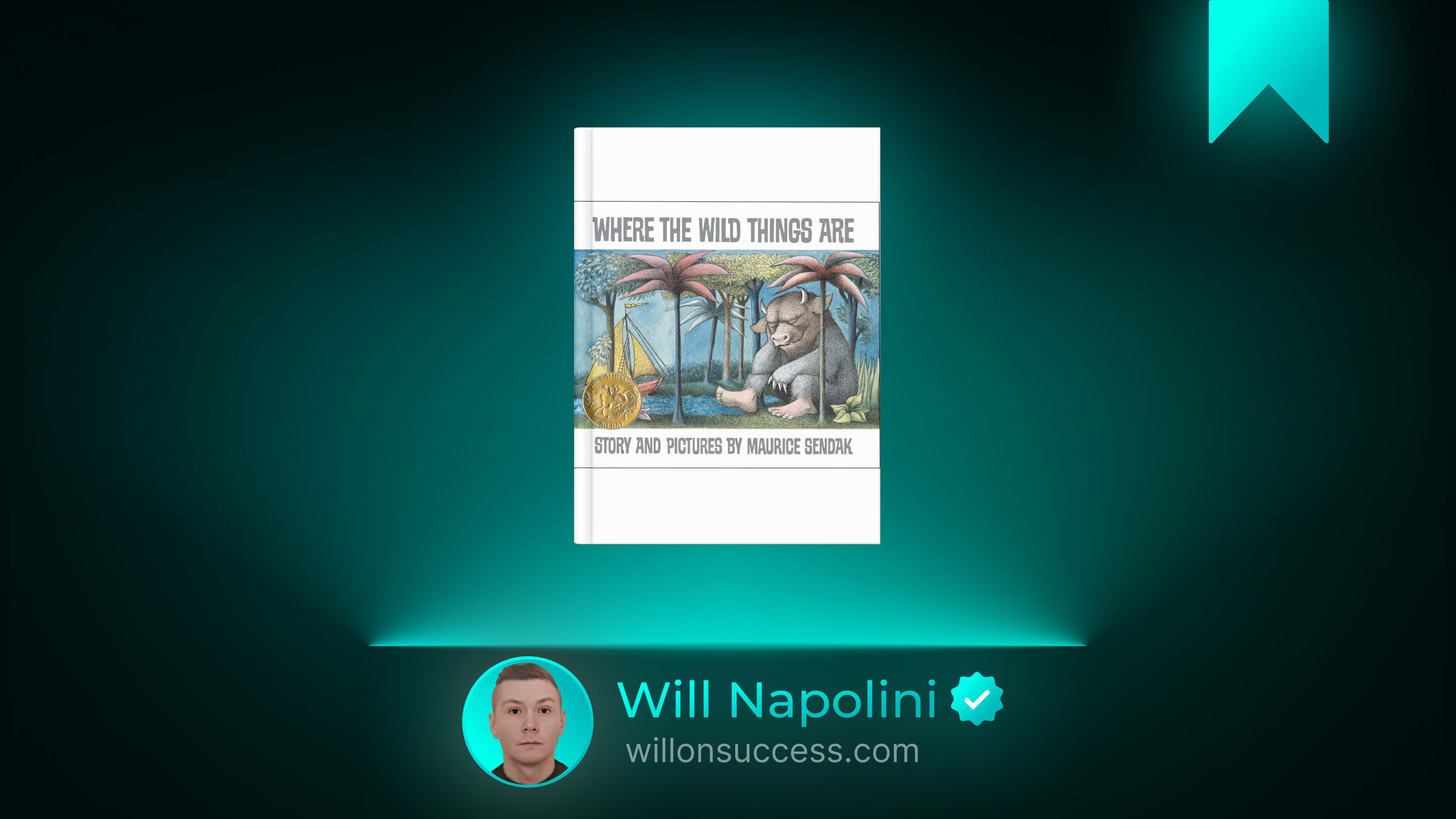
And the most profound guide I have ever found for this journey is not a thick psychological textbook. It is a classic children’s picture book: Where the Wild Things Are by Maurice Sendak.
The Big Idea: You Cannot Destroy the Wild Things
The central thesis of Sendak’s masterpiece is deceptively simple, yet it contains a lifetime of psychological wisdom: We cannot destroy our chaotic, untamed emotions. We can only acknowledge them, experience them fully, and ultimately choose to return to the place where we are anchored by love.
When we are angry or hurt, our instinct is to fight the feeling or run from it. But Sendak shows us that running only takes us deeper into the forest of our own minds. The wild things—our anger, our ego, our impulses—are a part of us.
Maturity is not the absence of the wild rumpus. Maturity is the ability to let the rumpus happen, realize you are the one in charge of it, and then decide when it is time to sail back to where someone loves you best of all.
The Story of the Journey
To understand the depth of this principle, we have to look at the story Sendak tells.
It begins with a boy named Max. He puts on a wolf suit, causes mischief, and is sent to his room without supper. His mother calls him a “WILD THING!” and Max replies, “I’LL EAT YOU UP!”
Instantly, his room transforms. A forest grows. The walls fall away. An ocean appears. Max sails his private boat to the land of the Wild Things.
When he arrives, the creatures roar and gnash their teeth. But Max does not run. He does not fight. He simply stares into their yellow eyes without blinking, and says, “BE STILL!” They are tamed, and they make him their king.
Max leads them in a wild rumpus. It is glorious and chaotic. But then, the night grows old. Max feels lonely. He catches the scent of good food from far away, and he decides to give up his crown. The Wild Things roar, but Max sails back.
When he returns to his room, the forest is gone. His supper is waiting for him. And it is still hot.
This is not just a bedtime story. It is a flawless, visual map of emotional regulation.
The Forest Grows in the Room You Tried to Escape
The first principle we must understand is that isolation is often the crucible where we finally meet ourselves.
When Max is sent to his room, it feels like a punishment. It feels like a confinement. When you are sent to your own “room”—when you are forced to sit with your anger after a blown argument, or your anxiety after a failure—it feels like a prison.
But look at what happens in that room. The walls do not just sit there. A forest grows. An ocean appears.
I have seen this happen in my own life and in the lives of those I mentor. When we are forced to stop and sit with our difficult emotions, those emotions do not stay small. They expand. The things we tried to ignore suddenly take up the entire room.
This is not a failure; it is a necessary step. You cannot navigate an emotion you refuse to look at. The expansion of the forest is simply your mind making space for you to finally confront what has been living there. You have to let the room transform before you can sail across it.
Taming the Chaos Requires a Steady Gaze, Not a Weapon
When Max arrives at the land of the Wild Things, the creatures are terrifying. They roar and show their claws. Our instinct when faced with intense emotion is the same: we want to fight it, suppress it, or run away.
But Max does something radically different. He stares into their yellow eyes without blinking.
This is the core mechanism of emotional regulation. You do not tame your anger by arguing with it. You do not tame your anxiety by trying to logic it away. You tame it by observing it without blinking.
In psychology, this is akin to mindfulness. It is the practice of noticing the physical sensation of anger in your chest, or the tight grip of fear in your throat, and simply watching it. You do not judge it. You do not act on it. You just look at it.
When you stare the wild thing in the eye without reacting, it loses its power over you. It realizes you are not afraid of it, and it settles down. You do not achieve peace by building a cage for your emotions; you achieve it by learning their names and holding your ground.
The Rumpus is Necessary, but It Is Not the Destination
Once the Wild Things are tamed, Max becomes their king. He starts the “wild rumpus.” They howl at the moon and swing from the trees.
This is a beautiful metaphor for the necessity of feeling our feelings. We are not meant to be robotic. We are meant to feel the joy, the anger, the passion, and the grief. The wild rumpus is the full, unfiltered experience of being alive.
But notice what happens next. The night grows old. Max looks across the water and feels lonely.
This is a critical lesson in personal growth. We often believe that if we can just let our ego run wild, if we can just chase our impulses, if we can just be the “king” of our own untamed desires, we will finally be satisfied. We think the rumpus is the destination.
But the rumpus is empty. Freedom without connection is just another kind of isolation. You can have all the power, all the validation, and all the chaotic excitement in the world, and still feel profoundly alone in the dark.
Growth requires us to realize that the wild rumpus is a season, not a home. It is a place to visit, to feel alive, but it is not where we build our lives.
The Anchor of Unconditional Love
The most powerful moment in the book is not the roaring of the monsters. It is the quiet decision Max makes to leave.
He smells good food from far away. He realizes he wants to go back to where someone loves him best of all.
When you are in the middle of an emotional storm, it is incredibly difficult to remember that you are loved. The wild things convince you that you are alone, that you must fight, that you must defend yourself.
But true emotional maturity is having an anchor that is stronger than the storm. It is knowing that no matter how wild you get, no matter how far you sail into your own ego, there is a place of unconditional love you can return to.
For some, this is a partner, a parent, or a child. For others, it is a deep, internal sense of self-worth, a spiritual faith, or a core set of values.
When Max returns to his room, the wild forest is gone. The world is quiet. And his supper is still hot.
This is the ultimate promise of emotional work. When you do the hard work of facing your wild things, when you navigate the ocean of your own mind and choose to return to love, you find that the world has not abandoned you. The love was there the whole time. It was kept warm for you.
Why It Matters on an Ordinary Tuesday
You might be wondering how a children’s book about a boy in a wolf suit applies to your actual life.
I have seen professionals, leaders, and parents completely paralyzed by their own reactivity. They let their “wild things” run the boardroom, the marriage, or the household. They think that being assertive means roaring. They think that being strong means never showing vulnerability.
But on an ordinary Tuesday, applying the wisdom of Where the Wild Things Are looks like this:
Your boss criticizes your project. You feel the wolf suit zipping up. Your chest tightens. The wild things in your mind start roaring, telling you to snap back, to defend your ego, to start a wild rumpus of arguments.
Instead of reacting, you pause. You let the forest grow in your mind for just a moment. You stare into the yellow eyes of your own anger without blinking. You observe the feeling without letting it drive the car.
And then, you choose to sail back. You choose to respond from a place of connection and professionalism, rather than reacting from a place of wildness. You choose the “hot supper” of long-term respect over the fleeting, empty calories of a temporary argument.
Practical Application: Your Next Steps
Understanding this metaphor is beautiful, but understanding without action changes nothing. Here is how you can put this into practice.
1. Identify Your Wolf Suit What does your “wild thing” look like? When you are triggered, what are your specific behaviors? Do you raise your voice? Do you shut down and give the silent treatment? Do you become overly critical? Write down your specific reactions. You cannot tame a wild thing you refuse to identify.
2. Practice the “Steady Gaze” The next time you feel a strong emotion rising, do not act on it for ninety seconds. Neuroscience tells us that the physiological surge of an emotion lasts about ninety seconds. Set a timer in your mind. Just sit and watch the physical sensation. Stare into its yellow eyes. Do not blink. Do not speak. Let it pass through you.
3. Define Your “Hot Supper” What is your anchor? When the wild rumpus loses its appeal and you feel lonely, where do you sail back to? Identify the people, the values, or the practices that remind you of who you truly are. When you are calm, write down three things you can do to reconnect with that anchor when you feel lost.
Who Should Read This Book
This book is essential for anyone who struggles with emotional regulation, anger, or feeling disconnected from their own humanity. It is a must-read for parents, because it reminds us that our children’s “wildness” is not a defect to be crushed, but a natural phase to be navigated.
It is also profoundly healing for adults who have forgotten how to play, how to feel deeply, or how to forgive themselves for their own messy emotions.
I will be honest with you: this is a picture book. You can read it in five minutes. But do not let its brevity fool you. If you read it looking for a simple children’s tale, you will miss the map. You must read it looking for yourself.
One Small Step
If you take only one thing away from this today, let it be this: You are not your wild things. You are the captain of the boat.
Right now, think of a recent situation where you lost your temper or acted out of alignment with your values. Forgive yourself. You were just in the land of the Wild Things.
Tomorrow, when you feel the familiar tightness in your chest and the urge to roar, try something different. Stop. Take one deep breath. Stare into the yellow eyes of your anger without blinking.
The wild things will roar, but they cannot hurt you if you do not let them take the wheel. Sail back to where you are loved. The supper is still hot.