Fear Is the Mind-Killer: What Frank Herbert's Dune Teaches Us About Power, Adaptation, and the Courage to Walk Into the Desert
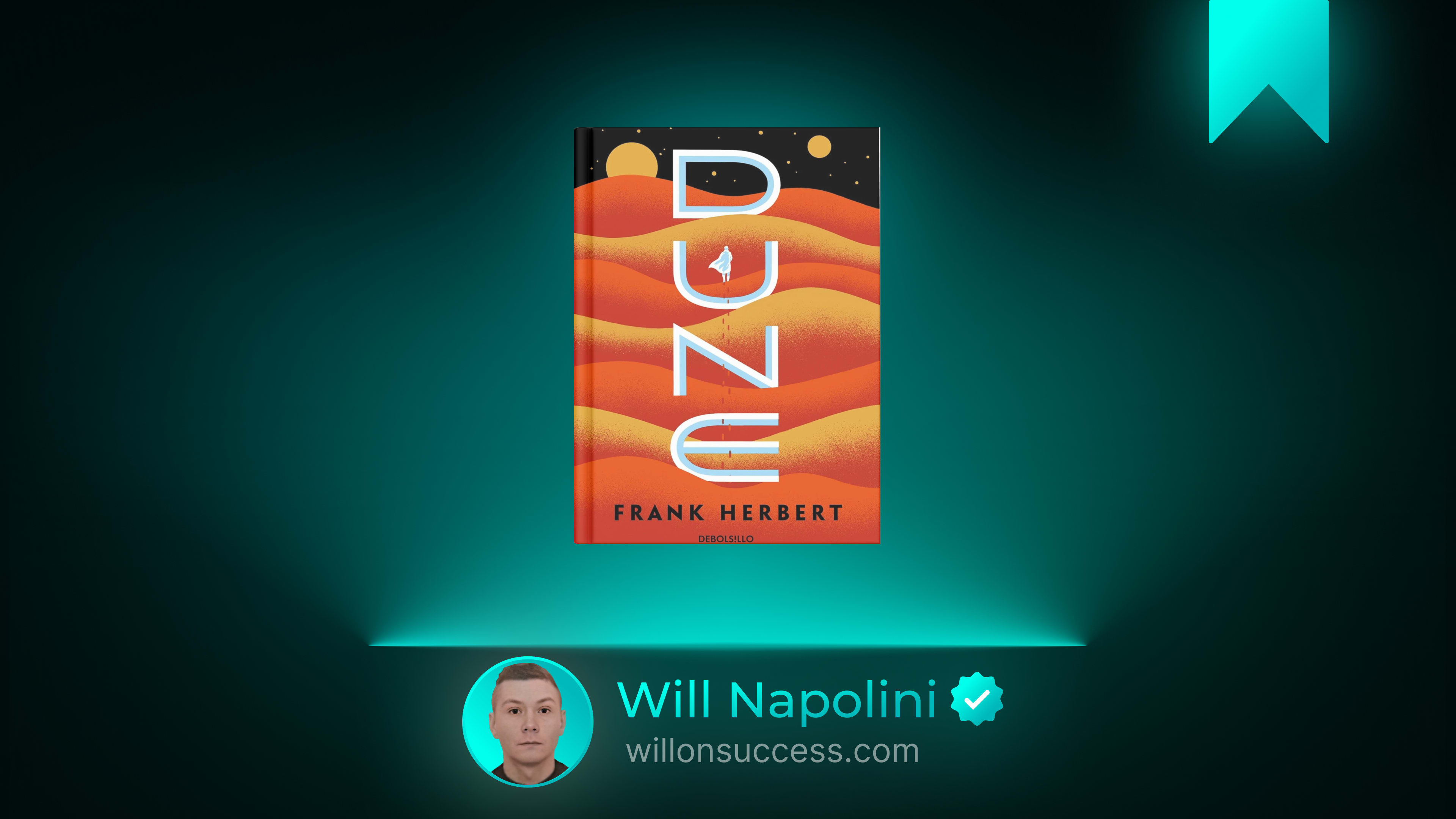
There is a moment in life when the ground you have been standing on simply gives way. Not slowly. Not with a long, polite warning. It gives way, and suddenly you are in a landscape you did not choose, with resources you did not gather, surrounded by people whose rules you have not yet learned. The old maps are useless. The old comforts are gone. And the only question that matters now is whether you can walk forward into the unfamiliar without being paralyzed by the enormity of what you have lost.
If you have lived through that moment—and I suspect you have, in some form—then you already know the emotional terrain of Frank Herbert’s Dune.
Published in 1965, winner of both the Hugo and Nebula Awards, Dune is often described as the greatest science fiction novel ever written. And it is. But calling it science fiction is a little like calling the ocean a body of water. Technically accurate, but it misses the depth. Dune is a novel about fear and what it does to human thinking. About adaptation and what it costs. About the terrible seduction of certainty, and about what happens when a young person is handed a destiny they did not ask for and must decide whether to accept it or be destroyed by it.
I have read this book at different ages, and it has spoken to me differently each time. In my youth, it was an adventure. In my middle years, it became a warning. Now I read it as something close to a manual for surviving the seasons of life where everything familiar has been taken and you must learn to breathe in a new atmosphere.
The Big Idea
Dune is set on Arrakis, a desert planet of almost unimaginable harshness. No rain falls. Water is so scarce that the indigenous people, the Fremen, have developed technology to reclaim every drop of moisture from their own bodies. The planet’s only reason for existing in the eyes of the galactic empire is that it produces the spice melange—a substance that extends life, expands consciousness, and makes space travel possible. Whoever controls Arrakis controls the spice. Whoever controls the spice controls everything.
Into this world, the young Paul Atreides is thrust when his father, Duke Leto, is given stewardship of the planet by the Emperor. But the appointment is a trap. The rival Harkonnen family, with the Emperor’s secret complicity, destroys the Atreides. Duke Leto is killed. Paul and his mother, Lady Jessica, flee into the open desert with nothing, hunted, presumed dead.
What follows is not simply a revenge story, though it contains revenge. It is the story of a young man who must survive in conditions that should kill him, who must earn the trust of a people who have no reason to trust outsiders, and who must confront a terrible question: if you can see the future, are you still free? Or has the vision of what is coming become a prison from which you cannot deviate?
Herbert’s deepest argument, woven through every layer of the plot, is this: the most dangerous thing in human life is not the enemy in front of you. It is the certainty that you know what comes next. Certainty kills adaptability. Certainty kills humility. Certainty turns living people into instruments of a fixed plan. And the desire for certainty—whether in the form of prophecy, ideology, or the blind faith in a single leader—is the force that destroys civilizations.
The Story: A Boy Walks Into the Desert
I will not trace every thread of the plot. The novel is dense, layered, and populated with dozens of characters whose loyalties shift like sand. But the essential arc is this.
Paul Atreides has been trained since birth by multiple disciplines. His mother, a member of the Bene Gesserit sisterhood, has trained him in mental and physical control. His father’s advisors have trained him in combat, strategy, and politics. He is, in many ways, a manufactured person—shaped by programs and plans that existed before he was born.
And then the world those programs prepared him for is annihilated in a single night.
What remains is a boy in the desert with his mother, a handful of tools, and the vast, indifferent hostility of the sand. The Fremen find them, but finding is not the same as accepting. Paul must prove himself. He must learn their ways. He must understand the ecology of the desert—not as an abstraction, but as the living system that will either sustain him or kill him. He must unlearn the assumptions of the world he came from and learn the grammar of the world he is in.
And he must face something worse than the desert. He must face the growing certainty, in his own mind and in the minds of those around him, that he is a prophesied figure. A messiah. A leader whose path is already written.
Herbert makes clear, both in the novel and in his later commentary on it, that this is not a celebration of the hero’s journey. It is a warning about it. Paul’s rise to power is also his entrapment. The very prescience that makes him powerful locks him into a path he can see but cannot escape. He becomes what the Fremen need him to be, and in doing so, loses the freedom to be anything else.
Fear and the Discipline of Facing It
One of the most famous passages in all of science fiction comes early in Dune. It is a litany—a short, repeated prayer—that the Bene Gesserit use to master their own terror. Its essence is this: fear is not something to avoid or deny. Fear is the thing that, if you let it, will paralyze your mind and make you incapable of acting. The discipline is not to eliminate fear. The discipline is to face it directly, to let it pass through you, and to observe, with calm attention, what remains when it has gone.
I have thought about this passage more times than I can count. Because the instinct, when fear arrives, is to argue with it. To distract yourself from it. To pretend it is not there. To build elaborate plans for avoiding the thing you are afraid of. And all of those strategies leave you exhausted, because you are spending your energy managing the fear rather than doing the work that fear is trying to prevent you from doing.
What Herbert’s litany suggests is different. You do not argue with fear. You do not flee from it. You turn toward it. You let it move through you like wind through a canyon. And then you look back and see what is left. And what is left, almost always, is the task itself. The thing you actually need to do. Stripped of the terror you wrapped around it.
Fear does not disappear. But it stops being the one holding the pen. You take the pen back. You write the next sentence. You take the next step.
This is not courage as the absence of fear. This is courage as the decision to act while fear is still in the room.
Adaptation Is Not Surrender; It Is the Highest Form of Intelligence
The Fremen survive in a desert that should be unsurvivable. They do so not by fighting the environment or by pretending it is something other than what it is. They do so by understanding
title: “Fear Is the Mind-Killer: What Frank Herbert’s Dune Teaches Us About Power, Adaptation, and the Courage to Walk Into the Desert” description: >- Frank Herbert’s Dune is far more than a science fiction epic. Beneath its deserts and prophecies lies a profound meditation on fear, adaptation, the seduction of certainty, and the terrible cost of becoming what others expect you to be. Here is what it teaches us about building a life in hostile ground. date: 2026-08-14 00:00:00 +0800 categories: [book-summaries, personal-development] tags: [ dune, frank-herbert, fear, adaptation, leadership, systems-thinking, science-fiction, resilience ] image: “IMAGE_URL” alt: “A lone figure walking across a vast desert landscape under a wide sky, sand dunes stretching to the horizon, footprints trailing behind.” pin: false fallback: —
There is a moment in life when the ground you have been standing on simply gives way. Not slowly. Not with a long, polite warning. It gives way, and suddenly you are in a landscape you did not choose, with resources you did not gather, surrounded by people whose rules you have not yet learned. The old maps are useless. The old comforts are gone. And the only question that matters now is whether you can walk forward into the unfamiliar without being paralyzed by the enormity of what you have lost.
If you have lived through that moment—and I suspect you have, in some form—then you already know the emotional terrain of Frank Herbert’s Dune.
Published in 1965, winner of both the Hugo and Nebula Awards, Dune is often described as the greatest science fiction novel ever written. And it is. But calling it science fiction is a little like calling the ocean a body of water. Technically accurate, but it misses the depth. Dune is a novel about fear and what it does to human thinking. About adaptation and what it costs. About the terrible seduction of certainty, and about what happens when a young person is handed a destiny they did not ask for and must decide whether to accept it or be destroyed by it.
I have read this book at different ages, and it has spoken to me differently each time. In my youth, it was an adventure. In my middle years, it became a warning. Now I read it as something close to a manual for surviving the seasons of life where everything familiar has been taken and you must learn to breathe in a new atmosphere.
The Big Idea
Dune is set on Arrakis, a desert planet of almost unimaginable harshness. No rain falls. Water is so scarce that the indigenous people, the Fremen, have developed technology to reclaim every drop of moisture from their own bodies. The planet’s only reason for existing in the eyes of the galactic empire is that it produces the spice melange—a substance that extends life, expands consciousness, and makes space travel possible. Whoever controls Arrakis controls the spice. Whoever controls the spice controls everything.
Into this world, the young Paul Atreides is thrust when his father, Duke Leto, is given stewardship of the planet by the Emperor. But the appointment is a trap. The rival Harkonnen family, with the Emperor’s secret complicity, destroys the Atreides. Duke Leto is killed. Paul and his mother, Lady Jessica, flee into the open desert with nothing, hunted, presumed dead.
What follows is not simply a revenge story, though it contains revenge. It is the story of a young man who must survive in conditions that should kill him, who must earn the trust of a people who have no reason to trust outsiders, and who must confront a terrible question: if you can see the future, are you still free? Or has the vision of what is coming become a prison from which you cannot deviate?
Herbert’s deepest argument, woven through every layer of the plot, is this: the most dangerous thing in human life is not the enemy in front of you. It is the certainty that you know what comes next. Certainty kills adaptability. Certainty kills humility. Certainty turns living people into instruments of a fixed plan. And the desire for certainty—whether in the form of prophecy, ideology, or the blind faith in a single leader—is the force that destroys civilizations.
The Story: A Boy Walks Into the Desert
I will not trace every thread of the plot. The novel is dense, layered, and populated with dozens of characters whose loyalties shift like sand. But the essential arc is this.
Paul Atreides has been trained since birth by multiple disciplines. His mother, a member of the Bene Gesserit sisterhood, has trained him in mental and physical control. His father’s advisors have trained him in combat, strategy, and politics. He is, in many ways, a manufactured person—shaped by programs and plans that existed before he was born.
And then the world those programs prepared him for is annihilated in a single night.
What remains is a boy in the desert with his mother, a handful of tools, and the vast, indifferent hostility of the sand. The Fremen find them, but finding is not the same as accepting. Paul must prove himself. He must learn their ways. He must understand the ecology of the desert—not as an abstraction, but as the living system that will either sustain him or kill him. He must unlearn the assumptions of the world he came from and learn the grammar of the world he is in.
And he must face something worse than the desert. He must face the growing certainty, in his own mind and in the minds of those around him, that he is a prophesied figure. A messiah. A leader whose path is already written.
Herbert makes clear, both in the novel and in his later commentary on it, that this is not a celebration of the hero’s journey. It is a warning about it. Paul’s rise to power is also his entrapment. The very prescience that makes him powerful locks him into a path he can see but cannot escape. He becomes what the Fremen need him to be, and in doing so, loses the freedom to be anything else.
Fear and the Discipline of Facing It
One of the most famous passages in all of science fiction comes early in Dune. It is a litany—a short, repeated prayer—that the Bene Gesserit use to master their own terror. Its essence is this: fear is not something to avoid or deny. Fear is the thing that, if you let it, will paralyze your mind and make you incapable of acting. The discipline is not to eliminate fear. The discipline is to face it directly, to let it pass through you, and to observe, with calm attention, what remains when it has gone.
I have thought about this passage more times than I can count. Because the instinct, when fear arrives, is to argue with it. To distract yourself from it. To pretend it is not there. To build elaborate plans for avoiding the thing you are afraid of. And all of those strategies leave you exhausted, because you are spending your energy managing the fear rather than doing the work that fear is trying to prevent you from doing.
What Herbert’s litany suggests is different. You do not argue with fear. You do not flee from it. You turn toward it. You let it move through you like wind through a canyon. And then you look back and see what is left. And what is left, almost always, is the task itself. The thing you actually need to do. Stripped of the terror you wrapped around it.
Fear does not disappear. But it stops being the one holding the pen. You take the pen back. You write the next sentence. You take the next step.
This is not courage as the absence of fear. This is courage as the decision to act while fear is still in the room.
Adaptation Is Not Surrender; It Is the Highest Form of Intelligence
The Fremen survive in a desert that should be unsurvivable. They do so not by fighting the environment or by pretending it is something other than what it is. They do so by understanding it so completely that they can move within it, use it, become part of its logic.
Their stillsuits reclaim moisture from the body. Their camps are hidden in rock formations that deflect sandstorms. Their entire culture is organized around the principle that water is sacred, that waste is death, and that the desert is not an enemy to be conquered but a system to be understood and respected.
Paul’s survival depends on his willingness to learn this. He cannot impose the logic of his old world onto the sand. He cannot demand that Arrakis be comfortable, or green, or easy. He must become someone who can live in the conditions that exist, not the conditions he wishes existed.
I have watched people struggle with this in their own lives. The person who loses a job and spends two years waiting for the exact same job to reappear, rather than asking what new terrain they are now standing on. The person whose relationship ends and who tries to rebuild the next relationship as a replica of the old one, rather than learning what this new person and this new season actually require. The person who moves to a new city, a new country, a new phase of life, and suffers because they keep insisting that this new place should operate by the rules of the old one.
Adaptation is not weakness. It is not abandoning who you are. It is the recognition that the ground has changed, and that your survival and your growth now depend on learning the grammar of the ground you are actually standing on.
The desert does not care about your preferences. But if you learn its language, it will teach you things that no comfortable room ever could.
The Trap of Certainty and the Danger of the Chosen One
This is, I believe, the deepest and most important theme in the novel, and the one Herbert himself emphasized most strongly in his later writings.
Dune is not a story about a hero who saves the world. It is a story about what happens when a society projects its desperate need for salvation onto a single person, and what happens to that person under the weight of that projection.
Paul can see possible futures. But the more he sees, the more those futures narrow. The more certain he becomes, the less free he is. His prescience does not liberate him. It imprisons him. He becomes a man walking a corridor with no doors, because every door would lead to a future he did not foresee, and he cannot risk the unseen.
Herbert’s warning is explicit: do not trust the person who claims to know exactly what will happen. Do not hand your agency to the leader who promises a fixed destination. Do not mistake certainty for wisdom. The future is not a road you can see from a great height. It is a landscape that changes as you walk through it, and the person who insists they already know the shape of the entire journey is the person most likely to lead you off a cliff.
In our own lives, this plays out in smaller but equally destructive ways. The five-year plan that becomes a prison because you are too afraid to deviate from it. The identity you constructed at twenty that you are still performing at forty because changing it would mean admitting you were uncertain. The leader, the ideology, the system that promises to explain everything and demands, in return, that you stop asking questions.
Certainty is comfortable. It is also the enemy of growth. The person who knows exactly what will happen next has stopped learning. And the person who has stopped learning is already, in the most important sense, finished.
Systems, Not Events: Thinking Like an Ecologist
Herbert was deeply influenced by ecology, and Dune is structured like an ecosystem rather than a plot. Every element is connected to every other element. The spice exists because of the sandworms. The sandworms exist because of the desert conditions. The desert conditions shape the Fremen. The Fremen shape the politics. The politics shape the economy. Remove one element, and the entire system shifts.
This way of thinking—seeing connections rather than isolated events—is one of the most transferable lessons the novel offers. Most of us are trained to think in terms of single causes and single effects. Something goes wrong, and we look for the one thing to blame. Something goes right, and we look for the one decision that caused it.
But life rarely works that way. The problem in yo