The Light You Cast: How to Fight the Fears That Drain Your Life
There is a specific kind of cold that has nothing to do with the weather. It is the chill of a fear that doesn’t just frighten you, but actively drains the color, the warmth, and the hope from your life.
You know the feeling. It is the moment a heavy anxiety settles over a project you used to love. It is the sudden, freezing realization that a toxic environment is sucking the joy out of the room. It is the whisper in your mind that tells you, with terrifying certainty, that things will never get better, and that you will never be enough.
If I could sit across the table from you, I would tell you that I know exactly how paralyzing that cold can feel. I have felt the frost creep up the windows of my own confidence, convincing me that I was entirely alone in the dark.
But there is a dangerous assumption hiding inside that fear. We assume that because the cold is so powerful, we are helpless against it. We assume that fear is an invincible force that we must either endure or run from.
What if the most powerful weapon you have against despair is not anger, not avoidance, but the deliberate, defiant cultivation of your own joy?
The Big Idea
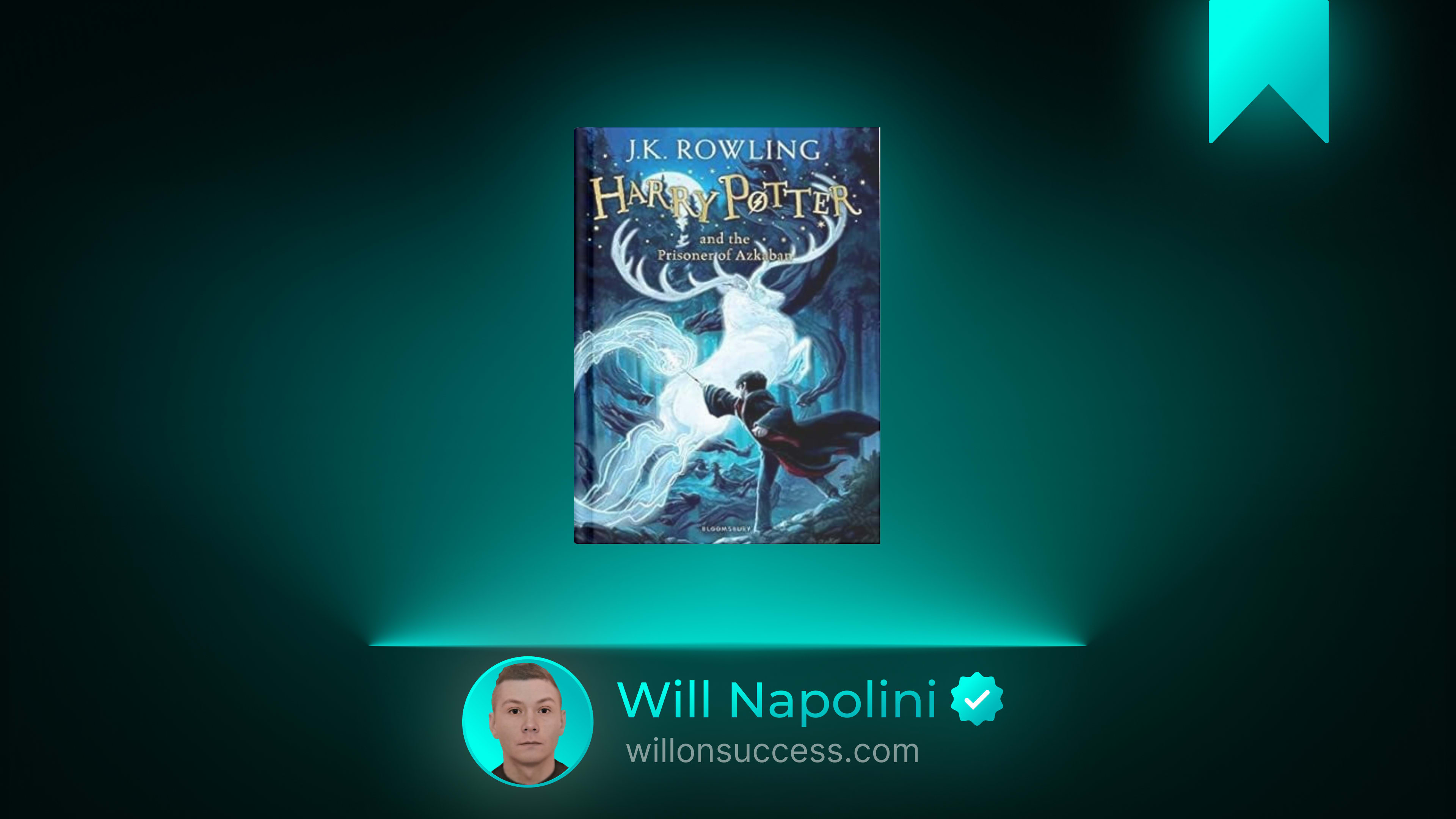
J.K. Rowling’s Harry Potter and the Prisoner of Azkaban is widely considered the turning point of the series. The childhood wonder of the earlier years begins to fade, replaced by a much more complex, shadowed reality. It introduces the terrifying concept of depression, the weight of the past, and the realization that the adults in the room are flawed and cannot always protect you.
The central thesis of the book is that true resilience is not the absence of fear or a painful history. True resilience is the ability to look the darkest parts of your past in the eye, and consciously choose to cast a light of your own making. It teaches us that we cannot fight despair with bitterness; we must fight it with the radiant, unbreakable force of our own inner hope.
The Story and the Concept
The story opens with a shadow hanging over the wizarding world. Sirius Black, a notorious mass murderer and loyal supporter of the dark wizard Lord Voldemort, has escaped from Azkaban, the wizard prison. The entire magical community believes that Black is hunting down Harry Potter.
To protect the students at Hogwarts, the Ministry of Magic stations Dementors—the soul-sucking guards of Azkaban—around the school. Dementors do not use physical weapons. They feed on human happiness. When they are near, the air freezes, all positive memories vanish, and the victim is forced to relive their worst traumas.
For Harry, the Dementors are devastating. Because he lost his parents to murder as a baby, their presence forces him to hear his mother’s dying screams. He faints. He feels helpless. While other students merely feel a chill, Harry is entirely broken by their proximity.
Enter Professor Remus Lupin, the new Defense Against the Dark Arts teacher. Lupin is gentle, observant, and understands Harry’s pain. He does not tell Harry to toughen up. Instead, he offers him chocolate, and he offers him a lesson. He teaches Harry the Patronus Charm—a highly advanced spell that produces a shield of pure, positive energy. To cast it, Harry must focus all his power on a single, incredibly happy memory.
As the book progresses, the narrative flips entirely. The terrifying monster, Sirius Black, is revealed to be innocent. The real traitor who betrayed Harry’s parents has been hiding in plain sight for twelve years. And in the climax of the story, Harry realizes that he cannot wait for the adults to fix the mess. He must step into the dark, face the Dementors, and cast the light himself.
The Anatomy of Despair
One of the most profound metaphors in modern literature is the Dementor.
Rowling has spoken openly about how the Dementors were inspired by her own struggles with severe depression. They are not traditional monsters with fangs and claws. They do not punch you. They do not yell at you. They simply enter the room, and they consume the light.
Despair does not shout; it whispers that things will never get better.
When Harry encounters a Dementor, he does not just feel scared. He loses the ability to feel hope. He loses the belief that he will survive the next five minutes. The Dementor forces him to isolate himself inside his worst memory, making him believe that the pain of the past is the only reality of the present.
I have seen brilliant, capable people freeze in the presence of their personal Dementors. It happens when a business fails and the entrepreneur suddenly believes they are fundamentally unlovable. It happens when a relationship ends and the person decides they are permanently broken. It happens when a medical diagnosis arrives and the mind immediately projects that suffering into the infinite future.
The first step to fighting this kind of despair is recognizing the cold for what it is. You cannot fight what you refuse to name.
When you feel that sudden drop in your energy, when the color drains from your day and the inner critic starts screaming, you must pause and say, This is the Dementor. This is the fear. This is not the objective truth. You must separate your identity from the temporary weather of your mind. The cold is a visitor. It is not your home.
The Patronus Within: Joy as a Weapon
When Harry asks Professor Lupin how to fight the Dementors, he expects to learn a dark spell, a combat curse, or a defensive shield made of iron. Instead, Lupin teaches him to fight with happiness.
The Patronus Charm requires the wizard to summon a single, overwhelmingly positive memory. They must pour every ounce of their belief in that memory into their wand until it takes physical form. Harry struggles immensely at first. His memories of being praised or winning games are not strong enough. The Dementors are too heavy.
But eventually, Harry learns to dig deeper. He finds the core of his identity. He realizes that his love for his parents, his gratitude for his friends, and his deep desire to belong are stronger than the fear.
This is a radical shift in how we approach personal growth.
When we are afraid, our instinct is to fight back with aggression, or to hide in shame. We grit our teeth. We tell ourselves we are stupid for being scared. We try to muscle our way through the dark.
But you cannot fight the dark by staring into it; you have to turn around and face the light.
Joy is not a frivolous luxury; it is the most potent armor you can forge. When you are facing a crushing deadline, a terrifying health scare, or a massive career transition, your bitterness will not sustain you. Your cynicism will not save you. The only thing that will pull you through is a deep, anchored connection to what you love.
Action before intention means that you do not wait for the fear to vanish before you act. You act to build the light. You deliberately, consciously summon the memory of the day you felt most proud. You look at the photo of the person who makes you feel safe. You play the song that reminds you of your strength. You forge your Patronus in the quiet moments of peace, so that when the Dementors arrive, your wand is already loaded.
The Danger of the Single Story
The second major revelation of the book is the truth about Sirius Black.
For thirteen years, Harry was told that Sirius Black was the monster. He was told that this man was a fanatical villain who betrayed his parents and laughed while twelve people died. The entire world had built a single, terrifying story about this man, and Harry accepted it as absolute truth.
But the truth was messy, complicated, and entirely different. Sirius was a deeply loyal friend who had been framed by a cowardly rat. He had suffered in the worst prison in the world for a crime he did not commit, holding onto his sanity only by knowing he was innocent.
We all carry single stories.
We are handed narratives by our families, our teachers, and our early failures, and we treat them like gospel. You are the careless one. You are not built for leadership. You always quit when things get hard. Your family has a history of broken relationships, so yours will fail too.
I have watched people waste years of their lives living inside a story that was not even theirs. They accept the label they were given at fifteen, or at twenty-five, and they build their entire identity around being the broken prisoner of that one chapter.
Growth before achievement requires you to interrogate the evidence. You must become a detective in your own life. When a voice tells you that you are fundamentally flawed, or that your past dictates your future, you must ask: Is this the absolute truth? Or is this just the story I was told?
You are allowed to reopen the case. You are allowed to discover that the monster in the corner is actually an innocent part of yourself that needs to be rescued. You are allowed to rewrite the narrative.
The Moment You Must Save Yourself
There is a climax in this book that I return to whenever I feel stuck.
Harry and Sirius are trapped by hundreds of Dementors beside a freezing lake. Harry is watching his life drain away. Across the water, in the shadows, he sees a figure. He recognizes the silhouette of his father. He believes his father has come back to save him. He waits for the figure to step forward, cast the glowing Patronus, and drive the monsters away.
But the figure does not move. The Dementors close in. Harry realizes, with a sudden, shocking clarity, that no one is coming.
He does not have a father to save him. He never did.
If he is going to survive the next ten seconds, he has to do it himself. Harry steps forward. He gathers the strongest, most profound love he has ever felt, and he casts the Patronus himself.
This is the hardest truth of adulthood, and it is the greatest gift of that truth: No one is coming to save you, and the greatest gift of that truth is that you get to save yourself.
We spend so much of our lives waiting for the rescue. We wait for the mentor to hand us the opportunity. We wait for the economy to improve. We wait for the toxic person in our life to finally apologize. We wait for our parents to give us the validation we missed when we were young.
Character before circumstances means accepting that the rescue is your responsibility. It means realizing that the person you are waiting for to step out of the shadows is actually you.
You have the magic. You have the memories. You have the power to cast the light. But you cannot do it while you are sitting on the shore, hoping someone else will do the heavy lifting. You have to step into the freezing water. You have to take ownership of your survival.
Why This Matters in Your Life
You might be reading this and thinking, I am not fighting soul-sucking demons, and I am not trying to clear the name of an escaped convict.
But you have your own Dementors. And you have your own prison walls.
You are trying to build a life in a world that frequently hands you cold, discouraging realities. You are trying to protect your peace in environments that are designed to drain it. You are trying to heal from a past that you did not choose.
If you try to navigate these challenges by waiting for the world to be fair, or by waiting for someone else to cast the light for you, you will be consumed by the cold. You will live your entire life as a prisoner of the narratives you were handed.
But when you learn to summon your own Patronus, you change the entire architecture of your reality. You stop being the victim of the Dementor, and you become the master of the light.
In your career, this means you stop waiting for permission to be excellent, and you start building the work that matters. In your mental health, it means you stop letting a bad day convince you that you have a bad life. In your personal growth, it means you finally realize that the key to your cell was in your pocket the entire time.
Practical Application
Understanding the philosophy of inner light is valuable, but understanding without action changes nothing. If you want to stop freezing in the dark and start casting your own spells, here is how you begin.
Inventory the Cold You cannot fight an invisible enemy. For the next three days, keep a small notebook with you. Write down the exact moments when you feel your hope drain out of you. Is it when a specific person speaks? Is it when you open a certain app? Is it when you look at a specific spreadsheet? Identify your Dementors. You do not have to fix them today; you just have to name them so they stop sneaking up on you.
Build Your Patronus File Joy is a muscle, and it requires deliberate cultivation. Take ten minutes today to write down three specific, visceral memories of joy, pride, or deep love. Do not write general statements like “I love my family.” Write the specific memory: the exact day, the smell of the air, the sound of the laughter, the feeling in your chest. Write them down on a card and keep them in your wallet, or make them your phone background. When the cold hits, you must have the ammunition ready.
Interrogate the Single Story Write down one negative label you believe about yourself. I am a quitter. I am bad with money. I am unlovable. Now, put that statement on trial. Write down three pieces of evidence that prove it is not an absolute truth. Find the hidden evidence in your own history. Give yourself permission to rewrite the file.
Cast Your Own Spell Identify one area of your life where you are currently waiting to be rescued. Maybe you are waiting for a boss to notice your hard work. Maybe you are waiting for a friend to apologize before you move on. Stop waiting. What is one small action you can take today to save yourself in that situation? Make the call. Submit the application. Set the boundary. Step into the lake.
Who Should Read This Book
Harry Potter and the Prisoner of Azkaban is essential reading for anyone who feels haunted by their past, and for anyone who is currently waiting for permission to be great. It is for the person struggling with the heavy, freezing weight of anxiety, and for the person who has been told a single, limiting story about who they are.
While it is a fantasy novel, its psychological depth regarding trauma, depression, and the necessity of self-rescue is staggering. If you are looking for a lighthearted, consequence-free adventure, this is not the book for you. It asks you to sit with the dark. But if you need a story that will validate your pain, challenge your excuses, and remind you that you possess the magic to save yourself, this book will be a lifelong companion.
One Small Step
Today, I want you to choose your Patronus memory.
I want you to find the single, brightest moment of joy or love you carry inside you. Close your eyes and feel the warmth of it in your chest. Write it down in one sentence, and put it somewhere you will see it tomorrow morning.
You do not need the dark to leave before you can find your light. You do not need the adults in the room to tell you it is safe to be happy. You just need the courage to lift your head, face the freezing air, and cast the spell.
The cold will try to convince you that you are alone in the dark. But the light is not waiting for you to find it. The light is waiting for you to become it.