It Is Our Choices: What the Chamber of Secrets Teaches Us About Who We Become
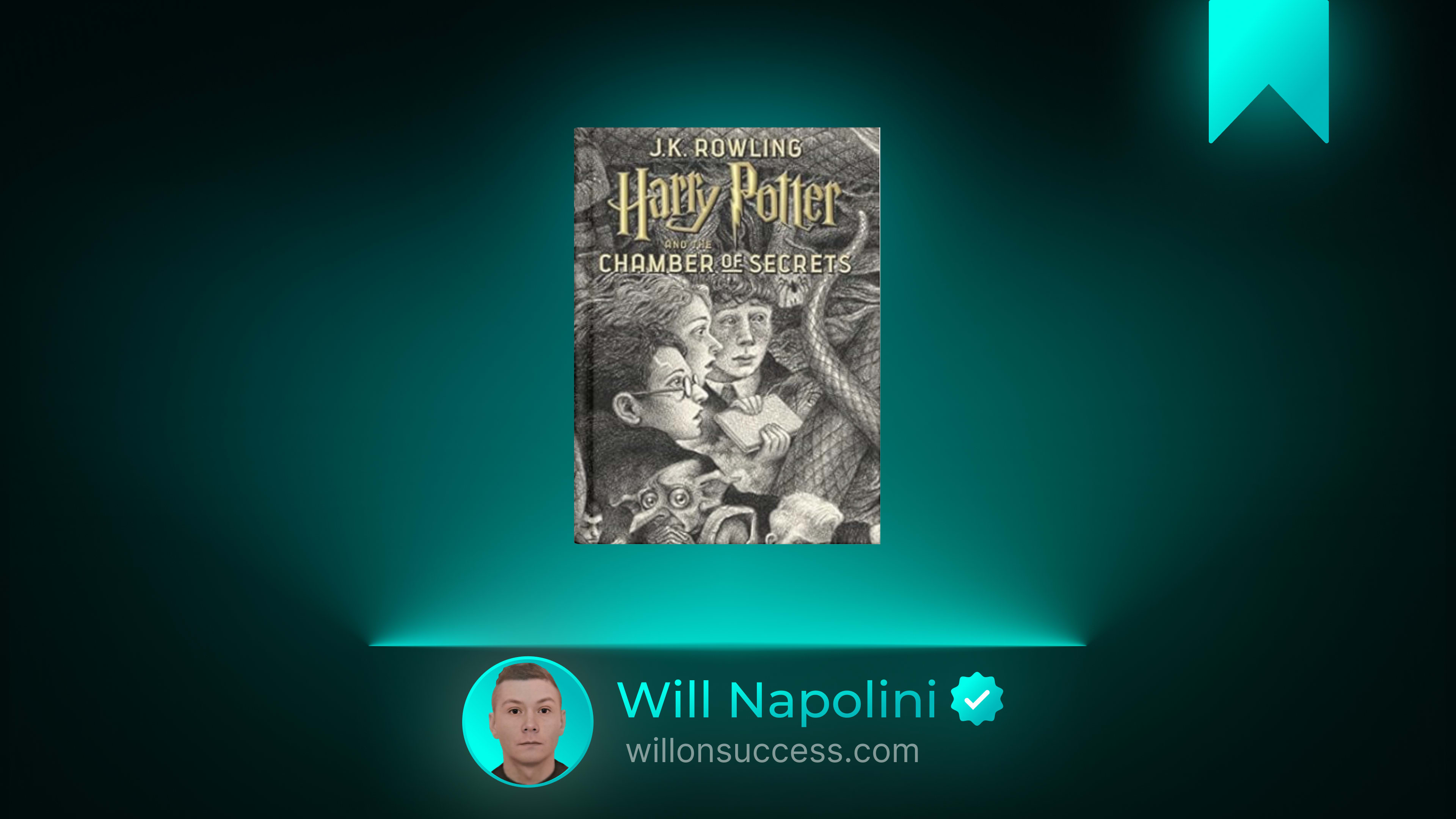
Have you ever looked at the people around you and wondered if you were fundamentally different? If there was some hidden flaw, some inherited trait, or some quiet failure that made you less worthy of love, success, or belonging than everyone else?
I have seen this fear in so many brilliant, capable people. We carry the quiet suspicion that we are imposters. We worry that our past, our background, or our natural inclinations have already decided our future. We wait for the world to discover that we do not truly belong.
But there is a dangerous assumption hiding inside the way we think about our own potential. We assume that who we are is a fixed state, handed to us at birth. We look at our abilities, our disadvantages, and our history, and we treat them as a life sentence.
What if the things you are most afraid of inheriting—the flaws, the fears, the mistakes of those who came before you—are not your destiny at all?
The Big Idea
J.K. Rowling’s Harry Potter and the Chamber of Secrets is universally celebrated as a thrilling mystery about a hidden monster in a magical school. But beneath the spells, the flying cars, and the ancient legends, it is a profound exploration of identity.
The central thesis of the book is one of the most vital truths a person can learn: It is not our innate abilities, our origins, or our past that show what we truly are. It is our choices.
Character before circumstances is not just a nice idea; it is the engine of human growth. You cannot control the hand you are dealt, the family you are born into, or the fears that wake you up at night. But you can control how you respond. Every single day, you are voting for the person you are becoming, and those votes are cast through your decisions, not your genetic makeup.
The Story and the Concept
The story begins with a warning. Harry Potter, a young wizard who survived a dark curse as a baby, is desperate to return to Hogwarts School of Witchcraft and Wizardry for his second year. But a small, frightened house-elf named Dobby warns him that returning will bring terrible danger. Harry goes anyway.
Almost immediately, the school is thrown into terror. Students are being found petrified, frozen as if turned to stone. A blood-red message is painted on the wall: The Chamber of Secrets has been opened. Enemies of the heir, beware.
The legend speaks of a hidden chamber built by Salazar Slytherin, one of the school’s founders, containing a monster that will purge the school of those deemed unworthy—specifically, students born to non-magical families. As the attacks continue, suspicion falls on Harry. Why? Because he discovers he can speak Parseltongue, the language of snakes, a rare ability closely associated with dark wizards.
Harry begins to doubt himself. He remembers that the magical Sorting Hat, which decides which school house a student belongs to, nearly placed him in Slytherin. He shares traits with the dark wizard who orphaned him. He begins to wonder if he is secretly dangerous. If he is fundamentally bad.
Meanwhile, Harry’s friend Ginny Weasley, feeling overshadowed and lonely, begins confiding her deepest secrets in a mysterious, blank diary. But the diary is not a friend. It is a vessel for the memory of Tom Riddle, a brilliant former student who grew up to become the dark wizard Lord Voldemort. The diary slowly manipulates Ginny, draining her life force and using her to open the Chamber.
To save her, Harry must descend into the dark, hidden tunnels beneath the school and face the monster—and the memory of the man who represents everything Harry fears he might become.
Your Origins Are Not Your Destiny
One of the heaviest burdens Harry carries in this book is the fear of his own nature. When he learns he can speak to snakes, the school turns on him. Whispers follow him down the corridors. But the hardest voice to silence is his own.
He confides in his mentors, terrified that he belongs in the house associated with dark magic. He fears that because he shares certain abilities with the villain, he must share the villain’s soul.
If I could sit across the table from you, I would tell you that this is one of the most common traps of the human mind. We look at our parents, our upbringing, our failures, and our anxieties, and we say, This is who I am. This is my bloodline. This is my wiring.
But Rowling dismantles this fear beautifully. The Sorting Hat did not place Harry in Slytherin because he asked it not to. That was his first real choice at Hogwarts. Years later, when Harry faces the memory of Tom Riddle in the Chamber, Riddle points out all their similarities. Both were orphans. Both were half-bloods. Both could speak Parseltongue. By all outward metrics, their abilities and origins were identical.
Yet, they became entirely different men. Why? Because Harry chose to love, to protect, and to sacrifice. Riddle chose to dominate, to manipulate, and to destroy.
A small decision becomes a direction, and a direction repeated long enough becomes a life. You are not the sum of your inherited traits. You are the sum of the choices you make in the face of those traits. If you have a temper, you are not a cruel person; you are a person who must choose patience. If you have a history of anxiety, you are not broken; you are a person who must choose courage. Your abilities are just the tools in your hands. Your choices determine what you build with them.
The Danger of Unspoken Secrets
While Harry battles his external fears, Ginny Weasley battles an internal one. And her struggle is perhaps the most painfully relatable part of the book.
Ginny is the youngest of her family, the only girl among seven children. She feels small, overlooked, and desperate for approval. She finds a diary and begins pouring her heart into it. She writes about her fears, her crushes, her insecurities. The diary seems to listen. It offers comfort.
But because she pours her secrets into this isolated, hidden space, she becomes vulnerable to manipulation. The memory of Tom Riddle uses her secrets against her, isolating her further and convincing her that she is losing her mind. The more she hides her struggles from the people who love her, the more power the diary gains over her.
The Chamber of Secrets itself operates on the same metaphor. It is a buried, hidden space. A secret kept for a thousand years. And what happens to secrets that are buried in the dark? They fester. They grow into monsters. When they finally break open, they petrify the people around them.
I have learned that isolation is the fertile soil where fear grows. When we carry our shame, our mistakes, and our anxieties in secret, they do not disappear. They take on a life of their own. They whisper that we are unworthy. They drain our energy.
What you repeat in private eventually becomes visible in your life. If you repeatedly hide your struggles, you will eventually lose your strength. But the moment you bring a secret into the light—the moment you confess your fear to a trusted friend, a mentor, or a partner—you break its power over you. The monster loses its shadows. The diary becomes just a book.
You do not have to carry the weight of your hidden chambers alone. Asking for help is not a surrender; it is the first step of reclaiming your territory.
Loyalty Brings the Sword
When Harry finally descends into the Chamber, he is entirely outmatched. He is a twelve-year-old boy facing a giant, lethal snake and the memory of the most dangerous wizard alive. He has no army. He has no master plan.
But he has one thing that Tom Riddle never understood: loyalty.
Harry did not go into the Chamber because it was his job. He did not go because he was forced. He went because Ginny was down there, and he cared about her. He went because he was loyal to her family, and because he was loyal to the mentor who believed in him.
Because of that loyalty, help arrives. Fawkes, the mentor’s phoenix, flies into the dark chamber to aid Harry. The phoenix brings a worn, old hat. From that hat, Harry pulls a gleaming silver sword, and with it, he defeats the monster.
Later, Harry asks how he knew the sword would be there. The answer is simple: only someone who was truly loyal to the principles of the house could pull the sword from the hat.
This is a profound lesson in how support actually works in the real world. We often think that help is a matter of luck, or that resources just magically appear for the talented. But true support is usually the echo of the relationships we have nurtured.
When you show up for people. When you stand by your friends in difficult seasons. When you commit to the work that matters even when it is inconvenient—you build a reservoir of trust. And when you find yourself in the dark, facing a monster that feels too big to defeat, that loyalty often finds its way back to you. Help arrives not because you are perfect, but because you have chosen to be present for others.
Why This Matters in Your Life
You might be reading this and thinking, I am not fighting a basilisk. I am not attending a magical school.
But you have your own monsters.
Maybe your monster is the fear of failure. It stalks the corridors of your career, petrifying your creativity, making you too afraid to launch the project, write the book, or ask for the promotion.
Maybe your monster is the prejudice you hold against yourself. You judge yourself by your background, your lack of formal education, or your past mistakes, and you convince yourself that you are the “enemy of the heir.” You convince yourself you do not belong in the room.
Maybe your monster is a secret you have been carrying for years. A habit you are ashamed of. A debt you have not spoken about. A relationship that is quietly draining you.
The lessons of this book matter because they give you a map for navigating the dark. They teach you that you cannot wait until you feel worthy to take action. Harry felt like an imposter right up until he drew the sword. He acted anyway.
When you master the art of choosing your character over your circumstances, you change your relationship with fear. You stop asking, Am I good enough? and start asking, What is the right thing to do next?
In your work, this makes you resilient. You stop looking for external validation and start building internal conviction. In your relationships, it makes you a safe harbor. You become the person who stays loyal when the storm hits. In your personal growth, it means you finally stop waiting for permission to be who you want to be. You give yourself the permission through your choices.
Practical Application
Understanding the philosophy of choice is valuable, but understanding without action changes nothing. If you want to stop being petrified by your fears and start building the life you want, here is how you begin.
Make the Hard Choice Today Identify one area of your life where you have been waiting to “feel ready” or waiting for external validation. A difficult conversation you need to have. A boundary you need to set. A creative project you need to start. Do not wait for confidence. Make the choice today. Take one concrete step that aligns with the person you want to become, regardless of your current abilities.
Bring One Secret into the Light Think of the “diary” you have been pouring your fears into. The worry you have not told your partner. The mistake you are hiding from your team. Choose one trusted person in your life and share it with them. Say the words out loud. You do not need them to fix it. You just need to bring it out of the dark so it stops draining your strength.
Choose Loyalty Over Convenience Pick one relationship in your life that has been suffering from neglect. A friend you haven’t called. A family member you have been too busy to visit. Reach out to them today. Not with a grand gesture, but with simple, undivided attention. Ask how they are doing, and actually listen. Build the reservoir of trust that will sustain you both when the dark comes.
Audit Your Labels Write down three negative labels you have placed on yourself. I am a procrastinator. I am bad with money. I am not a creative person. Look at them honestly. Are these fixed traits, or are they just habits you have chosen to repeat? Cross out the labels and replace them with choices. I am choosing to delay my work. I am choosing to spend without a plan. I am choosing not to practice my skills. When you turn a label into a choice, you turn a life sentence into a habit you can change.
Who Should Read This Book
Harry Potter and the Chamber of Secrets is essential reading for anyone who has ever struggled with imposter syndrome. It is for the person who feels trapped by their past, the person who fears they are fundamentally flawed, and the person who needs a reminder that their choices matter more than their origins.
While it is a fantasy novel and does not offer step-by-step tactical advice for business or finance, its psychological and emotional insights are profound. If you are looking for a dry, analytical guide to productivity, this is not your book. But if you need a story that will reignite your courage, challenge your self-doubt, and remind you of the power of loyalty and integrity, this book will serve you deeply.
It is a story that grows with you. Read it as a child, and you see a thrilling adventure. Read it as an adult, and you see a mirror reflecting your own hidden chambers and your own capacity for choice.
One Small Step
Tonight, before you go to sleep, I want you to identify one small choice you have been avoiding because you are afraid of what it might reveal about you.
Maybe it is apologizing to someone. Maybe it is deleting the app that steals your time. Maybe it is simply saying, out loud to yourself, “I am allowed to change.”
Do not plan it. Do not wait for the perfect moment. Make that one small choice today.
You do not need to be fearless to move forward. You do not need to have the perfect abilities. You just need to decide who you want to be, and take one step in the dark toward that person.
The monster in the chamber only has power if you leave it in the dark. Turn on the light, and make your choice.