The Architecture of Attention: How to Win the Battle for the Mind
You are doing too much, and it is making you invisible.
If you look at your resume, your daily schedule, or the way you present yourself to the world, you will likely see a sprawling list of competencies. You are trying to be the strategic thinker who is also great at the granular details. You are trying to be the visionary leader who is also the hands-on executor. You are adding new skills, taking on new projects, and trying to be everything to everyone, hoping that if you just offer enough value, the world will finally reward you with the recognition you deserve.
But it isn’t working. You feel overworked, underappreciated, and strangely interchangeable.
If I could sit across the table from you right now, I would offer you a truth that might sting at first, but will ultimately set you free: The reason you are being overlooked is not because you lack talent. It is because you lack a position.
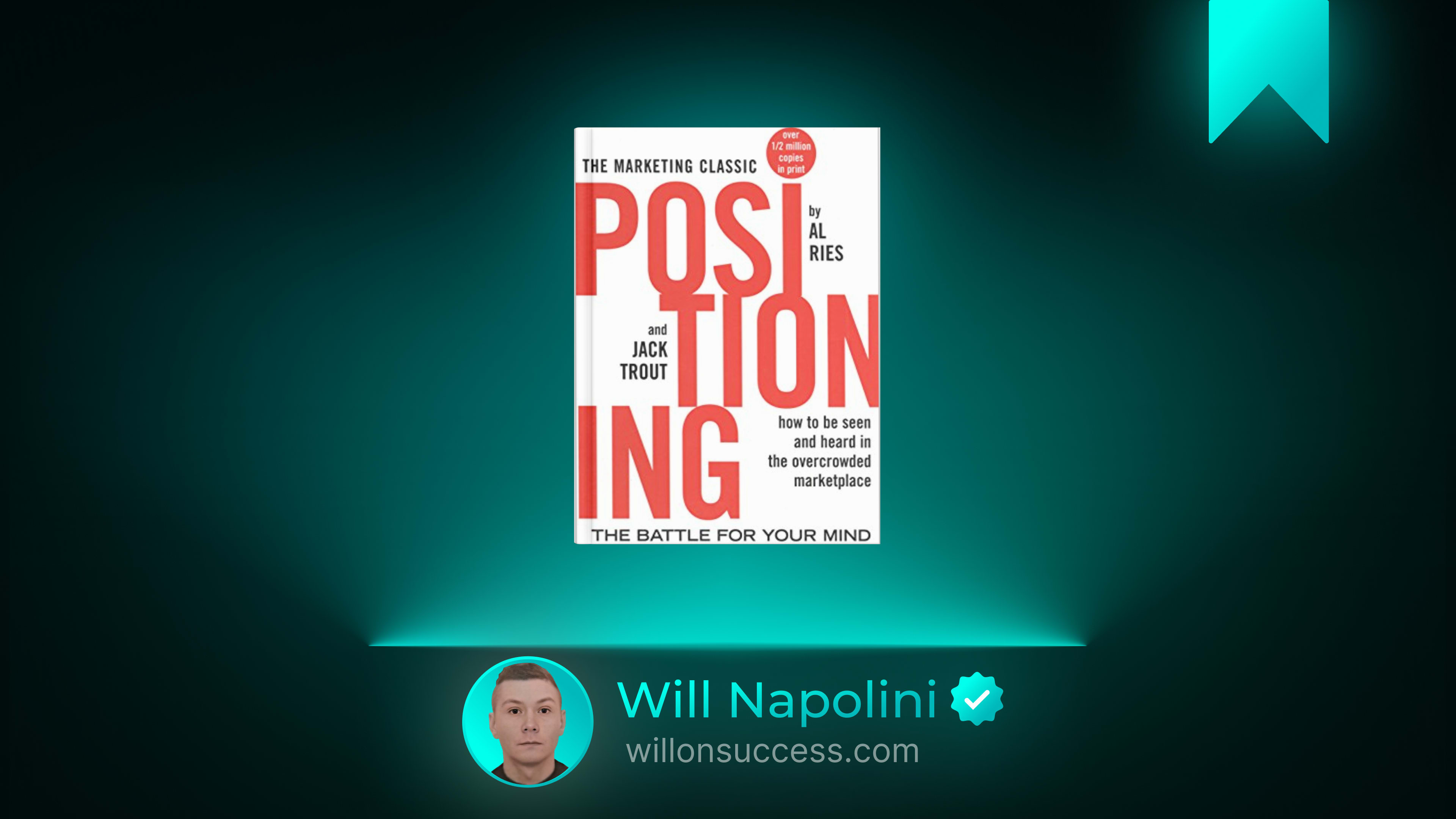
In their landmark book, Positioning: The Battle for Your Mind, Al Ries and Jack Trout dismantled the way the business world thinks about communication. While the book was written for marketers trying to sell products, its core philosophy holds the master key to your personal and professional life.
The central thesis of the book is this: Positioning is not what you do to a product; it is what you do to the mind of the prospect. In personal terms, your reputation is not defined by what you know you can do. It is defined by what others can easily understand, remember, and file away in their overcrowded minds.
We live in an overcommunicated society. The human mind is under constant siege from a relentless barrage of information, demands, and noise. To survive, the mind has developed a brutal, highly efficient defense mechanism: it simply rejects almost everything. It only accepts information that aligns with what it already knows or experiences.
When you try to be everything, you give the mind too much to process. And when the mind is overwhelmed, it does not work harder to understand you. It simply tunes you out.
The Fortress of the Mind
To understand why this happens, you have to understand the architecture of human attention. Ries and Trout describe the mind not as a sponge that absorbs information, but as a fortress with very limited storage space.
Imagine the mind as a row of tiny, rigid lockboxes. Each box has a specific label: “The reliable one,” “the creative one,” “the numbers person,” “the calm one in a crisis.” When someone interacts with you, their brain is desperately trying to figure out which lockbox to put you in.
If your behavior, your communication, and your skills clearly match one of those labels, the mind happily files you away. You are remembered. You are recommended. You are hired.
But if you present yourself as a complex, multifaceted paradox—if you claim to be both the big-picture visionary and the microscopic detail-checker, both the aggressive closer and the empathetic counselor—the mind gets confused. It tries to force you into a box, fails, and eventually drops you on the floor.
A mind cannot hold a symphony when it is only looking for a doorbell. It wants a single, clear note. When you embrace simplicity, you stop fighting the mind’s defense mechanisms and start working with them.
The Power of the Pivot: If You Can’t Be First, Be Different
One of the most famous principles in Positioning is the leadership principle: It is better to be first than it is to be better. The first person to cross the finish line, the first company to invent the smartphone, the first person in your company to adopt a new technology—these are the ones who own the category in the mind.
But what if you aren’t first? What if you are entering a crowded industry, joining an established team, or stepping into a market where the “first” players already dominate?
Ries and Trout offer a brilliant, liberating alternative: If you can’t be first in a category, set up a new category you can be first in.
I have watched incredibly talented professionals stall in their careers because they spend all their energy trying to be “better” than the established leader. If the senior partner at your firm is known as the brilliant legal strategist, trying to out-strategize them is a losing battle. They already own that lockbox in the client’s mind.
But what if you pivot? What if you position yourself as the first legal strategist who specializes exclusively in translating complex legal risk into plain-English financial dashboards for the CEO? You just stopped competing on their turf and created a new category where you are the undisputed leader. You are no longer the “second-best strategist.” You are the “first financial-legal translator.”
You do not need to be the best in the world. You only need to be the first in the specific, narrow category you design for yourself.
The Trap of Line Extension
In the corporate world, companies often fall into a trap Ries and Trout call “line extension.” A company builds a powerful brand around a specific product—say, a famous brand of aspirin. Then, flush with success, they decide to put that famous name on everything. They launch the brand’s toothpaste, the brand’s cold medicine, the brand’s bandages.
The result? The original brand loses its meaning. The mind becomes confused, and the core product loses its power.
In your personal and professional life, line extension is the silent killer of reputation.
It happens when a brilliant freelance graphic designer decides to also offer SEO, copywriting, and social media management because they are afraid of turning down revenue. It happens when a manager known for operational excellence suddenly tries to position themselves as a motivational thought leader.
We do this out of fear. We are terrified that if we say “no” to an opportunity, or if we don’t offer every conceivable service, we will be left behind. But every time you attach your name to something outside your core competency, you dilute your position. You water down the very thing that made you valuable in the first place.
When you try to be a Swiss Army Knife, people will use you for small, convenient tasks, but they will never trust you to build the house. True authority requires the courage to be narrow. It requires the willingness to let some opportunities pass you by so that you can become undeniable in the one thing you actually do.
Owning a Word in the Mind
The ultimate goal of positioning is to own a single word or concept in the mind of your audience.
When you think of Volvo, you think of “safety.” When you think of FedEx, you think of “overnight.” These companies spent decades and millions of dollars to hammer a single concept into the public consciousness. They did not try to be the safest, fastest, and most luxurious car all at once. They picked a word, and they owned it.
What word do you own in your workplace? What word do you own in your community?
If I were to ask your colleagues to describe your superpower in a single word, what would they say? If the answers are scattered—if one says “hardworking,” another says “creative,” and another says “nice”—you do not have a position. You have a blur.
You must decide what word you want to own, and then you must ruthlessly align your actions to support it. If you want to own the word “reliable,” you must never miss a deadline, even if it means working late. If you want to own the word “innovative,” you must stop spending your time optimizing old spreadsheets and start pitching new systems. You cannot claim a word if your daily behavior contradicts it.
Why This Matters on an Ordinary Tuesday
It is easy to read about corporate strategy and think it only applies to Fortune 500 companies. But positioning is the hidden architecture of your daily life.
Think about how you communicate with your partner or your family. If you are constantly shifting your stance, trying to be the strict disciplinarian one day and the permissive friend the next, your family cannot position you. They don’t know what to expect, which breeds anxiety and friction. When you position yourself clearly—as the calm, consistent anchor in the household—you give your loved ones the psychological safety of knowing exactly who you are and how you will react.
Think about your job hunt. The generalist resume, packed with fifteen different skills and a generic objective statement, goes straight into the trash. The mind of the hiring manager is looking for a solution to a specific problem. The candidate who positions themselves clearly—”I am the specialist who turns chaotic sales data into predictable revenue forecasts”—gets the interview.
When you stop trying to manage other people’s complex perceptions of you, and instead hand them a simple, undeniable truth, the friction in your life disappears. You stop having to convince people of your value. Your position does the convincing for you.
How to Reclaim Your Focus Today
Understanding the mechanics of the mind is valuable, but understanding without action changes nothing. If you want to stop being a blur and start becoming a landmark, you must begin applying these principles immediately.
1. The One-Word Audit You cannot position yourself if you don’t know your current position. Reach out to three trusted colleagues, friends, or mentors. Ask them this specific question: “If you had to describe my greatest professional (or personal) strength to a stranger using only one word, what would it be?” Do not guide them. Just listen. If the word they give you is not the word you want to own, you have a positioning gap. Your daily actions are not matching your intended message.
2. Find the Hole in the Market Look at your team, your industry, or your local community. What is everyone else focused on? If everyone in your agency is competing to be the most “creative,” the position of “creative” is overcrowded. Look for the hole. Is everyone ignoring execution? Are they terrible at client follow-up? Find the empty lockbox and claim it. Be the first to own the space no one else is defending.
3. The Pruning Exercise Look at your current list of services, your daily tasks, or your resume. Identify the “line extensions” that are diluting your core position. What are you doing just because you are afraid of saying no? Choose one thing this week to stop doing, stop offering, or delete from your profile. Pruning feels like a loss in the moment, but it is the only way to direct your energy into the branches that actually bear fruit.
Who Needs to Read This Book
Positioning: The Battle for Your Mind is mandatory reading for anyone whose success depends on the perception of others. If you are an entrepreneur, a freelancer, a marketer, or a leader trying to build a personal brand, this book will fundamentally change how you communicate. It is for the mid-career professional who feels stuck in the “generalist trap” and wants to understand how to become undeniably valuable.
However, if you are looking for a guide on internal emotional healing, deep psychological shadow-work, or spiritual growth, this is not the book for you. Ries and Trout are not therapists; they are strategists. They are concerned with the external reality of how you are perceived in a crowded marketplace. It is a tactical, analytical framework for cutting through the noise.
Your First Step Toward Clarity
You do not need to rewrite your entire business plan or quit your job to find your position. You just need to draw a line in the sand regarding what you stand for.
Here is what I want you to do today. Take out a piece of paper and write down the one specific problem you solve better than anyone else in your immediate circle. Not five problems. One.
Once you have written it down, look at your calendar for tomorrow. Find one meeting, one task, or one conversation that does not serve that single problem, and politely decline it.
You cannot be everything to everyone, and the beautiful truth is that you were never meant to be. The world does not need another Swiss Army Knife. It needs a scalpel. It needs someone who is so focused, so clear, and so undeniably good at one specific thing that the mind has no choice but to remember them.
Stop shouting into the noise. Find your lockbox, claim your word, and let the quiet power of a clear position do the heavy lifting for you.