The Art of the Clear Signal: What David Ogilvy Can Teach You About Selling Your Ideas
There is a trap that catches almost everyone who tries to create something of value, whether that is a marketing campaign, a pitch deck, or a professional reputation. We confuse being clever with being effective. We mistake being entertaining with being persuasive. We spend hours polishing the aesthetics of our work, hoping that if it looks beautiful or sounds witty, people will naturally reward us with their attention and their trust.
But what if the people you are trying to reach are not looking to be entertained? What if they are simply looking for a solution to their problem?
If I could sit across the table from you right now, I would tell you the hardest truth I have learned about getting people to listen to you: Nobody cares how clever you are. They only care about what you can do for them.
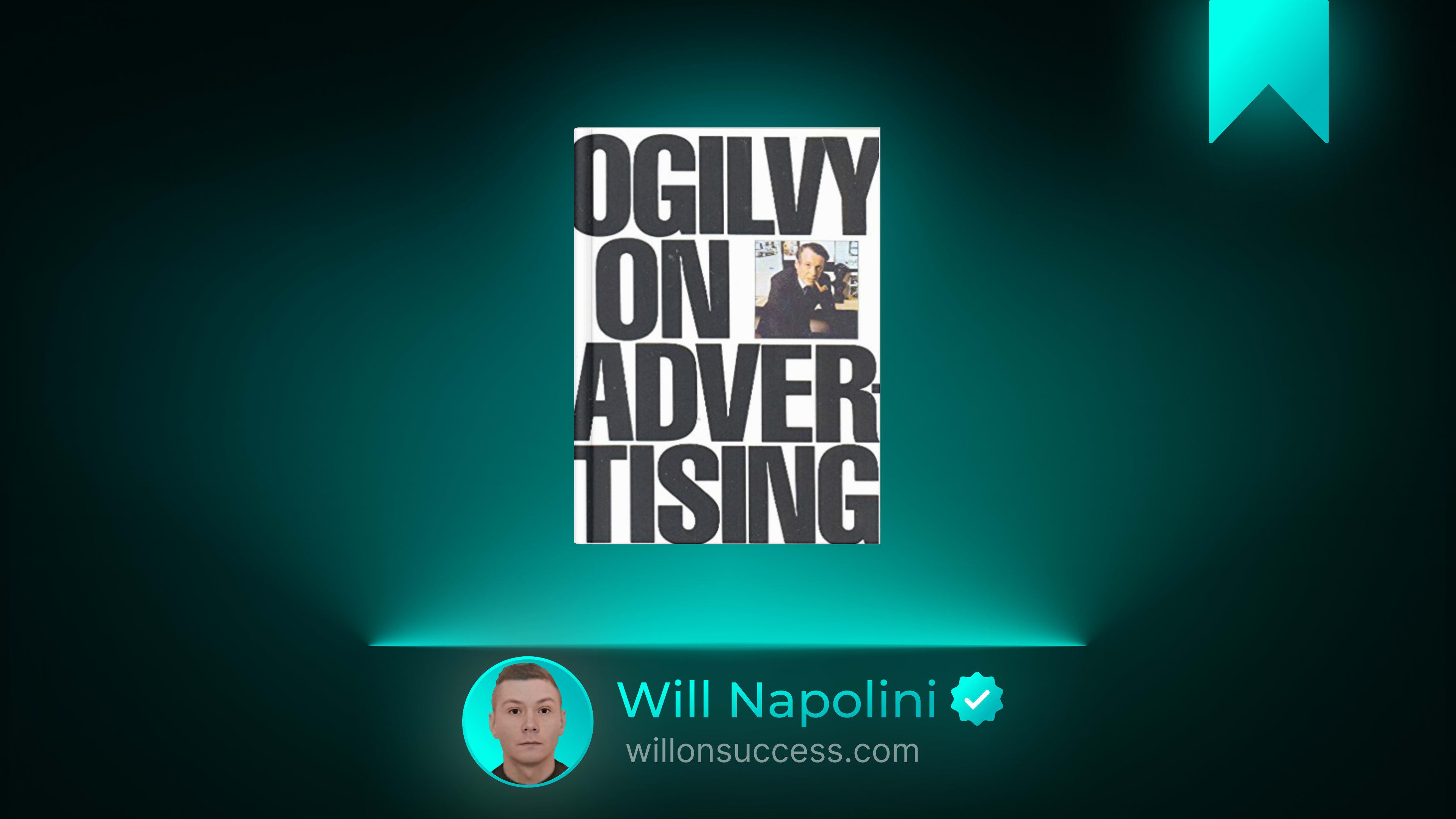
In his definitive masterwork, Ogilvy on Advertising, the legendary David Ogilvy lays down a gauntlet that the modern world desperately needs to pick up again. Ogilvy did not view advertising as an art form to be hung in a museum. He viewed it as a surgical instrument designed for one specific purpose: to sell the product.
“The consumer isn’t a moron; she is your wife,” he famously wrote. You cannot insult her intelligence with vague promises, nor can you distract her with irrelevant jokes.
The central thesis of the book is that effective communication is not about self-expression; it is about service. It is about understanding the person on the other side of the table, identifying their deepest needs, and presenting your offering with such crystal clarity that choosing you becomes the only logical decision.
When you apply this to your own life, the paradigm shifts. Your career, your business, and your ideas are the “product.” How you communicate them is your “advertising.” If you are not getting the results you want, it is rarely because your work is worthless. It is usually because your signal is weak, your message is cluttered, or you are trying to be interesting instead of being useful.
The Anatomy of a Clear Signal
Before David Ogilvy became the most famous advertising man in the world, he was a chef in Paris, a door-to-door salesman in Scotland, and a researcher for the Gallup polling organization. This background is crucial because it meant Ogilvy did not come into the advertising world as a bohemian artist looking for self-expression. He came in as a pragmatic observer of human behavior.
He noticed that the advertising industry was filled with “geniuses” who won awards for bizarre, abstract campaigns, but whose clients went bankrupt. Ogilvy realized that creativity without a commercial purpose was just vanity. He championed the concept of the “Big Idea.” He defined it as the magnetic core of any communication—the single, powerful insight that cuts through the deafening noise of the world and connects directly to the audience’s self-interest. Without a Big Idea, he warned, you will pass like a ship in the night.
Your Headline Is Your Handshake
Ogilvy calculated that, on average, five times as many people read the headline as read the body copy. “When you have written your headline, you have spent eighty cents out of your dollar,” he observed.
In the modern world, your headline is your email subject line, the first ten seconds of your presentation, or the opening sentence of your resume. It is the promise you make to the other person’s time. Most people write headlines that are clever, mysterious, or vague, hoping to lure the reader in. Ogilvy argued that the best headlines are specific, informative, and contain the core benefit.
I have watched professionals sabotage their own great work because they hid it behind vague titles. If you are pitching a project to your boss, do not title the document “Q3 Strategic Synergies.” Title it “Three Changes That Will Save the Department 15 Hours a Week.”
Clarity always beats cleverness. When you respect the reader’s time enough to tell them exactly what is in it for them, they will lean in to listen. You are not tricking them into reading; you are inviting them into a solution.
The Big Idea Requires Ruthless Simplicity
It takes a Big Idea to make people notice your work. But a Big Idea is rarely complex. It is usually a profound truth stated simply. Ogilvy insisted that every piece of communication must have a single-minded proposition. What is the one thing you want the person to remember?
I have watched founders pitch their startups for twenty minutes, using beautiful slides and complex diagrams, only to leave the investor completely confused about what the company actually does. They were trying to be comprehensive. Ogilvy would tell them to be singular.
When you are building a personal brand or launching a new initiative, the temptation is to list every single feature, every minor benefit, and every credential. You dilute your message. What is the one undeniable truth about your work? If you are a consultant, your Big Idea might be “I help founders scale without burning out.” Once you find that Big Idea, everything else—the design of your website, the structure of your meetings, the way you write emails—must serve and reinforce that single idea.
Research Over Guesswork
Ogilvy despised the “mad men” stereotype of the ad executive who drinks three martinis at lunch and dreams up a slogan out of thin air. He believed deeply in research. You must know your consumer better than they know themselves. You must know the product’s actual, demonstrable benefits.
In your career, guesswork is the enemy of growth. You might assume your manager values working late hours. But if you do the “research”—by asking questions, observing their behavior, and studying the company’s actual goals—you might find they actually value proactive problem-solving and efficiency.
When you base your actions on researched reality rather than your own assumptions, you become dangerously effective. You stop projecting your own desires onto the market and start responding to what the market actually needs.
Brand Image Is Built in the Long Game
Ogilvy coined the term “brand image.” He argued that every advertisement should be thought of as a contribution to the complex symbol which is the brand image. It is a long-term investment in the personality of the product. If you consistently deliver a message of cheapness, your brand image becomes cheap. If you consistently deliver a message of quality and reliability, your brand image reflects that.
I have seen incredibly talented people stall in their careers because their “brand image” was one of unreliability. They did brilliant work occasionally, but their daily “advertising”—missed small deadlines, vague email updates, chronic lateness to meetings—built a brand image of chaos.
Your personal brand is not what you say about yourself on social media. Your personal brand is the cumulative receipt of your daily actions. It is the reputation you build in the quiet moments. Every email you send, every deadline you meet, and every promise you keep is an “advertisement” for your character. You cannot run a brilliant, highly visible campaign of integrity in public while cutting corners in private. The market of human trust always audits the books eventually.
Why This Matters on an Ordinary Tuesday
We live in an era of unprecedented noise. Everyone is broadcasting, posting, and shouting for attention. The natural response to this noise is to shout louder, to use more aggressive marketing tactics, or to try to be more viral.
Ogilvy’s wisdom offers a quiet, powerful alternative. You do not need to shout if your signal is clear.
Think about your current professional life. Are you frustrated because you are doing great work but not getting recognized? You may be suffering from the “cleverness trap.” You are making your work too complex for others to easily understand and champion. You are asking your audience to do the hard work of figuring out your value.
When you adopt the Ogilvy mindset, you take responsibility for the communication. You make it easy for people to say yes to you. You strip away the jargon. You focus on the tangible result. You become a clear signal in a noisy world.
How to Reclaim Your Clarity Today
Understanding these concepts is valuable, but understanding without action changes nothing. If you want to begin dismantling the trap of cleverness, you must start applying these principles immediately.
1. Audit Your “Headlines” Look at the last three important emails you sent, the titles of your recent presentations, or the summary section of your professional profile. Are they descriptive and benefit-driven, or are they vague and clever? Rewrite them today. Focus entirely on the tangible benefit to the person reading them. Make the value proposition so clear that it would be foolish for them to ignore it.
2. Define Your Big Idea Take out a piece of paper. You have to describe the value you bring to your team, your clients, or your market. You are only allowed to use twelve words. No jargon. No buzzwords. If you cannot distill your value into twelve clear words, you do not have a Big Idea yet; you just have a list of tasks. Keep refining it until it is razor-sharp.
3. Conduct a “Brand Image” Audit Ask three trusted colleagues or friends a specific question: “If you had to describe my professional reputation in three words to a stranger, what would they be?” Do not get defensive. Just listen. If the words they use do not match the brand image you want to project, you have a gap. Your daily actions are not matching your intended message. Close the gap through consistent, daily behavior.
Who Needs to Read This Book
Ogilvy on Advertising is mandatory reading for anyone whose livelihood depends on persuading others. If you are an entrepreneur, a marketer, a copywriter, or a salesperson, this book is your foundational text.
But it is equally vital for anyone who needs to pitch an idea to a committee, negotiate a salary, or build a professional reputation. It is for the person who is tired of playing games and wants to understand the mechanics of human attention and trust.
However, if you are looking for a step-by-step manual on how to run digital ads or optimize modern algorithms, this book will not help you. The tactical tools of advertising change every five years. The psychology of persuasion has not changed in a century. Ogilvy teaches the latter.
Your First Step Toward Mastery
You do not need to rewrite your entire communication strategy today. You just need to prove that clarity works.
Here is what I want you to do today. Look at the primary project you are working on right now. Write down the “elevator pitch” for it—the way you would explain it to a friend. Now, rewrite it for your most important stakeholder (your boss, your client, your customer). Strip out every adjective, every piece of corporate jargon, and every clever metaphor. Leave only the noun, the verb, and the undeniable result.
Send that clarified version to one person today. Watch how much faster they respond.
The world is not starving for more entertainment. It is starving for clarity. When you stop trying to prove how smart you are, and start focusing entirely on how useful you can be, the resistance in your life begins to melt away. People trust those who respect their time. They follow those who point clearly toward the destination.
Take a hard look at the message you are broadcasting to the world today, strip away the noise, and remember that a brilliant idea poorly communicated will always lose to a simple idea communicated with absolute clarity.