The Honest Craft: What Stephen King's On Writing Teaches Us About Doing the Work
There is a quiet lie that tells us we must be extraordinary before we are allowed to create. We believe that unless our work is destined to be famous, or unless we feel a surge of divine inspiration, there is no point in putting our thoughts onto paper. We wait for the perfect moment, the perfect mood, the perfect audience.
But what if the most profound creative work is not born from lightning strikes of genius, but from the quiet, unglamorous act of simply showing up?
If I could sit across the table from you right now, I would tell you the truth about any craft you are trying to master: You do not need permission to be a creator. You only need a toolbox, a closed door, and the courage to tell the truth.
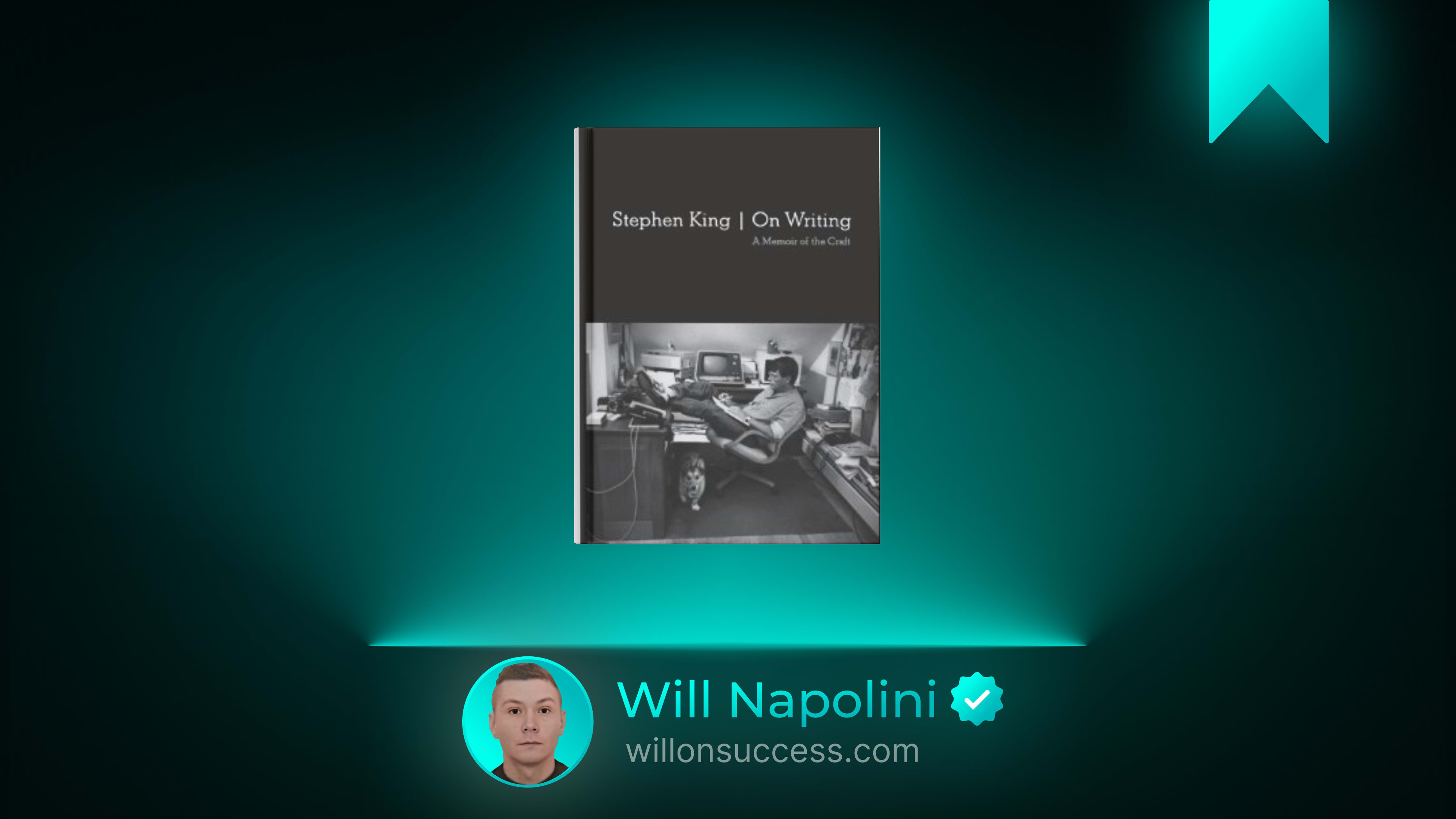
Stephen King is known for selling hundreds of millions of books and terrifying generations of readers. But in his seminal work, On Writing: A Memoir of the Craft, he steps out from behind the horror and offers something far more vulnerable and practical.
The central thesis of the book is not about how to get rich or how to write a bestseller. It is about the sacred, daily discipline of doing honest work. King argues that writing is not a mystical gift bestowed upon a chosen few; it is a trade. Like carpentry or plumbing, it requires a solid set of tools, a willingness to sweat, and a commitment to building something real.
When you apply this to your own life, the paradigm shifts. Your work—whether it is writing a novel, starting a business, or leading a team—becomes a practice of integrity. You stop trying to impress the world, and you start trying to communicate a single, true thing to one specific person.
The Blueprint of the Craft
King builds his philosophy around two powerful metaphors that serve as the blueprint for the book: the Toolbox and the Door.
He describes a carpenter’s toolbox. You don’t put the hammer on top of the nails; you organize it logically so you can grab what you need without looking. The top layer holds the essential tools: vocabulary and grammar. The layer beneath holds style and paragraph construction. Only when you have mastered the basics can you start building the complex furniture of a story.
The second metaphor is the door. King insists that you must write with the door closed and rewrite with the door open. The first draft is a private conversation between you and yourself. It is raw, messy, and vulnerable. If you open the door too soon, the cold wind of other people’s opinions will freeze your ideas before they have a chance to breathe. But once the draft is done, you must open the door. You must invite the world in to help you fix what is broken.
Master Your Toolbox Before You Try to Build the Sky
King insists that you cannot write well if you do not have a firm grasp on the fundamentals. He places vocabulary at the very top of the toolbox. Not because you need to use big words, but because you need the right words. Using a thesaurus to find a fancy synonym for a simple word is like dressing a housecat in a tuxedo. It might look impressive for a second, but everyone knows something is wrong.
In any craft, there are fundamentals. In business, it is understanding cash flow. In leadership, it is learning to listen. In writing, it is understanding grammar and syntax. Many of us want to skip the toolbox and jump straight to the architecture. We want to write the profound novel or launch the visionary startup without mastering the basics. But if your foundation is shaky, the structure will collapse under its own weight. You must respect the basics enough to practice them until they are second nature.
Write With the Door Closed, Rewrite With the Door Open
This is perhaps King’s most famous and transformative piece of advice. The first draft is for discovery. It is for finding out what the story is actually about. If you are constantly looking over your shoulder, wondering what your mother or your boss will think of a sentence, you will self-censor the truth right out of your work.
We live in a world that demands immediate feedback. We post half-baked ideas on social media and wait for validation. But deep, original work requires a period of incubation where you are not performing for anyone. When you are learning a new skill or developing a new idea, protect it. Do not invite criticism until you have actually built something. Give yourself the grace to be terrible in the first draft. The editing phase is where you become excellent, but you cannot edit a blank page.
The Ideal Reader: You Cannot Write for the Whole World
King writes for his wife, Tabitha. He imagines her reading the story. He asks himself, “What would she think of this?” He insists that you must have an Ideal Reader. It gives you a specific target to aim your emotional truth at.
When you try to appeal to everyone, you end up appealing to no one. You dilute your voice, smooth out your edges, and create a bland, safe product that offends no one and moves no one. Whether you are writing a speech, designing a product, or trying to communicate with your partner, you must identify the specific person you are trying to reach. When you speak to one person, you speak with intimacy. When you speak to a crowd, you speak with volume. Intimacy is what builds trust.
The Fuel: Read Relentlessly or Starve
King states bluntly: “If you don’t have time to read, you don’t have the time (or the tools) to write. Simple as that.” Reading is the fuel that keeps the creative engine running. It teaches you what has been done, what works, and what falls flat.
In any field, you must be a voracious consumer of high-quality work if you want to produce high-quality work. If you are a designer, you must study great design. If you are an entrepreneur, you must read about the market. If you are a parent, you must learn about child development. You cannot output what you do not input. Your mind is a factory; if you do not feed it good raw materials, it will produce cheap, fragile products.
Truth in Writing: The Ultimate Metric
King believes that the most important thing in any story is the truth. Not factual truth necessarily, but emotional truth. How would a real person actually react in this situation? What does this fear really feel like?
We often try to write what we think will be popular. We try to manufacture emotions or force characters to do things that serve the plot rather than their own nature. King warns that this leads to dead, hollow writing. The same applies to your life. If you are building a personal brand, leading a team, or making a major decision, are you operating from a place of truth, or are you performing a script you think others want to see? Authenticity is magnetic. Audiences and people can smell a fake from a mile away.
Why This Matters on an Ordinary Tuesday
We live in an era that celebrates the highlight reel. We are encouraged to present a polished, filtered version of ourselves to the world. We are told to optimize, to scale, to go viral.
Stephen King’s On Writing offers a quiet, grounding counter-narrative. It tells us that the work itself is the reward. It tells us that the daily, unglamorous practice of sitting down and doing the thing is what builds a life of substance.
Think about your current creative or professional life. Are you paralyzed by the fear of what others will think of your first attempt? Are you trying to write a masterpiece before you have even built your toolbox? Are you looking for a shortcut instead of committing to the daily quota?
When you adopt King’s mindset, you take the pressure off yourself to be a genius. You only have to be a worker. You close the door, you open your toolbox, and you start hammering. You focus on the next sentence, the next paragraph, the next small task. You let the door remain shut until the work is ready to face the light.
How to Reclaim Your Craft Today
Understanding these concepts is valuable, but understanding without action changes nothing. If you want to begin dismantling the trap of perfectionism, you must start applying these principles immediately.
1. Identify Your Ideal Reader Before you write your next email, draft your next project proposal, or start your next creative endeavor, write down the name of one person. This is your Ideal Reader. As you work, imagine them sitting across from you. What questions would they ask? What would confuse them? What would make them lean in? Speak directly to them. You will be amazed at how much clearer and more honest your communication becomes.
2. Practice the “Closed Door” Sprint Set a timer for 20 minutes. Choose a topic you have been avoiding because you are afraid of doing it wrong. Write continuously for those 20 minutes. Do not stop to fix a typo. Do not delete a sentence. Do not look up a word. If you get stuck, write “I am stuck” until the next thought comes. The goal is to prove to your brain that creation is safe, and that editing is a separate, later activity. You must learn to trust your own initial instincts before the critic is allowed to speak.
3. Audit Your Toolbox Look at the craft you are currently trying to master. What are the top three fundamental tools in your box? For a writer, it is vocabulary, grammar, and pacing. For a public speaker, it is breath control, structure, and eye contact. For a coder, it is syntax, logic, and debugging. Identify the one tool you are weakest at. Spend 30 minutes this week practicing that specific tool in isolation, without trying to build a whole project. Sharpen the blade before you try to chop the tree.
4. The Daily Quota King famously writes 2,000 words a day. He does not take days off, and he does not wait for inspiration. You do not need to write 2,000 words, but you do need a daily quota. What is your non-negotiable daily output? Is it 100 words? Is it one hour of deep work? Is it five sales calls? Set a small, consistent goal, and do it every single day. Consistency builds momentum; intensity only builds burnout.
Who Needs to Read This Book
On Writing is mandatory reading for anyone who wants to write, but it is equally vital for anyone who creates. If you are an artist, a musician, an entrepreneur, or a leader, this book will teach you how to approach your work with discipline and humility. It is for the person who is tired of waiting for inspiration and wants to understand the mechanics of sustained creativity.
However, if you are looking for a step-by-step guide on how to get a book deal or how to market your work, this book will not help you. King is not interested in the business of publishing in this book; he is interested in the soul of the craft. He teaches you how to make the thing, not how to sell it.
Your First Step Toward Mastery
You do not need to quit your job and move to a cabin in the woods to honor your craft. You just need to prove that you are willing to do the work today.
Here is what I want you to do. Find a quiet room. Close the door—literally. Set a timer for 15 minutes. Write down the truest thing you know about your current life situation. It could be a fear, a hope, or a frustration. Do not edit. Do not judge. Just let the truth flow onto the page.
When the timer goes off, leave the paper on the desk. Do not show it to anyone. You have just practiced the art of closed-door creation. You have proven to yourself that you can show up, do the work, and survive the silence.
The world does not need more people waiting for permission to be brilliant. It needs people who are willing to do the quiet, unglamorous work of building their craft.
When you stop trying to impress the crowd and start trying to tell the truth to one person, your work gains a weight and a gravity that no algorithm can manufacture. You become a craftsman rather than a performer. You become someone who can be trusted with a blank page.
Close the door. Open your toolbox. And remember that a masterpiece is just a thousand small, honest decisions made in private, eventually brought into the light.