The Mirror of Macondo: What One Hundred Years of Solitude Teaches Us About Memory, Legacy, and the Human Heart
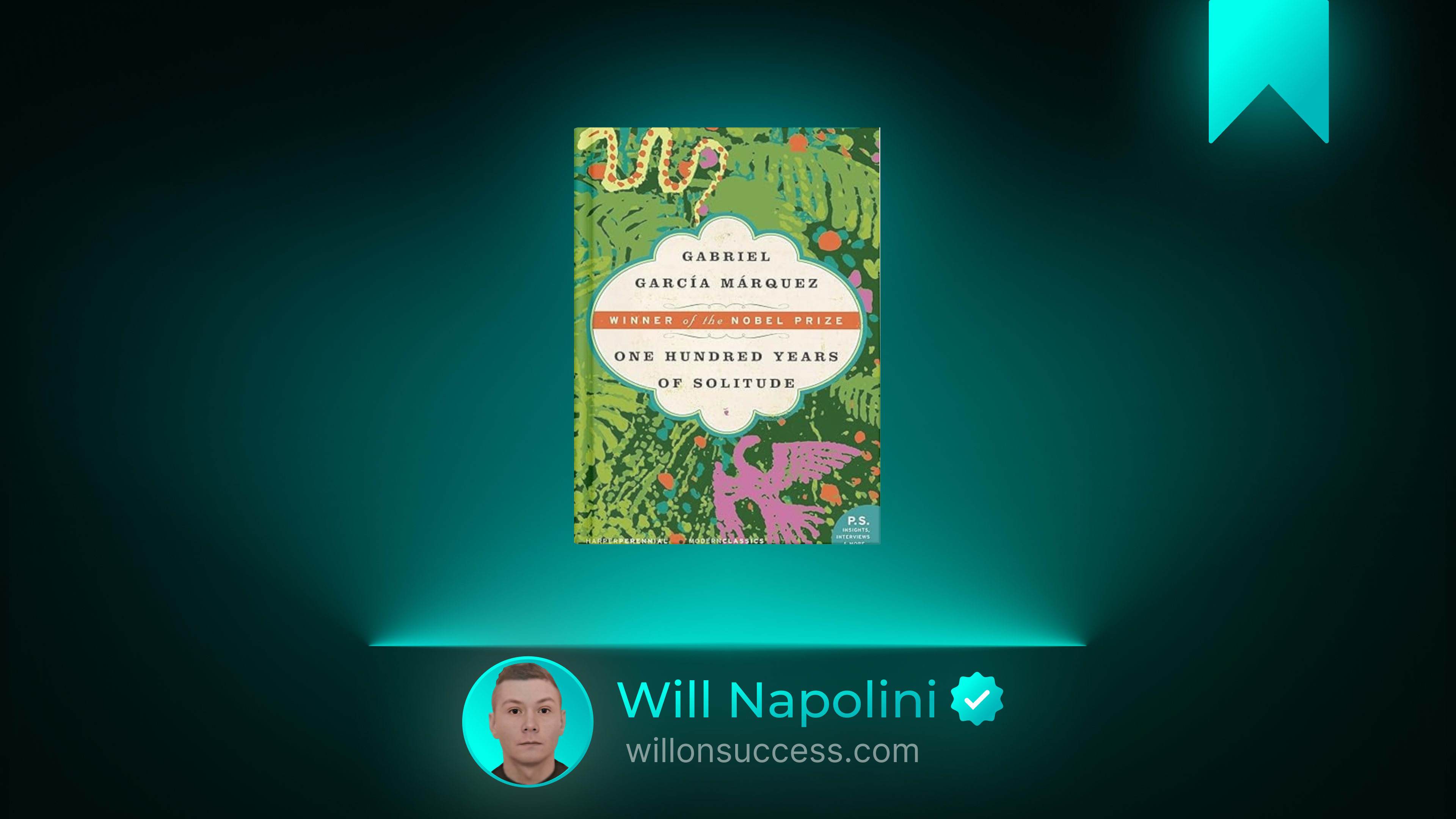
There are books that entertain you, and there are books that haunt you. Books that do not just tell you a story, but hold up a mirror to the hidden architecture of your own life. When I first read Gabriel García Márquez’s One Hundred Years of Solitude, I did not just read about the fictional town of Macondo. I saw my own family. I saw my own repeated mistakes. I saw the quiet, invisible walls we build around ourselves and call it independence.
If I could sit across the table from you right now, I would tell you that this novel is not a fantasy. It is the most realistic book ever written about the human heart.
At its core, One Hundred Years of Solitude is a profound exploration of the cyclical nature of time, the weight of legacy, and the devastating cost of isolation. García Márquez uses the story of the Buendía family—seven generations living in the isolated town of Macondo—to show us that history does not move in a straight line. It moves in circles. We repeat the traumas, the passions, and the silences of our ancestors until we finally find the courage to break the cycle.
The central thesis is that solitude is not merely the state of being alone. It is the inability to love, the inability to remember, and the inability to escape the gravitational pull of our own history.
The Founding of the Labyrinth
The novel begins with José Arcadio Buendía and his wife, Úrsula Iguarán, founding the town of Macondo in the middle of a jungle. They are driven by a fear: the fear of a child born with a pig’s tail, a curse of incest. This fear sets the stage for a century of isolation.
The family is visited by Melquíades, a gypsy who brings the wonders of the outside world—magnets, telescopes, alchemy—and writes a set of parchments that predict the entire history of the family. The parchments cannot be deciphered until the end. This is the genius of the book: the end is already written. The characters are living out a destiny they cannot see, trapped in a loop they do not know exists.
As the generations pass, the town experiences miracles and horrors. It survives an insomnia plague that erases memory. It endures a civil war led by Colonel Aureliano Buendía, who fights thirty-two uprisings and loses them all. It is exploited by a foreign banana company that massacres workers and erases the event from history. Finally, it is destroyed by a hurricane at the exact moment the last surviving Buendía deciphers the parchments.
The Cycle of History: We Repeat What We Do Not Resolve
The Buendía men are either named José Arcadio—impulsive, physical, curious—or Aureliano—withdrawn, intellectual, solitary. The women are Úrsulas—practical, enduring—or Amarantas—bitter, proud. They repeat the same mistakes.
Colonel Aureliano Buendía, after fighting his endless wars, returns home to make little gold fishes. He makes twenty-five, melts them down, and makes them again. It is a perfect metaphor for a life spent in motion but going nowhere. He is not creating; he is looping. He is trying to outrun his own solitude through repetitive labor.
In our own lives, we often repeat the patterns of our parents. The arguments, the financial mistakes, the emotional distance. If we do not consciously examine these patterns, we are doomed to live them out. We make gold fishes and melt them down. We marry the same type of person who hurt us before. We sabotage our success in the exact same way our father did. The cycle is invisible until you step back and look at the shape of the whole thing.
Solitude Is Not Just Being Alone
Every character in the book is profoundly lonely, even when surrounded by family. Colonel Aureliano locks himself in his workshop. Amaranta weaves and unweaves her shroud. They use work, pride, and routine as walls to keep people out. Their solitude is a defense mechanism against the vulnerability of love.
I have learned that you can be surrounded by people and still be in Macondo. True solitude is the refusal to be known. It is the pride that says, “I will handle this myself,” when your soul is begging for connection. It is the silence at the dinner table when someone asks how you are really doing. The Buendía family is cursed not by magic, but by their inability to surrender their pride and truly touch one another.
Memory Is the Thread That Holds Us Together
Macondo suffers from an insomnia plague that causes memory loss. The townspeople have to label things so they remember what they are. “This is a table.” “This is a cow.” Later, the banana company massacres workers, and the government erases the event from history. The survivors are told it never happened.
The loss of memory is the loss of identity. If you forget your past, you lose your anchor. You become a leaf in the wind, easily manipulated by whoever controls the present narrative.
In a world that moves fast and constantly rewrites history, remembering who you are, where you came from, and what actually happened to you is an act of survival. Your personal memory—your scars, your victories, your family stories—is the only thing that keeps you grounded in your own truth.
The Weight of Names and Legacy
The characters are burdened by their names. They are expected to live up to the traits of their ancestors. The name Aureliano carries the weight of solitude. The name José Arcadio carries the weight of impulsivity. They are trapped in a script written before they were born.
We carry the expectations of our families, our cultures, and our past selves. Breaking free from the “name” you were given—the label of the “smart one,” the “troublemaker,” the “quiet one”—is one of the hardest acts of self-liberation. You have to prove to the world, and to yourself, that you are not just a repetition of the people who came before you. You are a new sentence in an old book.
Why This Matters on an Ordinary Tuesday
We live in an era that is obsessed with the future. We are told to optimize, to move forward, to leave the past behind. But García Márquez teaches us that the past is never behind us. It is inside us. It is in the way we argue, the way we love, the way we handle money and grief.
If you do not heal your generational trauma, you will pass it on. If you do not speak your truth, it will come out as a symptom. If you do not break the cycle of pride, you will die making gold fishes.
This book matters because it forces you to look at the invisible scripts running your life. It asks you: What are you repeating? What are you forgetting? Who are you pushing away because you are afraid of being hurt?
How to Break the Cycle Today
Understanding these themes is valuable, but understanding without action changes nothing. If you want to begin dismantling the invisible walls around your own Macondo, you must start applying these insights immediately.
1. Trace the Pattern Look at your family history. What is the repeating mistake? Is it divorce? Is it financial ruin? Is it silence? Write it down. Name it. Once you can see the cycle, you can step out of it. You cannot fight an enemy you cannot see.
2. Break the “Gold Fish” Routine Identify one repetitive action in your life that feels like busywork but leads nowhere. The scrolling, the overworking, the arguing about the same thing. Stop making the gold fish. Do something new, even if it is terrifying. Take a different route to work. Have a conversation you have been avoiding for years. Interrupt the loop.
3. Remember Actively The world wants you to forget. Remember your history. Remember your values. Write down your family stories. Interview your elders. Keep a journal of your own life so you do not lose your memory to the insomnia of modern life. Your memory is your resistance.
4. Open the Door to Love The Buendía family’s ultimate tragedy is their inability to love without pride. Reach out to someone you have pushed away. Apologize. Be vulnerable. The opposite of solitude is not company; it is vulnerability. Let someone see the gold fish you have been melting down in secret.
Who Needs to Read This Book
This book is for anyone who has ever felt trapped by their family history. It is for those who want to understand the deep, mythical roots of human behavior. It is for readers who are willing to get lost in a labyrinth of time and emerge with a new understanding of their own soul.
However, if you are looking for a linear, plot-driven narrative with a clear moral at the end, this book will frustrate you. It is a dream, a myth, and a storm. It requires patience and a willingness to surrender to the magic. It does not give you answers; it gives you better questions.
Your First Step Toward Freedom
You do not need to move to a jungle town to break a cycle. You just need to start with one truth.
Today, I want you to identify one family pattern that you have inherited. It could be a habit, a fear, or a way of speaking. Say it out loud to yourself. “This is a pattern I inherited.” Then ask, “Do I want to keep it?”
If the answer is no, make one small decision today that goes against that pattern.
The parchments of your life are being written right now. You have the power to change the ending.
The world does not need more people sleepwalking through their ancestry. It needs people who are willing to wake up, remember who they are, and choose a different path.
When you stop running from your history and start understanding it, the solitude begins to lift. You are no longer a prisoner of Macondo. You are a traveler on your own road.
Open your eyes. Read the parchments. And remember that the wind only takes what has already been forgotten.