The Invisible Scent: What a Monster Teaches Us About Identity, Obsession, and the Human Hunger to Be Known
There are forces that govern your life that you cannot see, cannot name, and rarely acknowledge. They pull you toward certain people and away from others. They make you trust a stranger or distrust a friend. They make you feel at home in one city and utterly alien in another. Most of us move through our lives pretending that we are rational creatures, making logical choices based on evidence and reason.
But what if the deepest currents of your life—the ones that determine who you love, what you crave, and how you construct your sense of self—are invisible, instinctual, and far older than your conscious mind?
If I could sit across the table from you right now, I would tell you that one of the most profound explorations of this invisible world was written not by a psychologist, but by a novelist who understood the human soul with terrifying precision.
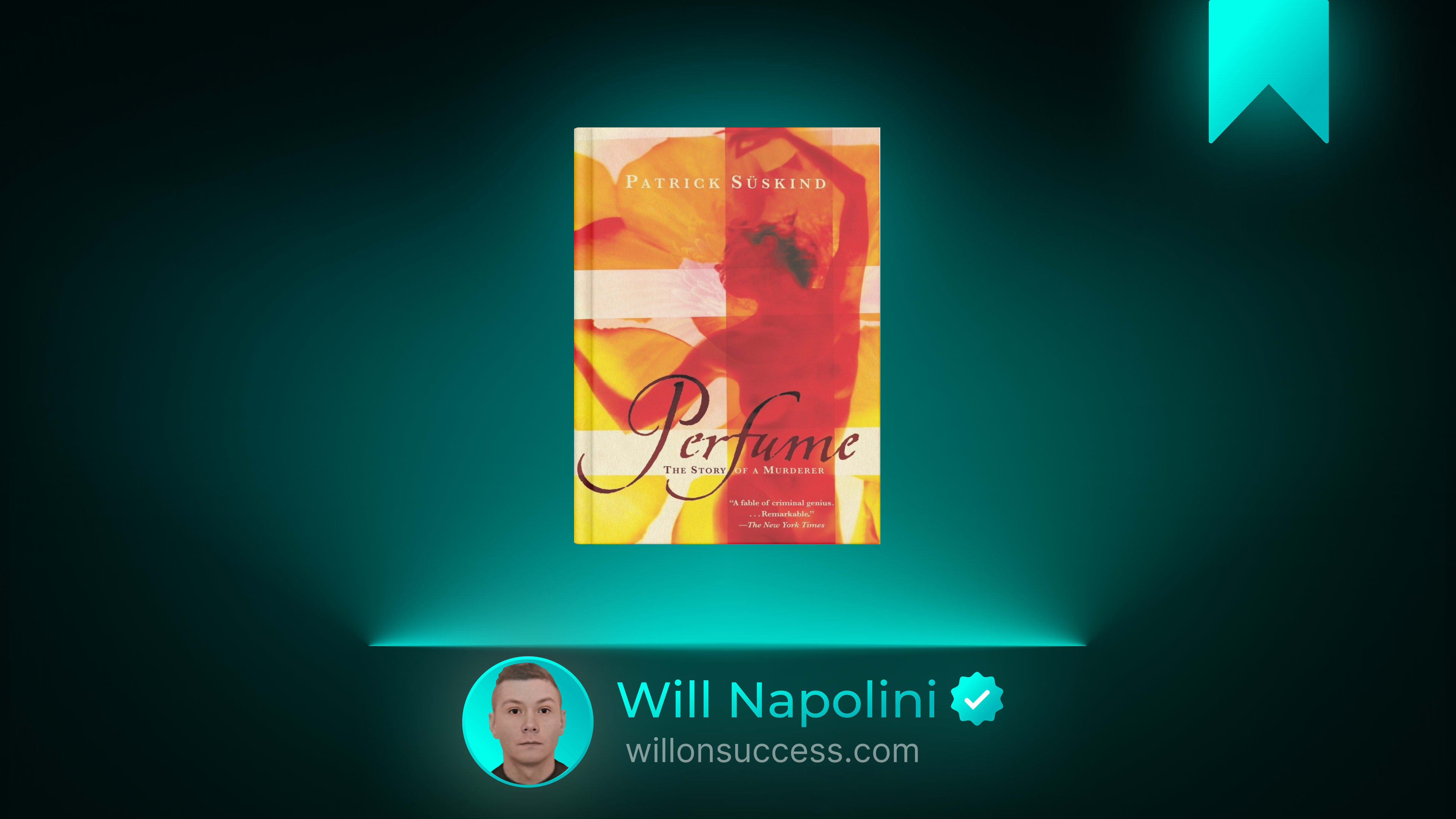
Patrick Süskind’s Perfume: The Story of a Murderer is a dark, hypnotic masterpiece that reads like a fairy tale whispered in a locked room. On the surface, it is the story of a man who murders twenty-five young women to create the world’s greatest perfume. Beneath the surface, it is a devastating meditation on what it means to have no identity, to be utterly unlovable, and to possess a genius that devours everything it touches.
The central truth of this novel is not about murder. It is about the terrifying void that opens inside a person who has never been seen, never been held, and never been loved. And it asks a question that every one of us must eventually face: What happens when a human being has no way to prove that they exist?
The Boy Born in the Stench of the World
The novel opens in 1738 Paris, in the most foul-smelling place imaginable—a fish market built over a former cemetery. Jean-Baptiste Grenouille is born here, discarded by his mother among the fish guts and garbage, left to die in the muck. But he does not die. He screams, and his screaming leads to his mother’s execution for infanticide. He survives.
From the very first page, Süskind establishes the central tragedy of Grenouille’s existence: he is unwanted. He is not born into love. He is born into filth, and the world’s first instinct is to throw him away.
As Grenouille grows, two extraordinary facts become apparent. First, he possesses the most sensitive, most extraordinary sense of smell ever recorded in human history. He can smell the world in ways no one else can perceive—stone, wood, metal, water, the emotions of other people, the future rot hidden inside a fresh apple. Second, and far more disturbing, he has no scent of his own. His body produces no odor whatsoever.
In a world where scent is the invisible signature of identity, Grenouille has no signature. Dogs cannot smell him. Babies do not recognize him. In a very real, very primal sense, he does not exist. He is a ghost wearing a human body. He can smell the entire world, but the world cannot smell him back.
I have learned that the deepest wound a person can carry is not cruelty. It is invisibility. To be ignored is worse than being hated, because hatred at least acknowledges your existence. Grenouille’s tragedy is that he is surrounded by the richness of the world’s scent, yet he has no place within it.
The Fire of Obsession Without a Hearth
Grenouille’s extraordinary nose leads him to an apprenticeship with a fading perfumer named Baldini, where he learns the craft of distillation. But Grenouille is not interested in making pleasant fragrances for the wealthy. He is driven by a singular, consuming obsession: to capture the scent of beauty itself.
This obsession leads him to the young women of Grasse, whose natural scent he finds intoxicating. He learns to murder them, extract their essence through enfleurage, and preserve their scent in tiny glass vials. He is not killing out of hatred or sexual desire. He is killing the way a scientist kills a specimen—coldly, methodically, in service of his art. He wants to bottle their essence and make it eternal.
Here is what I want you to understand about obsession, because I have seen it in many forms. Obsession is not passion. Passion is a fire that warms a house; it gives light, it cooks food, it gathers people around it. Obsession is a fire that has no hearth. It consumes everything around it—the furniture, the walls, the very foundation of the home—and it never grows warm. It only grows hungry.
Grenouille’s genius is real. His ability to perceive and recreate scent is genuinely transcendent. But because he has no human connection, no love, no mirror in which to see himself reflected, his genius has no moral center. It becomes a black hole. It pulls everything toward itself and gives nothing back. He creates the most beautiful perfume in human history, and it costs him the lives of twenty-five innocent women.
This is the warning hidden inside the story. Brilliance without belonging is not a gift. It is a weapon pointed at the world. Talent untethered from love does not elevate the person who possesses it; it isolates them further.
The Invisible Forces That Govern Us
One of the most unsettling truths Süskind explores is how easily human beings are manipulated by forces they cannot consciously detect. When Grenouille finally completes his masterpiece perfume and is led to his execution in the public square, he wears a single drop of it. The crowd of thousands, gathered to watch him die, is instantly overcome. They do not see a murderer. They feel love. They feel ecstasy. They fall to their knees and worship him.
The people do not choose to love him. They are chemically, biologically compelled to feel adoration. Their conscious minds are completely bypassed. The perfume speaks directly to the oldest, deepest parts of their brains—the parts that respond to scent, to pheromone, to the invisible signals that governed human behavior long before language existed.
This is not just a story about a magical perfume. It is a metaphor for the invisible forces that shape our daily lives. Think about it. Why do you trust one leader and distrust another? Why does a particular song unlock a memory you thought was lost forever? Why does the smell of a certain place make you feel instantly safe or instantly threatened?
We like to believe we are in control of our choices. We like to believe we love someone because of their character, their humor, their mind. And perhaps we do, on some level. But beneath that rational narrative runs a river of instinct, association, and sensory memory that we did not choose and cannot fully articulate. Süskind forces us to confront this. He asks: How much of your love is genuine, and how much of it is chemistry? How much of your identity is truly yours, and how much of it is a performance you have constructed to be loved?
The Tragedy of Being Loved for What You Are Not
In the novel’s devastating final act, Grenouille achieves everything he set out to achieve. The crowd loves him. They adore him. They would give him anything. But Grenouille feels no triumph. He feels only a deeper, more absolute despair.
He realizes that the love the crowd feels is not for him. It is for the perfume. They do not love Jean-Baptiste Grenouille. They love the mask he has created. If he were to take off the perfume, they would tear him apart with disgust. He has spent his entire life trying to be loved, and the only way he can achieve it is by erasing himself entirely and becoming someone else. He has finally been seen, but the person being seen is a fabrication.
I have seen this tragedy play out in quieter ways in the lives of people I have known. The executive who is admired for her ruthless efficiency but feels utterly unseen in her tenderness. The man who is loved for his humor but whose grief has no audience. The child who learns that love is conditional on performance, and who spends a lifetime performing, growing more hollow with every applause.
When you are loved only for what you produce, for what you perform, for the mask you wear, the love does not heal the void inside you. It widens it. Because every act of love directed at the mask is a confirmation that the real you is unlovable.
Why This Matters in Your Own Life
You are not a murderer. You are not a genius perfumer in 18th century France. But the questions Süskind raises are alive in your life right now, whether you acknowledge them or not.
Where in your life are you trying to manufacture love instead of earning it through vulnerability? Are you constructing a perfume—a persona, an achievement, a carefully curated image—hoping that if it is beautiful enough, people will finally love the real you underneath?
Where in your life has a passion become an obsession? Is there a pursuit that once brought you joy but now consumes your relationships, your health, your peace, and gives you nothing back but a hollow sense of progress?
And perhaps most importantly: Have you ever truly been seen? Not your accomplishments. Not your appearance. Not your utility. Have you ever been seen in your weakness, your confusion, your ordinary, unremarkable humanity, and been loved anyway?
If the answer is no, then you understand Grenouille. Not his cruelty. Not his violence. But his hunger. The desperate, aching need to prove that you exist, that you matter, that you are not invisible.
How to Confront Your Own Invisible Scent
Understanding these themes is valuable, but understanding without action changes nothing. If this novel stirs something in you, here is how you can bring its insights into your own life.
1. Identify Your Perfume Take out a journal and write honestly about the mask you wear most often. What is the version of yourself you present to the world to earn approval? Is it the competent one? The funny one? The strong one? The one who never needs help? Write it down. Then ask yourself: What would happen if I put the perfume down? What is the scent underneath? You do not have to remove the mask today. Just naming it is the first act of honesty.
2. Find Your Hearth Look at your obsessions. Not your passions—your obsessions. What is the thing you pursue that isolates you from the people you love? What is the work, the hobby, the ambition that has become a fire without a hearth? Identify one relationship or one daily practice that has been neglected because of it. Spend thirty minutes today rebuilding that connection. Send the text. Make the call. Sit with your child and do nothing but be present. Let the fire warm the house instead of burning it down.
3. Practice Being Seen Choose one person in your life whom you trust. The next time you speak with them, share one true thing. Not a curated truth. Not a performance. A real, small, unglamorous truth. “I felt lonely today.” “I am afraid of that meeting.” “I don’t know what I’m doing.” Let yourself be seen without the perfume. Notice what happens. Notice that the world does not end when you stop performing.
Who Should Read This Book
Perfume is for the reader who is not afraid of darkness. It is for anyone who has ever felt invisible, who has ever wondered what they would have to become in order to be loved, and who is brave enough to sit with that question. It is for those who appreciate language that is rich, sensory, and utterly immersive—Süskind writes scent the way a composer writes music, in layers and movements.
However, this is not a book for the faint of heart or for those seeking a tidy moral resolution. Grenouille is not redeemed. There is no neat lesson at the end, no warm embrace that makes everything right. The novel sits with you like a stone in your stomach, and it does not offer you the comfort of easy answers. If you are looking for a story where the hero triumphs and the world is just, this book will disturb you. It is meant to.
Your First Step Toward Being Real
You do not need to distill the essence of twenty-five women to prove you exist. You only need to stop hiding from the people who are already in front of you.
Here is what I want you to do today. Think of one person in your life who has known you for a long time but whom you have not truly allowed to see you recently. Not your achievements. Not your opinions. You. Send them a message. Call them. Say something small and true. Ask them how they are really doing, and mean it. Listen without preparing your response.
You do not need to perform. You do not need to be extraordinary. You only need to be present.
Because the deepest tragedy of Grenouille’s life was not that he was a monster. It was that he believed, from the very first moment he was thrown into the garbage of the world, that he had to become extraordinary in order to be loved. And he did become extraordinary. And it did not save him.
You do not need a perfume. You do not need to bottle the essence of the world to prove you belong in it. You are already here. You already have a scent. You already exist.
The only thing left to do is let someone smell you.