The Ghost We Build: What Daphne du Maurier's Rebecca Teaches Us About Comparison and Identity
There is a specific kind of haunting that has nothing to do with ghosts. It is the haunting of the invisible predecessor. It is the feeling of walking into a room, a relationship, or a career, and sensing that you are being measured against a standard of perfection you cannot see, cannot reach, and cannot defeat.
You look at the people who came before you—the predecessor in your job, the past love of your partner, the polished influencers on your screen—and you feel small. You feel like a guest in someone else’s life, tiptoeing through the halls of their legacy, terrified of disturbing the furniture.
If I could sit across the table from you right now, I would tell you the truth about that haunting: The ghost is not real. You built it. And because you built it, you are the only one who can tear it down.
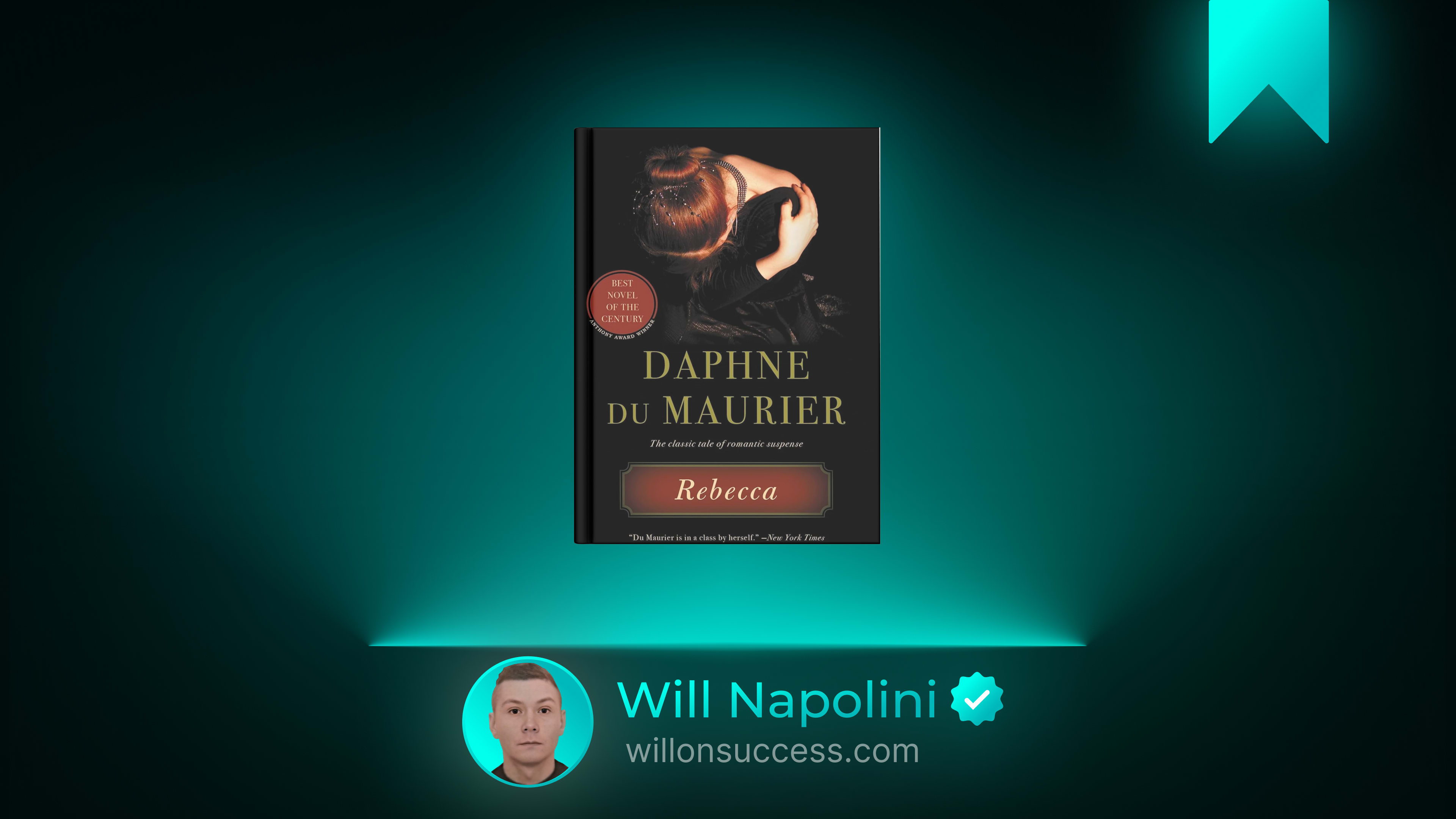
Daphne du Maurier’s 1938 masterpiece, Rebecca, is often classified as a Gothic romance or a mystery. But at its core, it is one of the most profound psychological explorations ever written about the paralyzing power of insecurity and the desperate need to claim one’s own identity.
The central thesis of the novel is this: When we allow ourselves to be defined by the perceived perfection of others, we erase ourselves. We become shadows. But the only way to step out of the shadow is to stop worshipping the ghost, break the silence that protects it, and finally speak our own name.
The Architecture of a Ghost
The novel begins with one of the most famous opening lines in literature: “Last night I dreamt I went to Manderley again.”
The narrator is a young, shy, unnamed woman. She is working as a paid companion to a wealthy, unpleasant woman named Mrs. Van Hopper. The narrator has no first name, no family of importance, and very little self-worth. She falls in love with Maxim de Winter, a wealthy widower whose first wife, Rebecca, died under mysterious circumstances.
Maxim takes the narrator to Manderley, his sprawling, beautiful estate. But Manderley is not a home; it is a museum. It is entirely preserved to reflect the taste, the elegance, and the overwhelming personality of Rebecca.
The narrator is immediately intimidated. She feels clumsy, plain, and inadequate. She is tormented by Mrs. Danvers, the housekeeper, who worships Rebecca’s memory and subtly undermines the new Mrs. de Winter at every turn. The narrator never sees Rebecca, yet Rebecca is the most powerful character in the book. She is a ghost that dictates how everyone behaves.
The Ghost of the Ideal: How We Haunt Ourselves
The narrator of Rebecca is not oppressed by Maxim; she is oppressed by her own imagination. She builds Rebecca into a goddess of perfection. She imagines Rebecca as effortlessly beautiful, brilliantly witty, and utterly confident. She compares her own awkwardness to this imagined perfection and finds herself wanting.
This is the exact mechanism of imposter syndrome and social comparison. We look at someone else’s polished exterior—their successful career, their seemingly perfect marriage, their curated social media feed—and we compare it to our own messy, internal reality. We create a “Rebecca” in our minds. We say, “I am not as smart as them, I am not as capable as them, I do not belong here.”
The tragedy of the narrator’s early life at Manderley is that she is competing with a fantasy. She is trying to win a game against an opponent who is already dead, and whose true nature she does not yet understand. You cannot defeat a ghost you have invented. You can only stop believing in it.
The Tragedy of Silence
The horror of Manderley is not built on violence; it is built on secrets. Maxim never tells his new wife the truth about his marriage to Rebecca. He assumes she is too young, too innocent, or too fragile to handle it. The narrator, terrified of losing Maxim and terrified of her own inadequacy, never asks him the hard questions. She suffers in silence.
Because of this silence, the housekeeper, Mrs. Danvers, fills the void with poison. When truth is absent, fear rushes in to fill the space.
How many relationships, teams, and families are slowly destroyed because people are afraid to speak the truth? We swallow our insecurities because we do not want to look weak. We hide our mistakes because we do not want to disappoint. But silence does not protect us; it isolates us. It gives other people’s narratives the power to define us. The moment the narrator finally speaks up, the moment Maxim finally tells the truth, the ghost of Rebecca loses its grip.
The Illusion of the Perfect Facade
The turning point of the novel occurs when the truth about Rebecca is finally revealed. Rebecca was not a perfect, angelic woman. She was manipulative, deceitful, and cruel. She had a secret life, and she used her charm to control everyone around her. The “perfect” Manderley was a stage set for her performance.
We often mistake confidence and charm for character. We see someone who seems to have it all together and assume they possess a peace we lack. But du Maurier teaches us that the most polished facades often hide the deepest rot. The people we envy are often fighting battles we know nothing about, or they are living lives built on unsustainable lies. When you realize that the “perfect” standard you are chasing is actually hollow, you can finally set it down.
Claiming Your Name
The narrator’s journey is a journey from anonymity to identity. At the beginning of the book, she is just “I.” She has no name, no power, no voice. By the end of the book, after the truth is revealed and Manderley is destroyed by fire, she has survived. She has stood by her husband, faced the truth, and stepped out of Rebecca’s shadow. She is no longer a guest in her own life.
You cannot build a life of substance while you are still apologizing for taking up space. You must claim your name. This does not mean becoming loud or aggressive. It means accepting that your perspective, your value, and your presence are valid. It means deciding that you are not a supporting character in someone else’s story; you are the author of your own.
Why This Matters on an Ordinary Tuesday
We live in an era that is designed to make us feel like the unnamed narrator. Algorithms feed us curated images of impossible perfection. We are constantly invited to compare our behind-the-scenes with everyone else’s highlight reel. We feel like frauds, waiting for the day when someone finally discovers that we do not belong.
Rebecca offers a profound, grounding counter-narrative. It tells us that the standard of perfection we are chasing is a lie. It tells us that our silence is our prison, and our honesty is our key.
Think about your current life. Are you trying to live up to the legacy of someone who came before you? Are you staying silent about your struggles because you are afraid of disappointing the people who admire you? Are you performing a version of yourself that feels like a costume, terrified that someone will see the strings?
When you adopt the lessons of Manderley, you stop trying to be perfect. You start trying to be real. You realize that the only way to burn down the ghost is to shine the light of truth on it.
How to Reclaim Your Identity Today
Understanding these themes is valuable, but understanding without action changes nothing. If you want to begin dismantling the trap of comparison, you must start applying these principles immediately.
1. Identify Your “Rebecca” Take out a piece of paper. Write down the name of the person, the standard, or the past version of yourself that you are secretly trying to compete with. It could be a colleague, a former partner, or an idealized version of success. Now, write down three things you are assuming about them that are probably not true. Strip away the mythology. See them as a human being with flaws, struggles, and limitations. You are not competing with a god; you are comparing yourself to a person.
2. Break the Silence Identify one conversation you have been avoiding because you are afraid of looking weak, inadequate, or uninformed. It could be a question you need to ask your boss, a boundary you need to set with your partner, or a confession you need to make to a friend. Commit to having that conversation this week. You do not need to have it perfectly. You just need to have it. Watch how the monster shrinks the moment you speak its name.
3. Claim Your Space The next time you are in a room where you feel like an impostor, do the opposite of what your fear tells you to do. Instead of shrinking, speak first. Instead of apologizing, state your opinion clearly. Instead of waiting for permission, take the seat at the table. You are training your nervous system to realize that you belong in your own life.
4. Burn the Museum Is there an area of your life where you are preserving a past identity out of obligation? Are you holding onto a career path, a relationship dynamic, or a belief system that belonged to someone else? Give yourself permission to let it burn. You do not have to preserve a life that does not fit you anymore.
Who Needs to Read This Book
Rebecca is essential reading for anyone who has ever felt like an outsider looking in. If you struggle with imposter syndrome, chronic comparison, or the fear of not being “enough,” this novel will act as a mirror and a map. It is for the person who is tired of performing and ready to be real.
However, if you are looking for a fast-paced, action-packed thriller, this book may not be for you. Du Maurier is a master of atmosphere and slow-burn tension. The horror in Rebecca is psychological, not visceral. It requires patience and a willingness to sit with uncomfortable emotions.
Your First Step Toward Mastery
You do not need to burn down a grand estate to claim your identity. You just need to stop apologizing for being yourself.
Here is what I want you to do today. Write down one thing you are currently doing just to maintain a facade of perfection. It could be agreeing to a project you do not have time for, pretending to understand a topic you are confused about, or staying quiet in a meeting to avoid conflict.
Tomorrow, in that exact situation, tell the truth. Say “I don’t know,” say “I can’t take this on,” or say “I see it differently.”
Feel the fear of disappointing the ghost. Do it anyway.
The world is filled with beautiful, intimidating estates. There will always be a predecessor, a standard, a ghost that seems larger than life.
But you are not here to be a curator of someone else’s museum. You are here to build your own home, with your own hands, on your own ground.
Stop whispering in the halls of your own life. Speak your name. Claim your space.
Because a life built on the shadow of another will always collapse, but a life built on the truth of who you are will stand firm, even when the fire comes.