The Courage to Be Wrong: What Pride and Prejudice Teaches Us About Seeing Clearly
There is a moment in every honest life when the floor drops out from beneath you. A moment when someone you have dismissed, misunderstood, or quietly despised says something that cuts through your carefully constructed narrative, and you are forced to confront an unbearable truth: I was wrong. And worse than being wrong—I did not even want to be right.
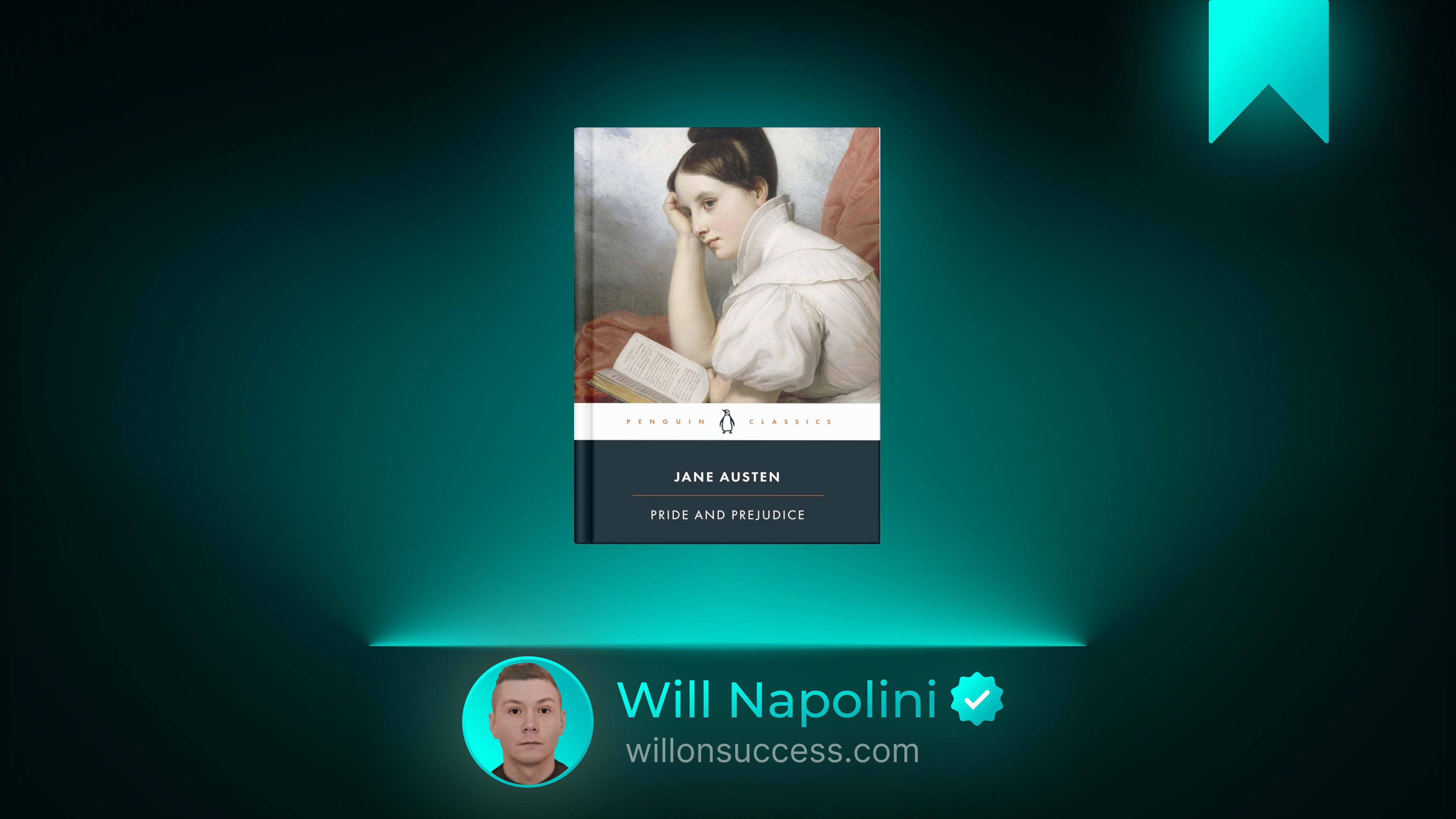
If you have never experienced that moment, you have not yet truly grown. And if you have experienced it, you know exactly why Jane Austen’s Pride and Prejudice has endured for over two centuries.
This is not, despite what the covers of a thousand paperback editions might suggest, merely a romance. It is one of the most precise, devastating, and ultimately hopeful studies of human self-deception ever written. It is a novel about the architecture of our blindness—how we build elaborate stories about other people to protect our own fragile egos, and how only the most painful truths can set us free.
If I could sit across the table from you right now, I would tell you something that Austen understood with surgical clarity: The hardest person in the world to see clearly is yourself. And the people who irritate you the most are almost always holding up a mirror you are refusing to look into.
The Big Idea
The central thesis of Pride and Prejudice is deceptively simple: We are all prisoners of our own perspective. We judge others not by who they actually are, but by how they make us feel in a single moment. We construct narratives about their character to justify our own reactions, and we defend those narratives with every ounce of our pride.
Elizabeth Bennet believes she is perceptive. She prides herself on her wit, her ability to read people, her refusal to be impressed by wealth. Mr. Darcy believes he is discerning. He prides himself on his judgment, his standards, his refusal to waste himself on people beneath his station. Both are catastrophically wrong about each other. Both must be broken open before they can see.
Austen is not interested in whether two people will fall in love. She is interested in the far more difficult question: Can two people who are deeply, stubbornly committed to their own rightness ever learn to see the truth?
The Wound That Starts Everything
The novel opens at a country ball in the small town of Meryton. Elizabeth Bennet, the second of five daughters in a family of modest means, overhears Mr. Darcy—a man of enormous wealth and social standing—dismiss her. He tells his friend that she is “tolerable, but not handsome enough to tempt me.”
In that single sentence, the trap is set. Elizabeth is wounded. Her pride is stung. And from that wound, she constructs an entire narrative about Darcy’s character. He is arrogant. He is cold. He is contemptuous. Every subsequent piece of evidence is filtered through that first judgment. When the charming Mr. Wickham tells Elizabeth a sob story about how Darcy cheated him out of an inheritance, she believes him instantly. Not because the evidence is strong, but because the story confirms what she already wants to be true.
I have watched this happen in boardrooms, in friendships, in families. Someone makes a careless comment in a meeting, and from that single moment, a narrative is born. He is not a team player. She does not respect my work. They think they are better than everyone else. Once the narrative is set, every action is interpreted through its lens. A thoughtful email becomes condescension. A quiet moment becomes disapproval. We are no longer seeing the person. We are seeing the story we built to protect our wounded pride.
The Mirror and the Hammer
The turning point of the novel—and I believe one of the most important scenes in all of literature—comes at Rosings Park, where Darcy proposes to Elizabeth for the first time.
It is a disaster. He tells her he loves her “against his will, against reason, against my own character.” He insults her family. He makes it clear that he sees the match as beneath him. Elizabeth, furious and humiliated, refuses him. She tells him he is the last man in the world she could ever be prevailed upon to marry.
And then, the next morning, he gives her a letter.
In that letter, Darcy explains two things. First, he explains why he separated Elizabeth’s beloved sister Jane from Mr. Bingley—not out of cruelty, but because he genuinely believed Jane did not return Bingley’s affection. He was wrong, but his motive was not malice. Second, he reveals the truth about Mr. Wickham. Wickham is not a victim. He is a gambler, a liar, and a predator who tried to elope with Darcy’s fifteen-year-old sister for her fortune.
Elizabeth reads the letter. She reads it again. And then she reads it a third time.
What happens next is not a romantic revelation. It is an existential reckoning. Elizabeth is forced to confront the fact that she has been entirely wrong. She judged Darcy by a single careless remark and never allowed a single piece of contradictory evidence to penetrate her certainty. She believed Wickham because his flattery fed her vanity. She rejected Darcy because his honesty wounded her pride.
She says to herself a sentence that I believe should be carved above the door of every institution of learning: “Till this moment I never knew myself.”
This is the moment the novel truly begins. Not the proposal, not the romance. This moment of shattering. The moment Elizabeth realizes that her “perceptiveness” was actually blindness, that her “independent judgment” was actually vanity, that the story she told herself about her own goodness was the very thing preventing her from being good.
Pride Is Not What You Think It Is
Austen draws a distinction that most of us miss. There is a difference between pride and vanity, and there is a difference between pride and self-respect.
Darcy’s pride is real, but it is not the pride of a person who thinks he is better than everyone. It is the pride of a person who has never been challenged. He was born into wealth, raised to believe his judgment was superior, and surrounded by people who deferred to him. His pride is a kind of insulation. It keeps him safe from the vulnerability of being wrong.
Elizabeth’s prejudice is not really about Darcy. It is about her own need to feel superior. In a world where she has no money, no power, and no social leverage, her wit and her judgment are the only things she owns. To admit she was wrong about Darcy would be to admit that the one thing she prides herself on—her ability to read people—is flawed. And that is a terrifying admission for anyone whose identity is built on being the perceptive one.
I have learned that the people who are most defensive about being wrong are almost always the people whose self-worth is most fragilely attached to being right. When your entire identity rests on your ability to see clearly, the possibility that you have misjudged someone feels like annihilation. So you double down. You defend the narrative. You protect the prejudice. Because the alternative—that you were blind, that you were vain, that you were wrong—is too painful to bear.
Character Is Revealed in How We Handle Discomfort
The genius of Austen’s structure is that she gives us multiple marriages as mirrors for different approaches to life.
Charlotte Lucas marries Mr. Collins, a foolish and obsequious man, because she is twenty-seven, has no fortune, and needs security. She is pragmatic. She does not love him. She does not respect him. She simply accepts the terms of the world as they are and negotiates the best deal she can within them.
Lydia Bennet, Elizabeth’s youngest sister, elopes with Wickham in a reckless frenzy of infatuation. She does not think. She does not consider consequences. She mistakes excitement for love and freedom for maturity.
Elizabeth refuses both paths. She refuses to marry for security without love, and she refuses to marry for passion without character. She waits. Not passively, but actively. She holds her standard even when the pressure to abandon it is immense. When Lady Catherine de Bourgh, Darcy’s imperious aunt, demands that Elizabeth promise never to marry Darcy, Elizabeth refuses. Not with rage. Not with drama. With quiet, unshakeable dignity.
This is not stubbornness. This is character. The ability to hold your ground when the entire social world is pressuring you to compromise your deepest values. The willingness to say, “I will not trade my integrity for your approval.”
Why This Matters on an Ordinary Tuesday
You may be thinking, This is a novel about 19th-century English gentry. What does it have to do with my life?
Everything. Because the mechanics of blindness have not changed. Only the costumes have.
Think about your workplace. Is there a colleague you have decided is incompetent, or arrogant, or untrustworthy based on one or two early interactions? Have you filtered every subsequent action they take through that initial judgment? Have you ever sat down and honestly asked yourself, What if I am wrong about this person?
Think about your relationships. Is there someone in your life you have written off because they hurt you once? Have you built an entire narrative about their character to justify your distance? Are you protecting your pride by refusing to see the full, complicated truth of who they are?
Think about how you consume information. In an era of algorithmic feeds and instant hot takes, we form judgments about strangers in seconds. We see a headline and we know exactly who is right and who is wrong. We build our prejudices in real time and defend them with the ferocity of Elizabeth Bennet defending her narrative about Wickham.
Austen’s novel is a mirror held up to every one of these moments. It asks: Are you seeing the truth, or are you seeing the story that flatters your pride?
How to Practice the Discipline of Seeing Clearly
Understanding Austen’s insight is valuable, but understanding without action changes nothing. If you want to begin dismantling your own prejudices, you must start applying these principles immediately.
1. The Second Reading Rule The next time you form a strong negative judgment about someone—a colleague, a neighbor, a public figure—force yourself to do what Elizabeth did with Darcy’s letter. Read the evidence a second time. Ask yourself: What if the explanation I have constructed is wrong? What if there is a completely different motive I have not considered? You do not have to change your mind. You only have to honestly interrogate it.
2. Identify Your Wickham Think about the last time you instantly liked someone, trusted someone, or believed someone without question. What was it about them that made you so certain? Was it their character, or was it their flattery? Were they telling you what you wanted to hear? Identify the people in your life who feed your vanity, and notice how quickly you give them the benefit of the doubt.
3. Practice the Sentence Elizabeth’s turning point was a single sentence: Till this moment I never knew myself. Write that sentence down. Keep it somewhere visible. Let it be a daily reminder that self-knowledge is not a destination. It is a practice. Every day is a new opportunity to discover that you were slightly, quietly, comfortably wrong about something.
4. Refuse the Collins Compromise Charlotte Lucas married security at the cost of respect. Look at your own life. Where are you settling for a version of success, a relationship, or a career that is “tolerable” but beneath what you actually value? Where are you saying yes out of fear rather than conviction? You do not have to blow up your life today. But you do have to name the compromise. You have to say, “I see what I am doing, and I see what it is costing me.”
Who Should Read This Book
Pride and Prejudice is essential reading for anyone who has ever been wrong about someone and been too proud to admit it. It is for the person who prides themselves on being a good judge of character and secretly suspects they might be more prejudiced than they think. It is for anyone navigating the tension between social expectation and personal integrity.
However, if you are looking for a fast-paced plot, or if you prefer stories where the conflict is external rather than internal, this novel will test your patience. Austen’s battlefield is the drawing room, not the battlefield. Her weapon is not a sword but a sentence. The drama is quiet, precise, and devastating. You must be willing to sit with the subtlety.
Your First Step Toward Clarity
You do not need to rewrite your entire worldview today. You just need to find one crack in your own certainty.
Here is what I want you to do today. Think of one person in your life about whom you have formed a firm, settled judgment. Someone you have decided is arrogant, or lazy, or untrustworthy, or beneath you.
Now ask yourself one question: What evidence would I need to see to change my mind about this person?
If you cannot answer that question—if no conceivable evidence would shift your judgment—then you are not seeing clearly. You are protecting a prejudice. You are Elizabeth at the ball, nursing a wound and calling it wisdom.
The world does not need more people who are certain. It needs people who are willing to be surprised.
Jane Austen understood that the greatest act of courage is not standing up to a Lady Catherine. It is standing up to your own narrative. It is reading the letter a third time. It is looking into the mirror and saying, Till this moment I never knew myself.
The mirror is always there. The question is whether you are brave enough to look.