The Architecture of Your Peace: Reclaiming Your Life After Narcissistic Abuse
Have you ever looked in the mirror and wondered where the vibrant, confident person you used to be has gone? You wake up, you go to work, you manage your responsibilities, and you smile when people ask how you are doing. But beneath the surface, you are operating in a state of quiet, exhausting hyper-vigilance. You are constantly scanning the room, monitoring the moods of others, and second-guessing your own memory.
If I could sit across the table from you right now, I would look you in the eyes and tell you the most important truth you will hear today: You are not crazy. Your memory is not failing you. And the exhaustion you feel is not a sign of weakness; it is the natural result of surviving a war you were never told you were fighting.
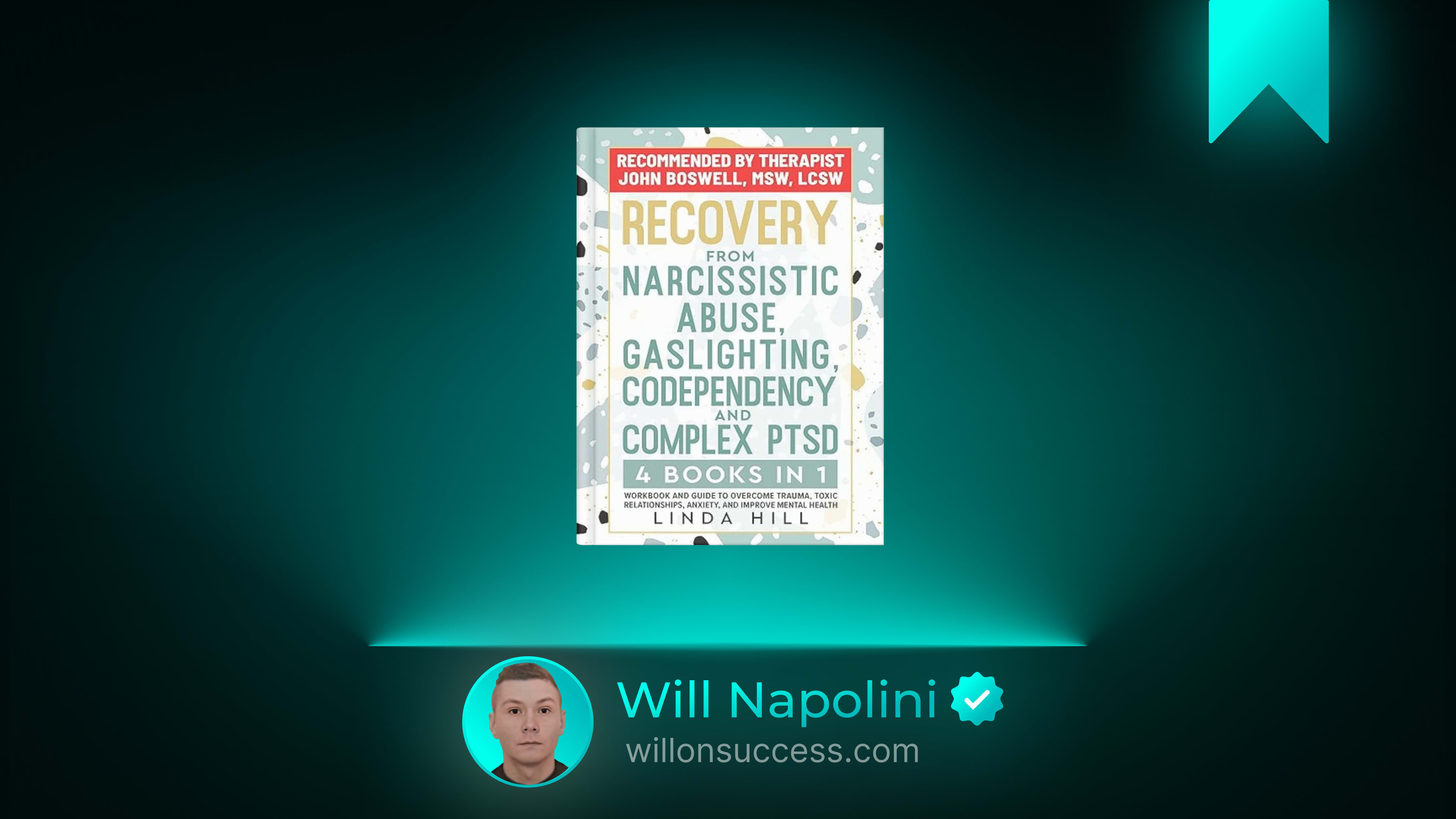
In Recovery from Narcissistic Abuse, Gaslighting, Codependency and Complex PTSD, Linda Hill provides a comprehensive, compassionate roadmap for those who have survived the profound disorientation of emotional abuse. This is not a book about how to “fix” a toxic partner, navigate a difficult boss, or win back someone’s affection.
The central idea of this work is radically liberating: Healing from narcissistic abuse is not about figuring out why they hurt you; it is about figuring out how to protect, regulate, and reparent yourself now that the abuse is over. The abuser was entirely responsible for the damage. But you are entirely responsible for the architecture of your recovery.
The Architecture of the Trap
To understand how to heal, we must first understand the mechanism of the trap. Narcissistic abuse rarely begins with cruelty. If it did, you would have walked away on the first date, or quit the job after the first week. Instead, it usually begins with intense charm, mirroring, and a feeling of being profoundly “seen.” This phase, often called love-bombing, is designed to lower your defenses and secure your trust.
But once your trust is secured, the dynamic shifts. This is where gaslighting enters.
Gaslighting is not just lying; it is the systematic dismantling of your reality. When you bring up a hurt, they tell you it never happened. When you express a need, they tell you that you are too sensitive, too demanding, or imagining things. Over months and years, this constant invalidation forces your brain to stop trusting its own perceptions. You hand over the keys to your reality to someone who uses them to drive you into isolation.
I have watched incredibly intelligent, capable people slowly disappear into the background of their own lives because someone else demanded all the psychological space. You begin to believe that you are the problem. You think, If I could just communicate better, if I could just be more patient, they would finally love me the way they did in the beginning.
But the goal of the narcissist is not mutual understanding; it is control. And you cannot negotiate with a system that requires your confusion to function.
This dynamic creates what is known as a trauma bond. Many survivors judge themselves harshly for staying, or for missing the abuser after they leave. They ask, Why am I so weak?
You are not weak; you are experiencing a biochemical addiction. The narcissist operates on a cycle of intermittent reinforcement—alternating between intense affection and cruel withdrawal. This unpredictability floods your brain with dopamine during the “good times” and cortisol during the “bad times.” Your brain literally becomes addicted to the relief that the abuser provides after they have caused the pain. Breaking a trauma bond is not a matter of sheer willpower; it requires treating it with the same clinical seriousness as a chemical withdrawal.
Your Nervous System Is Not Broken; It Is Exhausted
One of the most critical concepts Hill addresses is Complex Post-Traumatic Stress Disorder (C-PTSD). When most people hear “PTSD,” they think of a single, catastrophic event—a car accident or a combat deployment. But C-PTSD is born from chronic, inescapable, relational trauma. It is the drip-drip-drip of emotional erosion, walking on eggshells day after day, year after year.
Because the abuse was woven into the fabric of your daily life, your nervous system adapted to survive it. Your body was flooded with cortisol and adrenaline for so long that “fight, flight, freeze, or fawn” became your default setting.
Now, even if you have left the toxic relationship or set physical distance from the abuser, your body still thinks you are in danger. You might find yourself having intense emotional reactions to minor inconveniences, feeling sudden waves of shame, or experiencing profound dread for no logical reason.
These are not character flaws. These are emotional flashbacks. Unlike a cognitive memory where you remember the event, an emotional flashback pulls you back into the exact emotional state you felt during the abuse. You feel as small, helpless, and terrified as you did in that moment. Your nervous system is simply doing what it was trained to do: scan for the threat. Recognizing this is the first step toward self-compassion. You do not need to be “fixed” because you are not broken. You need to be regulated because you are exhausted.
Codependency Is Not Loving Too Much; It Is Losing Yourself
Many survivors carry immense shame about their “codependency.” They look back at the things they tolerated, the boundaries they let get crossed, and the excuses they made, and they judge themselves harshly. Why did I stay? Why did I keep giving?
Let’s reframe this. Codependency in the context of abuse is not a symptom of loving too much. It is a survival strategy. If you grew up in an environment where love was conditional, or if you were taught that your value lay in your utility to others, you learned to manage other people’s emotions to keep yourself safe.
Fawning—the trauma response of people-pleasing and appeasing—kept you alive in a hostile environment. But that same survival mechanism is what prevents you from building a life of genuine peace today. Breaking codependency requires a profound paradigm shift: You must stop viewing your boundaries as acts of aggression, and start viewing them as the architecture of your peace.
When you set a boundary, you are not punishing the other person. You are simply defining where you end and where they begin. You are telling your own nervous system, I will protect you now.
The Core Work of Reparenting
Narcissistic abuse often targets the most vulnerable, unhealed parts of our psyche. When the abuser criticizes you, it is rarely the confident, adult version of you that feels the deepest sting. It is the wounded inner child—the part of you that was never taught how to defend its own worth.
Healing from this level of trauma requires “reparenting.” You must become the fierce, protective, and unconditionally loving parent to yourself that you never had. When the inner critic speaks up, echoing the voice of the abuser, you do not argue with it. Instead, you step in as the healthy adult. You speak to that younger part of yourself and say, I hear that you are scared, but I am in charge now. I will not let anyone treat us this way again. Reparenting is the act of taking back the authority over your own self-worth.
Closure Is an Inside Job
Perhaps the hardest pill to swallow in recovery is the realization that you may never get the apology you deserve. You may never get the vindication, the admission of guilt, or the tearful realization from the abuser of how deeply they hurt you.
Waiting for their closure is a trap. It keeps you tethered to their narrative.
True closure is an inside job. It is the moment you accept that the person you thought you loved, the person who existed during the “idealization” phase of the relationship, was an illusion created to hook you. You are not grieving a real person; you are grieving a phantom. And while that grief is incredibly painful, it is also the price of your freedom. Once you stop expecting a broken well to provide clean water, you can finally turn around and dig your own.
Why This Matters on an Ordinary Tuesday
You might be thinking, This sounds incredibly heavy. But let’s look at what happens when you actually apply these principles to your daily life.
Imagine it is Tuesday evening. A friend cancels on you at the last minute with a flimsy excuse. Before recovery, your C-PTSD and codependency would flare up. Your inner critic would tell you that you are unlovable. You would suppress your anger to avoid conflict, send a cheerful text saying, “No worries at all!”, and then spend the next three days ruminating, feeling drained, and physically exhausted.
After integrating this recovery work, the scenario changes. You notice the tightening in your chest—the emotional flashback. You recognize it for what it is. You take a deep breath to signal safety to your vagus nerve. You reply to your friend with a clean, unapologetic boundary: “I was really looking forward to seeing you, but I need more notice when plans change. Let me know when you’re free next.”
You put the phone down. You do not ruminate. You go make dinner. You have reclaimed your energy, your time, and your reality. This is what freedom looks like. It is not the absence of triggers; it is the mastery of your response to them.
In the workplace, this mastery looks like refusing to absorb a toxic manager’s anxiety. Instead of “fawning” and taking on extra work to soothe their chaotic moods, you calmly state, “I can prioritize this new task, but it means the quarterly report will be delayed until Thursday. Which would you prefer?” You force them to manage their own chaos, while you protect your peace.
How to Reclaim Your Agency Today
Understanding the psychology of abuse is the foundation, but healing happens in the body and in your daily actions. Here is how you begin the practical work of recovery.
1. Master the Somatic Sigh When you feel an emotional flashback hitting—when the panic, shame, or dread rises—do not try to logic your way out of it. Your prefrontal cortex is offline; your amygdala is driving. You must speak to your body. Take two quick inhales through your nose, followed by one long, slow, extended exhale through your mouth. This specific breathing pattern rapidly offloads carbon dioxide and sends an immediate biological signal to your brain that the threat has passed. Do it three times.
2. Name and Tame the Flashback When you feel overwhelmed by disproportionate emotion, say out loud: “I am having an emotional flashback. I am feeling small and unsafe right now, but I am an adult, and I am safe in this present moment.” This simple act bridges the gap between your emotional brain and your logical brain, pulling you out of the past and back into the room.
3. Implement the “Grey Rock” Method If you are in a situation where you cannot go completely “no contact” (such as co-parenting or working with a toxic individual), become a grey rock. Be as uninteresting, unresponsive, and boring as a rock in the landscape. Give short, factual answers. Do not offer emotional reactions, personal details, or defenses. The narcissist feeds on emotional supply—both positive adoration and negative conflict. When you starve them of the reaction they seek, they will eventually look elsewhere.
4. Reparent in Real-Time The next time you make a mistake and feel a wave of intense shame, pause. Visualize the younger version of yourself. Speak to them with the fierce, unconditional protection you always needed. Tell them, “It is okay to make mistakes. I am here. I am not leaving you. I still love you.” Watch how quickly the shame dissipates when it meets unconditional acceptance.
Who Needs to Read This Book
Linda Hill’s comprehensive guide is essential for anyone who feels they have lost their identity after a toxic relationship. It is for the chronic people-pleaser who is tired of feeling drained, the survivor of childhood emotional neglect, and the person who constantly feels like they are “walking on eggshells” in their own home.
However, this book is not for someone who is looking for couples counseling strategies to “save” their marriage to an active narcissist. It will not teach you how to communicate better with someone who uses your communication as ammunition. It is strictly a manual for the survivor’s extraction, healing, and rebuilding.
Your First Step Toward Peace
You do not need to map out the next five years of your healing journey today. You just need to prove to your nervous system that you are finally on your own side.
Here is what I want you to do right now, today.
Find a quiet space where you will not be interrupted for two minutes. Place one hand on your chest and one hand on your stomach. Feel the warmth of your own hands. Take a slow breath and say this sentence out loud, with absolute conviction:
“What happened to me was not my fault, but my healing is my responsibility. I am safe now, and I am finally coming home to myself.”
The fog is lifting. You are not crazy, you are not broken, and you are not alone. You were simply surviving a storm that you were never meant to weather. But the storm has passed. It is time to step out of the rubble, look at the vast, open space ahead of you, and begin the quiet, beautiful work of building a life that belongs entirely to you.