The Hidden Biology of a Generous Life: Why Kindness Changes Everything
I used to believe that giving my energy away left me with less for myself.
When you are running on empty, offering help to a colleague, listening to a struggling friend, or even just holding the door for a stranger can feel like a withdrawal from an already overdrawn account. We are often taught to treat kindness as a luxury. We tell ourselves we will be generous once we are fully rested, once the project is finished, once we have achieved our goals and finally have enough time and resources to spare.
But what if the mathematics of human connection do not work that way at all?
What if the reason you feel depleted has less to do with how much you are giving, and more to do with the fact that you have stopped giving in the way your biology actually requires?
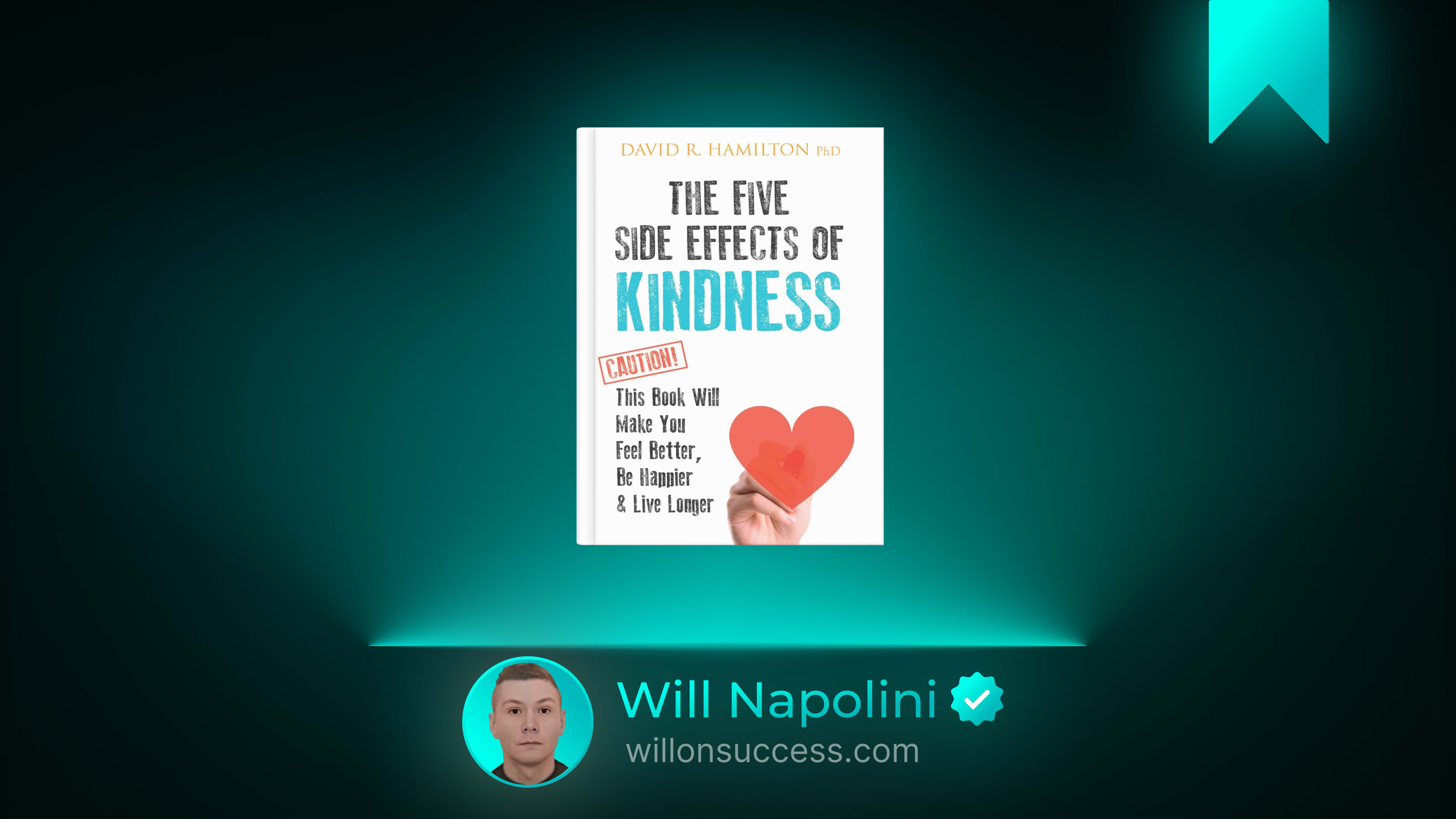
In The Five Side Effects of Kindness, biochemist and author David R. Hamilton flips this assumption on its head. His central thesis is both simple and profound: kindness is not a drain on your resources. It is the very mechanism that generates them. When you choose to be kind, you are not just improving someone else’s day. You are fundamentally altering your own biology, your emotional baseline, and the social fabric around you.
If you have been feeling burned out, disconnected, or physically exhausted, this book offers a perspective shift that is as scientifically grounded as it is deeply encouraging.
The Architecture of Generosity
To understand why this matters, we have to look at what actually happens inside you when you do something nice for someone else.
Think of your body as a complex ecosystem. Most of us try to force this ecosystem to thrive through sheer willpower, applying the fertilizer of hustle and the water of caffeine. But Hamilton points out that there is a specific nutrient your system is actually craving. That nutrient is oxytocin, often referred to as the “love hormone” or “bonding molecule.”
Every time you perform an act of kindness, your brain releases a flood of oxytocin. This is not just a warm, fuzzy feeling. It is a measurable physical event. Oxytocin causes the release of nitric oxide in the cardiovascular system, which dilates blood vessels and lowers blood pressure. It reduces inflammation. It literally protects your heart.
The concept here is that the architecture of your body was designed with generosity built into the foundation. You cannot out-hustle a depleted nervous system, but you can heal it through the simple act of looking out for someone else. Kindness is not a withdrawal from your energy account; it is the interest that compounds it.
Your Biology Rewards What You Give Away
The first two side effects Hamilton explores are deeply intertwined: kindness makes you happier, and it benefits your heart.
We often chase happiness as if it is a destination we will arrive at once our circumstances align perfectly. We wait for the promotion, the right relationship, or the perfect weekend to finally feel good. But the neurochemical reality is that the sequence is usually reversed. The action of giving creates the happiness, not the other way around.
When you help someone, your brain’s reward center lights up. You experience what researchers call the “helper’s high,” driven by a release of dopamine and serotonin. You feel a genuine lift in your mood. Simultaneously, the oxytocin released during this act protects your cardiovascular system.
Why this matters for your daily life: You may be working hard and still wondering why nothing is changing, why you still feel tired and unmotivated. You might be trying to think your way into a better mood. But you cannot think your way into a neurochemical state; you have to act your way into it. When you shift your focus from your own internal discomfort to the external needs of someone else, you break the cycle of rumination. You give your brain a tangible reason to release the chemicals that make you feel capable and alive.
Practical Application: Start a “Micro-Generosity” practice. Do not plan grand gestures. Instead, commit to three tiny, invisible acts of kindness every day. Pick up a piece of trash on the sidewalk. Let someone merge in traffic. Leave a genuinely specific compliment in a colleague’s Slack channel. The goal is not to be recognized for these acts. The goal is to trigger your own biological reward system before noon.
Generosity Rewires the Clock
The third side effect is perhaps the most surprising: kindness slows aging.
This sounds like a bold claim, but the mechanism is rooted in how our bodies handle stress. Chronic stress floods your system with cortisol. Over time, elevated cortisol increases oxidative stress and free radical damage, which literally accelerates the aging of your cells. It breaks you down from the inside out.
Oxytocin is the biological antidote to cortisol. When you act kindly, you reduce your own stress response. You lower your free radical levels. You are quite literally protecting your cells from premature degradation.
Why this matters for your daily life: We spend an enormous amount of time and money trying to anti-age. We buy creams, we optimize our diets, we track our sleep. But if your daily routine is filled with cynicism, frustration, and a hyper-focus on your own problems, you are fighting a losing battle against your own biology. You cannot out-supplement a hostile internal environment. True vitality requires a shift in how you relate to the people around you.
Practical Application: Implement the “Compassion Pause.” The next time you feel a spike of frustration—when a coworker makes a mistake, when a family member forgets something, or when a stranger cuts you off—stop for three seconds before reacting. Take a breath and silently say to yourself, “They are having a hard time, just like I do.” This single pause interrupts the cortisol spike and invites oxytocin back into the system. You are choosing to protect your own cells by offering grace to someone else.
Connection Is a Mirror, Not a Transaction
The fourth side effect focuses on relationships. Kindness improves them, but not in the way we usually expect.
We often view relationships as transactions. We think, If I am nice to you, you should be nice to me. When the return on our investment does not match our expectations, we become resentful. We build walls. We isolate ourselves.
Hamilton explains that human beings are wired with mirror neurons. We are biologically designed to catch each other’s emotions. When you smile at someone, their brain mirrors that neural activity. When you offer genuine warmth, the other person’s nervous system begins to regulate and settle.
You do not need to demand trust; you just need to signal it first.
Why this matters for your daily life: If you are feeling disconnected in your marriage, your friendships, or your team at work, you might be waiting for the other person to change the atmosphere. You are waiting for them to be warmer, more communicative, or more appreciative before you open up. But because of mirror neurons, the atmosphere only changes when someone introduces a new emotional temperature into the room. You have to be the thermostat, not the thermometer.
Practical Application: Adopt the “First to Warm” rule. In your next interaction with someone you feel distant from, be the first to soften your posture. Be the first to ask a genuine question about their day. Be the first to offer a small concession. Do not do it to get a reaction. Do it to change the environment. Watch how their mirror neurons inevitably begin to reflect the warmth you introduced.
The Ripple Effect Is Measurable
The final side effect is the most expansive: kindness makes the world a kinder place.
It is easy to feel small. When you see the massive problems in the world, it is tempting to conclude that your individual actions do not matter. Why bother holding the door or listening to a friend when the world feels so fractured?
Hamilton highlights fascinating sociological studies showing that kindness is contagious. When you perform a kind act, it does not just affect you and the recipient. The recipient is more likely to be kind to someone else, and that person is likely to be kind to a third person. The ripple effect of a single generous act can influence up to three degrees of separation—meaning your action impacts friends of friends of friends.
A single act of generosity does not just change the recipient; it changes the atmosphere of the room, which changes the behavior of the people in it, which eventually alters the culture of the community.
Why this matters for your daily life: You are never acting in a vacuum. Every interaction you have is a vote for the kind of world you want to live in. When you choose patience over irritation, or encouragement over criticism, you are not just being a “good person.” You are actively participating in the structural repair of your community. Your behavior gives other people permission to behave that way, too.
Practical Application: Try the “Visible Kindness” experiment. For one week, do your kind acts where others can see them, not to brag, but to model the behavior. Pay for the coffee of the person behind you in line. Verbally appreciate a team member in front of the whole group. Help a neighbor carry groceries while others are watching. You are not just helping one person; you are giving everyone who witnesses the act a blueprint for how to treat each other.
Who Should Read This Book
The Five Side Effects of Kindness is a vital read for anyone who feels burned out, cynical, or physically exhausted by the demands of modern life. If you have been trying to achieve happiness through acquisition, status, or sheer productivity, this book will offer a deeply refreshing alternative. It is also highly valuable for leaders, managers, and parents who want to understand the biological and social mechanics of building healthy, trusting environments.
However, if you are looking for a dense, purely philosophical treatise on the ethics of altruism, or a deeply spiritual text devoid of science, this may not be the exact fit. Hamilton’s approach is heavily rooted in biology, psychology, and measurable outcomes. He is practical, accessible, and focused on the tangible results of human behavior.
One Small Step
Understanding the science of kindness is valuable, but understanding without action changes nothing. The proof is always in the doing.
Today, I want you to take one specific step. Send one text message to someone you have not spoken to in a while. Do not ask them for anything. Do not make small talk about the weather. Simply tell them one specific thing you appreciate about them and how it has positively impacted your life.
Then, put your phone down. Do not wait for their reply. Just sit quietly for a minute and notice how your own chest feels. Notice the subtle shift in your breathing.
That feeling is not an accident. It is your biology thanking you for remembering how you were designed to live.
The Door Is Already Open
The world does not change because a few people do massive, heroic things. It changes because ordinary people do small, kind things consistently, day after day.
You have the power to alter your own biology, heal your own heart, and shift the mood of your environment before lunchtime tomorrow. You do not need to wait until you have more money, more time, or more energy. The resources you need are already inside you, waiting to be activated by a single decision to look outward.
The door to a better life is not locked, and you do not need a special key to open it. You just need to hold it open for someone else.