The Kite Runner by Khaled Hosseini: How to Face the Past and Choose a Different Path
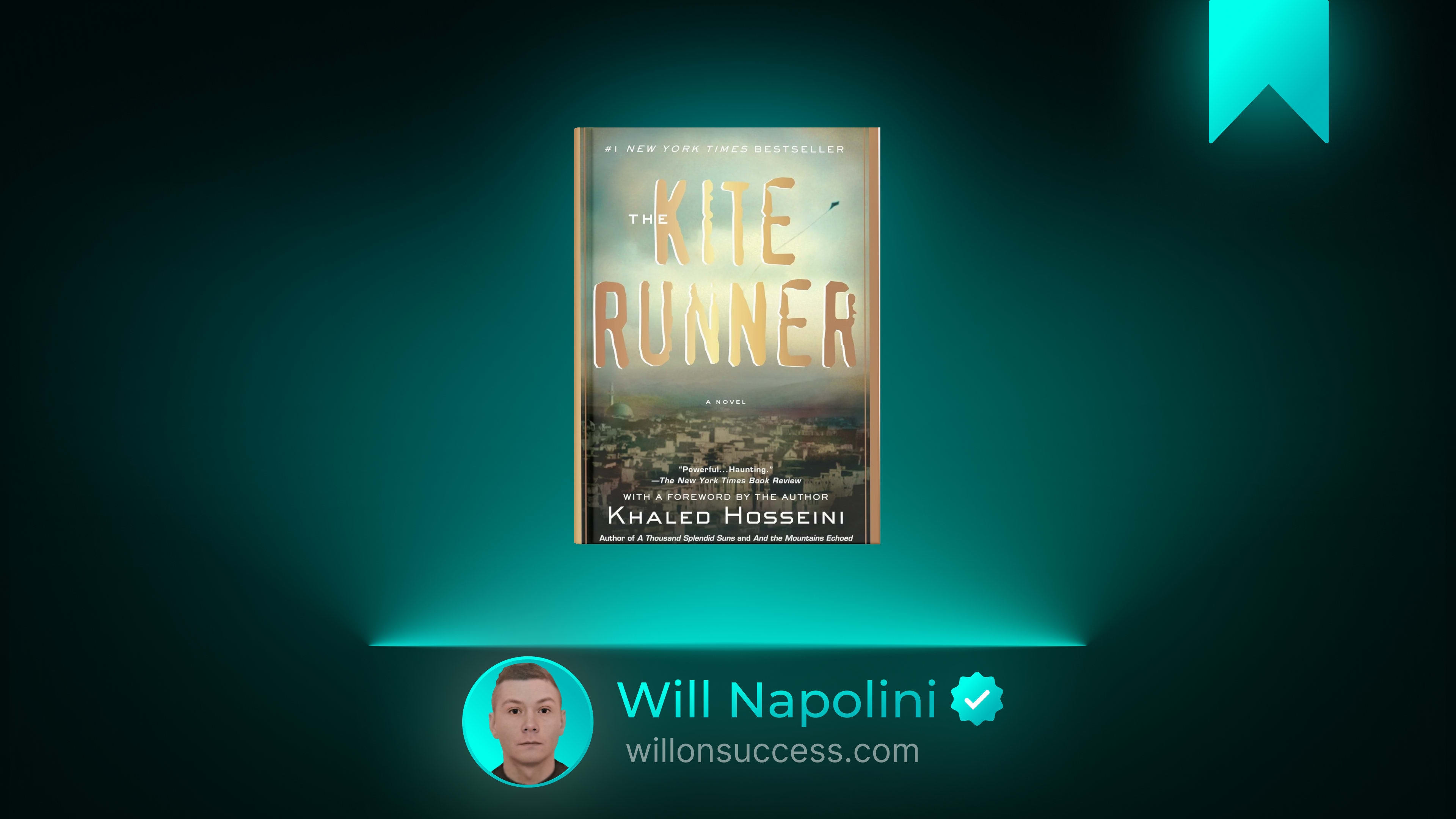
You already know how heavy an unspoken truth can become. It starts small. A moment of hesitation. A word left unsaid. A choice to look away when you knew you should step forward. Over time, that single moment settles into the foundation of your life. You carry it into your work. You carry it into your relationships. You carry it into the quiet hours when the noise finally stops and you are left with your own reflection.
What if the weight you have been carrying is not meant to crush you, but to move you?
Khaled Hosseini’s The Kite Runner is a work of fiction, but it speaks a psychological truth with startling clarity: guilt left unexamined becomes a permanent tenant. Guilt faced with courage becomes a teacher. The novel follows a man who spends decades running from a childhood betrayal, only to discover that the only way out is the way through. You may not live through war-torn Kabul, and you may never face a choice as dramatic as the one in the book. But you do face the everyday moments where character is tested: when you stay silent instead of speaking up, when you protect your comfort instead of honoring your values, when you let a relationship drift because repair feels too difficult.
Here is what I would tell you if we were sitting together with this book open between us: you do not need more time to become the person you want to be. You need the willingness to stop running from the person you already are, and to start doing the work that turns regret into responsibility.
The Big Idea
The central thesis of The Kite Runner is captured in a single line that echoes through the narrative: there is a way to be good again. This is not a sentimental promise. It is a practical claim. Hosseini does not suggest that past mistakes vanish or that consequences disappear. He suggests something harder and more useful: moral damage can be repaired through deliberate action. Redemption is not a mood you wait to feel. It is a direction you choose to walk.
Most of us treat guilt as a life sentence. We let it shape our self-image, shrink our ambitions, and poison our relationships. The novel asks you to treat it differently. Guilt is a signal, not a verdict. It tells you where your values and your actions have drifted apart. Once you hear that signal clearly, you stop trying to outrun it. You start building a path back. A small decision becomes a direction, and a direction repeated long enough becomes a life.
The Story That Carries the Weight
Amir and Hassan grow up in the same Kabul household, but their lives are shaped by invisible lines of class, ethnicity, and unspoken hierarchy. Hassan is loyal to Amir in a way that asks for nothing in return. Amir wants his father’s approval, a hunger that leaves him vulnerable to fear and self-protection. When a moment of crisis arrives in an alley behind a kite tournament, Amir watches. He does nothing. He lets Hassan carry the consequences. Then, unable to live with his own cowardice, he pushes Hassan away.
The years that follow are not dramatic in the moment, but they are heavy in their accumulation. Amir moves to America, builds a life, marries, writes, and succeeds on paper. But the past does not stay buried. It leaks into his marriages, his ambitions, his quiet mornings. Decades later, a phone call offers him a chance to return to a fractured homeland and rescue Hassan’s son from danger. The journey is terrifying. It forces him to face the country he left, the father he disappointed, the friend he failed, and the boy who mirrors everything he ran from. He does not go to feel better. He goes to act rightly. And in that choice, the story finds its center.
You do not need a war-torn city or a childhood trauma to understand this pattern. You only need to recognize how often you have chosen comfort over courage, and how that choice quietly echoes through your days. The story is a mirror, not a manual. But the reflection it offers is deeply practical.
Silence Compounds the Original Wound
The first betrayal in Amir’s life is not the moment he fails to intervene. It is the years he spends refusing to name what happened. Silence does not protect you from guilt. It preserves it. When you avoid the truth, you are not moving past it. You are storing it.
I have seen this happen in relationships, in careers, in the quiet drift of families. Someone says the wrong thing, or does nothing when they should have done something, and instead of addressing it, they pretend it did not matter. The pretense becomes a habit. The habit becomes a wall. The wall becomes a life.
Hosseini shows us that unspoken failures do not fade. They compound. They alter how you show up in other rooms. They make you defensive when you should be open. They make you overcompensate where you should simply be honest. What you repeat in private eventually becomes visible in your life. If your private relationship with your own mistakes is built on avoidance, your public relationships will carry the same tension.
The way out is not dramatic. It is direct. You name what happened. You stop editing the story to make yourself look better. You accept that the discomfort of truth is always lighter than the exhaustion of concealment. You do not need perfect words. You need willing honesty. And once the truth is in the room, you can finally begin the work that silence prevented.
Redemption Demands Action, Not Just Remorse
Regret is passive. It lives in your head. It replays the scene, rehearses the apology you never gave, and convinces you that feeling bad is the same as doing good. It is not. Remorse without repair is just another form of self-focus.
Amir does not earn his way back by mourning his past. He earns it by risking his present. He travels into danger. He confronts a man who embodies everything he once ran from. He chooses the hard, visible path over the comfortable, hidden one. The novel makes a quiet but firm claim: you cannot think your way into moral clarity. You must act your way into it.
This matters because so many of us wait for a sign that we are forgiven, or that the moment has passed, or that the other person no longer cares. You will rarely get that sign. You will get the work instead. You will get the awkward conversation. You will get the apology that feels clumsy. You will get the decision to show up differently tomorrow, and the day after, and the day after that.
Action is the bridge between who you were and who you are becoming. You do not need to erase your past to move forward. You need to stop letting it dictate your next step. When you replace self-judgment with responsibility, guilt stops being a cage and starts being a compass.
You Cannot Build a Future on Unexamined Pasts
We like to believe we can leave old patterns behind by simply changing our address, our job, or our social circle. But the past does not disappear when you stop talking about it. It goes underground. It shows up as impatience in your marriage. It shows up as perfectionism in your work. It shows up as the sudden urge to walk away when things get difficult.
Hosseini’s narrative is a reminder that unprocessed history has a way of steering your present. Amir’s need for his father’s approval, his fear of conflict, his habit of choosing self-protection over loyalty—none of these vanish when he crosses an ocean. They travel with him. They shape his choices until he finally sits down with them and asks the right questions.
Here is what I have learned from watching people rebuild their lives: you cannot construct a stable future on a foundation you refuse to inspect. You must walk back into the rooms you have kept locked. You must look at the choices you made, not to punish yourself, but to understand them. You must separate who you were in that moment from who you are now. You must acknowledge that you were limited by fear, by ignorance, by pressure, by the weight of expectation. And then you must decide what you will do differently.
Growth is not the absence of failure. It is the presence of honest reflection. When you stop treating your past as a life sentence and start treating it as data, you free yourself to build something sturdier. A life is not built by never making mistakes. It is built by learning how to repair them.
Loyalty Is a Choice That Costs You Something
Hassan’s loyalty is not sentimental. It is costly. He does not stay loyal because it is easy. He stays loyal because he believes in the bond itself, even when the bond is not returned. Amir’s betrayal is not born of malice. It is born of fear. He chooses safety over fidelity. He chooses his own comfort over someone else’s dignity.
We make this same choice every day, usually in smaller forms. We choose not to defend a colleague when it would cost us political capital. We choose not to speak honestly to a friend when it might create temporary friction. We choose to stay quiet in our families because disruption feels dangerous. We call it pragmatism. It is often just fear wearing a different coat.
Loyalty is not the absence of doubt. It is the decision to stay aligned with your values when doubt shows up. It is choosing the harder conversation over the easier silence. It is showing up for someone when showing up costs you something. This does not mean you tolerate abuse or abandon your boundaries. It means you refuse to trade your character for convenience.
What you practice in private eventually becomes visible in your life. If you practice loyalty to your word, to your relationships, to your own standards, you will not abandon them when pressure arrives. You will adjust. You will communicate. You will stay. And staying, when it matters, is often the most powerful form of courage.
Why This Story Matters for Your Ordinary Life
You do not need to be running from a childhood failure to feel the weight of unaddressed guilt. You only need to be human. We all carry moments we wish we could edit. A promise we broke. A conversation we avoided. A boundary we crossed. A friendship we let fade because repairing it felt too heavy.
This novel matters because it refuses to let you romanticize avoidance. It does not suggest that time heals everything. It suggests that action heals what time alone cannot. It reminds you that moral courage is not a personality trait you are born with. It is a muscle you train. You train it by telling the truth when lying would be easier. You train it by apologizing when defending yourself would feel safer. You train it by choosing repair over resentment, even when the other person has already moved on.
Here is what changes when you apply this to your life: you stop waiting for permission to make amends. You stop treating relationships as disposable when they require effort. You stop believing that success erases character. You start understanding that the quality of your life is directly tied to the honesty of your accounting. You become someone who faces things instead of fleeing them. And that shift, quiet as it may seem, alters everything.
Practical Application
Understanding these ideas is only the beginning. The real work happens when you translate them into behavior. Here are concrete steps you can take to begin applying this framework to your own life:
Name the Unspoken Moment Choose one regret you have carried in silence. Write it down in plain language. Do not justify it. Do not soften it. Simply state what happened, what you chose, and how it affected someone else. Writing it down removes its power to haunt you and gives it a form you can actually work with.
Separate Guilt from Shame Guilt says: I did something wrong. Shame says: I am wrong. The first is useful. The second is paralyzing. When guilt arises, ask yourself: What value did I violate? What behavior can I adjust? What repair is possible? Keep your focus on action, not identity.
Design a Repair Step If amends are possible, draft a clear, direct message. Acknowledge your part without demanding forgiveness. Offer a specific change in behavior going forward. If direct contact is unsafe or inappropriate, write the letter anyway and keep it as a commitment to how you will show up differently in future relationships.
Practice Low-Stakes Moral Courage You do not need a crisis to train integrity. Choose one small situation this week where you normally stay silent. Speak up kindly. Return something you borrowed. Admit a mistake before you are caught. Keep a promise you made to yourself. Integrity is built in the minor moments that go unnoticed by everyone except you.
Create a Weekly Accountability Check Set aside ten minutes once a week to review your choices. Ask: Where did I align with my values this week? Where did I choose comfort over courage? What will I do differently next week? Do not use this as a self-punishment exercise. Use it as a navigation tool. You are charting your course, not judging your worth.
These steps are not dramatic. They are deliberate. They do not require you to become someone else. They only require you to stop avoiding the person you already are. Consistency will handle the rest.
Who Should Read This Book
The Kite Runner will serve you best if you are exploring questions of accountability, moral courage, or the long-term impact of unaddressed guilt. It is valuable for readers interested in how personal choices intersect with cultural and historical forces, and for anyone who wants to understand the difference between feeling sorry and doing the work of repair. It is also a powerful read for those navigating complex family dynamics, loyalty conflicts, or the quiet process of rebuilding trust after failure.
It may be less useful if you are seeking light entertainment, clinical guidance on trauma, or a story with neatly resolved endings. The novel is emotionally heavy. It does not offer quick fixes or moral certainty. It offers something rarer: an honest portrait of how people fail, how they carry that failure, and how they can choose to move forward without pretending the past never happened. Read it not as a self-help guide, but as a mirror. Let it show you where you are running, and where you might finally decide to stand still.
One Small Step
You do not need to overhaul your life to change your trajectory. You only need to choose one honest action today.
Before the day ends, write down one specific moment where you avoided responsibility, stayed silent when you should have spoken, or let a relationship drift because repair felt too difficult. Then write one clear sentence stating what you will do differently moving forward. Keep it visible. Act on it this week.
The past does not get to write your future unless you hand it the pen.
You are not defined by the moment you looked away. You are defined by what you choose to do when you finally decide to look back, face what is there, and step forward anyway.