The Power of Discipline: How to Stop Waiting for Motivation and Start Building Mental Toughness
You have probably spent years waiting. Waiting for the perfect morning, the right mood, or that sudden burst of motivation that will finally make doing the hard work feel easy. I know that waiting room well. I have sat in it, watching the clock, wondering why my ambitions remained stuck on the drawing board while others seemed to effortlessly cross the finish line.
But what if the reason you keep failing to reach your goals has almost nothing to do with your work ethic, and everything to do with a dangerous assumption you’ve been sold about how human beings actually change?
The Big Idea: Discipline Outweighs Motivation
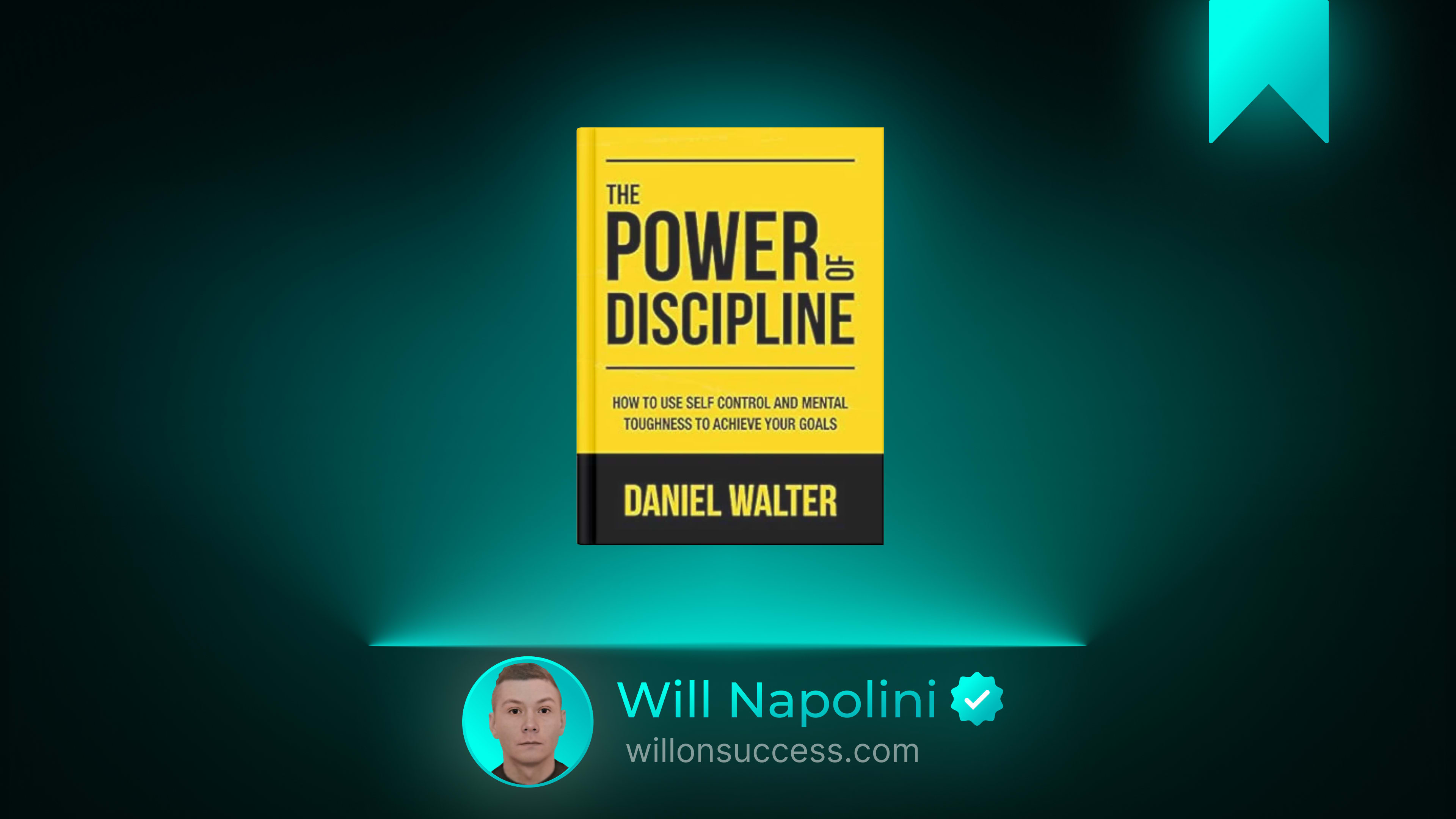
In his book, The Power of Discipline: How to Use Self Control and Mental Toughness to Achieve Your Goals, Daniel Walter dismantles the myth of motivation and replaces it with a much more reliable engine for success.
Here is the central truth: discipline outweighs motivation every single time. Motivation is a feeling. It is a fleeting emotional state that vanishes the moment you are tired, stressed, or faced with an obstacle. Discipline, on the other hand, is not a feeling. It is a system. It is the ability to make a promise to yourself and keep it, regardless of how you feel in the moment. Walter’s core message is that you do not need more inspiration to change your life; you need the mental toughness to execute when inspiration abandons you.
The Biology of Self-Control: Your Brain on Dopamine
To understand why discipline is so hard, we have to look under the hood of the human brain.
Walter points out that our struggles with self-control are not merely moral failings or signs of weak character; they are deeply biological. At the center of this struggle is dopamine, the brain’s reward chemical. Your brain is wired to seek immediate gratification. It wants the dopamine hit of a sugary snack, a social media notification, or a comfortable evening on the couch.
When you try to rely on motivation to do something difficult—like waking up at 5:00 AM to work on a business or going to the gym after a long day—you are asking your brain to choose delayed reward over immediate pleasure. Your biology rebels. It screams at you to conserve energy.
But Walter introduces a powerful reframing. Discipline is not about punishing yourself. It is a biological armor that shifts your brain from passive survival into active creation. When you repeatedly choose the harder right over the easier wrong, you literally rewire your dopamine pathways. You teach your brain to find satisfaction in the effort itself, not just the reward at the end. You stop being a victim of your impulses and become the architect of your neurochemistry.
Principle 1: Stop Waiting to “Feel Like It”
The most costly mistake you can make in your personal development is tying your actions to your emotions.
If I could sit across the table from you, I would tell you that waiting to “feel like it” is a trap. Amateurs wait for the right mood. Professionals get to work. Walter emphasizes that stopping procrastination requires you to sever the link between how you feel and what you do.
You do not need to feel energized to start. You just need to start. Action actually precedes motivation. When you force yourself to take the first small step, the friction disappears. The momentum of doing the work generates the energy you thought you needed before you began.
You will rarely feel like doing the things that will change your life; you must simply decide to do them anyway.
Principle 2: Build Biological Armor Through Small Discomforts
Mental toughness is not a genetic gift. It is a muscle. And like any muscle, it only grows when subjected to resistance.
Walter argues that we build discipline by voluntarily exposing ourselves to small, manageable discomforts. You cannot expect to show up for the massive, life-altering challenges if you constantly surrender to the minor daily frictions.
Every time you hit the snooze button, every time you check your phone instead of reading, every time you choose the easy way out, you are casting a vote for the person you are becoming. Conversely, every time you embrace a small discomfort—taking the cold shower, making the difficult phone call, finishing the last page of a book—you are forging mental armor.
A small decision becomes a direction, and a direction repeated long enough becomes your character.
Principle 3: Change Your Daily Defaults
There is a concept in the book that cuts through all the noise: the easiest way to change yourself is to change the things you do each day.
We often think transformation requires a massive, dramatic overhaul. But human behavior is largely governed by defaults. What do you do automatically when you wake up? What is your default response to stress? What is your default environment?
If your environment makes the bad habits easy and the good habits difficult, no amount of willpower will save you. Discipline is largely about designing your life so that the right choice is the path of least resistance. It is about changing the daily defaults that quietly shape your identity.
Why This Matters for Your Life Right Now
Why should you care about the mechanics of dopamine and daily defaults? Because right now, you are likely bleeding potential through a thousand tiny compromises.
You may be working hard and still wondering why nothing is changing. The answer is often that your daily systems are quietly sabotaging your long-term goals. When you apply Walter’s principles, you stop fighting a daily war against your own exhaustion.
Imagine an ordinary Tuesday. The alarm goes off. You are tired. The old you would negotiate with the snooze button, starting the day with a broken promise to yourself. The disciplined you simply puts feet on the floor. You do not negotiate with weakness. You execute the plan. Over months and years, this quiet, unglamorous consistency compounds into a life that looks like magic to the outside world.
Practical Application: Building Your System
Understanding discipline is valuable, but understanding without action changes nothing. Here is how you can turn these concepts into behavior starting today:
The 10-Minute Rule: The next time you are dreading a task—whether it is writing a report, going for a run, or having a tough conversation—commit to doing it for just ten minutes. Give yourself full permission to quit after the timer goes off. Nine times out of ten, once you cross the threshold of starting, you will finish.
Audit Your Dopamine: Spend one day noticing when you reach for cheap dopamine. Do you grab your phone the moment you feel bored? Do you eat sugar when you feel stressed? Awareness is the first step to rewiring the biological reward loop.
Design Your Evening for Your Morning: If you want to wake up and work out, do not rely on morning willpower. Lay out your clothes, fill your water bottle, and put your shoes by the door the night before. Remove the friction between you and the right choice.
Who Should Read This Book
The Power of Discipline is a no-nonsense guide to mastering self-control and building unshakable habits.
It will deeply benefit you if you are stuck in a cycle of starting and stopping, if you rely heavily on motivation, or if you feel like you are constantly battling procrastination and laziness. It is highly practical and concise, making it perfect for someone who wants actionable strategies without getting bogged down in abstract theory.
However, if you are looking for deep, psychoanalytical explorations of childhood trauma or highly philosophical treatises on the meaning of suffering, this book may feel too tactical for your tastes. It is a field manual for action, not a therapy session.
One Small Step
I want you to leave this summary with more than just a good feeling. I want you to leave with a mandate.
Tonight, identify one task you normally postpone. Just one. It might be washing the dishes, sending that email, or reading ten pages of a book. Do it immediately, before you open social media, turn on the television, or allow your brain to negotiate an excuse.
Do not wait until you feel ready. Do not wait for the perfect moment.
The life you want is waiting on the other side of the excuses you are making right now. What you repeat in private eventually becomes visible in your life, so choose your next action carefully.