The Outsider’s Advantage: What a 1951 Novel Teaches Us About Reinvention and Power
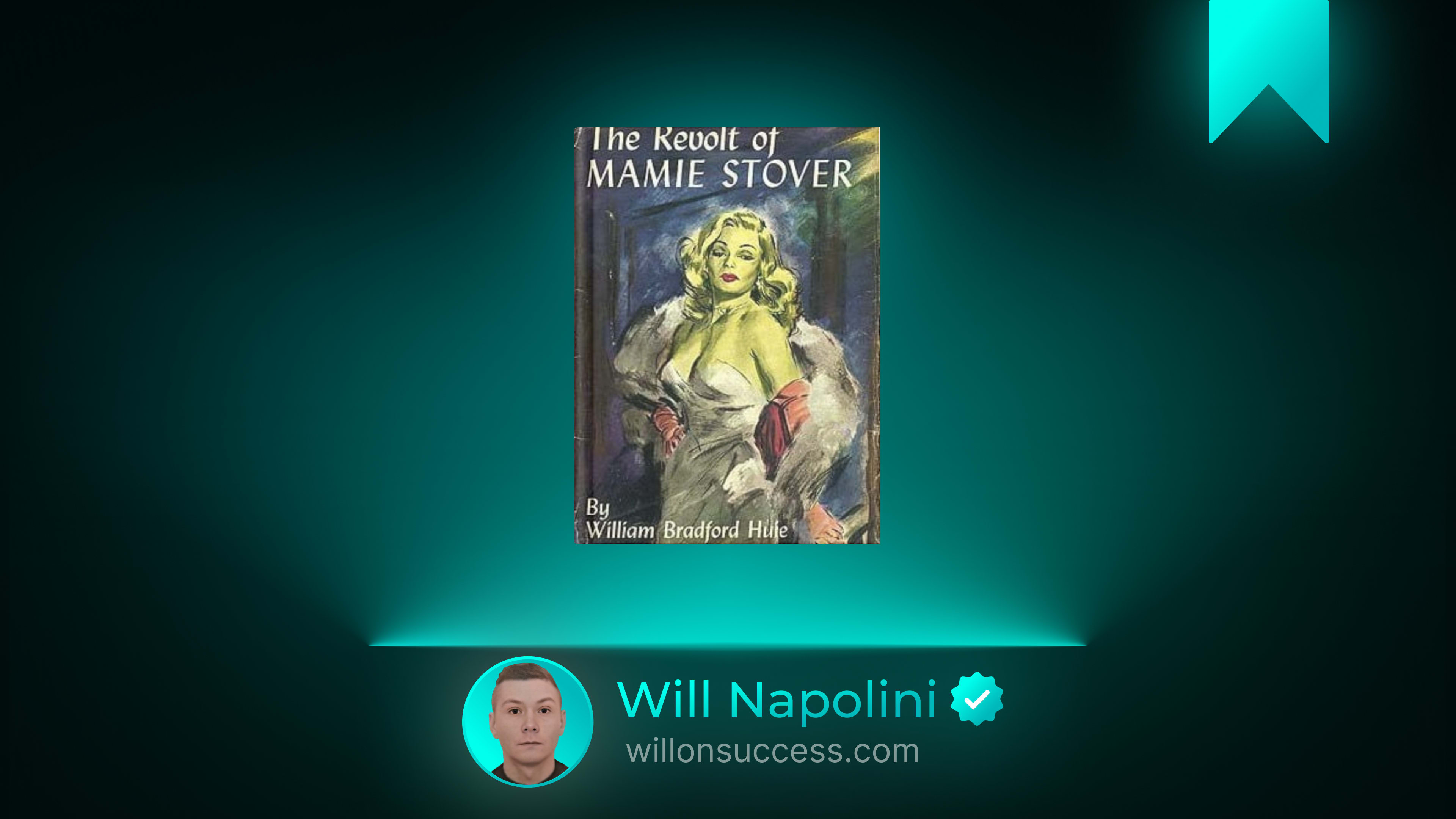
What do you do when the world has already decided who you are?
Perhaps you made a mistake years ago that still follows you. Perhaps you started at the bottom of an industry that only respects inherited connections. Or perhaps you simply feel trapped by the expectations of the people around you, boxed into an identity that no longer fits the person you are trying to become.
When we feel boxed in, the temptation is to shrink. We try to apologize for our past. We try to quietly earn our way into the rooms where decisions are made, hoping the gatekeepers will finally hand us a seat at the table.
But I have learned that waiting for permission is the most expensive habit you can develop.
There is a different way to approach a life that feels limited. It requires a shift in how you view your past, your environment, and the chaos of the world around you. To understand it, we need to look at a story that most people have forgotten—a story that sounds like a scandalous Hollywood melodrama, but hides a profound lesson about agency, reinvention, and power.
The Big Idea
In 1951, the investigative journalist and novelist William Bradford Huie published a book called The Revolt of Mamie Stover. On the surface, it is a provocative tale of a woman with a scandalous past who moves to Honolulu just before the attack on Pearl Harbor, eventually using the chaos of World War II to build a massive fortune. It was later adapted into a famous 1956 film starring Jane Russell.
But beneath the mid-century melodrama lies a profound thesis about personal agency, social mobility, and the mechanics of power.
Huie’s central idea is that the established rules of society are often designed to protect those who already have power. If you are an outsider—whether because of your past, your class, your gender, or your lack of formal credentials—you cannot win by playing by their rules. You win by recognizing that chaos disrupts the old hierarchies, and by taking relentless, pragmatic action while the old guard is paralyzed by the shifting winds.
The book teaches us a foundational truth of personal development: Your past is merely the soil you came from; it does not dictate the harvest you can grow.
The Story of the Outsider and the Oligarchs
Let me tell you the story Huie paints. Mamie Stover arrives in Hawaii shedding a “dubious past” from San Francisco. She is an outsider with no formal status. The island of Oahu is largely controlled by the “Big Five,” a powerful oligarchy of agribusiness and shipping families who have dictated Hawaii’s economy and social hierarchy for generations. They are the old money, the gatekeepers, the untouchables.
When the world goes to war, Honolulu becomes a booming, chaotic hub of military activity. While the established elite try to maintain the pre-war social order, Mamie sees something else entirely: a massive, desperate influx of people needing services, entertainment, and shelter. She doesn’t ask the Big Five for a loan. She doesn’t ask the high society of Honolulu for acceptance.
Instead, she buys a dilapidated property. She works relentlessly. She leverages the wartime economic boom to build an empire of hotels and clubs, amassing a fortune that eventually rivals the old guard. Her ultimate “revolt” is not just about making money; it is about forcing the entrenched establishment to acknowledge her power. She proves that in the face of undeniable value and relentless execution, the old gatekeepers have no real authority over those who choose to build their own tables.
The Major Principles
Your Past Is a Prologue, Not a Prison
We often treat our past like a life sentence. We look at our mistakes, our lack of pedigree, or our current circumstances, and we assume they are fixed coordinates on a map.
But Mamie understood a fundamental truth of human reinvention: geography and environment can be powerful tools for identity shifting. She left San Francisco not just to escape her reputation, but to place herself in a soil where her old labels couldn’t take root.
I have seen so many talented people stay in environments that constantly remind them of who they used to be. They stay in the hometown that only remembers them as a teenager. They stay in the company that only sees them as an entry-level assistant. They stay in relationships that reinforce their deepest insecurities.
You do not need more motivation to change your life; sometimes, you simply need to change your soil. A seed cannot grow into a mighty oak if it remains in a pot meant for a bonsai. You have the right to walk away from the people and places that insist on defining you by your worst chapters. What you repeat in private eventually becomes visible in your life, but what you tolerate in public will dictate the boundaries of your future.
Chaos Is the Great Equalizer
Most people run from chaos. When the economy shifts, when an industry is disrupted, when a crisis hits, the instinct is to seek safety and wait for things to return to “normal.”
But “normal” is usually just a system designed to benefit the people who built it.
When Pearl Harbor was attacked, the world of the “Big Five” was upended. The old rules of high society and exclusive contracts mattered less than the immediate, pragmatic needs of a wartime population. Mamie did not panic at the chaos; she leaned into it. She saw the vacuum left by the disruption and moved to fill it.
In your own life, chaos—whether it is a layoff, a breakup, a market crash, or a massive technological shift—is not a punishment. It is an invitation. When the established structures break down, the gatekeepers lose their grip. The hierarchy flattens. In the middle of a storm, the person who is willing to grab a hammer and start building shelter is the one who ends up leading the village.
Adversity does not just test your character; it creates the clearing where your new life can be built.
Build Your Own Table When They Won’t Give You a Seat
There is a deep, painful longing in many of us to be accepted by the “establishment.” We want the degree from the prestigious school, the promotion from the traditional boss, the validation of the old guard. We spend years trying to prove we are worthy of their approval.
But here is the hard truth I have learned: the gatekeepers are rarely interested in opening the gate. Their power relies on scarcity.
Mamie’s genius was that she stopped asking the Honolulu elite to let her in. She built her own hotel. She created her own wealth. She served the market directly. And once she had undeniable leverage, the elite had no choice but to deal with her.
You must shift your focus from seeking permission to creating undeniable value. If the industry you want to enter is guarded by people who look down on your background, stop trying to impress them. Build a side project. Serve a neglected audience. Create a product that solves a problem they are too arrogant to see.
A small decision becomes a direction, and a direction repeated long enough becomes a life. When you build your own table, you no longer have to worry about who is holding the chairs.
The Revolt Against Invisible Ceilings
The “revolt” in the title of Huie’s book is not a violent uprising in the streets. It is the quiet, relentless refusal to accept the invisible ceilings placed over your head.
The Big Five believed they owned the island’s destiny. They believed that someone with Mamie’s background could never truly belong in the corridors of power. Her revolt was the act of becoming so economically and practically vital that their social prejudices became irrelevant.
In your life, the “Big Five” might be the internalized voices telling you that you aren’t smart enough, that you started too late, or that you don’t have the right network. Or they might be the actual systemic barriers in your industry.
You defeat invisible ceilings by outworking them, out-learning them, and out-serving them. You do not argue with a gatekeeper; you render them obsolete. You build a bridge over the wall they built to keep you out. Character before circumstances means realizing that your internal resolve will always outlast their external barriers.
Why It Matters Today
Why does a novel from 1951 matter to you today?
Because the dynamics of power, exclusion, and disruption have not changed; only the scenery has.
Today, you might feel marginalized in your career because you didn’t take the traditional college path. You might feel locked out of an industry because you are changing fields at forty. You might feel that the modern “Big Five”—the massive corporations, the entrenched algorithms, the established creators—have made it impossible for an individual to succeed.
Huie’s story reminds us that the established order is always more fragile than it appears. It relies on your compliance. It relies on you believing that you need their permission to succeed.
When you apply the principles of The Revolt of Mamie Stover to your daily life, you stop waiting for a savior or a sponsor. You realize that the “wartime boom” of your life—the very disruption or challenge you are currently afraid of—is exactly the leverage you need to rewrite your story. You stop apologizing for where you started and start focusing entirely on where you are going.
Practical Application
Understanding this philosophy is only the beginning. Action before intention is where the real change happens. Here is how you can apply the outsider’s advantage to your life this week:
- Audit Your “Big Five”: Take out a piece of paper and write down the three “gatekeepers” or limiting beliefs that currently hold power over your mind. Is it a specific boss? A fear of your past mistakes? A belief that you need a specific certification before you can start? Acknowledge them. Then, ask yourself: What is one way I can create value that completely bypasses their permission?
- Find Your Chaos: Look at the areas of your life or industry that are currently experiencing disruption. Where is the confusion? Where are people complaining that “things aren’t the way they used to be”? That frustration is a vacuum. Step into it. Offer a simple, pragmatic solution to the people who are suffering from the change.
- The 30-Day “No Apologies” Challenge: For the next thirty days, stop apologizing for your non-traditional background. When someone asks about your unconventional path, do not frame it as a disadvantage. Frame it as the very reason you see the world differently. Own your soil.
Who Should Read This Book
The Revolt of Mamie Stover is not a traditional self-help book, and its mid-century prose reflects its time. However, it is deeply valuable for the resilient outsider.
If you are an entrepreneur who feels locked out of traditional venture capital networks, or a professional trying to pivot into a new industry that values pedigree over pragmatism, this story will fuel your fire. It is highly recommended for anyone who has been told their past disqualifies them from a great future.
However, if you are looking for a gentle, step-by-step guide to corporate ladder-climbing, or if you prefer stories where the protagonist wins by conforming to societal norms, this book will likely frustrate you. Huie’s protagonist wins by breaking the rules of polite society and forcing the world to adapt to her. It is a book for the builder, the disruptor, and the unapologetic survivor.
One Small Step
You do not need to buy a hotel in Honolulu today to take control of your life. You just need to take one step that bypasses a gatekeeper.
Think of one project, one idea, or one skill you have been holding back because you feel you aren’t “officially” qualified yet.
Today, I want you to take that idea and put it directly in front of the people who need it. Publish the article. Send the portfolio to a potential client. Launch the beta version. Do not ask an expert if it is ready. Do not wait for a credential.
Take the action that proves you belong in the arena, not the stands.
We spend so much of our lives waiting for the world to recognize our worth, hoping that if we are just patient enough, the gatekeepers will finally open the door. But the door was never locked; you just had to realize you were holding the hammer to build your own.
Your history is the foundation, but your actions are the architect.
Walk out of the shadow of who you were, and start building who you are.