The Power of Your Focus: A Grounded Guide to the Law of Attraction
Have you ever noticed how, when you decide to buy a specific model of a car, suddenly you see that exact car everywhere? Or when you wake up in a foul mood, the entire day seems to conspire against you, with every traffic light turning red and every coffee spilling?
We often dismiss these moments as mere coincidence. We tell ourselves that the world is just a chaotic place. But what if your attention is not just passively observing your life, but actively constructing it? What if the reason you keep seeing the same frustrating patterns has less to do with bad luck and more to do with the frequency you are broadcasting?
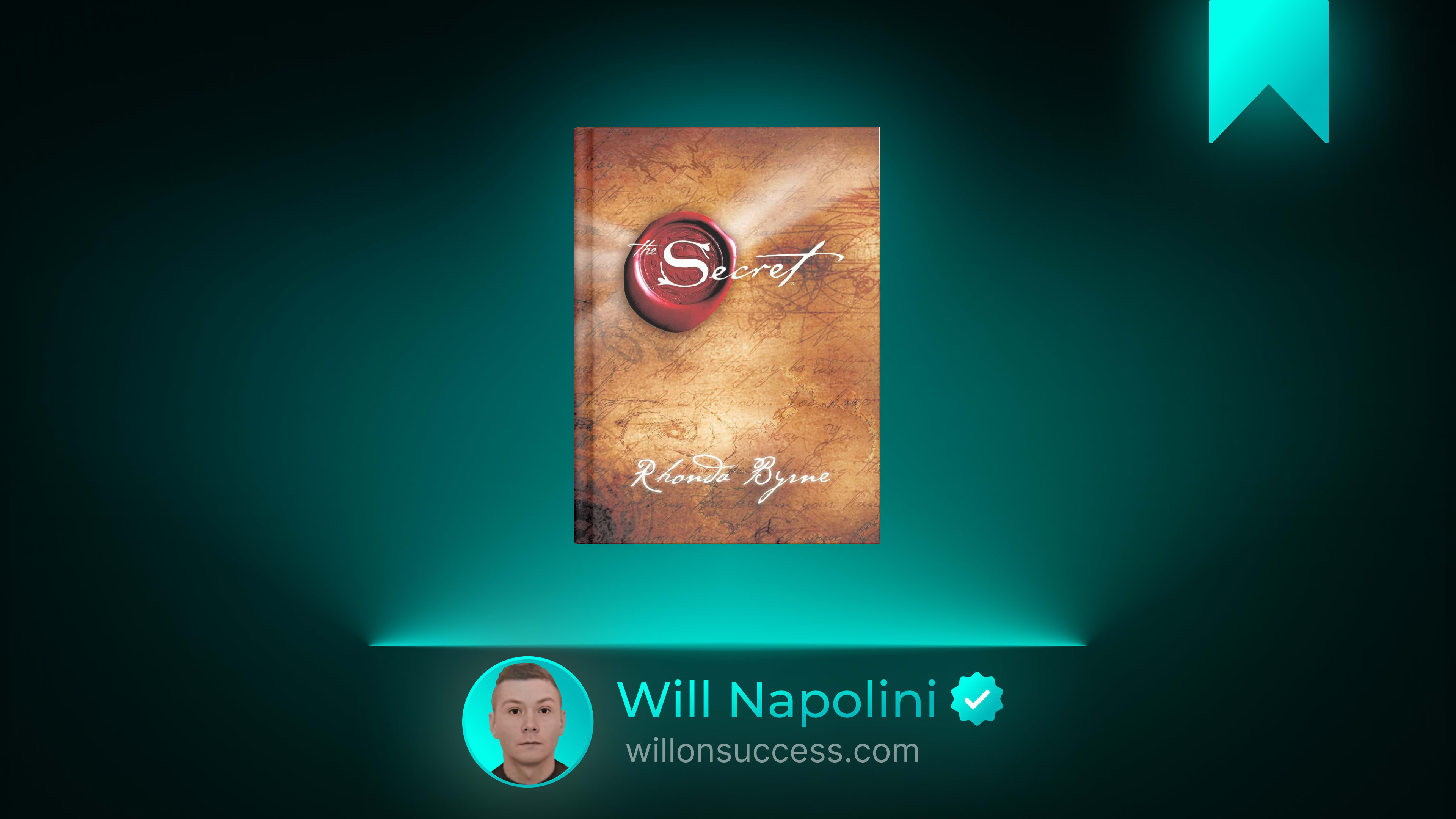
I want to show you an idea that has transformed millions of lives, though it is frequently misunderstood. It is the central premise of Rhonda Byrne’s book, The Secret.
The Big Idea: The Architecture of Attention
In The Secret, Rhonda Byrne popularized a concept that has existed in various philosophical and spiritual traditions for centuries: the Law of Attraction. The central thesis is both simple and profound. Like attracts like.
According to this principle, your thoughts emit a frequency. As you think, you send a signal out into the universe, and the universe responds by matching that frequency. If you focus primarily on what you lack, on your debts, or on your frustrations, you attract more of those exact circumstances. If you focus on what you desire and cultivate the genuine feeling of already having it, you draw those positive circumstances into your life.
But as a mentor who has sat across the table from countless people trying to apply this philosophy, I have learned a crucial distinction. The magic of The Secret is not in the wishing. The magic is in the alignment of your mind, your emotions, and your subsequent actions.
When we understand this, the book stops being a manual for magical thinking and becomes a profound guide for taking radical responsibility for our internal world.
The Creative Process: Ask, Believe, Receive
To explain how this works, Byrne frames the Law of Attraction as a simple three-step creative process: Ask, Believe, Receive.
Think of it like tuning an old-fashioned radio. “Asking” is the act of choosing the station you want to hear. You clarify what you want. “Believing” is the process of turning the dial slowly, patiently, until the signal is clear and free of static. You act, speak, and feel as though the station is already playing. “Receiving” is simply sitting back and listening to the music that is now broadcasting clearly into your room.
The mistake most of us make is that we ask for the music, but we keep our hands on the dial, twisting it back and forth in doubt, checking to see if it is working. We complain that all we hear is static, never realizing that our own restless hands are causing the interference.
Your Thoughts Are Blueprints, Not Just Wishes
The first major principle to extract from this book is that your thoughts are the blueprints of your reality.
Byrne argues that thoughts are things. While she speaks in spiritual terms, modern neuroscience gives us a fascinating biological parallel: the Reticular Activating System (RAS). The RAS is a bundle of nerves at our brainstem that filters out unnecessary information so the important stuff gets through.
When you set a clear intention, you are programming your RAS. Suddenly, you notice opportunities, conversations, and resources that were always there, but which your brain previously filtered out as irrelevant. Your thoughts do not magically conjure a new job out of thin air, but they absolutely rewire your perception so that you can see the path to that job.
What you repeat in private eventually becomes visible in your life, because your focus dictates your perception, and your perception dictates your action.
Emotion Is the Engine of Attraction
If thought is the steering wheel, emotion is the engine. This is the second vital principle of The Secret.
Many people try to practice the Law of Attraction by simply repeating positive affirmations in the mirror. They say, “I am wealthy,” or “I am healthy,” while their stomach is tied in knots with anxiety about their bills. Byrne points out that the universe does not respond to your words; it responds to your emotional frequency.
If your words say “wealth” but your feelings say “panic,” the emotion will always win. The feeling of a thought is its true signal. To make this work, you must generate the emotion of your desire in the present moment. You must feel the relief, the joy, or the gratitude of the outcome before it physically manifests.
This is incredibly difficult. It is easy to feel joy when the bank account is full. It requires profound discipline to cultivate a feeling of abundance when you are looking at an empty one. But that discipline is exactly what separates those who change their lives from those who merely dream about it.
Gratitude Shifts Your Frequency
How do we shift our emotional frequency when circumstances are difficult? Byrne offers a powerful tool: gratitude.
She describes gratitude as the ultimate state of receivership. When you are truly thankful for something, you are operating from a place of having it. You cannot feel genuine gratitude and lack at the exact same time. They are mutually exclusive frequencies.
When you wake up and immediately focus on what is going wrong, you set a frequency of complaint for the day. When you wake up and intentionally list the things you are grateful for—the warmth of your bed, the breath in your lungs, the opportunity to try again—you shift your frequency to one of abundance. You stop fighting your current reality and start building from it.
Inspired Action Bridges the Gap
Here is where I must offer a crucial clarification, born from watching people struggle with this material. The most common misreading of The Secret is the assumption that you can skip the work.
Let me be clear: the universe does not reward passive wishing. A vision without a vehicle is just a daydream.
Byrne does address action, framing it as “inspired action.” When your mind and emotions are aligned with your goal, you will feel nudges, intuitions, and impulses to do something. You might feel compelled to call an old friend, take a different route to work, or start writing a business plan.
You must follow those nudges. More importantly, you must take the ordinary, unglamorous actions required to move forward. The Law of Attraction will not deliver a finished manuscript to your desk; it will give you the clarity, the energy, and the ideas to sit down and write the book. You still have to type the words. Action is the bridge between the invisible world of thought and the visible world of results.
Why It Matters on an Ordinary Tuesday
Why should you care about these principles? Because most of us are living reactively.
We let the morning news, a rude comment from a colleague, or a frustrating email dictate our internal state. We hand the remote control of our minds to whoever happens to be standing in front of us.
When you understand the mechanics of your focus, you stop being a leaf blown by the wind and become the gardener. You realize that complaining about your debt keeps your focus locked on debt. Shifting your focus to building wealth—even in small, practical ways, like reading a book on investing or canceling an unused subscription—changes the decisions you make.
This philosophy matters because it returns your agency to you. It removes the comforting but disempowering cloak of victimhood. It asks you to look at your life and realize that while you may not have control over every circumstance that befalls you, you have absolute control over the frequency you project in response to it.
Practical Application: Moving from Theory to Behavior
Understanding the Law of Attraction is useless if it does not change how you behave. Here is how you can translate these principles into your daily routine.
1. The Morning Anchor Before you look at your phone, before you check your email, spend five minutes in quiet visualization. Picture one specific goal you are working toward. Do not just see it; feel it. What does it feel like to achieve it? Where do you feel that emotion in your body? Hold that feeling for as long as you can before your feet hit the floor.
2. The Gratitude Audit Keep a small notebook by your bed. Every night, write down three specific things you are grateful for from that day. Do not write generic things like “my family.” Write specific things: “The way the sun hit the kitchen table this morning,” or “The helpful smile of the cashier at the grocery store.” This trains your brain to scan the world for positives rather than threats.
3. The “Next Right Step” Rule When you feel stuck or overwhelmed by a massive goal, stop looking at the mountain. Look at your feet. Ask yourself, “What is the next right step?” It might be sending one email, making one phone call, or simply organizing your desk for ten minutes. Take that step. Action clears the static.
4. The Complaint Fast For the next 24 hours, commit to going without complaining. When you catch yourself about to complain about the weather, the traffic, or a coworker, physically stop yourself. Redirect your thought to something you appreciate, or simply remain silent. Notice how much energy you conserve when you stop broadcasting dissatisfaction.
Who Should Read This Book
The Secret is a powerful catalyst for a specific type of reader. If you struggle with chronic pessimism, self-sabotage, or a lingering feeling that life is simply happening to you, this book will offer a refreshing, empowering shift in perspective. It is highly effective for breaking out of a mental rut.
However, if you are looking for a permission slip to sit on the couch and wait for a million dollars to fall through the ceiling, you will be deeply disappointed. Furthermore, readers who are in the midst of severe trauma or systemic hardship should approach the book with grace; the philosophy of “attracting your reality” can sometimes be misapplied in ways that unfairly blame individuals for circumstances beyond their control.
Read this book for its profound lessons on mindset, focus, and emotional regulation. But leave the magical thinking at the door. Bring the wisdom, but keep your work ethic.
One Small Step
If you take only one thing from this summary, let it be this: Your attention is a finite resource, and you are spending it every single second.
Today, I want you to conduct a simple experiment. For the next three hours, monitor your internal dialogue. Every time you catch yourself focusing on what you lack, what is going wrong, or what you fear, consciously interrupt the thought. Replace it with a specific statement of what you want instead.
Do not judge yourself when you slip up. Just gently redirect your focus. You are training a muscle that has likely been neglected for years.
The Door Opens Forward
Your life is a mirror, not a window. It reflects back to you what you are projecting.
When you change the way you look at things, the things you look at begin to change. You do not need to wait for your circumstances to improve before you decide to feel hopeful, grateful, and focused. You can choose that frequency right now, in this exact moment, regardless of what is happening around you.
The universe is listening to the signal you are sending. Make sure it is a signal you actually want to receive.