Healing the Unforgivable: What 'The Shack' Teaches Us About Grief, Forgiveness, and Moving Forward
There is a room inside almost all of us that we keep locked.
We do not just lock the door; we throw away the key, build a fence around it, and pretend it does not exist. We call it by different names—regret, grief, betrayal, anger, shame. But eventually, it becomes a shack in the woods of our mind, a remote and desolate place where our deepest pain is buried.
I have sat across the table from many people who are exhausted. They are working hard, showing up for their families, and trying to do the right things, yet they carry a heavy, invisible weight. When we finally talk about what is really going on, the conversation always drifts toward that locked room. They are spending an enormous amount of emotional energy just keeping the door shut.
If I could sit across from you right now, I would tell you that you cannot build a meaningful life while simultaneously guarding a graveyard.
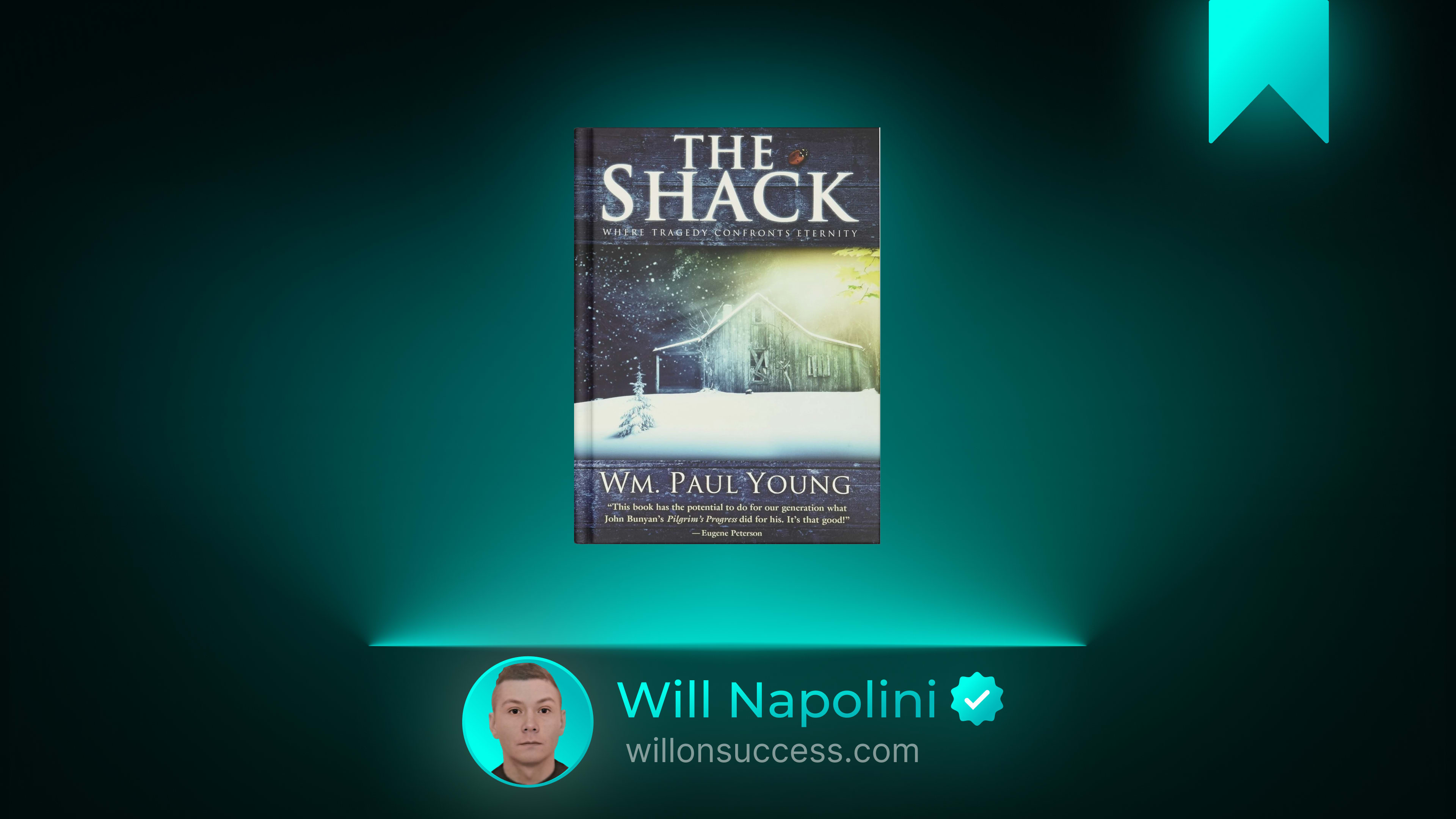
This is the central tension of William P. Young’s novel, The Shack. While it is a work of fiction, the emotional mechanics it explores are profoundly real. It is a story about devastating loss, the agonizing struggle to forgive the unforgivable, and the quiet, messy process of letting love break through our deepest defenses.
You may not be dealing with a tragedy on the scale of the book’s protagonist. But you are dealing with your own version of the shack. And the principles of healing remain exactly the same.
The Big Idea: Healing Requires Returning to the Scene of the Pain
The central thesis of The Shack is that true healing does not come from avoiding our pain, intellectualizing it, or simply waiting for time to pass. Time does not heal all wounds; it merely buries them deeper. Healing comes from stepping back into the very place that broke us, but this time, choosing to face it with an open heart rather than a defensive one.
Young uses a deeply spiritual framework to explore this, but the psychological truth is universal: we cannot move forward until we turn around and look at what we are running from. Forgiveness is not a feeling that eventually washes over you. It is a deliberate, often painful choice to release someone from a debt they can never repay, so that you can finally put down the heavy ledger you have been carrying.
The Story: A Journey into the Great Sadness
To understand the principles, we have to understand the story.
Mackenzie (Mack) Phillips is a man whose life has been shattered. His youngest daughter, Missy, is abducted while the family is camping, and her body is later found in an abandoned shack in the Oregon wilderness. The shack becomes what Mack calls his “Great Sadness.” It is the physical location of his worst nightmare.
Four years later, Mack is barely functioning. He is going through the motions of life, but his marriage is strained, his faith is broken, and his heart is hardened. He is drowning in anger—anger at the murderer, anger at the world, and anger at God for allowing this to happen.
Then, he receives a mysterious note in his mailbox inviting him back to the shack.
When he arrives, expecting to find a cruel joke or a gruesome reminder, he instead encounters three strangers who reveal themselves to be the divine: Papa (God the Father, portrayed as a warm, joyful woman), Jesus (a humble, approachable man), and Sarayu (the Holy Spirit).
Over the course of a weekend, Mack is taken on an emotional and spiritual journey. He is forced to confront his grief, challenge his rigid beliefs, and face the ultimate test of his character: forgiving the man who killed his daughter. The shack, once a monument to his despair, becomes the very place where he is reconstructed.
You Cannot Heal What You Refuse to Look At
The first and most difficult lesson Mack has to learn is that avoidance is not healing. For four years, Mack has built a fortress around his pain. He suppresses his anger, he avoids the topic of his daughter, and he isolates himself emotionally from his wife.
I have seen this happen so often in my own life and in the lives of those I mentor. We think that if we just stay busy, the pain will lose its power. But unexamined pain does not lose its power; it gains control over you. It dictates your reactions, it poisons your relationships, and it quietly shapes the decisions you make.
Mack’s journey begins only when he is forced to physically return to the shack. He has to look at the place of his trauma. In our own lives, this means we must eventually stop running from the memories, the failures, or the betrayals that haunt us.
You cannot outwork a broken heart. You cannot out-logic a deep betrayal. You have to walk into the woods, find the shack, and open the door. It is terrifying. It feels like it will destroy you. But it is the only way to clear out the rot.
Forgiveness Is a Choice, Not a Feeling
Perhaps the most powerful mechanism explored in the book is the true nature of forgiveness. Mack is asked to forgive the man who murdered his child. His immediate, visceral reaction is that forgiveness is impossible. He believes that forgiving the man means excusing the action, or letting the man off the hook.
This is a dangerous misconception that keeps many of us trapped in our own shacks. We withhold forgiveness because we think it is a way to punish the person who hurt us. We hold onto our bitterness, believing it is a shield.
But as the story illustrates, unforgiveness is like drinking poison and expecting the other person to die.
Forgiveness is not saying that what happened was acceptable. It is not pretending the wound does not exist. Forgiveness is simply the decision to hand the ledger over. It is the realization that you cannot balance the scales of justice on your own, and that holding onto the demand for repayment is only keeping you chained to the person who hurt you.
When Mack finally chooses to forgive, it is not a warm, fuzzy emotional experience. It is agonizing. It feels like tearing a bandage off a raw wound. But it is in that exact moment of surrender that the chains begin to break. You do not forgive because the other person deserves it. You forgive because you deserve to be free.
The Wounds of Our Past Shape the Walls of Our Present
A profound layer of Mack’s struggle is his relationship with his own father, a man he refers to only as “Judge.” His father was emotionally and physically abusive, leaving Mack with a deep-seated belief that he is unlovable and that he must perform to earn affection.
Because Mack was never truly fathered with grace, he struggles to offer grace to himself, and he struggles to accept it from others. He becomes a “judge” in his own mind, constantly evaluating his failures and the failures of those around him.
This is a vital principle for our own growth: we will inevitably pass on the wounds we do not heal. If you were raised in an environment of criticism, you will likely criticize yourself and others. If you were raised in an environment of emotional absence, you will likely struggle to be emotionally present for your own children or partner.
Mack’s healing requires him to confront the ghost of his father. He has to realize that the voice of the “Judge” in his head is not the truth. He has to allow himself to be loved unconditionally, which in turn allows him to stop judging himself and others.
You cannot break a generational cycle of pain until you are willing to step out of the cycle yourself. You have to become the person you needed when you were younger.
Love Is a Verb, Not Just a Concept
One of the most beautiful aspects of The Shack is how it portrays the divine. There are no grand theological lectures delivered from a mountaintop. Instead, healing happens in the dirt, in the kitchen, and at the dining table.
Papa bakes bread. Jesus washes Mack’s feet and works alongside him in the garden. Sarayu tends to the plants and sits with him in his sorrow. The healing is deeply relational and intensely practical.
This reminds us of a fundamental truth about personal development and emotional recovery: we are not healed in isolation. We are healed in the context of safe, present, and loving relationships.
You can read all the books on grief, listen to all the podcasts on forgiveness, and journal until your hand cramps. But eventually, healing requires another human being. It requires someone who will sit with you in the dark and not try to rush you into the light. It requires someone who will bake the bread, wash the face, and simply be present.
If you are trying to heal entirely on your own, you are fighting a battle you were not designed to win. Allow people in. Let them see the mess. Let them help you carry the wood.
Why It Matters on an Ordinary Tuesday
You might be thinking, This is a beautiful story, but my life doesn’t look like this. I haven’t lost a child to violence.
That is true. But you have experienced loss. You have experienced betrayal. You have faced moments where the world did not make sense, where the people you trusted let you down, or where your own choices led to devastating consequences.
Think about an ordinary Tuesday. You are at work, and a colleague takes credit for your idea. You feel a sudden flash of rage. Or you are driving home, and a memory of a past failure surfaces, making your chest tight. Or you are looking at your spouse, and a lingering resentment from an argument three years ago flares up.
These are the moments where the principles of The Shack matter.
When you choose not to snap at your colleague, you are practicing forgiveness. When you pause and breathe through the memory of your failure, you are refusing to let the “Judge” dictate your worth. When you choose to lean into your spouse instead of pulling away, you are practicing relational love.
Healing is not a one-time event that happens at a magical shack in the woods. It is a daily practice. It is a thousand small choices to leave the ledger on the table, to step out of the locked room, and to let the light in.
Practical Application: Turning Insight into Action
Understanding these concepts is not enough. As I always say, understanding without action changes nothing. Here is how you can begin to apply the lessons of The Shack to your own life today.
1. Identify Your Shack Take ten minutes today with a pen and paper. Ask yourself: What is the room I keep locked in my mind? What is the pain, memory, or resentment I am spending all my energy trying to avoid? Write it down. You do not have to show it to anyone. Just naming it robs it of some of its shadow-power.
2. The Ledger Exercise Think of one person who has deeply hurt you. It could be a former friend, a family member, or even yourself. Write their name at the top of a piece of paper. Below it, write down the “debt” you feel they owe you (an apology, a changed behavior, a reversal of the past). Now, physically draw a line through the paper. Say out loud, “I am handing this ledger over. I release this debt.” Throw the paper away. This is a physical act of a spiritual and emotional decision.
3. Break the Cycle of the Judge For the next three days, pay attention to your inner critic. When you make a mistake, notice the voice in your head. Is it the voice of grace, or is it the voice of the “Judge”? When you hear the Judge, consciously interrupt it. Replace the criticism with the exact words you would use to comfort a small child who just made a mistake.
4. Schedule Relational Presence Healing requires community. Identify one safe person in your life. Reach out to them this week and ask them for coffee or a walk. You do not have to trauma-dump or share your deepest secrets if you are not ready. Just say, “I’ve been carrying a lot lately, and I just really need some good company.” Let them be present with you.
Who Should Read This Book
The Shack is a unique book, and it is not for everyone.
It is highly recommended for:
- Anyone navigating deep grief, loss, or a crisis of faith.
- People who feel stuck in bitterness and are struggling to forgive someone who does not deserve it.
- Readers who are open to exploring spiritual and theological concepts through narrative and emotion, rather than strict academic doctrine.
- Those who have felt let down by rigid, rule-based religious frameworks and are looking for a more relational, grace-filled perspective.
It may be less useful for:
- Readers looking for a purely secular, clinical, or psychological approach to trauma recovery.
- Those who prefer strict, orthodox theological treatises (the book takes significant creative liberties with the portrayal of the divine, which some traditional readers find uncomfortable).
- People who are currently in the acute, immediate shock of a tragedy and need professional counseling rather than a novel.
Despite its unconventional approach, the book’s emotional resonance has helped millions of people articulate feelings they could not otherwise express. It is worth reading for the sheer power of its empathy.
One Small Step
If you take only one thing from this reflection, let it be this: Forgiveness is a gift you give to yourself.
Today, I want you to take one small, concrete step toward releasing a burden. Think of one minor grievance you are holding onto. It does not have to be a massive betrayal. It can be the coworker who was rude to you last week, the driver who cut you off, or the friend who forgot to call you back.
Right now, mentally picture that person. Take a deep breath in, and as you exhale, silently say, “I release you.”
It will not solve all your problems. But it will lighten your load. And over time, those small releases create the space you need for profound healing.
The Door Opens
We all have a shack. We all have a place where the worst things that have happened to us are buried. For a long time, you may have believed that your job was to guard that door, to keep the pain contained, to protect yourself and others from the mess inside.
But a guarded door keeps the pain in, and it also keeps the light out.
You do not have to live in the Great Sadness. You can walk back out to the shack, open the door, and let the air clear out. You can let the relationships you have built, the grace you have been offered, and the choices you make today dismantle the walls, board by board.
The place that broke you does not have to be the place that defines you. It can simply be the place where you finally learned how to heal.