From Broken to Brilliant: A Mentor’s Guide to Healing What Happened to You
Somewhere in the architecture of your mind, a very old alarm system is still ringing. You can be sitting in a sunlit room, entirely safe, when a minor inconvenience—a blunt email, a change of plans, a misunderstood tone of voice—triggers a physical reaction meant for a battlefield. Your chest tightens. Your vision narrows. You snap, or you freeze, or you run. In the quiet, heavy aftermath of these moments, you usually ask yourself a deeply punishing question: What is wrong with me?
If I could sit across the table from you right now, I would ask you to take a deep breath and let go of the heavy judgment you have been carrying. I have spent years studying human behavior, walking alongside people who are desperate to change, and the most tragic mistake I see is trying to use logic to fight a biological survival response.
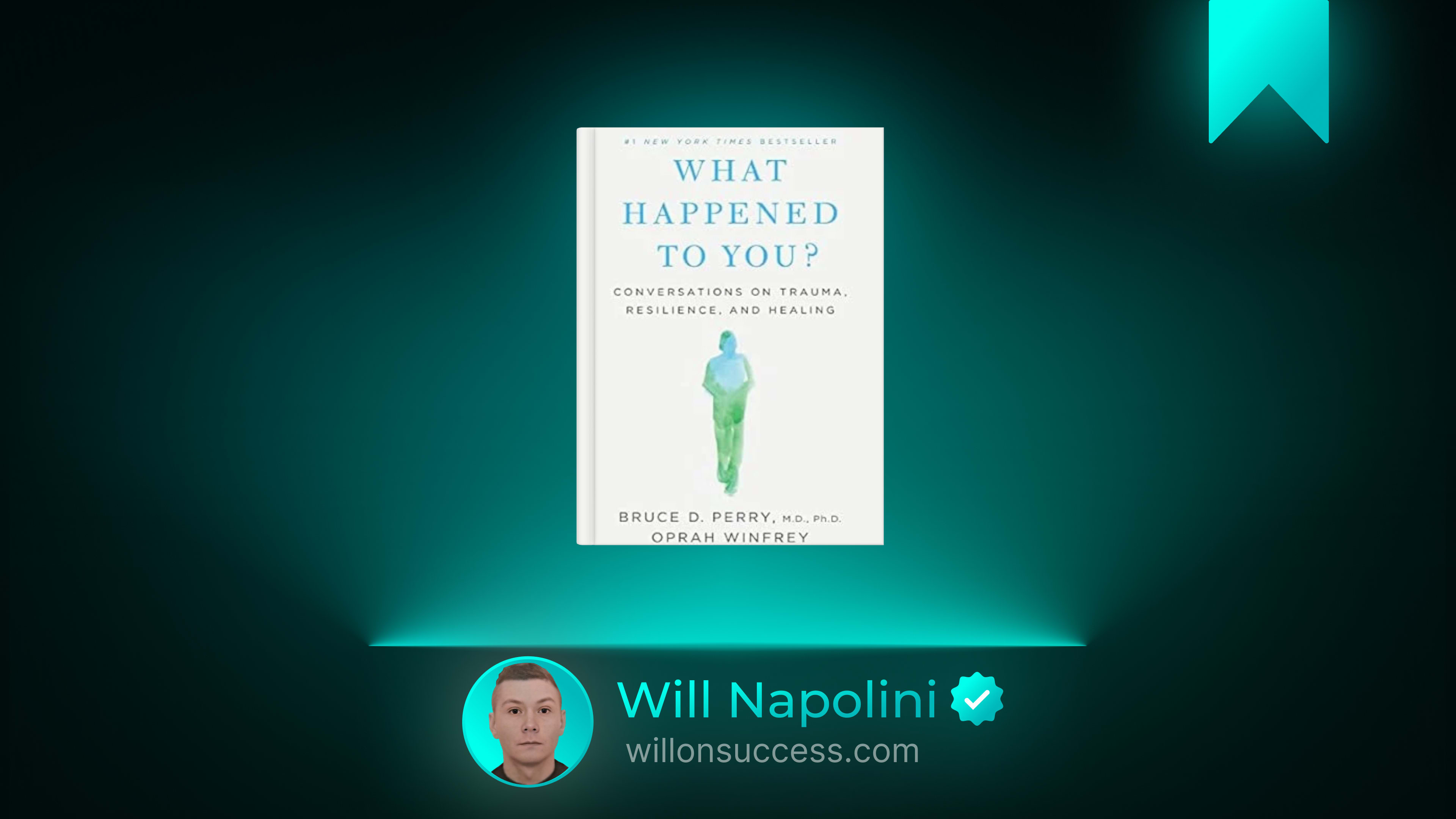
There is a profound shift in perspective that changes everything. It is the central premise of the transformative conversations between Dr. Bruce Perry and Oprah Winfrey, which deeply explore how our earliest childhood experiences cast a long shadow over our adult behavior and mental health. The shift is simple in theory but revolutionary in practice: we must stop asking, What is wrong with you? and start asking, What happened to you?
When you ask what is wrong with you, you imply that you are broken, defective, or inherently flawed. You invite shame. But when you ask what happened to you, you invite curiosity. You begin to see your behaviors not as character defects, but as brilliant, adaptive responses to the environments you had to survive. You were not built to fail; you were built to adapt. And the very mechanisms that kept you safe in the past are simply misfiring in the present.

The Architecture of Your Survival
To understand why we react the way we do, we have to look at the architecture of the human brain. The brain does not develop all at once. To understand this, Dr. Perry utilizes his Neurosequential Model, which organizes our histories to show how the brain develops and processes information from the bottom up.
Imagine a three-story house.
The basement is your brainstem. It handles your most primitive survival functions: heart rate, breathing, and the fight-or-flight response. It does not think; it reacts.
The first floor is your limbic system, the emotional center. It processes feelings, attachments, and social cues.
The top floor is your cortex, where logic, language, reasoning, and planning live.
When you experience early, unpredictable, or extreme stress, the basement becomes hyper-vigilant. Your brain learns that the world is unsafe, and it wires itself to detect threats constantly. When a trigger occurs in your adult life, the alarm bells in the basement ring so loudly that the top floor literally goes offline. You cannot negotiate with a nervous system that believes it is under attack. This is why you cannot simply “think positive” or “logic your way” out of a trauma response. You are trying to fix a basement fire by rearranging the furniture on the top floor.
The Sequence of Healing: Regulate, Relate, Reason
What I discovered early in my own journey is that we are a society obsessed with the top floor of the brain. We love to analyze, debate, and intellectualize. But when we are triggered, or when we are trying to help someone else who is triggered, we almost always make the same mistake: we start with reason. We try to explain, argue, or lecture. But when the brainstem is activated, the cortex is inaccessible.
The most effective approach to healing follows a specific, non-negotiable sequence: first regulate the body, then relate to a safe person, and only then attempt to reason through the problem.
1. Regulate: You must calm the brainstem. This requires somatic, physical input. Deep breathing, a cold splash of water on the face, a brisk walk, or listening to a steady, rhythmic beat. You have to send a physical signal to the basement that the immediate threat has passed.
2. Relate: Once the body is slightly calmer, you engage the limbic system (the first floor) through connection. This means making eye contact, using a warm tone of voice, and feeling a sense of shared humanity. You cannot heal in isolation. We are biologically wired to co-regulate with others.
3. Reason: Only after the body is regulated and the heart feels connected can you engage the cortex. Now, and only now, can you analyze the situation, plan for the future, or have a productive conversation.
If you try to skip to reason while you are still dysregulated, you will only build frustration. You have to honor the sequence.
The Power of Rhythmic Connection
How do we actually regulate a dysregulated nervous system? Talk therapy is wonderful, but words live in the cortex. To heal the lower parts of the brain, we need patterned, repetitive, rhythmic somatosensory activities.
Think of a rocking chair, a drumbeat, the rhythmic cadence of walking, or the steady pace of kneading dough. These activities mimic the regulating rhythms we experienced in the womb or as infants being rocked. I have seen profound shifts in people who finally stop trying to “think” their way out of anxiety and instead commit to a daily, rhythmic physical practice. It is in the steady repetition of the body that the mind finally finds permission to rest. Healing is not just a cognitive shift; it is a physical return to rhythm.
Breaking the Inheritance of Pain
One of the heaviest burdens we carry is the realization that our pain is not always our own. Dr. Perry explains how the echoes of trauma can pass through generations, shaping our responses even when we are far removed from the original events. We inherit the survival strategies of our parents and grandparents. A family that survived famine may pass down a deep, unconscious anxiety around scarcity. A community that has endured systemic oppression may pass down a necessary, protective hyper-vigilance.
But here is the hopeful truth: just as trauma can be inherited, so can resilience. The brain is remarkably plastic. It is constantly rewiring itself based on new experiences. You are not doomed to repeat the patterns of your lineage. By doing the work to regulate your own nervous system, by seeking safe relationships, and by bringing awareness on your triggers, you become a circuit breaker. You stop the transmission of pain and begin the transmission of peace. The roof of your life cannot stay dry if the foundation is still shifting, but you have the power to pour a new foundation.
Why This Matters on an Ordinary Tuesday
Why does this matter in your daily life? Because it changes how you interact with everyone, including yourself.
When your child throws a tantrum, you stop seeing them as “bad” and start seeing them as dysregulated. You stop yelling (which only escalates their brainstem) and start offering a calm, regulating presence.
When your partner withdraws after a long day, you stop taking it as a personal rejection and recognize it as a nervous system needing to down-regulate.
In leadership and entrepreneurship, this shift is the difference between a toxic culture and a thriving one. When a team member makes a costly mistake, the instinct is to ask what is wrong with them. Are they lazy? Incompetent? But if you ask what happened to them, you might discover they are operating in a state of chronic survival, terrified of failure because their nervous system equates a missed goal with a threat to their livelihood. A leader who understands the brain builds psychological safety before demanding high performance.
When you feel the familiar urge to self-sabotage right as you are about to achieve a goal, you recognize it not as a lack of willpower, but as your brain’s fear of the unfamiliar. You learn to tolerate the discomfort of success because you understand that your brain prefers the misery it knows over the joy it hasn’t yet learned to survive.
It is important to remember that stress itself is not the enemy; in fact, manageable stress is an essential and positive part of normal human development. We need challenges to grow. But we need a regulated foundation to handle those challenges without breaking.
Turning Wisdom into Action
Understanding is valuable, but understanding without action changes nothing. Here is how you can begin to apply this wisdom today.
Create a Regulation Menu You cannot think your way into a new way of acting when you are triggered. You need a pre-planned menu of physical, regulating activities. Write down three things that calm your body. It might be stepping outside to feel the wind on your face, doing ten slow squats, humming a low note, or petting your dog. When you feel your chest tighten, do not try to solve the problem in your head. Go to your menu and execute a physical action.
Pause the “Why” and Ask the “What” The next time you feel a disproportionate emotional reaction, catch the thought Why am I like this? and gently replace it with What is my nervous system responding to right now? This simple linguistic shift moves you from the courtroom of self-judgment to the laboratory of self-discovery.
Find Your Rhythmic Anchor Commit to ten minutes a day of a rhythmic, repetitive activity that requires no deep cognitive load. Walk without a podcast. Chop vegetables with a steady cadence. Stretch to a slow count. Give your brainstem the steady, predictable rhythm it craves.
Who Should Read This Book
This book is a vital compass for anyone who feels stuck in repetitive emotional loops, who finds themselves reacting to the present with the intensity of the past. It is profoundly useful for parents, teachers, leaders, and anyone in a caregiving role who wants to understand the hidden drivers of human behavior.
It may be less useful if you are looking for quick-fix productivity hacks or superficial motivational platitudes. This work requires courage. It asks you to look honestly at the wounds you have carried and to take radical responsibility for your own healing. It is not about blaming your past; it is about understanding your past so you can finally take ownership of your future.
One Small Step
Healing does not begin when you force yourself to change; it begins when you finally grant yourself permission to understand.
Your action for today is small but foundational. Identify one moment today where you feel a spike of frustration, anxiety, or defensiveness. Instead of reacting, pause. Take one slow, deep breath that lasts for a count of six on the inhale and six on the exhale. Send that breath down into the basement of your brain, and silently say to yourself: I am safe right now. That was then. This is now.
You are not the damage that was done to you; you are the awareness that is healing it. The alarm is finally quieting. Step out of the basement, and walk into the rest of your life.