Catching Fire: What Happens After You Survive (And the System Won't Let You Rest)
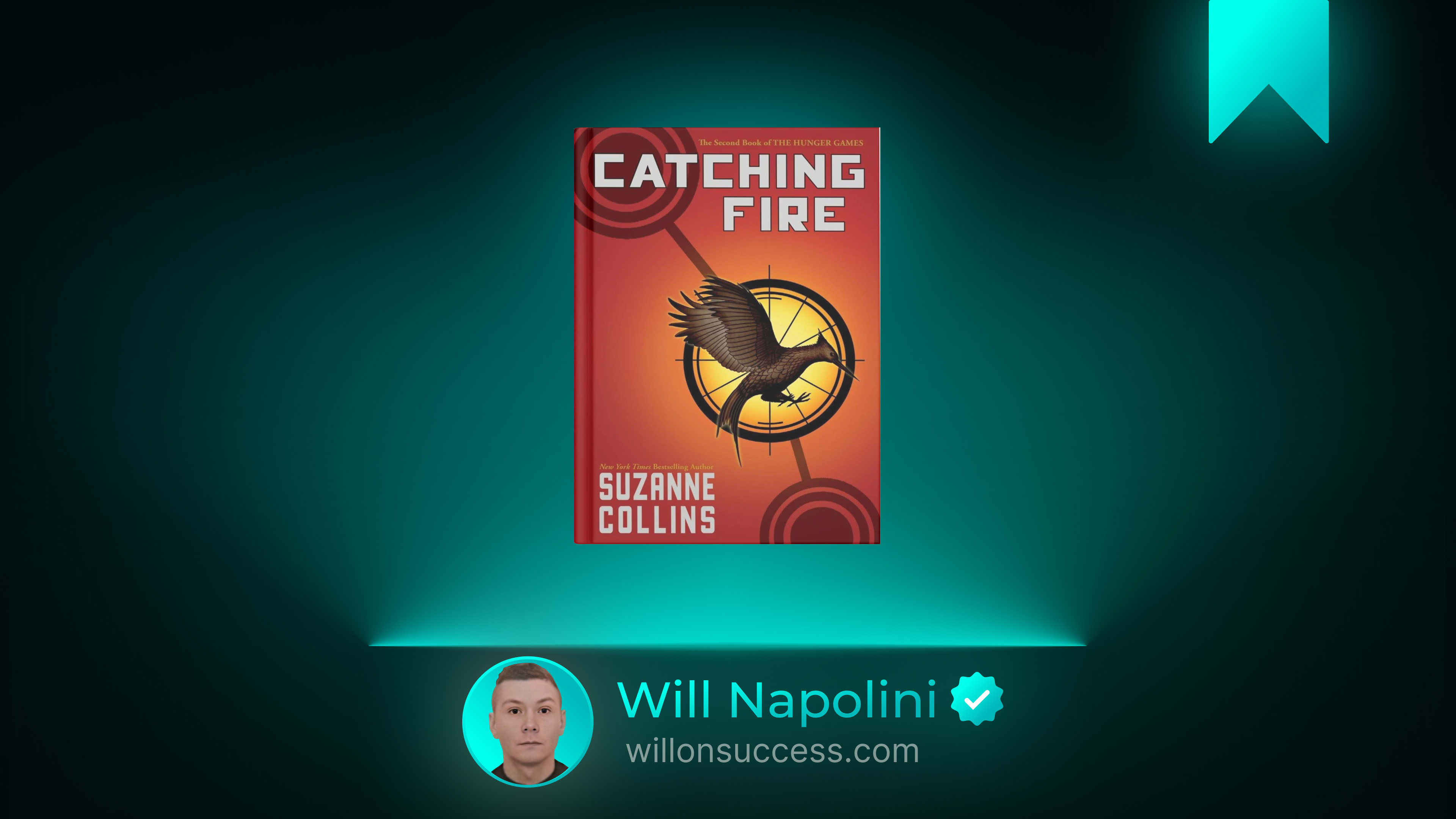
You survived the thing. The worst thing. The thing you were certain would break you. You made it through the ordeal, and you allowed yourself, briefly, to believe it was over. You set down the weight. You exhaled. You looked at the people you love and thought, Now we can rest. Now we can build something quiet.
And then the system reaches back into your life and pulls you under again.
Not because you failed. Not because you were weak. But because your survival was inconvenient. Because the way you survived—the specific, stubborn, unscripted way you held on—threatened the people who needed you to lose. And so they rebuild the arena around you. They change the rules. They put you back in. And they smile while they do it.
If you have ever felt that particular exhaustion—the exhaustion of being forced to fight a battle you already won, of being dragged back into a struggle you thought was finished—then Suzanne Collins’ Catching Fire was written for the part of you that is tired, and furious, and still standing.
This is the second book in The Hunger Games trilogy, published in 2009. On the surface, it is a young adult dystopian thriller about a girl forced back into a televised death match. Beneath that surface, it is one of the most honest explorations I have encountered of what it costs to remain yourself in a world that demands you perform. What it costs to be a symbol. What it costs to trust. And what it means to discover that the fight you thought was yours alone was, in fact, part of something much larger than you could see.
The Big Idea: One Honest Act Can Shake the Architecture of Control
At the end of the first novel, Katniss Everdeen and Peeta Mellark won the Hunger Games. But they did not win cleanly. In the final moments, when the Capitol tried to force them to kill each other, Katniss pulled out a handful of poisonous berries and threatened mutual suicide rather than submit. The Capitol blinked. They let both tributes live.
It was meant to be a desperate act of love. But the districts saw something else. They saw a girl who looked at the most powerful institution in her world and said no. They saw that the Capitol could be defied. And in a world built on the absolute certainty that resistance is futile, that single act of defiance became a spark.
Catching Fire begins in the aftermath of that spark. Katniss is home. She is alive. But President Snow visits her personally and tells her the truth: her act has ignited unrest across the districts. People are rioting. People are refusing to work. And the only way to contain the fire is for Katniss to convince the nation that her defiance was not political. It was romantic. She was a love-crazed girl, not a revolutionary. She must perform. She must smile for the cameras. She must sell the lie.
And if she cannot sell the lie, the people she loves will die.
This is the novel’s central tension, and it is one I think every person recognizes in some form. You have done something true. Something authentic. Something that came from the deepest part of your character rather than from a script someone handed you. And now the world around you is demanding that you reframe that truth into something safe. Something palatable. Something that does not threaten the existing order.
They do not say, Stop being yourself. They say, Be yourself, but in the way we have approved. Smile. Perform. Make it comfortable for us.
And the cost of refusing is not abstract. It falls on the people you love.
The Victory Tour: Seeing What Your Choices Have Set in Motion
Before the new arena, Katniss must travel through the districts on the Victory Tour. This sequence is one of the most quietly devastating parts of the novel. She moves from district to district, giving speeches, smiling, waving. And in each district, she sees what her act of defiance has actually done.
In some districts, she sees hope. People press their hands together in the gesture she made with Rue, the tribute who died in the first Games. They look at her with a desperate, hungry faith. They believe she is going to save them.
In other districts, she sees the cost. An old man is executed in the street for making the same gesture. A woman’s home has been burned. The Peacekeepers are everywhere, and their faces are harder than they were a year ago.
Katniss wanted to save herself and Peeta. That was all. She did not ask to be a symbol. She did not ask for a revolution. But her choice rippled outward, and now other people are bleeding because of it, and she cannot take it back.
I have learned that this is one of the hardest truths about living with integrity. When you refuse to comply with something unjust, the consequences do not stay neatly contained within your own life. Your defiance changes the temperature of the room. It gives other people permission to feel what they already felt but were too afraid to name. And sometimes, that permission costs them something.
This does not mean you should stay silent. It means you should understand the weight of speaking. Authenticity is not free. It never has been. But the alternative—performing compliance while your spirit slowly suffocates—has a cost too. And that cost is paid in installments, over years, until one morning you look in the mirror and cannot remember who you were before you started lying.
Back Into the Arena: When the System Rebuilds the Trap Around You
The Quarter Quell is announced. Every twenty-five years, the Hunger Games have a special twist. For the 75th Games, the twist is this: the tributes will be reaped from the existing victors.
There are only two victors from District 12. Katniss and Peeta. They are going back in.
I want to pause here, because this moment matters. Katniss has already survived the worst thing imaginable. She has already been through the fire. And the system, because it cannot tolerate what she represents, simply rebuilds the fire around her. It does not care that she is traumatized. It does not care that she is seventeen. It does not care that she won. The system’s only concern is its own continuation, and if the price of that continuation is feeding her back into the machine, then that is the price.
You know this feeling. Maybe not in the literal sense. But you know what it is to heal from something, to rebuild, to finally feel solid ground under your feet, and then to have the ground shift again. A reorganization at work that undoes everything you built. A relationship that pulls you back into the same argument you thought you resolved. A health scare that returns just when you believed you were in the clear.
The system does not owe you a rest just because you survived. That is the brutal truth Collins is willing to state without flinching. But here is what she also shows you: you are not the same person going back in. The first time, Katniss was reactive, terrified, improvising. The second time, she is sharper. She knows how the game works. She knows that the arena is designed, that the threats are mechanical, that the rules are written by people who can be outmaneuvered.
The arena is the same. You are not.
The Clock: Preparing for What You Can See Coming
The new arena is structured like a clock. Twelve sectors, each containing a different lethal threat, each activating at its corresponding hour. Lightning at twelve. Blood rain at ten. A deadly fog at eight. A massive wave at eleven. The threats are terrifying, but they are scheduled. They are predictable.
This is one of the most quietly brilliant metaphors in the novel. The arena is still deadly. The threats are still real. But because you can see them coming, because you can map the clock, you can position yourself. You can prepare. You can choose where to stand when the hour strikes.
In your own life, you cannot control every catastrophe. But you can learn the rhythms of your particular arena. You can notice which hours bring the fog. Which seasons bring the wave. You can prepare for the blood rain instead of pretending it will not come.
This is not about eliminating danger. It is about refusing to be blindsided by it. It is about the difference between standing in the path of the lightning because you did not know it was coming, and standing three sectors away because you studied the clock.
Preparation is not paranoia. Preparation is respect for the reality you are living in.
Trust in the Arena: The Hardest Alliance
In the second arena, Katniss cannot survive alone. She forms alliances with other victors: Finnick Odair, whose charm hides a deep and complicated grief. Johanna Mason, who is sharp-tongued, furious, and far more loyal than she lets on. Beetee, the quiet inventor from District 3. Wiress, who sees patterns others miss. Old Mags, who volunteers to die so that Finnick can live.
Katniss’s instinct is to trust no one. In the first Games, every other tribute was a threat. Every alliance was temporary. Every handshake was a prelude to a knife. And that instinct kept her alive.
But in the second Games, that instinct will get her killed. She must learn to rely on people. She must let Finnick save Peeta’s life in the water. She must trust Beetee’s plan, even when she does not fully understand it. She must accept that survival is not a solo act.
This is one of the most difficult lessons for anyone who has been through a period of profound self-reliance. When you have had to be your own rescue, trust feels like surrender. Letting someone else carry part of the weight feels like exposure. You worry that if you lower your guard, even for a moment, the knife will come.
And sometimes, it does. Johanna does, in fact, cut Katniss. But she cuts her to remove a tracking device. The wound is the price of the rescue. You cannot always tell, in the moment, whether the blade is an attack or a surgery.
Trust is not the absence of risk. Trust is the decision that the cost of staying armored forever is higher than the cost of letting someone close enough to matter.
The Lightning Strike: Breaking the Arena From the Inside
The climax of the novel is not a fight between tributes. It is an act of sabotage.
Beetee, the inventor, has a plan. He has a wire. He needs to connect it to the force field that contains the arena at the exact moment lightning strikes the twelve o’clock sector. The plan is to channel the lightning through the wire and shatter the force field. To break the arena itself.
Katniss does not fully understand the plan. She does not know, until the very end, that the rebellion has been planning this moment for months. That Plutarch Heavensbee, the Head Gamemaker, is working with the underground. That the other tributes were not her competitors but her protectors. That the entire arena was a stage, and she was not the player. She was the piece they were trying to get to the other side of the board.
She wraps the wire around the arrow. She aims at the force field. The lightning strikes. The arena explodes.
And she wakes up on a hovercraft, alive, free, and completely disoriented. Because the truth is that the rebellion was already happening. The system she thought she was fighting alone had been cracking from the inside for years. She was not the spark. She was the match that someone else was waiting to strike.
There is a profound comfort in this, even though Katniss herself feels betrayed by it. You do not always have to be the architect of your own rescue. Sometimes, the work you have been doing in the dark, the stubbornness you thought was pointless, the small refusals you made when no one was watching—those things were seen. Those things were part of a larger pattern you could not yet see. You were not shouting into a void. You were adding your voice to a chorus that was already singing.
What Remains When the Home Is Gone
The novel’s final pages are devastating. Katniss learns that Peeta has been captured by the Capitol. She learns that District 12—her home, the only place she has ever known—has been firebombed. Erased. The Seam where she grew up, the meadow where she hunted, the house where her mother and sister lived. Gone.
There is no going back. The life she survived the first arena to protect no longer exists.
I will not soften this. There are losses in life that do not resolve neatly. There are doors that close and do not reopen. There are versions of your life that are burned to the ground, and no amount of effort will rebuild them in the same shape.
But Collins does not leave Katniss in the ashes. She places her on a hovercraft, surrounded by people who chose to fight, heading toward District 13—a place she was told did not exist, a place that has been building and waiting and preparing beneath the surface for decades.
The home you knew is gone. But you are not. And the fact that you are not gone means the story is not finished. It means you get to decide what you build next. Not in the old shape. Not in the old place. But forward. Always forward.
Who Should Read This Book
If you loved The Hunger Games and found yourself haunted by the question of what happens after survival, this book is essential. It is darker than the first, more complex, and far more willing to sit in the uncomfortable space between victory and peace.
It is particularly powerful for anyone navigating a period where they feel forced to perform a version of themselves for an audience—whether that audience is a workplace, a family, a social circle, or an institution that needs them to be palatable. Katniss’s struggle between the face she must show the cameras and the rage she feels underneath is one of the most honest portrayals of that tension I have read.
A fair note: the novel deals with trauma, violence, manipulation, and the psychological toll of being used as a political symbol. If you are in a fragile place, the relentless pressure Collins places on her characters may feel like too much. Read it when you are strong enough to sit with the discomfort and let it teach you something about your own capacity to endure.
It is not a gentle book. But it is a true one.
Your One Small Step
Here is what I would ask you to do today.
Think about one area of your life where you are performing. Where you are smiling for a camera that no one asked you to stand in front of. Where you are saying the safe, approved, comfortable thing instead of the true thing.
You do not have to burn the arena down today. You do not have to wrap the wire around the arrow and call down the lightning. That moment will come, or it will not, and when it does, you will know.
But today, you can do one small thing. You can stop rehearsing the performance. You can put down the script. You can sit in a quiet room, with no audience, and say the true thing out loud. Just to yourself. Just to hear what it sounds like when no one is watching.
“I am not okay with this.”
“I did not choose this, but I am choosing what to do next.”
“I am tired of pretending the arena is not there.”
Say it. Hear it. Let it exist in the air for ten seconds before you put the mask back on.
Because the fire does not start with the inferno. It starts with the single, honest ember that refuses to go cold. And once it catches, no force field in the world can contain it.