The Courage to Show Up: What Brené Brown's Dare to Lead Teaches Us About Bravery
There is a quiet lie that most of us have been told about strength. It is the lie that says the strongest person in the room is the one who never flinches. The one who has all the answers. The one who keeps their emotions locked in a steel box and projects absolute certainty, even when the ground beneath them is shaking. We learned this lie early. We learned it from the adults who never admitted they were wrong, from the teachers who rewarded perfection over honesty, from the workplaces that promoted the person who never seemed to need anything.
And so we built armor. We welded it together from achievements, from busy-ness, from cynicism, from the need to be the smartest or the funniest or the most composed person in the room. We put it on every morning before we walked out the door, and we called it professionalism. We called it leadership. We called it being fine.
If that sounds familiar, I want you to know something: The armor was necessary once. It kept you safe when you were young and the world felt unpredictable. But the armor that protected you then is the exact thing suffocating you now.
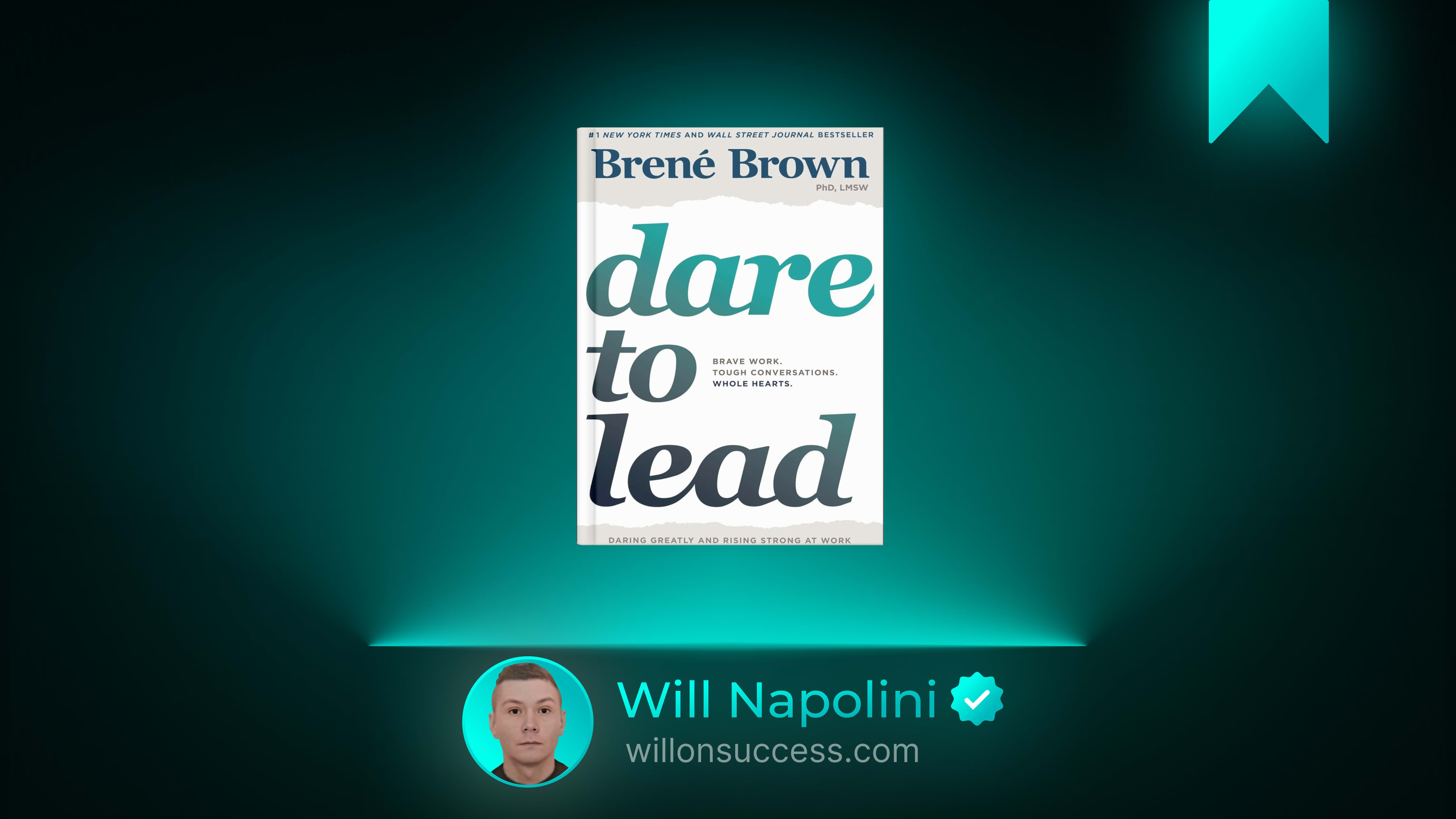
Brené Brown has spent over two decades studying what makes human beings brave. Not fearless. Brave. And in Dare to Lead, she takes that research and turns it directly toward the people who hold responsibility for others—managers, parents, teachers, mentors, anyone who has ever had to look another person in the eye and say, I don’t know, but we’ll figure it out together.
Her central finding is both simple and radical: Courage is not a personality trait you either have or lack. It is a set of skills. And those skills can be learned, practiced, and strengthened. But they all begin with the one thing we have spent our entire lives trying to avoid.
Vulnerability.
The Big Idea: Vulnerability Is Not Weakness; It Is the Prerequisite
I know how that word lands. I have seen people physically recoil when someone says “vulnerability” in a professional setting. It sounds soft. It sounds like losing control. It sounds like walking into a meeting and announcing your weaknesses.
But Brown’s definition is precise, and it changes everything. Vulnerability is not weakness. It is uncertainty, risk, and emotional exposure. It is the moment you raise your hand and share an idea that might be rejected. It is the conversation where you tell someone they are underperforming, knowing they might get angry or quit. It is the decision to say, I need help, when every instinct tells you to handle it alone.
You cannot have courage without vulnerability. That is not poetry. That is the mechanical reality of how bravery works. If there is no risk, no uncertainty, no chance of failure or rejection, then there is no courage required. You are simply executing a task. Courage only exists in the space where you might get hurt, and you choose to show up anyway.
Brown’s framework in Dare to Lead breaks this down into four teachable skill sets: Rumbling with Vulnerability, Living into Our Values, Braving Trust, and Learning to Rise. Together, they form a map for what she calls “daring leadership,” as opposed to what she calls “armored leadership.”
And the distinction matters, because armored leadership is not just ineffective. It is exhausting. For you, and for everyone who works with you.
The Armor You Wore to Survive Is Now Keeping You from Leading
One of the most confronting sections of the book is Brown’s inventory of the armor we wear. She identifies the specific strategies people use to avoid vulnerability, and when I first read through them, I recognized myself in almost every single one.
Some people armor up with perfectionism, believing that if they can just make everything flawless, no one will be able to criticize them. Some armor up with cynicism, adopting a posture of detached irony so that nothing can ever disappoint them or make them feel foolish for caring. Some armor up with foreboding joy, unable to enjoy a good moment because they are already bracing for the disaster they are convinced is coming. Some armor up by hoarding knowledge, by being the only person who understands the system, because if they share what they know, they lose their leverage.
Brown does not list these to shame us. She lists them to help us see clearly. Because you cannot take off armor you do not know you are wearing.
Here is what I would tell you if you were sitting across from me: Your armor is not a character flaw. It is a survival strategy that has outlived its purpose. You learned to perfect, to deflect, to control, because at some point in your life, being open got you hurt. But the cost of keeping that armor on in your adult life is isolation. It is the slow, quiet erosion of genuine connection. It is leading a team that respects your competence but never trusts your heart. It is going home to people you love and still feeling like you have to perform a version of yourself rather than simply being.
The first step toward daring leadership is not adding a new skill. It is noticing where you are armored. It is asking yourself, honestly: Where am I protecting myself right now? What am I afraid of happening if I put this down?
A Rumble Is Not a Fight; It Is a Conversation Where You Stay
The first and most central skill in Brown’s framework is what she calls “rumbling with vulnerability.” A rumble is her term for the hard, messy, uncertain conversations we avoid. The feedback session. The boundary-setting. The admission of a mistake. The moment you say to a colleague, I think we’re heading in the wrong direction, or to a partner, I felt invisible in that conversation.
Armored leadership avoids rumbling. It sends the passive-aggressive email. It talks about the problem in the hallway but not in the room. It waits until the frustration explodes and then calls it “just being honest.”
Daring leadership walks into the rumble. Not with aggression. Not with a script designed to win. But with a willingness to stay in the discomfort, to listen, to be wrong, to say, I don’t have this fully figured out yet, but I care enough about this relationship to talk about it.
Brown emphasizes that a rumble is not about being right. It is about being honest and staying curious. It is asking, Tell me more about how you see this, even when your defensive system is screaming at you to shut down.
I have seen this happen in real time. A team leader who has spent years avoiding conflict, letting small resentments calcify into a toxic culture, finally sits down with the person they have been frustrated with. They do not lead with blame. They lead with, Here is what I am struggling with, and I need your help to understand your side. And something shifts. Not because the problem magically disappears. But because the silence that was feeding the problem finally breaks.
The messy middle is where the real work happens. And the only way through it is to stay.
You Cannot Lead with Values You Have Not Named
The second skill set is “living into our values.” Brown’s research shows that most people, when asked, will list ten or twelve things they care about. Honesty. Family. Creativity. Loyalty. Hard work. Kindness. But when you press them, they cannot narrow it down. And because they cannot narrow it down, they do not actually live by any of them with consistency.
Brown’s exercise is deceptively simple: You must identify your two core values. Not five. Not eight. Two. The two values that, if you compromised them, you would feel a deep, structural sense of wrongness.
Then you must translate those values from abstract nouns into observable behaviors. What does “integrity” actually look like on a Thursday afternoon when you are tired and someone asks you to cut a corner? What does “respect” look like when a subordinate makes a mistake in front of the whole team?
If you cannot answer those questions, your values are just words on a wall. They are not a compass.
This principle extends far beyond the corporate world. You lead your family. You lead your friendships. You lead yourself through the small decisions of an ordinary day. And if you have not named the two or three principles that govern those decisions, you will default to whatever is easiest, or most comfortable, or most likely to earn approval in the moment.
Values are roots. And you cannot weather a storm if you have only leaves.
Trust Is Built in the Smallest Moments
The third skill set is “braving trust,” and Brown breaks this down using an acronym she calls BRAVING: Boundaries, Reliability, Accountability, Vault, Integrity, Non-judgment, and Generosity.
What I appreciate about this framework is that it removes the mystique from trust. We tend to think of trust as this grand, sweeping thing. Either you trust someone or you don’t. But Brown shows that trust is actually built in tiny, almost invisible moments. It is built when you say you will call at three o’clock and you actually call at three o’clock. It is built when someone shares a confidence with you and you do not repeat it, even casually, even to someone close to you. It is built when you make a mistake and you say, I was wrong, and here is how I will fix it, without adding a paragraph of justification.
The “Vault” component is particularly powerful. It refers to the principle that if someone shares something with you, it goes in the vault. You do not trade their story for social currency with someone else. You do not use their vulnerability as gossip. In a world where information is constantly weaponized, being a vault is a radical act of leadership.
And the “Generosity” component challenges us to interpret others’ actions in the most generous way possible before assuming the worst. Not naively. Not as a doormat. But as a starting posture. Because armored leadership assumes the worst and then has to manage the fallout. Daring leadership assumes good intent, investigates the gap, and builds a culture where people are safe enough to be honest.
Trust is not a switch. It is a jar you fill, one small marble at a time. And every time you follow through, every time you protect someone’s dignity, every time you choose honesty over comfort, you drop another marble in. It takes a long time to fill. It takes one careless moment to shatter the jar. That is why trust must be treated as the most precious resource in any relationship, any team, any family.
The Comeback Is Not About Bouncing Back; It Is About Reckoning
The final skill set is “learning to rise.” This is Brown’s framework for what to do when you fall. When the project fails. When the conversation goes sideways. When you lose your temper, or you get passed over, or you realize you have been leading from a place of fear rather than conviction.
Armored leadership pretends the fall didn’t happen. It minimizes, deflects, blames, or simply barrels forward as if nothing occurred.
Daring leadership stops. It does what Brown calls the “reckoning.” You get curious about your own emotional reaction. You ask yourself, What am I actually feeling right now? Where is this coming from? You do not skip the emotion to get to the fix. You sit with the discomfort long enough to understand it.
Then comes the “rumble”—the honest conversation with yourself or with others about what actually happened, what your role was, and what you need to change.
And then comes the “revolution.” You apply what you learned. You change the behavior. You do not just apologize and repeat the pattern. You restructure the system that allowed the failure to happen.
This is not about resilience in the sense of bouncing back to where you were. It is about growing through the fall. The person you are after the reckoning is not the same person who fell. They are wiser. They are more honest. They have a deeper understanding of their own patterns.
You fall. You reckon. You rise differently.
Why This Matters Beyond the Boardroom
I want to be clear about something, because I know the word “leadership” can feel corporate and distant. Brown’s definition of leadership is not about a title or an org chart. She defines a leader as anyone who takes responsibility for finding the potential in people and processes, and who has the courage to develop that potential.
By that definition, you are a leader. You lead your children through the way you handle your own frustration. You lead your friendships through the boundaries you set and the grace you extend. You lead your own life through the promises you keep to yourself in private.
If you have been leading from armor, the cost is not just professional. It is personal. It is the distance you feel from the people you love, even when you are sitting in the same room. It is the exhaustion of maintaining a performance. It is the quiet grief of wondering if anyone actually knows you, or if they only know the polished version you have been presenting.
Daring leadership is not a strategy for getting promoted. It is a strategy for coming home to yourself.
Practical Application: Three Exercises to Begin
Understanding these principles is the first step. Practicing them is where the change happens. Here are three concrete ways to start this week.
1. Name Your Armor Tonight, take a blank piece of paper and write down the answer to this question: What do I do when I feel uncertain, exposed, or at risk of failure? Do you over-prepare to the point of paralysis? Do you make a joke to deflect the tension? Do you go silent and withdraw? Do you become critical of others so no one looks at you? Write it down without judgment. Just see it clearly. You cannot take off armor you have not identified.
2. Schedule One Rumble Think of one conversation you have been avoiding. A boundary you need to set. A piece of feedback you have been holding back. An apology you owe. Schedule it. Not for next month. This week. Before you go in, write down one sentence that starts with, I want to talk about this because I care about this relationship, and here is what I am struggling with. Lead with the care, not the complaint. Then stay in the conversation. Do not rush to fix it. Do not shut down. Stay.
3. Fill the Jar with One Marble Choose one person in your life—a colleague, a friend, a family member—and commit to one small act of reliability this week. Something specific. I will be on time. I will not interrupt them when they are telling me about their day. I will keep the confidence they shared with me and not mention it to anyone else. Trust is not rebuilt in grand gestures. It is rebuilt in the small, repeated choices that say, You can count on me.
Who Should Read This Book
Dare to Lead is for anyone who has ever felt the exhausting weight of pretending to have it all together. It is for managers who want to build teams that actually trust each other, not just tolerate each other. It is for parents who want to model emotional honesty for their children. It is for anyone who has ever walked away from a difficult conversation feeling like they abandoned themselves to keep the peace.
It is especially valuable for people who have built their entire identity around being competent, being strong, being the one who handles everything. Brown’s work will challenge that identity, not to tear it down, but to make room for something more sustainable.
It may be less useful for someone who is looking for a tactical, step-by-step management playbook with scripts for every scenario. Brown’s work is principles-based, not formula-based. It asks you to do internal work before it gives you external techniques. If you are not willing to look at your own patterns, the frameworks will feel abstract.
What makes it worth reading is the depth of the research behind it. This is not one person’s opinion. It is drawn from thousands of interviews, years of data, and a genuine, hard-won understanding of what makes human beings brave. And it is delivered with a warmth and honesty that makes you feel like you are sitting across from someone who has been in the same trenches you are in.
One Small Step
You do not need to transform your leadership style overnight. You do not need to have the perfect vocabulary for your values or solve the hardest conversation in your life before Friday.
You just need to do one thing.
Tomorrow, in a moment where you would normally put on the armor—where you would normally deflect, or over-prepare, or stay silent, or make a joke to avoid the tension—pause. Take one breath. And choose to stay present. Say what is true, even if your voice shakes. Ask the question you are afraid to ask. Admit the thing you have been hiding.
You do not have to do it perfectly. You just have to do it without the shield.
Because the armor kept you safe once. But you are not that person anymore. And the life you are trying to build, the relationships you are trying to deepen, the leader you are trying to become—none of it can exist behind the steel.
Put it down. Even for one conversation. Even for one moment. The world on the other side of that armor is where everything worth having actually lives.