The Art of Letting Go: What a Children’s Classic Teaches Us About Finding Peace
I want to ask you a question that might seem too simple to matter: How do you end your day?
Not how you finish your work. Not how you collapse into bed after a long shift. But how do you actually, consciously, transition from the noise of the world to the quiet of your own mind?
Most of us do not end our days. We merely interrupt them. We carry the glow of the screen, the weight of the unread email, and the echo of the day’s frustrations directly into our pillows. We expect our nervous systems to shift from a hundred miles an hour to zero in the time it takes to turn off a lamp. And when we stare at the ceiling at 2:00 AM, we wonder why we cannot sleep.
If I could sit across the table from you, I would tell you that your exhaustion is rarely just a product of how much you are carrying. It is a product of how you are setting it down.
What if the reason you feel so perpetually depleted has less to do with how much you are doing, and everything to do with how you are stopping?
The Big Idea
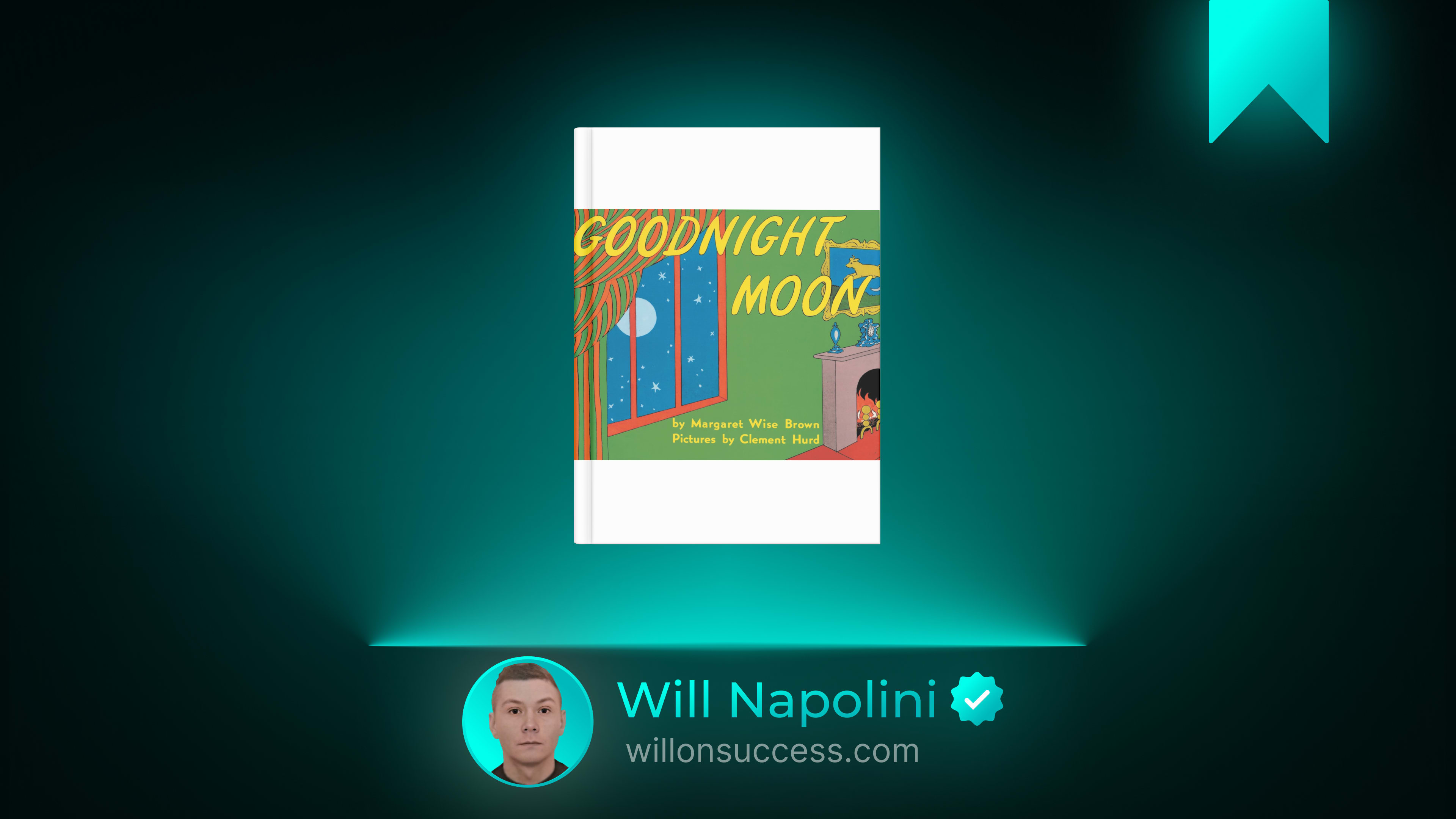
There is a profound, almost forgotten wisdom hiding inside a sixty-page children’s picture book published in 1947. Margaret Wise Brown’s Goodnight Moon is universally known as a bedtime staple for toddlers. But if you look closely, it is not just a story about a bunny going to sleep. It is a masterclass in the architecture of transition. It is a blueprint for mindfulness, grounding, and the deliberate act of letting go.
Brown understood something that modern adults have largely forgotten: peace is not a switch you flip; it is a room you enter, step by step. You cannot force the mind to rest. You must invite it to settle by acknowledging the world around you and gently closing the open loops of your waking life.
The Story and the Concept
The premise of Goodnight Moon is almost aggressively simple. Goodnight Moon does not have a traditional plot. Instead, it describes the going-to-bed ritual of a small bunny, who surveys all the objects of its surrounding green room.
As the bunny prepares for sleep, he does not just close his eyes and hope for the best. He systematically surveys his environment. He looks at the telephone, the red balloons, the picture of the cow jumping over the moon, the two little kittens, and the pair of mittens. And to each one, he says goodnight.
Margaret Wise Brown based this ritual on her own childhood habit of saying goodnight to the toys and objects in her room. Her entire philosophy of writing was rooted in capturing the sensory, here-and-now reality of a child’s experience. She knew that children do not live in the abstract future or the regret-filled past. They live in the immediate, physical reality of the objects right in front of them.
What feels like a simple rhyming scheme to a toddler is actually a profound psychological mechanism for an adult. The bunny is systematically decelerating his mind. He is taking inventory of his safe space, acknowledging the day is done, and consciously severing his attachment to the external world so he can retreat into the internal one.
The Architecture of Transition
Think about how a high-speed train comes to a stop. It does not hit the brakes at full speed. If it did, the momentum would tear the train apart. It begins to decelerate miles before the station. It shifts gears, slows its rhythm, and gradually eases into stillness.
Most of us treat our brains like cars without brakes. We work intensely until 9:00 PM, answer one last text, check the news, and then command our bodies to sleep. We are surprised when our minds keep racing.
Goodnight Moon teaches us the necessity of the deceleration ritual. The bunny’s litany of “goodnights” is not random; it is a paced, rhythmic slowing down of consciousness.
I have learned that consistency matters more than intensity when it comes to rest. A dramatic, hour-long meditation once a week will not save you if you spend the other six nights doom-scrolling until your eyes burn. What you need is a small, reliable bridge between the day and the night.
You need a transition that signals to your ancient, hardwired nervous system that the hunt is over. The predators are gone. The work is done. You are safe.
When you lack a transition ritual, you bleed the stress of today into the recovery of tonight. You wake up already behind. But when you build a deliberate bridge into rest, you protect your tomorrow.
The Practice of Grounding
As the bunny looks around the room, he names what he sees. “Goodnight light. Goodnight red balloon.”
In psychology, there is a concept known as affect labeling. When you put feelings or observations into words, you diminish the emotional response of the amygdala—the brain’s fear center. You pull your mind out of the abstract, terrifying unknown of tomorrow’s to-do list, and you anchor it in the concrete, manageable reality of right now.
Anxiety lives in the future. It lives in the “what ifs” and the “not enoughs.”
Presence lives in the physical. It lives in the texture of the blanket, the sound of the wind, the dim glow of the lamp.
When you name your immediate surroundings, you shrink your worries. You remind yourself that you are not a floating consciousness trapped in a vortex of obligations. You are a physical being, sitting in a physical room, and in this exact second, you are okay.
I have seen this happen in my own life during seasons of intense overwhelm. When the world feels too large and too loud, I stop trying to solve the large problems. Instead, I focus on the small, immediate truths. I notice the weight of my feet on the floor. I notice the hum of the refrigerator. I name them.
The bunny does not worry about whether the cow will successfully jump over the moon again tomorrow. He simply acknowledges the picture on the wall. He grounds himself in his “great green room.”
What you repeat in private eventually becomes visible in your life. If you repeatedly practice grounding yourself in the present moment before you sleep, you will eventually become a person who is grounded in the present moment while you are awake.
The Sanctity of the Room
Notice the setting of the story. It takes place in a specific, sheltered environment. The room is not an office. It is not a hub of entertainment. It is a sanctuary designed for one specific purpose: rest.
We often treat our environments as neutral backdrops to our lives. But your environment is quietly shaping your behavior every single second.
If you work in your bed, your brain learns that the bed is a place of stress and problem-solving. If you argue with your partner in the bedroom, your nervous system learns that the bedroom is a battlefield. If you scroll through outrage-inducing news in the dark, your bed becomes a theater of anxiety.
The bunny’s room is a controlled, curated space. The kittens are there. The mittens are there. The quiet old lady whispering “hush” is there. Everything in the room belongs to the ritual of peace.
You must reclaim your sanctuary.
Character before circumstances means taking responsibility for the spaces you inhabit. You cannot expect a chaotic environment to produce a peaceful mind.
This does not require an expensive interior designer. It requires boundaries. It means making a difficult but necessary decision: the bedroom is for sleep and for love. The screens stay in the kitchen. The laptops stay on the desk.
When you cross the threshold into your room, the world’s demands must stop at the door. You must become the quiet old lady whispering “hush” to the distractions of the day.
The Courage to Pronounce the Day Finished
Towards the end of the book, the scope of the bunny’s goodnights expands. He moves beyond the objects in the room to the universe outside.
“Goodnight stars. Goodnight air. Goodnight noises everywhere.”
There is a profound finality in this. The day is over.
One of the greatest thieves of human joy and rest is our refusal to accept that the day is done. We lie in bed mentally replaying the awkward conversation we had at lunch. We mentally draft the email we need to send at 8:00 AM. We try to fix the unfixable past and control the uncontrollable future.
But you cannot fix everything today.
There comes a moment when you must look at the day—with all its victories, its failures, its unfinished tasks, and its embarrassing mistakes—and pronounce it finished.
You have to say goodnight to your ambitions for the day. You have to say goodnight to your frustrations. You have to say goodnight to the person you wished you had been today, so you can rest and become the person you need to be tomorrow.
Letting go is not a passive act; it is an active surrender. It is the courage to say, “I have done what I could. The rest is out of my hands.”
Growth before achievement means understanding that you cannot grow if you never stop to recover. A seed does not sprout by straining in the sunlight; it sprouts by resting in the dark soil. You must allow yourself the darkness. You must allow yourself the quiet.
Why This Matters Beyond the Bedroom
Why should a busy professional, an overwhelmed parent, or an ambitious entrepreneur care about the mechanics of a toddler’s bedtime story?
Because the way you end your day determines the quality of your life.
If you do not know how to stop, you will eventually break. Burnout is rarely the result of a single, catastrophic event. It is the slow, quiet accumulation of days that were never properly closed.
When you master the art of transition, you change your relationship with time. You stop feeling like you are constantly running on a treadmill that someone else controls. You begin to reclaim your agency.
In your relationships, this practice changes everything. When you transition properly from work to home, you do not bring the ghost of your boss into the dinner table conversation with your spouse. You arrive fully.
In your leadership, this practice makes you dangerous in the best way possible. A leader who knows how to rest does not project chronic urgency onto their team. They project calm clarity. A rested mind sees solutions that an exhausted mind misses.
This is not about “life hacks” to squeeze more productivity out of your waking hours. This is about honoring your humanity. It is about recognizing that you are a creature of rhythms, seasons, and cycles. The sun sets. The fields lie fallow. The tide goes out. You are not a machine. You are a living thing, and living things require the dark to survive.
Practical Application
Understanding is valuable, but understanding without action changes nothing. If you want to build a sanctuary in your own life, here is how you begin.
The 15-Minute Dimmer Switch Do not go from bright overhead lights and intense podcasts straight into bed. Create a fifteen-minute buffer zone. Dim the lights in your home an hour before sleep. Switch from active consumption (working, scrolling, debating) to passive, gentle input (reading fiction, listening to acoustic music, stretching). Build the deceleration ramp.
The “Goodnight” Inventory When you get into bed, before you close your eyes, mentally name three physical objects in your room and silently say goodnight to them. “Goodnight window. Goodnight chair. Goodnight door.” It sounds almost too simple to work, but it forces your brain to disengage from abstract thought and anchor into physical reality. It shrinks the world down to a size you can handle.
Close the Open Loops Keep a small notebook outside the bedroom. If a thought about tomorrow’s to-do list pops into your head, do not try to hold it in your working memory. Write it down. Tell your brain, “It is captured. We do not need to carry it tonight.” Then, close the book.
Protect the Threshold Make a hard rule about technology. Decide where your phone charges, and ensure it is not within arm’s reach of your pillow. Make your bedroom a sanctuary where the outside world is not permitted to intrude.
Who Should Read This Book
While Goodnight Moon is technically a children’s book, its deepest lessons are for the chronically exhausted adult.
It is for the entrepreneur who cannot turn off their brain at 11:00 PM. It is for the parent who feels guilty for resenting the bedtime routine because they are so desperate for their own rest. It is for anyone who feels like they are constantly bracing for the next emergency.
You will not find complex frameworks or dense scientific studies in this book. If you are looking for a bio-hacking manual on sleep architecture, this is not it.
But if you are looking for permission to slow down, a reminder of the beauty in simple rituals, and a gentle guide back to your own senses, Margaret Wise Brown’s masterpiece is exactly what you need. It is worth reading slowly, perhaps aloud, just to feel the rhythm of the words washing over you.
One Small Step
Tonight, when you are ready for bed, do not just collapse into the sheets.
Stand in the doorway of your bedroom for ten seconds. Take one deep breath. Look at the room that shelters you. Name one object in the dark, silently say goodnight to it, and then step inside and close the door.
You do not need more motivation to succeed tomorrow. You need the courage to let go of today.
Rest is not a reward for the work you finished. It is the foundation for the person you are becoming.