The Myth of the Natural: Why Grit Matters More Than Talent
Have you ever watched someone with undeniable natural talent slowly fade into the background, while someone with seemingly average abilities quietly builds an extraordinary life?
I have seen this happen more times than I can count. We look at the prodigy, the charismatic leader, or the effortlessly brilliant artist, and we tell ourselves a story. We tell ourselves that they have something we do not. We worship the “natural.”
But there is a dangerous assumption hiding inside the way most of us think about success. We believe that our potential is a fixed pie, determined the day we are born. If you are not a genius, you assume your ceiling is low. If you are not naturally gifted, you assume the race is already lost.
What if the reason you keep falling short of your goals has almost nothing to do with your raw ability, and everything to do with your stamina?
The Big Idea
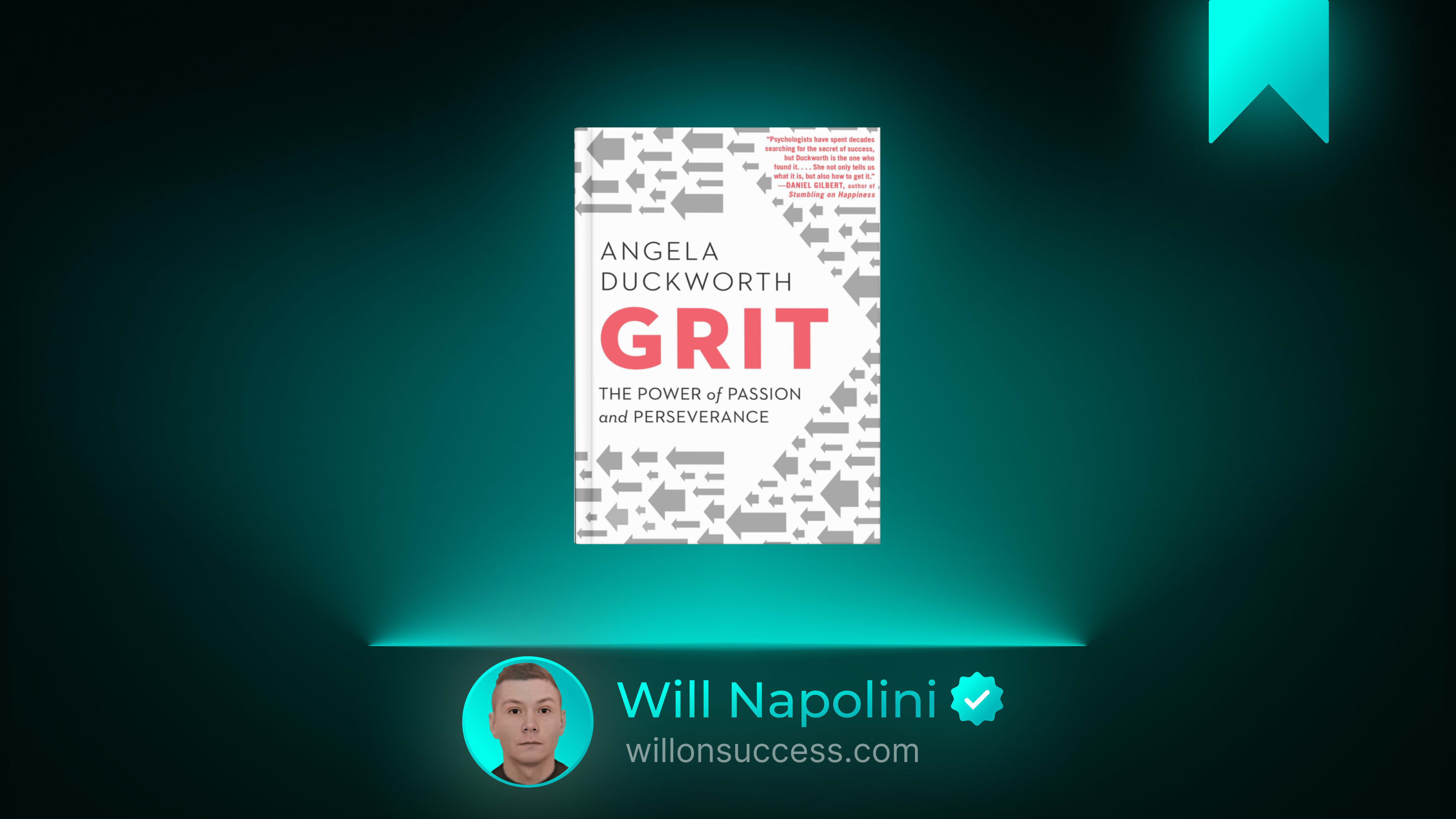
If I could sit across the table from you, I would tell you to stop worrying about your innate talent. The secret to outstanding achievement is not a genetic lottery. It is a specific, cultivatable blend of passion and perseverance that psychologist Angela Duckworth calls grit.
Grit is not about working yourself to exhaustion. It is not about blind stubbornness. It is about holding a top-level goal in your mind for years, sometimes decades, and refusing to let it go. Duckworth’s central thesis is profoundly hopeful: grit can be grown, and effort matters far more than the gifts you were handed at birth.
The Story That Changes Everything
To understand why grit matters, you have to look at where talent is supposed to matter most.
Every year, thousands of high school seniors apply to the United States Military Academy at West Point. The admissions process is brutal, measuring brains, brawn, and leadership potential through a rigorous metric called the Whole Candidate Score. These are the best of the best. The most talented young people in the country.
Yet, when these elite cadets arrive for Beast Barracks—a grueling, six-week summer initiation program designed to break them down physically and mentally—something strange happens. The cadets with the highest Whole Candidate Scores are just as likely to drop out as those with the lowest scores. The military’s traditional metrics for predicting success were completely failing.
Duckworth was brought in to solve the mystery by giving the incoming cadets a short, simple questionnaire measuring their perseverance and passion for long-term goals.
The results were stunning, as the Grit Scale was the single best predictor of who would survive the Beast. It wasn’t physical fitness that kept them going when their muscles failed. It wasn’t raw intelligence that kept them moving when they were sleep-deprived. It was the quiet, unglamorous refusal to quit.
The Mathematics of Effort
We are culturally obsessed with talent. We love the story of the effortless genius. But Duckworth argues that our obsession with talent actually distracts us from the real engine of achievement.
She proposes a simple, elegant formula to explain how success actually works: Talent multiplied by Effort Equals Skill, and Skill multiplied by Effort equals Achievement.
Let that sink in, because talent is simply the rate at which you improve when you apply effort. Skill is what happens when that effort is sustained over time. But here is the crucial part: effort counts twice.
Without effort, your talent is nothing more than unmet potential. You can have all the natural coordination in the world, but if you never pick up the tennis racket, you will never develop the skill. And even if you develop the skill, without continued effort, that skill remains dormant. Talent without effort is a tragedy. Skill without effort is a waste.
I have learned that consistency matters more than intensity. The person who writes one page every single day will eventually outpace the “genius” who waits for a lightning bolt of inspiration that never comes. Your habits are votes for the person you are becoming, and effort is the currency you use to buy your future.
The Four Pillars of Grit
The most common misconception about grit is that you either have it or you don’t. We assume gritty people are just born with an iron will.
But Duckworth’s research reveals that grit is not a fixed trait. She identifies four specific assets that grow grit over time: Interest, Practice, Purpose, and Hope. Furthermore, she argues that these four psychological assets are not “You have it or you don’t” commodities. They are muscles you can build.
1. Interest: The Spark of Passion
Passion does not begin with a grand epiphany. It begins with play. It begins with curiosity. You cannot force yourself to be gritty about something you fundamentally despise. Gritty people do not just work hard; they are deeply interested in what they do. But interest is not just a feeling you wait to discover. It is something you actively cultivate by asking questions, finding the nuances, and digging deeper into the subject.
2. Practice: The Mundanity of Excellence
Once interest is established, the work shifts from playful exploration to disciplined refinement. This is where deliberate practice comes in. Most people practice what they already know how to do because it feels good and it feels like progress. But deliberate practice requires you to operate at the very edge of your ability. It is frustrating. It is exhausting. You will fail repeatedly in a single hour of deliberate practice. But that friction is the exact mechanism of growth. A muscle only grows when it is subjected to a load it cannot easily handle. Your skills are no different.
3. Purpose: The Anchor
Interest is about what you enjoy. Purpose is about why it matters to the world. Think about the classic parable of the stonemasons building a cathedral. One sees himself as merely laying heavy bricks. The other sees himself as building a house for the divine. The physical action is identical, but the psychological experience is entirely different. Duckworth’s research shows that gritty people are the ones building cathedrals. They have connected their daily grind to a larger, human-centric purpose. When you view your work as a way to serve others, the inevitable suffering of the process becomes meaningful.
4. Hope: The Engine of Resilience
Hope is the final pillar, but it is not the passive wish that things will get easier. It is the active, defiant belief that you can find a way to make things better. When a gritty person fails, they do not say, “I am a failure.” They say, “My strategy was a failure. I need to try a different approach.” Hope is what allows you to get up off the floor when life knocks you down.
Why This Matters in Your Life
You might be working hard and still wondering why nothing is changing. You might be bouncing from one new hobby, one new business idea, or one new fitness regimen to the next, driven by a burst of initial enthusiasm that inevitably fades when the work gets hard.
We often confuse the initial spark of interest with the enduring fire of passion. We quit when the novelty wears off, assuming we just haven’t found our “true calling” yet.
But what you repeat in private eventually becomes visible in your life. If you repeatedly abandon your goals the moment they require sustained, unglamorous effort, you are training your brain to quit. You are building a habit of starting over.
Grit changes your relationship with failure. It teaches you that a setback is not a stop sign; it is merely data. It shifts your focus from the anxiety of immediate results to the quiet satisfaction of daily effort.
In your career, grit means you become the person who can be relied upon when the project loses its shine. In your relationships, it means you possess the stamina to work through conflict rather than walking away when the initial infatuation fades. In your personal growth, it means you understand that becoming someone capable of sustaining success takes years of quiet, uncelebrated work.
Practical Application
Understanding the theory of grit is valuable, but understanding without action changes nothing. If you want to build a more resilient, purposeful life, here is how you begin.
Design Your Deliberate Practice Stop just “putting in the hours.” Identify one specific micro-skill within your craft or profession that you are currently weak at. Dedicate just twenty minutes a day to practicing only that weakness with intense, undistracted focus. Seek feedback from someone better than you. Make the practice slightly uncomfortable.
Climb the “Why” Ladder When you are doing a tedious, frustrating task, ask yourself, “Why am I doing this?” When you get the answer, ask “Why does that matter?” Do this three or four times until you connect the mundane task in front of you to a deeper purpose that serves other people. Connect the spreadsheet to the family you are providing for. Connect the difficult conversation to the integrity of your team.
Audit Your Distractions Grit requires sustained attention. You cannot build deep passion if your mind is constantly fractured by cheap dopamine. Choose one hour a day where your phone is in another room while you work on your most important long-term goal. Protect your focus as fiercely as you protect your bank account.
Reframe Your Setbacks The next time you fail or face a rejection, consciously change your internal vocabulary. Do not say, “I’m not good at this.” Say, “I haven’t figured out the right strategy yet.” Shift from a fixed mindset to a growth mindset.
Who Should Read This Book
Grit is essential reading for anyone who has ever felt paralyzed by their own perceived lack of natural talent. It is for the student who studies for hours but doubts their intelligence, the entrepreneur facing their third failed launch, and the parent trying to model resilience for their children.
However, it is worth noting that the book focuses heavily on individual agency. If you are looking for a deep critique of systemic barriers, socioeconomic disadvantages, or the role of sheer luck in success, you may find this framework incomplete. Duckworth’s work is a powerful tool for maximizing your personal effort, but it does not claim to solve the inequities of the world.
Still, for what it sets out to do—demystify the mechanics of perseverance and prove that effort counts twice—it is a masterpiece of practical psychology.
One Small Step
Today, I want you to identify one long-term goal that you have quietly given up on because you convinced yourself you lacked the “natural talent” for it.
Take out a piece of paper and write down one tiny, specific action you can take tomorrow to move the needle on that goal. Not a massive, heroic leap. Just one small, deliberate step. Then, take it.
You do not need to be a genius to build an extraordinary life. You just need to refuse to quit.
Your talent is just the seed. Your effort is the rain.