Forged in Fire: What How the Steel Was Tempered Teaches Us About Resilience and Purpose
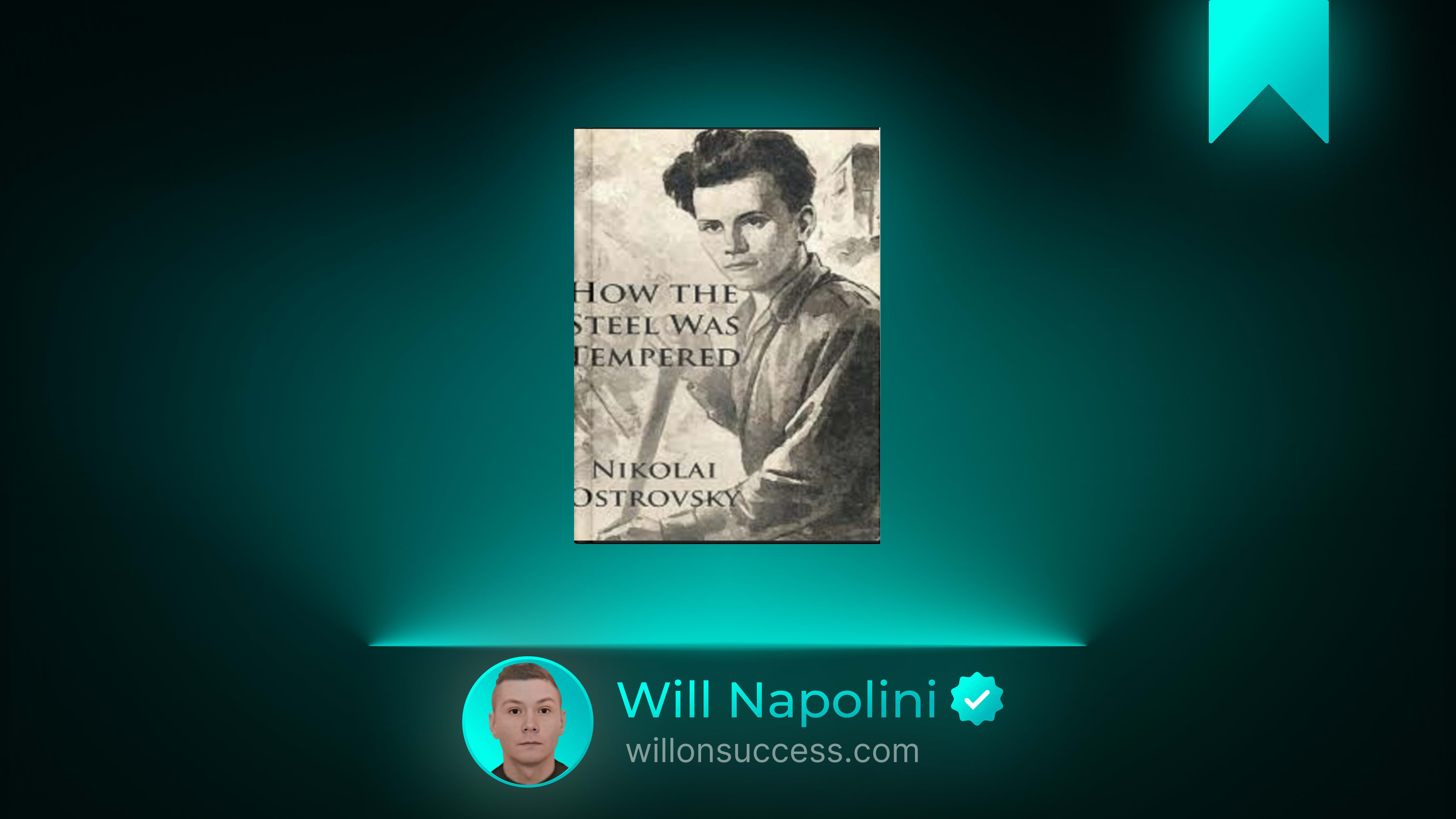
There is a sentence buried inside a century-old novel that has outlived empires, ideologies, and generations of readers who never agreed with its politics.
“Man’s dearest possession is life, and since it is given to him but once, he must live so as not to be ashamed of the life he has lived.”
I first encountered those words during a season when my own life felt like ash. I was not building anything. I was merely surviving. And yet, reading them did not make me feel guilty for my exhaustion. They made me feel seen. Not because I shared the author’s revolutionary fervor, but because I recognized the ache behind the words—the desperate, human need to know that suffering can mean something.
How the Steel Was Tempered by Nikolai Ostrovsky is often dismissed as Soviet propaganda, and it undeniably is. But to reduce it to ideology is to miss the fire at its core. This is a book written by a man who was blind and paralyzed at twenty-nine, dictating his story through a stencil frame because his hands could no longer hold a pen. It is a fictionalized autobiography forged in actual agony, not theoretical posturing.
What I want to show you is not a political manifesto. It is a mirror. Pavel Korchagin’s journey from a beaten dishwasher to a broken soldier to a writer who refused to be erased is, beneath its historical specificity, a map for anyone who has ever been shattered and wondered if the pieces could still form a life worth living.
The Big Idea: Strength Is Not Born—It Is Forged
The central thesis of this novel lives in its title. Steel is not found. It is made. Raw iron is impure, brittle, and useless until it is subjected to extreme heat and relentless hammering. Only then does it become capable of bearing weight.
Ostrovsky applies this metallurgical truth to the human spirit. Pavel Korchagin does not begin as a hero. He begins as a twelve-year-old boy kicked out of school for a childish prank, forced into brutal labor where he is beaten by coworkers. His early life is defined by humiliation, poverty, and powerlessness. There is nothing noble about his starting point.
What transforms him is not innate greatness. It is the repeated application of pressure, pain, and conscious choice. Each wound, each loss, each moment of despair becomes part of the tempering process. The novel argues that character is not a gift. It is a product of how we respond to what breaks us.
This matters profoundly for you. You may be measuring yourself against people who seem unbreakable and concluding you are defective. But steel does not judge itself by its raw state. It judges itself by what it becomes after the forge. Your current fragility is not your final form. It is your raw material.
The Story That Carries the Truth
To understand why this idea lands with such force, you must understand the life behind it. Nikolai Ostrovsky was born in 1904 in Ukraine to a poor family. He joined the Red Army as a teenager, fought in the Russian Civil War, and was severely wounded multiple times. By nineteen, he was paralyzed. By his mid-twenties, he had lost his sight.
He wrote How the Steel Was Tempered between 1932 and 1934 while completely bedridden, using a special frame to guide his hand or dictating to family members. He died at thirty-two. The protagonist Pavel Korchagin loses his health, his mobility, and eventually his eyesight, only to discover that he can still serve through writing. This is not invention. This is transcription.
When critics dismiss the novel as socialist realism lacking artistic credibility, they are not entirely wrong. The prose can be uneven, the ideology heavy-handed, and some characters function more as symbols than people. But autobiographical sincerity carries a weight that polished craft cannot replicate. Readers across cultures and decades have responded not to the doctrine but to the authenticity of a man refusing to surrender his voice even as his body failed.
I have learned that the most transformative stories are rarely the most elegant. They are the ones where you can feel the author’s breath between the lines. Ostrovsky did not write about resilience from observation. He wrote it from inside the furnace.
Suffering Without Meaning Breaks; Suffering With Meaning Builds
Pavel’s physical deterioration is relentless. Spinal injuries from war slowly sap his strength. He endures typhus, freezing conditions while building an emergency railway line, and eventual total paralysis. A lesser story would treat these as tragedies to be mourned. Ostrovsky treats them as crucibles.
But here is the crucial distinction: Pavel’s suffering only becomes meaningful because it is tethered to something larger than himself. Whether you call that cause communism, justice, love, or legacy, the mechanism is identical. Pain without purpose produces bitterness. Pain welded to purpose produces steel.
You do not need to share Pavel’s ideology to apply this principle. What you need is honesty about what you are willing to endure for. I have watched people collapse under far lighter burdens than Pavel bore because their suffering served no narrative beyond victimhood. I have also watched people carry unimaginable weight with quiet dignity because every ounce of pain was invested in something they loved.
Your trials are not automatically ennobling. They become ennobling only when you choose what they will build. Ask yourself not “Why is this happening to me?” but “What is this asking me to become?”
Identity Must Be Rebuilt When the Body Fails
One of the most devastating and instructive arcs in the novel occurs after Pavel can no longer fight, work, or move independently. For a man whose entire identity was built on physical action and revolutionary service, disability is not just a medical condition. It is an existential annihilation.
Pavel contemplates suicide. He sees himself as useless, a burden, a finished thing. This is perhaps the most honest moment in the book. Resilience literature often skips past this darkness, rushing toward triumph. Ostrovsky lingers here because he knows that rebuilding requires first acknowledging the ruin.
Pavel’s salvation comes not through miraculous recovery but through reinvention. He discovers that he can still contribute—as a writer, as a mentor, as a witness. His value was never truly located in his legs or his eyes. It was located in his capacity to offer something to the world. When one channel closed, he had to carve another.
If you have lost a role, a relationship, a career, or a version of yourself that defined you, you are standing where Pavel stood. The old identity is gone. Grieve it. Then ask: What remains that cannot be taken? What can I still give? Your usefulness is not synonymous with your former function. It is deeper, quieter, and more durable.
Discipline Is Love Made Visible
Socialist realism emphasized collective duty over individual desire, and Pavel embodies this to an almost punishing degree. Modern readers often bristle at his self-sacrifice, interpreting it as fanaticism. But strip away the ideological packaging and you find a universal truth: lasting contribution requires the subordination of impulse to commitment.
Pavel does not always feel motivated. He works through fever, grief, and exhaustion. He chooses discipline not because it feels good but because he loves what he serves more than he loves his comfort. This is not masochism. It is devotion expressed through action.
In our age of endless optimization and self-care rhetoric, we have sometimes confused rest with retreat. Rest is necessary. But there is a difference between restoring yourself for meaningful work and avoiding difficulty because it is uncomfortable. Pavel teaches that love—for a person, a craft, a cause—is proven not in sentiment but in sustained effort when every fiber wants to quit.
You do not need to martyr yourself to honor this principle. But you do need to identify what you love enough to suffer for. Then build the daily practices that keep you faithful to it even when inspiration deserts you. Discipline is simply love showing up on the days it doesn’t feel like love.
Why This Matters Beyond Its Historical Moment
You might wonder why a Soviet novel from the 1930s deserves your attention today. The answer is that human beings have not changed, even though regimes have. People still face illness, loss, injustice, and the terror of meaninglessness. People still need models of endurance that do not pretend suffering is easy or optional.
Critics rightly note that the novel served as a tool for shaping ideal Soviet citizens. But tools can outlast their original architects. Millions of readers in China, Latin America, Africa, and beyond embraced Pavel not as a communist archetype but as a symbol of defiant hope against impossible odds. The book sold over thirty-six million copies not because everyone agreed with its politics but because everyone recognizes the hunger to matter despite brokenness.
On an ordinary Tuesday, this means you can read Ostrovsky without adopting his worldview and still receive his gift. His gift is permission to take your own pain seriously—not as punishment, not as random cruelty, but as potential fuel. His gift is the reminder that your story is not over because your circumstances have changed. His gift is the insistence that a life lived with intention, however constrained, is never wasted.
Practical Application: Tempering Your Own Steel Today
Abstract admiration changes nothing. Here is how to translate Pavel’s example into your life this week.
Name Your Forge Journal for fifteen minutes. Identify one current source of suffering or frustration that you have been resisting or resenting. Now ask: If this pressure were intentionally shaping me, what might it be trying to produce? Write down three possible strengths or clarifications this difficulty could forge. You are not glorifying pain. You are reclaiming agency within it.
Define Your “So As Not To Be Ashamed” Revisit Ostrovsky’s famous quote. Complete this sentence for yourself: “I want to live so as not to be ashamed of __.” Be specific. Not “being a good person,” but “showing up faithfully for my children even when I’m depleted,” or “creating work that tells truths others avoid,” or “treating strangers with dignity when I feel invisible.” Post this somewhere visible. Let it anchor your decisions.
Rebuild One Lost Identity Channel If you have lost a role or capacity that defined you, list five ways you can still express the core value that role represented. If you can no longer run marathons but valued perseverance, perhaps you now practice patience in caregiving or persistence in learning a new skill. Choose one alternative expression and commit to it for thirty days. Identity survives transformation when values outlive forms.
Practice Devotional Discipline Select one small daily action that serves something you love but does not come naturally. Do it for seven consecutive days regardless of mood. Track completion, not quality. Notice the difference between motivation-dependent effort and commitment-dependent effort. Let the latter become your foundation.
Write Your Testimony Pavel’s final act of creation was writing his story. You do not need to publish a novel. But spend thirty minutes this week writing honestly about a trial you’ve endured and what it taught you. Write it for your future self, for someone who needs to hear it, or simply to externalize the meaning. Unexpressed suffering stagnates. Expressed suffering becomes wisdom.
Who Should Read This Book
How the Steel Was Tempered will speak directly to you if you are navigating chronic illness, disability, career loss, or any season where your former identity no longer fits. It is essential reading for anyone who suspects that modern resilience discourse has become too comfortable and needs to remember that real endurance is costly. Readers interested in twentieth-century history, Soviet literature, or the intersection of art and ideology will find it historically indispensable.
Readers seeking light entertainment, nuanced moral ambiguity, or apolitical self-help should look elsewhere. The novel is ideologically committed, stylistically rough, and emotionally demanding. It will not coddle you. But if you are ready to be challenged rather than comforted, it will meet you exactly where you are.
Its greatest value lies not in agreement but in encounter. You do not have to believe what Pavel believed to be changed by how he believed.
One Small Step
Before you close this page, open a blank document or notebook. Write Ostrovsky’s quote in full: “Man’s dearest possession is life, and since it is given to him but once, he must live so as not to be ashamed of the life he has lived.”
Beneath it, write one sentence completing this thought for your own life right now. Not someday. Not when things improve. Now, in this imperfect, unfinished, still-becoming moment.
Then do one small thing today that honors that sentence.
Steel is not tempered in theory. It is tempered in the next right action, taken while the metal is still hot.
Your forge is already lit. Begin.