How to Talk to Anyone: The Quiet Craft of Effortless Connection
Have you ever stood at the edge of a crowded room—a wedding, a networking event, a simple dinner party—and felt a familiar knot tighten in your stomach? You know everyone else seems to be gliding effortlessly from group to group, laughing, exchanging numbers, building connections. Meanwhile, you are gripping your drink, staring at your phone, or mentally rehearsing what you are going to say, terrified that you will sound foolish.
If I could sit across the table from you right now, I would tell you something I have learned after years of studying human behavior: The people who command a room are not born with a magical gift. They are not genetically superior. They have simply learned a craft.
We have been sold a dangerous myth about charisma. We believe that being a great conversationalist means being witty, having fascinating stories, or possessing an aggressive, extroverted personality. But the most magnetic people in the room rarely talk about themselves at all.

The Big Idea: The Art of Shining the Spotlight
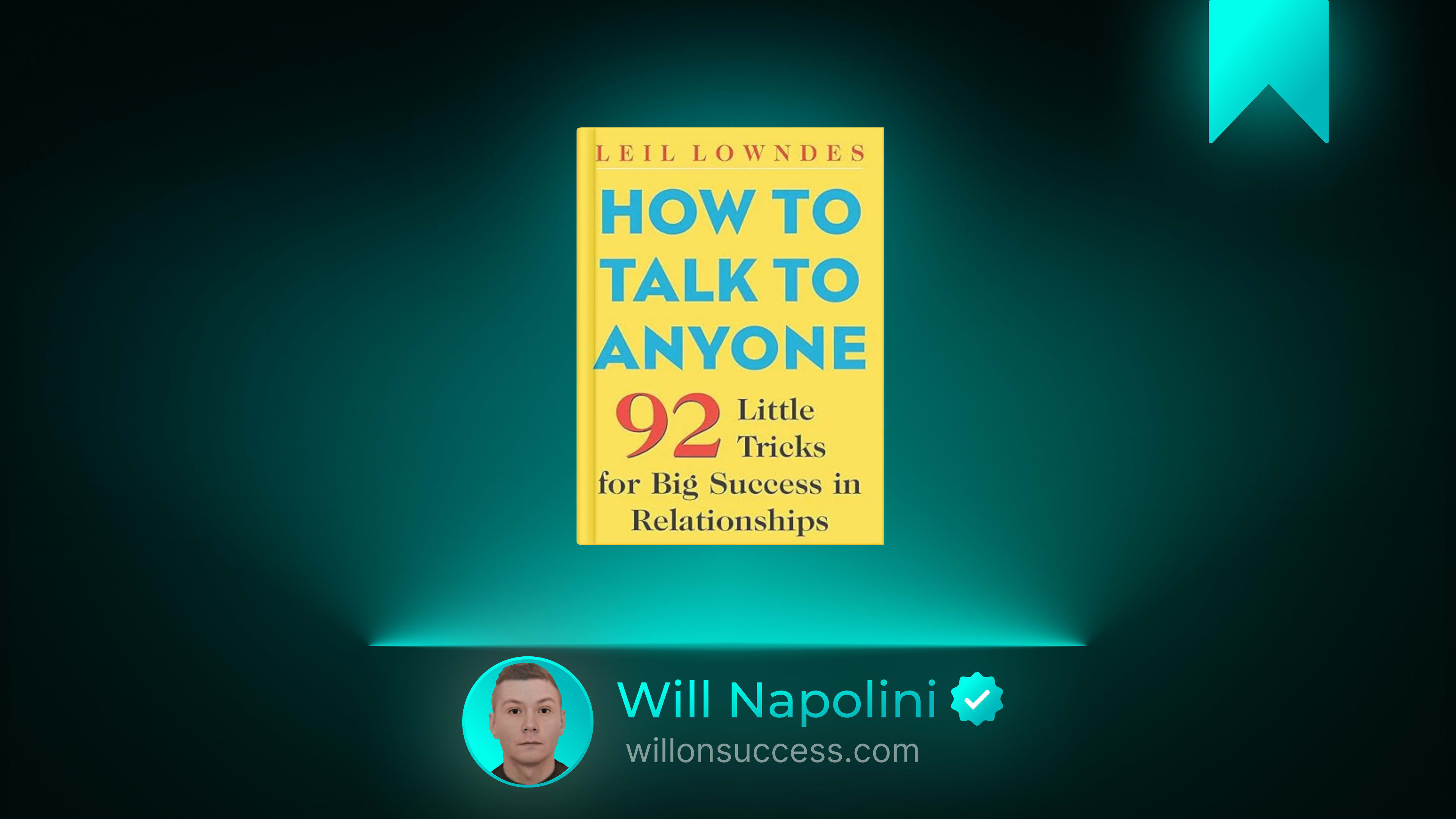
In her highly practical book, How to Talk to Anyone, Leil Lowndes breaks down the elusive art of social grace into a series of specific, learnable behaviors. Her central thesis is both liberating and profound: You do not need to be the most interesting person in the room to be captivating. You simply need to make the person you are talking to feel like they are the most interesting person in the room.
Lowndes argues that conversation is not a performance; it is an act of focused attention. The anxiety you feel before speaking to someone is usually just the sound of your own internal spotlight glaring at you. Why am I standing like this? Is my breath bad? What if I run out of things to say?
The moment you turn that spotlight away from yourself and shine it onto the other person, the anxiety evaporates. Connection is not about proving your worth; it is about witnessing someone else’s.
Charisma is not the ability to draw attention to yourself. It is the ability to make someone else feel seen.
The Tale of Two Guests: The Performer vs. The Host
To understand how this works in reality, imagine two guests at the same dinner party.
The first guest is desperate to be liked. They stand slightly angled toward the exit, scanning the room over the shoulder of whoever is speaking to them. When someone asks how they are, they give a one-word answer and wait. They are waiting for the other person to entertain them. They are a passive consumer of conversation.
The second guest operates like a host, even though they are in someone else’s home. They turn their entire body to face the person speaking. They hold eye contact just a fraction longer than average. When the person finishes a sentence, they pause, letting the words land, before responding. They ask questions that invite stories, not just facts.
Lowndes would tell you that the second guest is practicing what she calls the “Swiveling Spotlight.” They are not worried about their own performance. They are entirely focused on making the other person feel comfortable, intriguing, and valued.
Before the first guest ever builds a meaningful connection, the second guest has already built a bridge. And the fascinating thing about human nature is that people will go out of their way to help, hire, and befriend the person who made them feel good about themselves.
The Core Principles of Effortless Connection
How do you transition from the anxious performer to the welcoming host? Here are the core principles Lowndes outlines to help you master the mechanics of connection.
1. The Architecture of a First Impression
Long before you speak a single word, your body has already introduced you. Lowndes emphasizes that non-verbal communication is the foundation of trust.
One of her most powerful concepts is the “Flooding Smile.” Instead of offering a generic, instant smile when you meet someone, you pause for a brief second, look deeply into their eyes, and then let a warm smile slowly flood across your face. This micro-pause tells the other person that the smile is genuine and exclusively for them. It transforms a polite reflex into a moment of true recognition.
Combine this with what she calls “Sticky Eyes.” This does not mean staring aggressively. It means maintaining strong, warm eye contact when the other person is speaking, and even when they finish, holding their gaze for a moment before you look away. It signals absolute presence.
Your eyes speak before your voice ever clears its throat. A rushed greeting says you are busy; a delayed, genuine smile says you are honored.
2. The Grace of the Spotlight Shift
Once the connection is made, the goal is to keep the conversation flowing without it feeling like an interrogation.
Lowndes introduces the idea of “Parroting.” If you are nervous and don’t know what to say, simply repeat the last few words the other person just spoke, turning them into a gentle, rising question. If they say, “I just got back from a chaotic trip to Chicago,” you don’t need to have been to Chicago. You simply say, “A chaotic trip to Chicago?” This prompts them to elaborate. It keeps the spotlight on them, and it gives you time to breathe and think.
Furthermore, Lowndes suggests using the “Premature We.” Instead of asking, “What are you doing this weekend?” you ask, “What are we doing this weekend?” This tiny linguistic shift instantly builds a sense of shared reality and belonging. It subtly tells the other person, “We are in this together.”
3. Leaving Hooks for the Future
A common trap in small talk is giving “naked” answers. Someone asks, “Where are you from?” and you say, “Ohio.” Then the conversation dies.
Lowndes advises that you should never give a naked answer. Always attach a hook. “I’m from Ohio, where I spent my childhood trying to avoid tornado sirens,” or “I’m from Ohio, but I’ve been living here for five years trying to find the perfect cup of coffee.”
By adding a hook, you give the other person an easy, natural bridge to ask a follow-up question. You are essentially handing them the next line in the script.
When you learn to leave hooks, you stop feeling like you are carrying the entire weight of the conversation, and you start feeling like you are playing a game of catch.
Why This Matters on an Ordinary Tuesday
Why do these subtle mechanics matter when you are just trying to get through your work week or run errands? Because every opportunity you will ever receive—every job offer, every introduction to a future partner, every moment of unexpected grace—will pass through the filter of a human interaction.
If you are an entrepreneur, your ability to make a client feel deeply understood is more valuable than the features of your product. If you are a leader, your team will not follow your strategy; they will follow the way you make them feel when they are struggling.
The tragedy of modern life is that millions of brilliant, capable people are hiding behind screens, terrified of looking foolish in person. They are starving for connection, but they are waiting for someone else to make the first move.
When you apply these principles, the fear of rejection begins to fade. You realize that you do not need to impress anyone. You only need to be present, observant, and generous with your attention. You stop competing for attention, and you start giving it away. And in doing so, you become the most magnetic person in the room.
Practical Application: Building Your Social Muscle
Understanding these concepts is a beautiful start, but reading without action is just entertainment. If you want to become comfortable in any room, you must build a system that turns these ideas into reflexes.
- Practice the One-Second Delay: For the next three days, when someone says hello to you—a coworker, a barista, a family member—do not smile instantly. Look at them for one full second, and then let your smile bloom. Watch how their posture softens in response.
- The “Hook” Habit: Tonight, write down three brief, interesting facts about yourself that you could attach to a simple answer about your background. Practice saying them out loud so they feel natural.
- Parrot the Last Phrase: In your next conversation, consciously practice repeating the last two or three words the other person said. Notice how it invites them to keep talking, and notice how it removes the pressure from you to be “clever.”
Who Should Read This Book
How to Talk to Anyone is a vital read for the introvert who feels drained by superficial small talk, the professional who knows they are missing out on opportunities because of social anxiety, and the creative who struggles to articulate their worth. It is deeply valuable for anyone who wants to advance in life without losing their authenticity or resorting to aggressive self-promotion.
However, if you are looking for a step-by-step manual on how to dominate a debate, how to manipulate people into doing your bidding, or how to become the loudest voice in the room, this book will frustrate you. Lowndes is not interested in dominance. She is interested in warmth, empathy, and the quiet power of making people feel safe. She demands that you shift your focus away from your own ego and toward the humanity of the person in front of you. For many, that internal shift is far more challenging than simply memorizing a script.
One Small Step to Take Today
You do not need to wait for a major networking event or a first date to begin changing your social life. The law of connection is available to you right now, in this very moment.
Here is your one small step for today: Identify one person you interact with today who is used to being overlooked—a colleague, a cashier, a neighbor.
When you speak to them, use the “Big Baby Pivot.” Turn your entire body, from your head to your toes, directly toward them. Give them your full physical orientation. Then, ask them a question that invites a story: “What is the best part of your week so far?”
Listen to their answer. Do not interrupt. Do not relate it back to yourself. Just let them bask in your attention.
Watch how their eyes change. Watch how the energy in the room shifts. In that single moment, you have stopped being an anxious performer waiting for a verdict, and you have become an architect of human connection.
The world does not remember the person who tried the hardest to look impressive; it remembers the person who made it feel like home.