How to Win Friends and Influence People: The Quiet Power of Human Empathy
Have you ever walked away from an argument knowing you were right, yet watching the other person walk away more entrenched in their wrongness than ever before?
You laid out the facts. You used flawless logic. You proved your point. And yet, nothing changed. In fact, the wall between you just grew thicker.
If I could sit across the table from you right now, watching you wrestle with the frustration of being misunderstood, here is the first thing I would tell you: Logic is a beautiful thing, but it is a terrible tool for changing human behavior.
We operate under a dangerous illusion. We believe that if we just explain ourselves clearly enough, if we just present the right data, the other person will naturally see our side. But human beings are not creatures of logic. We are creatures of emotion, prejudice, pride, and ego.

The Big Idea: The Deepest Human Hunger
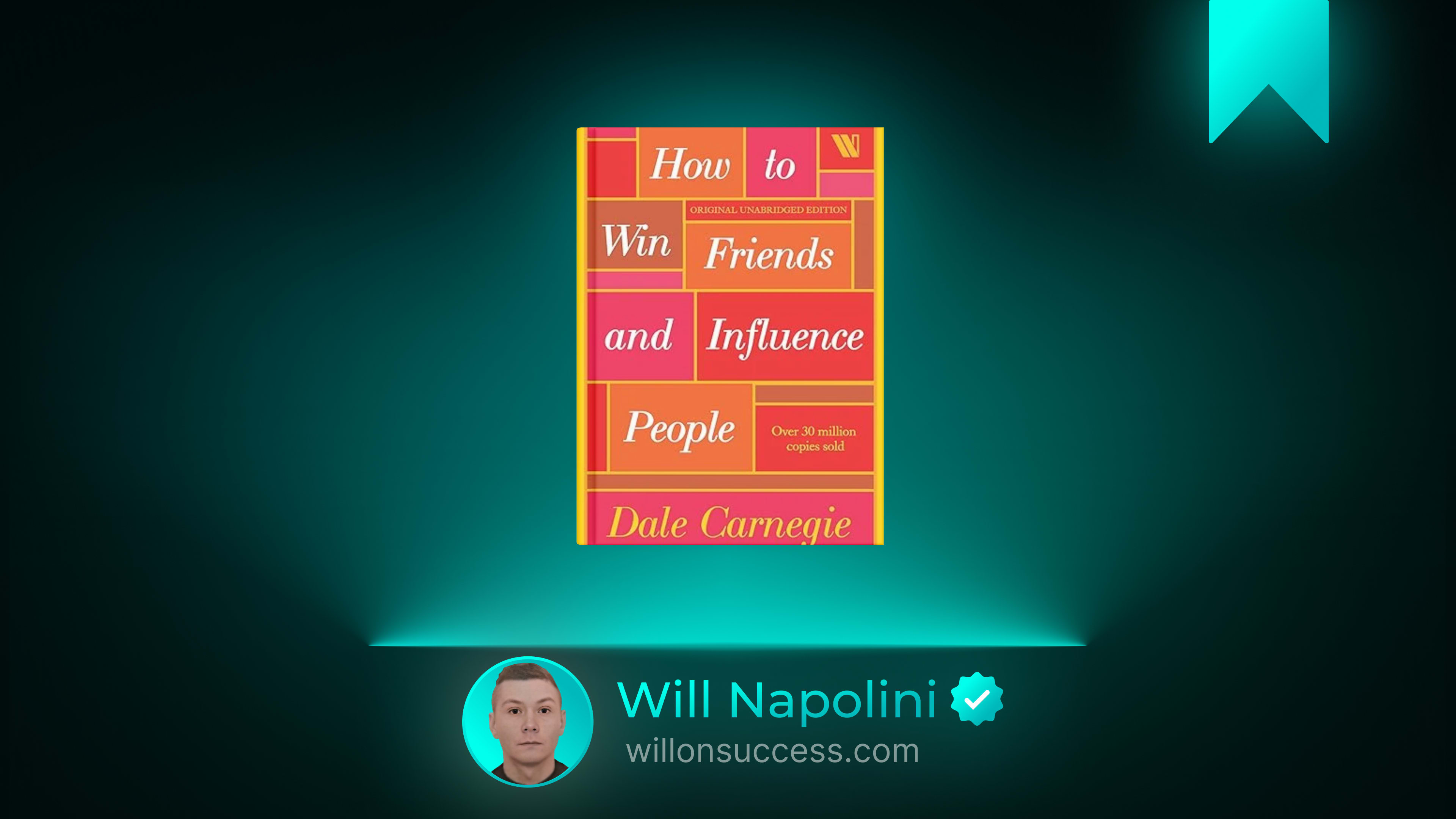
In his timeless masterpiece, How to Win Friends and Influence People, Dale Carnegie strips away the complex theories of psychology and reveals a profound, almost startlingly simple truth about human nature.
The philosopher John Dewey once said that the deepest urge in human nature is “the desire to be important.” Carnegie built his entire philosophy on this single bedrock. He realized that every person you will ever meet is walking around carrying a heavy, invisible burden: the need to feel valued, respected, and significant.
When you try to influence someone by correcting them, arguing with them, or demanding they see things your way, you are starving their ego. You are making them feel small. And a person who feels small will fight you to the bitter end, not because they care about the facts, but because they are defending their own sense of worth.
To truly win friends and influence people, you do not need to become a master debater. You must become a master of making other people feel important. And you must do it sincerely.
You cannot force a mind to open by pounding on the door with facts. You must hand them the key, and the key is always their own dignity.
The Story of a Duel and a Transformation
To understand how deeply this principle runs, we have to look at one of the greatest leaders in history, long before he became a legend.
In his youth, Abraham Lincoln was not the patient, empathetic statesman we revere today. He was sharp-tongued, arrogant, and loved to mock people. As a young lawyer in Springfield, Illinois, Lincoln wrote an anonymous letter to the local newspaper ridiculing a vain, combative politician named James Shields. The town roared with laughter, but Shields was humiliated.
Furious, Shields tracked down the author, challenged Lincoln to a duel, and gave him the choice of weapons. Lincoln, who was opposed to dueling but too proud to back down, chose cavalry broadswords because of his long reach. The two men met on a sandbar, ready to fight to the death. Seconds before the first strike, their supporters intervened and stopped the bloodshed.
It was the most terrifying moment of Lincoln’s life. But more importantly, it was his greatest lesson. He realized that his cleverness had nearly cost him his life and the life of another man. From that day forward, Abraham Lincoln almost never wrote an insulting letter, and he almost never ridiculed anyone.
During the Civil War, when his generals repeatedly failed and the press demanded their heads, Lincoln refused to condemn them. He adopted a motto that changed the course of history: “Do not judge them, and they will not be judged.”
Lincoln learned the hardest lesson of all: Criticism does not change behavior; it only breeds resentment. True influence begins the moment you lay down your hammer and pick up a mirror.
The Core Principles of Human Connection
How do we move from being critics to being architects of human potential? How do we navigate the fragile egos of the people we work with, live with, and love? Here are the core principles Carnegie outlines.
1. Drop the Hammer: The Futility of Criticism
When an animal is rewarded for good behavior, it learns much faster and retains what it learns far more effectively than an animal punished for bad behavior. Humans are no different.
When you criticize someone—even if your criticism is 100% accurate and completely justified—you put them instantly on the defensive. They will spend all their energy justifying themselves rather than listening to you. Criticism wounds a person’s precious pride, hurts their sense of importance, and arouses resentment.
If you want to gather honey, do not kick over the beehive. Instead of condemning people, try to understand why they do what they do. That is far more profitable and intriguing than criticizing. It breeds sympathy, tolerance, and kindness.
2. The Currency of Sincere Appreciation
There is a massive difference between flattery and appreciation. Flattery is a transaction disguised as a compliment; it is cheap, selfish, and universally recognized as false. Flattery is from the teeth out. Appreciation is from the heart out.
Charles Schwab was one of the first executives in American history to be paid a salary of over a million dollars a year by Andrew Carnegie. Why? Schwab himself admitted he knew very little about the actual manufacturing of steel. He was paid that immense sum for his ability to deal with people.
Schwab’s secret was simple: “I consider my ability to arouse enthusiasm among my people the greatest asset I possess,” he said. “The way to develop the best that is in a person is by appreciation and encouragement.”
Look for the good in the people around you. Be hearty in your approbation and lavish in your praise. When you make someone feel like a hero, they will move mountains to prove you right.
3. The Bait on the Hook
If you go fishing, you do not bait the hook with what you like to eat. You might love strawberries and cream, but fish prefer worms. So, you bait the hook with worms.
Yet, in human relations, we constantly bait the hook with what we want. We talk endlessly about our goals, our needs, and our desires, and then wonder why no one is listening.
The only way on earth to influence anyone is to talk about what they want and show them how to get it. Whether you are trying to get your child to stop smoking, your spouse to help around the house, or a client to sign a contract, you must first ask yourself: What does this person truly want? Then, you align your request with their deepest desires.
4. The Sweetest Sound in the Language
A person’s name is to that person the sweetest and most important sound in any language. It is the core of their identity.
When you remember someone’s name, you are paying them a subtle but powerful compliment. You are telling them, “You are significant to me. You are not just a face in the crowd.” When you forget it, or misspell it, or fail to use it, you signal that they do not matter.
Listen closely when someone introduces themselves. Repeat it in your mind. Use it naturally in the conversation. It is the smallest investment of effort that yields the highest return in human goodwill.
Why This Matters on an Ordinary Tuesday
Why does a book written in the 1930s matter so urgently today? Because the technology of our communication has changed, but the hardware of the human heart has not changed at all.
We live in an era of profound polarization. We are quicker to judge, faster to cancel, and more eager to prove our intellectual superiority than ever before. We have mistaken “winning an argument” for “winning a person.” But you can win every argument and still lose every relationship.
When you internalize Carnegie’s principles, you stop viewing other people as obstacles to be overcome, and you start viewing them as human beings to be understood. You become a safe harbor in a chaotic world.
If you are a leader, your team will not follow your spreadsheets; they will follow the way you make them feel when they make a mistake. If you are a spouse, your marriage will not be saved by being “right”; it will be saved by making your partner feel deeply valued.
Practical Application: Building Your Relational Muscle
Understanding these principles is beautiful, but reading without action changes nothing. You must build a daily practice that rewires your social reflexes.
- The 24-Hour Zero-Criticism Fast: Choose one day this week where you make a sacred vow: You will not criticize, condemn, or complain about anyone or anything for 24 hours. When you feel the urge to point out a flaw, swallow it. Watch how the emotional climate of your home and workplace shifts when you remove the toxic friction of constant judgment.
- The “One Thing” Appreciation: Every evening, identify one specific, genuine thing someone in your life did well that day. Tell them. Do not say, “Good job today.” Say, “I really appreciated how patiently you handled that difficult client on the phone this morning. It showed a lot of grace.”
- The Empathy Pause: Before you enter a difficult negotiation or a tense conversation, take out a piece of paper. Write down the other person’s top three desires or fears. Do not walk into the room until you can articulate their perspective as well as they can.
Who Should Read This Book
How to Win Friends and Influence People is a vital read for anyone who has to deal with human beings. It is essential for leaders, parents, salespeople, and spouses. It is a masterpiece for the brilliant introvert who struggles to communicate their value, and the fiery extrovert who constantly accidentally alienates people.
However, if you are looking for a Machiavellian playbook on how to manipulate people for your own selfish gain, this book will deeply frustrate you. Carnegie’s methods only work when they are driven by genuine empathy. If you try to use these principles as “hacks” while secretly harboring contempt for the person you are talking to, you will fail. People can smell insincerity from a mile away. This book demands that you actually cultivate a profound, authentic love for your fellow humans.
One Small Step to Take Today
You do not need to overhaul your entire personality to begin changing the trajectory of your relationships. You just need to change your next interaction.
Here is your one small step for today: Think of someone in your life who feels underappreciated. It might be a colleague who does the heavy lifting, a spouse who manages the household, or a friend who is always there to listen.
Send them a message, or walk up to them, and give them a piece of sincere, specific appreciation. Tell them exactly what they do that makes your life better, and thank them for it. Do not ask for anything in return.
Watch their posture change. Watch the light come into their eyes. In that single moment, you have stopped trying to force the world to see you, and you have started the beautiful work of seeing the world.
The greatest influence you will ever have is not found in the arguments you win, but in the dignity you give away.