Finding Family in Unexpected Places: What James and the Giant Peach Teaches About Resilience
I want to show you an idea that might change how you see your own struggles.
We often believe that safety comes from stability—from predictable routines, familiar faces, and adults who have everything under control. But what if true security is not found in avoiding chaos, but in discovering who you become when chaos arrives? What if the people (or creatures) who seem strangest at first are exactly the ones who can help you grow?
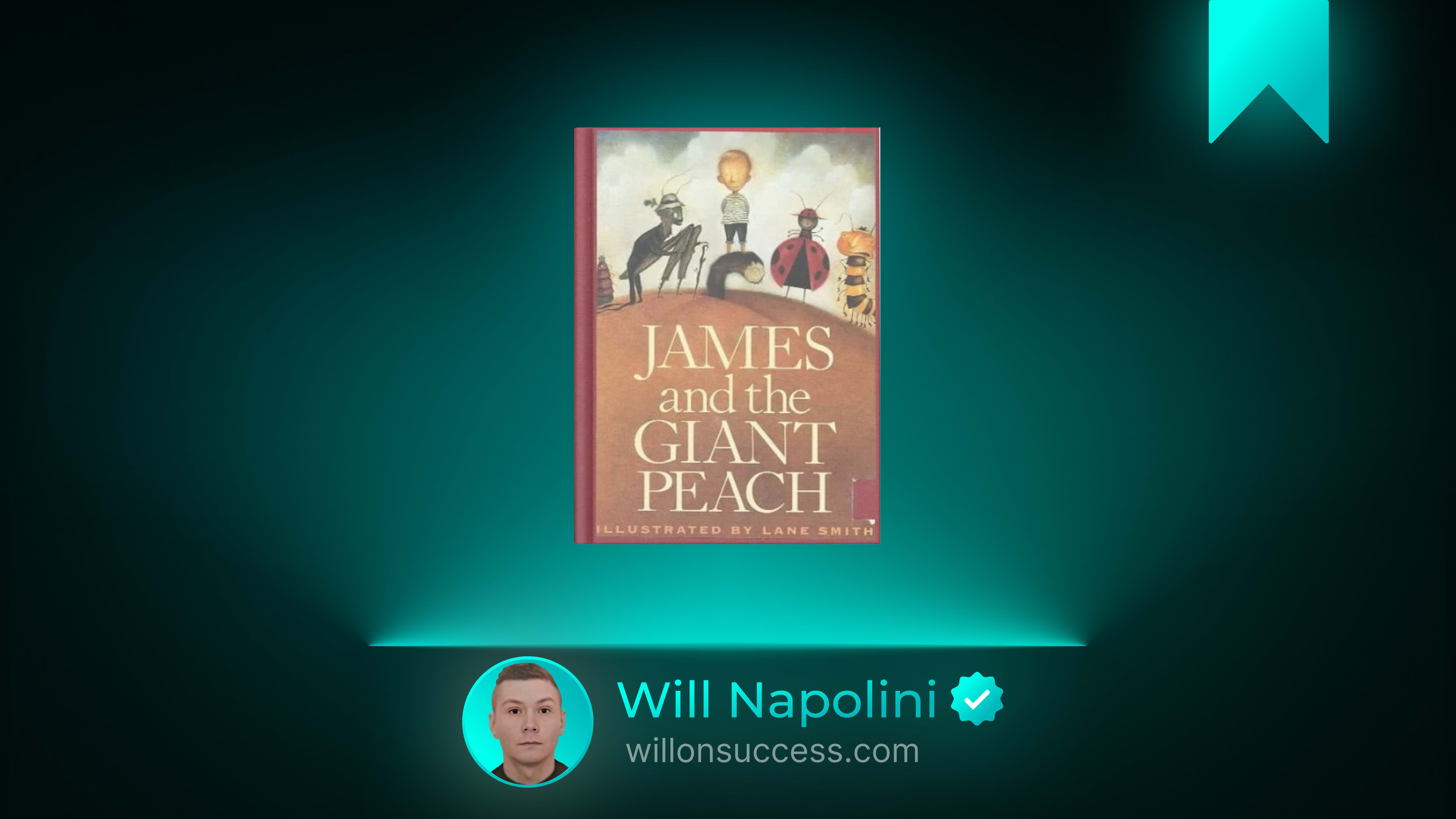
Roald Dahl’s James and the Giant Peach is widely cherished as a children’s fantasy, yet beneath its whimsy lies one of the most honest portraits of trauma, resilience, and found family in literature. James Henry Trotter begins as a four-year-old orphan whose parents are killed by a rhinoceros, then endures years of emotional and physical abuse from his cruel aunts. His journey aboard a magical peach with a band of oversized insects is not merely an escape; it is a crucible of transformation.
If you have ever felt abandoned, misunderstood, or too small to matter, this story speaks directly to the part of you that still believes in possibility. It reminds us that growth often begins where comfort ends.
The Big Idea: Belonging Is Built, Not Given
The central thesis of James and the Giant Peach is that family is not defined by blood or authority, but by mutual support, trust, and shared courage. James does not find safety because adults finally treat him kindly; he finds it because he chooses companions who see his worth even when he cannot see it himself. The peach becomes a vessel not just for travel, but for rebirth—a space where identity is forged through relationship rather than imposed by circumstance.
This matters because so much of personal development focuses on individual achievement or fixing broken systems. Dahl shows us something quieter and more radical: healing happens in community. You do not need perfect conditions to grow. You need witnesses who believe in you before you believe in yourself.
Character before circumstances means becoming someone capable of connection even when your environment has taught you isolation. Growth before achievement means valuing the process of trusting others over the outcome of arriving safely.
From Abandonment to Chosen Family
James’s early life is marked by profound loss and neglect. After his parents’ sudden death, his aunts confine him to their yard, deny him playmates, and refuse even to speak his name. This is not mere cruelty; it is emotional abandonment that teaches him he is unworthy of care. When he first encounters the insects inside the peach, his terror is understandable—he expects rejection or harm because that is all he has known.
Yet the insects offer something revolutionary: unconditional acceptance. Miss Spider, Centipede, Old-Green-Grasshopper, Ladybug, and Earthworm do not demand perfection. They argue, boast, fear, and fail—but they also protect, encourage, and include James as an equal. Through them, he learns that friendship is not earned through obedience, but built through vulnerability and shared experience.
I have seen this pattern in my own mentoring work. People who have been failed by traditional families often assume they must earn belonging through performance. But real connection begins when you stop proving your worth and start allowing others to see you. Your chosen family may look nothing like what you imagined—and that is precisely why they can heal you.
The Peach as Sanctuary and Catalyst
The giant peach is far more than a plot device. Symbolically, it represents both sanctuary and catalyst—a nurturing space where transformation becomes possible. Before the peach grows, James is trapped in a barren landscape controlled by abusive adults. The peach emerges from nature itself, suggesting that growth arises not from human design but from organic, mysterious forces aligned with life.
Inside the peach, James is no longer a prisoner. He is a participant. The confined space forces collaboration; survival depends on each member contributing their unique gifts. Centipede’s bravado, Miss Spider’s compassion, Grasshopper’s wisdom—all become resources James learns to rely on and eventually lead. The peach does not solve his problems; it gives him the context in which he can solve them himself.
Your own “peach” may be a therapy group, a creative project, a mentorship, or a period of solitude. Whatever form it takes, recognize it as sacred ground where old identities dissolve and new ones emerge. Do not rush through it. Let it hold you while you change.
Fear Is the Gateway to Confidence
Dahl never pretends that courage feels good. James is frequently terrified—of the insects, of falling, of failing his friends. Yet each time he acts despite fear, his confidence deepens. When Centipede dangles over the Atlantic Ocean, James does not hesitate; he leaps after him, trusting his body and his bond. This is not heroism born of fearlessness. It is leadership forged in the fire of caring more about others than about his own safety.
Crucially, his growth is accelerated by the insects’ honesty. Unlike his aunts, who used silence and punishment to control him, his friends name realities without shaming him. Their belief in him becomes evidence he can use against his inner critic. Fear loses its power not when it disappears, but when it is met with connection.
On days when self-doubt whispers that you are inadequate, remember James. Confidence is not the absence of trembling. It is the decision to move forward anyway, anchored by those who remind you who you are becoming.
Why This Matters Beyond Childhood
You may wonder what a children’s book offers adults navigating complex lives. Everything. The dynamics James faces—abandonment, misfit communities, leading through uncertainty—are universal.
In your career, you may feel like an imposter among seasoned colleagues until you find mentors who see your potential. In grief, you may discover that strangers in a support group understand you better than well-meaning relatives. In parenting, you may realize that your child’s resilience mirrors your own unhealed wounds. Dahl teaches us that transformation is always relational. No one grows alone.
Consistency before intensity means showing up for your chosen people daily, not just in crises. Responsibility before excuses means owning your role in building trust, even when past betrayals make it hard. Principles before hacks means understanding that belonging requires patience, not tactics.
Practical Application: Identify Your Peach Today
Understanding is valuable, but understanding without action changes nothing. Here is one concrete step inspired by James’s journey:
Map Your Support Ecosystem
Take twenty minutes to reflect: Who in your life currently functions as “insect companions”—people who accept you without condition and challenge you toward growth? Write their names. Beside each, note one quality they embody that helps you feel safe and seen.
Then ask: Where am I still waiting for permission to belong? What small act of trust could I offer today—to reach out, share a struggle, or accept help?
Do this once. Notice where resistance arises. That resistance points to old wounds ready for tending. Return to this map whenever doubt resurfaces.
Who Should Read This Book
James and the Giant Peach will resonate deeply if you:
- Have experienced loss, abandonment, or emotional neglect
- Feel like an outsider in your current environment
- Are rebuilding your sense of self after trauma
- Believe stories can heal as effectively as textbooks
- Want to reconnect with wonder without sacrificing depth
It may be less useful if you seek literal advice, linear success formulas, or narratives that minimize pain. Dahl honors darkness while insisting light persists. His voice is playful but never dismissive of suffering.
Read this book if you need reminding that your strangeness is not a flaw—it is the very thing that qualifies you for extraordinary connection.
One Small Step Toward Belonging
Before you close this page, think of one person who has shown you unexpected kindness.
Send them a message today. Say simply: “Thank you for seeing me.”
Do this now.
Because family is not inherited. It is chosen, one brave word at a time.
You were never meant to survive alone. You were meant to be transformed together.